
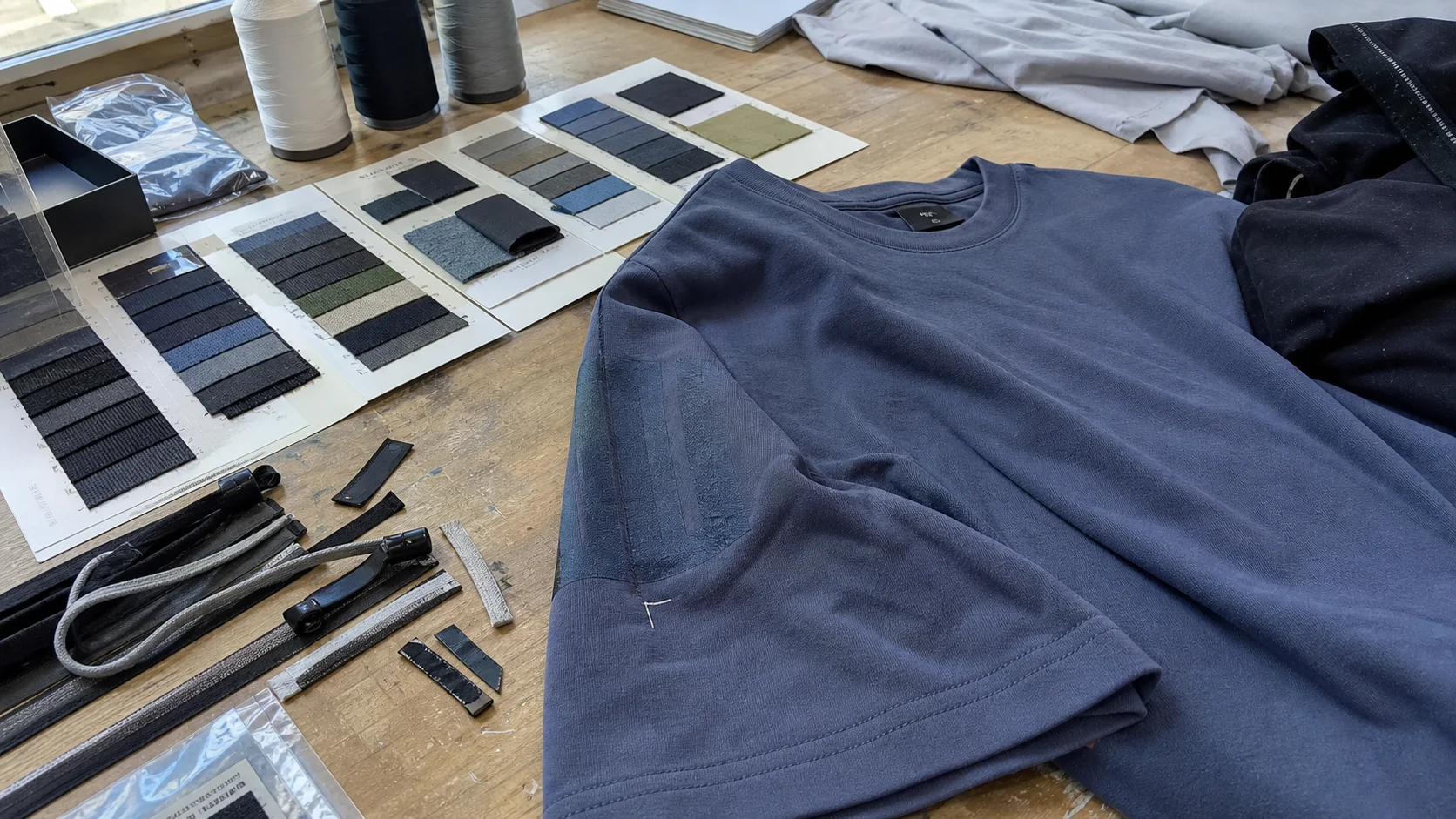
A distributor-focused outline for evaluating bulk sleeve print map trims, including artwork placement maps, trim compatibility, decoration tolerances,...
Sleeve Print Map Trim Sourcing Review for Buyers - Decoration & Printing manufacturing guide
Sleeve print map trim sourcing refers to the planning, procurement, and production control of printed decoration placed on garment sleeves according to a defined artwork map. For distributor buyers, this usually means ordering bulk decorated apparel where sleeve graphics, logos, brand marks, size runs, and trim placements must remain consistent across many units, colors, and sometimes multiple factories or production lots.
The word “map” matters. A sleeve print is not just an artwork file sent to a printer. It needs placement coordinates, scale, direction, print boundaries, color references, and garment-size grading rules. A left sleeve logo on a small hoodie cannot always use the same placement distance as an XL hoodie without looking slightly off. A long vertical sponsor print on a performance sleeve may need different positioning than a small bicep logo on a cotton tee.
In bulk sourcing, sleeve print map trim can include direct sleeve prints, heat-applied logos, reflective strips, woven or printed patches attached near the sleeve, silicone badges, transfer labels, sublimated sleeve panels, and printed sleeve tapes. The common point is that each trim or decoration is positioned on the sleeve and must align with a technical map.
Distributor buyers often work between the end customer and the manufacturer. That position creates pressure. The customer wants accurate branding, fast turnaround, competitive pricing, and low defect rates. The manufacturer needs complete specifications, workable artwork, approved samples, and realistic production time. A clear sleeve print map is the document that reduces interpretation and protects both sides.
Sleeve decoration is visible, but it is also easy to misplace. A chest logo can usually be checked quickly against standard placement rules. Sleeve artwork is more sensitive because the garment shape changes with seam construction, sleeve length, cuff type, fabric stretch, and size grading.
Distributor buyers should care about sleeve print mapping because mistakes are costly at bulk scale. A print that sits too close to the cuff, twists toward the underarm, crosses a seam, or appears upside down when worn can make an otherwise acceptable garment fail customer review. The issue may not show clearly on a flat inspection table, especially if the inspector does not have a placement map.
For promotional apparel, uniform programs, teamwear, workwear, and retail capsules, sleeve graphics may carry sponsor names, safety markings, country flags, QR codes, brand slogans, or compliance-related visibility details. When those elements are wrong, rework may not be possible. Heat transfers can sometimes be removed from certain fabrics, but removal risks staining, ghosting, glue residue, or fabric damage. Screen prints and sublimation are generally permanent.
Strong sleeve print map sourcing also improves quotation accuracy. Suppliers quote differently when they understand whether the order needs one-color screen print on one sleeve, reflective transfer on both sleeves, oversized print crossing a seam, or multi-position decoration with size-specific placement. Vague artwork requests usually lead to low initial quotations and later cost corrections.
Buyers who need broader apparel production support can review manufacturing and decoration capabilities through Fabrikn services. A structured service discussion helps clarify whether sleeve decoration should be produced in-line with garment manufacturing or handled as a post-production embellishment step.
Distributor buyers usually source sleeve print map trims through one of three routes: fully finished garment production, blank garment decoration, or trim/component sourcing before garment assembly. Each route has advantages and limits.
In this model, the apparel manufacturer produces the garment and manages sleeve decoration before final packing. This is often the cleanest route for private label, uniforms, sportswear, and fashion programs. The supplier controls fabric cutting, sewing, decoration timing, washing, finishing, and packing.
The advantage is coordination. Sleeve prints can be applied on cut panels before sewing, which may improve flatness and placement accuracy for certain designs. Sublimation and all-over prints often require panel-level planning. The drawback is less flexibility after production starts. If the end customer changes artwork late, the factory may need to pause cutting or decoration.
Distributor buyers often purchase blank garments and send them to a decorator for sleeve printing. This works for lower volume orders, rush jobs, and promotional programs where standard blanks are acceptable. It also gives buyers access to domestic or regional decorators who can handle smaller batches.
The tradeoff is placement limitation. Finished sleeves are tubular, narrow, and sometimes difficult to load onto print equipment. Prints near the cuff, seam, or shoulder may be harder to control. Sleeve length and seam twist in blank garments can also vary between lots, which affects placement repeatability.
Some buyers source heat transfers, reflective trims, silicone patches, woven badges, or printed sleeve tapes separately, then send them to a garment factory or decoration facility for application. This route can improve branding consistency when the same trim is used across several garment styles.
The risk is compatibility. A transfer that works well on cotton fleece may fail on water-repellent polyester. Reflective film may crack on stretch sleeves if the wrong grade is selected. Adhesive-backed patches may require specific pressure, dwell time, and temperature. Buyers should never approve a trim supplier in isolation without testing the trim on the actual bulk fabric.
Sourcing Route Best For Main Advantage Main Risk Finished garment production Private label, uniforms, sportswear, fashion runs Better production coordination Late artwork changes can delay the full order Blank garment decoration Promo orders, short runs, rush programs Flexible and accessible Placement limits on finished sleeves Separate trim sourcing Programs using shared badges, transfers, or tapes Consistent trim branding across styles Fabric compatibility must be tested carefullyThe print method should be selected after reviewing fabric, order volume, artwork complexity, hand feel, wash expectations, and placement. A sleeve map can look simple on screen but become difficult in production if the wrong decoration method is chosen.
Screen printing is common for bulk sleeve logos on cotton tees, fleece hoodies, sweatshirts, and some jersey garments. It works well for solid spot colors, simple logos, and repeat production. For larger bulk orders, screen printing can be cost-effective because setup costs spread across more units.
Typical MOQs for efficient sleeve screen printing may start around 100 to 300 pieces per design and colorway, though many factories prefer 500 pieces or more for export programs. Small batches can be produced, but unit costs rise because screens, ink mixing, setup, and machine time remain relatively fixed.
Screen printing risks include poor opacity on dark fabrics, cracking on stretch zones, ink bleeding, misregistration, and placement drift. Buyers should specify ink type, Pantone target, curing requirements, print size, sleeve side, and acceptable placement tolerance. For stretch fabrics, request a stretch test and wash test before bulk approval.
Heat transfers are widely used for sleeve logos, sponsor marks, reflective details, names, numbers, and multi-color graphics. They are practical when artwork has gradients, small details, or lower quantities. Transfers can be produced centrally and applied to different garments, which is useful for distributor programs.
Typical MOQs vary widely. Custom transfer suppliers may accept 50 to 100 pieces for simple logos, while better pricing usually appears from 300 to 1,000 pieces. For reflective, silicone, puff, flock, or specialty transfers, MOQs may be higher because material and tooling costs increase.
The main sourcing issue is fabric compatibility. Temperature-sensitive polyester can scorch. Nylon may need low-temperature adhesive. Water-repellent finishes can block adhesion. Rib cuffs and curved sleeve seams can reduce pressure consistency. Buyers should request application instructions, including temperature, pressure, dwell time, peel method, and post-press handling.
Sublimation is suitable for polyester sleeves, especially sportswear, cycling wear, running tops, team jerseys, and performance uniforms. It produces soft-hand graphics because the dye bonds with the polyester fiber. It is best planned at panel stage before sewing.
Sublimation is not suitable for cotton and performs best on white or light polyester. Dark base fabrics do not show sublimated colors properly. Placement control depends on pattern engineering, cutting accuracy, and sewing alignment. If the artwork must line up across sleeve seams or body panels, the buyer should expect more sampling and tighter cutting controls.
MOQs can start around 100 to 300 pieces per design for some sublimated apparel programs, but more efficient production often begins at 500 pieces and above. Lead time depends on artwork engineering, print paper preparation, cutting, sewing, and any additional trims.
Digital options such as DTG and DTF are useful for complex artwork, small runs, personalization, and fast sampling. DTF has become popular for sleeve decoration because transfers can be applied to various fabrics and order quantities can be flexible.
For distributor buyers, digital methods can be helpful for pre-production samples and low-volume programs. The tradeoff is that bulk consistency, wash durability, hand feel, and edge quality must be checked. A DTF sleeve logo may look acceptable at 25 pieces but feel too heavy or show adhesive outlines at 2,000 pieces if the film and powder system are not appropriate.
Method Good Use Case Typical Bulk MOQ Range Buyer Watchpoint Screen print Solid logos, repeat programs, cotton and fleece 100-500+ pieces Opacity, curing, cracking, placement drift Heat transfer Multi-color logos, reflective marks, sponsor graphics 50-1,000+ pieces Adhesion, wash durability, fabric scorching Sublimation Polyester sportswear and panel prints 100-500+ pieces Color on polyester, panel alignment, seam matching Digital DTG/DTF Short runs, samples, detailed artwork 25-300+ pieces Hand feel, wash life, adhesive edge marksA reliable quotation starts with a complete sleeve print map trim specification. Buyers should not expect suppliers to infer technical details from a mockup. Mockups are useful for visual discussion, but they are rarely accurate enough for production.
The specification should include garment style, fabric composition, fabric weight, colorways, size range, sleeve construction, decoration method, artwork files, print dimensions, print colors, placement coordinates, tolerance, packing method, and testing requirements. If the sleeve has rib cuffs, thumbholes, reflective piping, panels, or curved seams, note these details before sampling.
Placement tolerance should be realistic. For many sleeve prints, a tolerance of plus or minus 0.5 cm to 1.0 cm may be practical, depending on garment type and application method. Tighter tolerances may be possible for panel printing before sewing, but finished garment decoration may need more tolerance due to sleeve shape and loading variation.
Buyers should also define whether the print must be visible when the garment is worn naturally. Flat placement and worn placement are different. A vertical sleeve print that looks centered on a flat sleeve may rotate toward the back arm when worn if the sleeve seam twists or the garment pattern is not balanced.
MOQ depends on the garment, decoration method, trim material, supplier setup, and whether the order uses stock blanks or custom manufacturing. Distributor buyers should treat MOQ as a commercial and technical number, not just a supplier rule.
For stock blank decoration, sleeve print orders may be feasible from 50 to 100 pieces, especially with heat transfer or digital methods. For custom garment manufacturing with sleeve print, practical export MOQs often sit around 300 to 1,000 pieces per style or color, with better pricing at 1,000 to 3,000 pieces. Specialty trims such as reflective transfers, silicone patches, branded tapes, and custom woven sleeve badges may require separate trim MOQs from 500 to 5,000 pieces depending on tooling and material.
Price is usually affected by number of print positions, number of colors, artwork size, print method, garment handling difficulty, rejection allowance, testing, and packing requirements. A small one-color sleeve logo is very different from a full-length reflective print on both sleeves. Buyers comparing quotations should confirm that each supplier has included the same decoration scope.
Lead time depends on artwork approval, sample rounds, blank garment availability, fabric production, trim production, printing capacity, curing or drying time, final inspection, and shipping. A simple domestic decoration order on available blanks may ship within 7 to 21 days after approval. A custom bulk apparel order with sleeve print may require 30 to 75 days after final sample approval. Complex trims, lab testing, dyed fabrics, and peak-season production can extend that schedule.
Purchasing judgment: if the sleeve print is central to the brand presentation, do not compress the sample stage to save one week. A rejected sleeve placement at bulk inspection costs more than a controlled pre-production approval.
Buyers should also ask when lead time starts. Some suppliers count from purchase order date. Others count from deposit, artwork confirmation, fabric arrival, trim approval, or pre-production sample approval. The safest commercial agreement defines the trigger clearly.
For distributor buyers needing a quote-ready discussion, the Fabrikn contact page is the right place to start a sourcing review with artwork, target quantity, garment type, and delivery expectations.
A disciplined sample workflow reduces bulk risk. Sleeve print map trim approvals should move from artwork review to material test to physical sample to pre-production confirmation. Skipping steps may seem efficient, but it often pushes unresolved questions into bulk production.
The supplier should review artwork format, logo scale, line thickness, color references, print position, sleeve construction, and fabric suitability. Buyers should ask early whether any artwork elements are too small, too close to seams, or unsuitable for the intended method.
A strike-off is a print test on fabric or comparable material. For heat transfers, the buyer may receive a transfer sample applied to the actual fabric. This stage checks color, edge quality, opacity, hand feel, stretch, adhesion, and surface finish.
The first garment sample should confirm actual sleeve placement on the garment. Buyers should review the sample flat and on a body or mannequin if the print orientation matters. Photos should show front, side, back, sleeve close-up, cuff area, and underarm relationship.
The pre-production sample should use bulk fabric, bulk trims, bulk print method, final artwork, final size grading, and final packing direction. This is the sample that should control production. If the supplier changes ink, transfer film, fabric lot, or application setting after this approval, the buyer should require notice.
Once approved, one physical sample should be sealed and retained by the supplier. Another should be kept by the buyer if timing allows. Photos and measurement maps should be attached to the production file. Inspection teams need the same reference, not just a sales mockup.
A practical approval workflow may take one to three sample rounds. Simple sleeve logos can be approved quickly. Multi-color wrap prints, reflective sleeve details, and panel-aligned graphics may need more revisions. Buyers should budget for that time instead of treating every sleeve decoration as a standard logo application.
Sleeve print map trims need inspection at both decoration and final garment stages. The most common failures are placement deviation, wrong sleeve side, color mismatch, poor adhesion, print cracking, stains from pressing, scorch marks, ink bleeding, ghost marks, and inconsistent angle.
Inspection should compare bulk units against the approved placement map and sealed sample. The inspector should measure from the same reference points used in the tech pack. If the map says “8 cm from cuff edge,” inspection should not measure from the sleeve seam unless the specification allows it.
AQL inspection can catch visible defects, but it may not fully protect against durability problems. Buyers should request wash testing before bulk shipment when decoration is important. Common internal checks include 3 to 5 wash cycles for appearance, though formal programs may require more rigorous standards based on the customer’s market.
Reflective trims need special care. Buyers should verify reflectivity, surface continuity, cracking after stretch, and adhesion after washing. Workwear or safety-related products may require specific reflective performance standards. If the sleeve print has safety implications, decoration cannot be treated as a cosmetic trim only.
Printed sleeve tapes and patches also carry sewing risks. Tape can twist, pucker, or narrow after washing. Patches can detach at corners if stitch density or adhesive support is weak. Silicone badges may feel premium but can create weight imbalance or discomfort if placed near elbow bend zones.
Supplier selection should focus on capability match, communication quality, and process control. The cheapest quote is not always the lowest-cost option if the supplier cannot manage sleeve placement repeatability.
Distributor buyers should ask for production details rather than general promises. A supplier should be able to explain whether the sleeve print will be applied before or after sewing, what equipment is used, what tolerances are realistic, how samples are approved, and how bulk units are inspected.
Checklist Item Buyer Question Why It Matters Decoration capability Can the supplier produce this sleeve method in-house or through a controlled partner? Outsourced decoration can work, but responsibility must be clear. Fabric compatibility Has the print or trim been tested on the actual bulk fabric? Adhesion, opacity, and hand feel depend on fabric construction and finish. Placement control What placement tolerance can be maintained in bulk? Sleeve shape makes unrealistic tolerances risky. Sample discipline Will the pre-production sample use bulk materials and final application settings? Decorative approvals are only useful when they match production conditions. Inspection process Who checks sleeve print position, color, adhesion, and packing before shipment? Final inspection needs decoration-specific criteria. Reorder control Can the supplier keep artwork, screens, transfer files, and placement maps for repeat orders? Distributor programs often depend on consistent reorders.Buyers should also confirm ownership of screens, dies, films, and artwork output files where relevant. Some suppliers charge setup fees but retain production tools. That may be acceptable, but the commercial terms should be clear before payment.
Supplier background and working model matter when sourcing decorated apparel programs. Buyers can review company positioning and sourcing approach through Fabrikn about us before starting a bulk sleeve print map trim discussion.
The best sleeve print map trim sourcing decision depends on volume, deadline, product value, and customer expectations. A low-volume promotional order does not need the same engineering depth as a national uniform rollout. A premium retail hoodie with a visible sleeve mark deserves more sampling than a budget giveaway tee.
If the buyer needs speed, stock blanks with heat transfer or digital decoration may be the best route. The tradeoff is less control over garment fabric, sleeve shape, and long-term reorder consistency. If the buyer needs brand control and repeatability, custom garment production with integrated sleeve decoration is usually stronger, but lead time and MOQ rise.
If the artwork is simple and order volume is high, screen printing can provide good cost efficiency. If artwork changes often or contains gradients and small details, transfers may reduce setup friction. If the garment is polyester performance wear and the sleeve graphic is large, sublimation may produce the cleanest hand feel. If the program includes reflective or specialty branding, expect longer development and stricter testing.
Buyers should be cautious with oversized sleeve graphics on finished garments. The larger the print, the harder it is to control distortion, seam interruption, and print angle. Full-length prints may look strong in mockups but become difficult on tapered sleeves. Panel printing before sewing can solve some issues, but it shifts risk to cutting and sewing alignment.
Cost-saving decisions should be made openly. Reducing sample rounds saves time and sample charges, but increases bulk risk. Choosing a lower-cost transfer may reduce unit price, but it may crack or peel sooner. Accepting a wider placement tolerance can make production smoother, but the customer must be comfortable with the visual variation.
Direct purchasing view: for distributor buyers, the safest sourcing route is the one that makes the sleeve decoration measurable. If the supplier cannot define placement, tolerance, application method, and inspection criteria, the order is not ready for bulk production.
Buyers should prepare a quote package that includes garment reference, target quantity, size breakdown, colorways, artwork files, decoration method preference, placement map, quality expectations, delivery date, packing needs, and shipping destination. A clear package reduces back-and-forth and makes supplier comparisons more accurate.
Negotiation should focus on total program value, not just unit price. Ask whether setup charges are one-time or repeated, whether reorders can use the same screens or digital files, whether trim overages are included, and whether rejected units will be replaced. Clarify whether the quotation includes testing, labeling, polybags, cartons, hangtags, and freight terms.
For bulk distributor programs, a pilot order can be useful. A smaller first run allows the buyer to test customer response, wash performance, and supplier execution before scaling. The unit price may be higher, but the information gained can protect a larger order.
Sleeve print map trim sourcing is a technical buying category, not a simple decoration add-on. It requires clear artwork, measurable placement, fabric-compatible print methods, sample discipline, and decoration-specific inspection. Distributor buyers who manage these details early can reduce rejection risk, improve quote accuracy, and deliver more reliable decorated apparel programs.
The most practical approach is to start with the garment and end-use, then select the decoration method. Fabric composition, sleeve construction, order volume, and customer durability expectations should guide the choice. A sleeve logo that works on cotton fleece may not work on nylon outerwear. A transfer that looks sharp on a sample may fail if applied at the wrong pressure in bulk. A print map that ignores size grading may look inconsistent across the size range.
Good sourcing does not eliminate all risk, but it makes risk visible before bulk production. That is where distributor buyers gain control. The buyer who defines sleeve placement, approves real samples, confirms application settings, and inspects against a sealed standard is far better positioned than the buyer who relies on a mockup and a general decoration note.
Get a free quote from Fabrikn — your trusted B2B clothing manufacturer with 10+ years of experience. MOQ as low as 200 pieces.
Get a Free Quote →Sleeve print map trim sourcing is the process of buying and controlling sleeve decoration according to a defined placement map. It covers artwork, print method, trim selection, fabric compatibility, sampling, bulk production, and inspection.
For stock blank decoration, MOQs may start around 50 to 100 pieces. For custom garment production with sleeve printing, practical MOQs often range from 300 to 1,000 pieces per style or color. Specialty trims may require 500 to 5,000 pieces depending on material and tooling.
Screen printing is efficient for simple high-volume logos. Heat transfers are flexible for multi-color graphics and moderate quantities. Sublimation works best on polyester performance garments. Digital methods suit samples, short runs, and complex artwork, but bulk durability should be checked.
Placement should be measured from clear reference points such as cuff edge, shoulder seam, sleeve seam, or sleeve centerline. The specification should include print size, sleeve side, orientation, tolerance, and whether placement changes by garment size.
The main risks are wrong placement, wrong sleeve side, print angle variation, poor adhesion, cracking, color mismatch, fabric scorching, ink bleeding, and inconsistent appearance after washing. Finished sleeves are harder to decorate than flat panels, so inspection must be specific.
Panel printing before sewing can improve flatness and support large graphics, sublimation, and engineered placements. Finished garment printing is more flexible for smaller logos and stock blanks. The right choice depends on artwork size, garment construction, order volume, and lead time.
The best pre-production sample uses bulk fabric, final artwork, final trim, actual application settings, correct sleeve placement, and final garment construction. It should be reviewed flat and, when relevant, on a body or mannequin.
Buyers can reduce risk by providing complete artwork files, confirming fabric compatibility, approving strike-offs, sealing a pre-production sample, defining placement tolerance, testing wash durability, and inspecting bulk goods against the approved map.