
A practical sourcing review for clinic purchasing teams comparing zippers, cuffs, hems, logos, and reflective trim on bulk softshell jackets, with cost and...
Clinic purchasing teams do not buy softshell jackets the same way a retail brand does. The order is usually functional, branded, and tightly budgeted. Trim choices matter because they affect durability, appearance, comfort, and lead time. A jacket can pass on fabric and fail on details if the zipper sticks, the cuff binding rolls, or the logo zipper pull arrives late. For bulk buying, trim sourcing deserves the same attention as the shell fabric.
This review focuses on bulk softshell jacket trim sourcing for clinic purchasing teams, with an emphasis on MOQ, cost structure, sample approval, and the quality risks that show up during production. The practical goal is simple: reduce surprises before the order is cut, sewn, packed, and delivered.
Bulk Softshell Jacket Trim Sourcing for Clinic Buyers - Fabrikn production reference
Clinic buyers usually care about three outcomes: the jacket should hold up through repeated wear, the branding should stay clean, and the total landed cost should remain predictable. Trim sourcing affects all three.
Cheap trim can lower unit price on paper, but the savings are often small compared with the cost of rejects, remakes, or delayed distribution. A clinic jacket is not a seasonal fashion item. It is a service uniform or staff layer, so consistency matters more than trend detail. That shifts the sourcing standard toward dependable components and conservative specifications.
Trim also influences compliance and usability. A zipper pull that is too small is hard to use with gloves. A binding tape that is too stiff can irritate the wrist. A label placement that is careless can create comfort complaints. These are small issues individually, but they add up in bulk programs.
In clinic programs, the cheapest trim is not always the best buying decision. The right trim is the one that keeps production stable and field use simple.
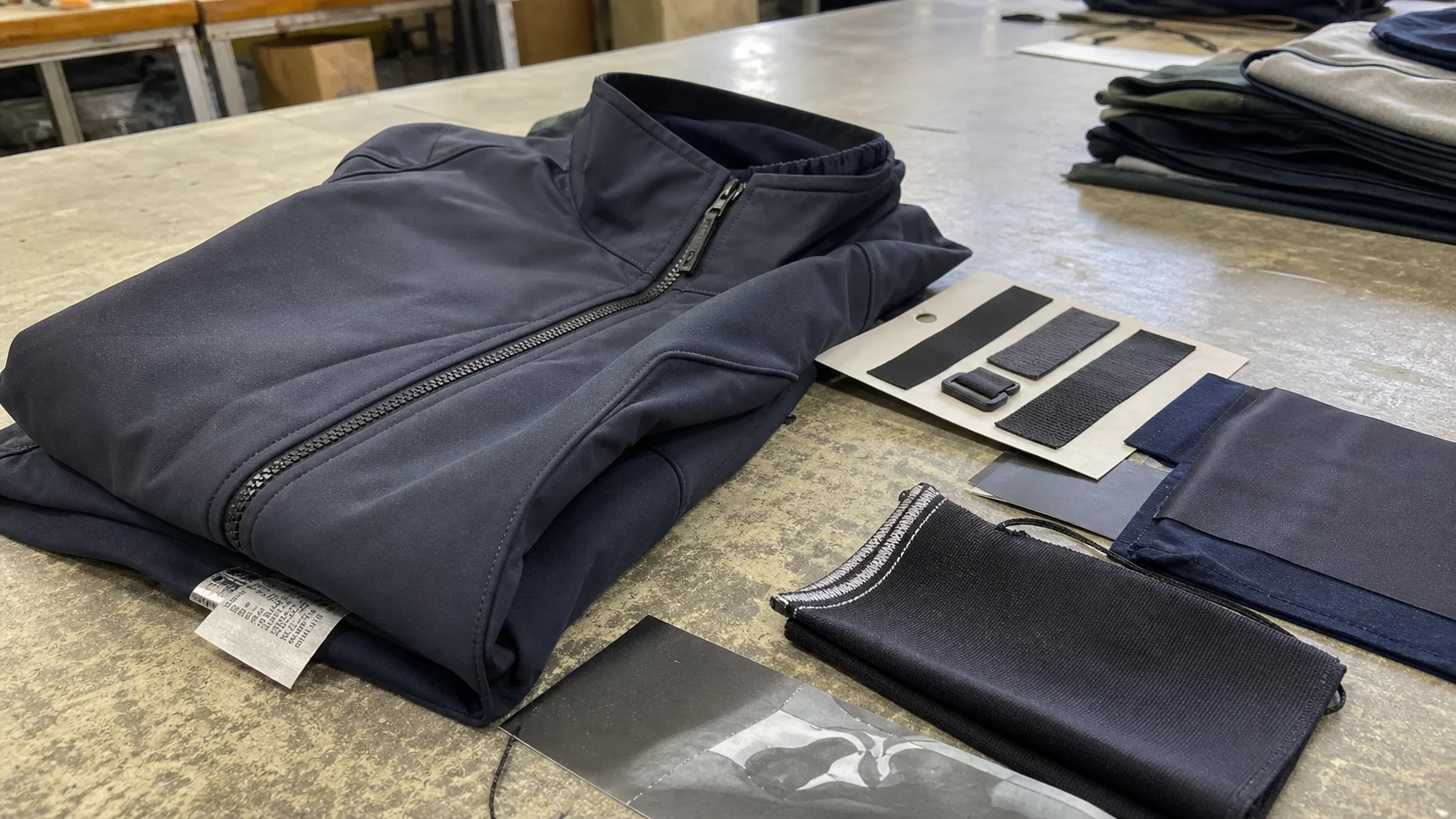
A softshell jacket trim package usually includes a zipper system, pocket closures if used, elastic or binding for cuffs and hem, labels, hangtags, sewing thread, and branding items such as woven labels or rubber badges. Some programs also include chin guards, storm flap snaps, cord locks, or reflective details.
Each trim item should be treated as a separate risk and cost line. When buyers ask for a quote, they often focus on fabric weight and logo print first. That misses the reality that trim selection can change both garment price and production difficulty.
Zippers are the most important trim item on a softshell jacket. Front zippers usually need to be smooth, durable, and easy to operate under everyday conditions. For clinic workwear, a nylon coil zipper is often a practical choice because it runs smoothly and is lighter than molded plastic options. Metal zippers can look stronger, but they are not always necessary for a staff jacket and may add weight or cost.
Buyers should confirm zipper tape width, tooth type, color match, puller style, and whether the zipper is auto-lock or semi-auto-lock. A custom puller with a logo can improve presentation, but it can also extend lead time. If the program volume is modest, a standard puller with a woven or heat-transferred brand label can be the safer cost choice.
Cuffs and hems are common failure points. Elastic quality varies more than many teams expect. The key issues are recovery, shrinkage, and the way the elastic feels against skin. Binding tape may be used where a cleaner edge finish is needed, but the choice should be tested on fit and comfort. If the clinic staff will wear the jacket for long shifts, a rough binding finish is a legitimate complaint risk.
Hem adjustment features, such as toggles or cord locks, can improve fit. They also add parts, assembly time, and inspection risk. For bulk clinic sourcing, simpler is usually better unless the end-user group has clearly asked for adjustability.
Woven labels, heat-transfer labels, size labels, and care labels are not decorative afterthoughts. They affect user experience and compliance. A label that scratches the neck will be noticed immediately. A care label that is too large or badly placed can make the inside of the jacket feel cluttered.
Branding on the outside should be restrained for clinic use unless the buyer has a specific identity requirement. Embroidery is durable and familiar, but it increases stitch time and may affect softshell stretch in the logo area. A low-profile chest logo may be enough for staff identification.
Thread type should be matched to fabric behavior and seam stress. Polyester core-spun thread is a common choice because it balances strength and sewing performance. Snaps, if used, need to be tested for pull strength and appearance after repeated handling. Secondary trims are inexpensive individually, but they can create quality issues when specs are vague.
Trim Item Typical Buyer Priority Common Risk Practical Buying Note Front zipper High Jamming, weak puller, color mismatch Request a sample zipper run and confirm puller style early Cuff/hem elastic High Poor recovery, discomfort, shrinkage Ask for stretch and wash test results when available Woven label Medium Scratchy hand feel, color shift Approve size, weave density, and placement before bulk Logo badge or embroidery Medium Misalignment, stitch puckering Lock artwork and placement with a pre-production sample Snaps or toggles Low to medium Function inconsistency Use only when the feature solves a real user needMOQ in trim sourcing depends on whether the trim is stock, semi-custom, or fully custom. Standard trims can often be sourced in small quantities because suppliers already hold inventory. Custom zipper pulls, printed labels, branded badges, or color-matched binding usually require higher minimums.
For clinic buyers, typical MOQ ranges are easier to manage when the order is built around standard trims. A common pattern looks like this:
Cost usually rises for four reasons: custom tooling, extra color matching, longer approval cycles, and slower production handling. Small changes can have an outsized effect. A custom molded puller, for example, may add only a little unit cost on a large order, but the tooling fee can be hard to justify for a clinic run unless the order volume is strong.
The most useful buying question is not "What is the cheapest trim?" It is "Which trim option keeps the order stable at the required quantity and delivery date?" That framing leads to better decisions.
Trim costs hide in approvals, not only in the quote. A supplier may quote a base price and later add charges for artwork changes, color matching, corrected samples, or split shipments. Buyers should ask whether the quote includes development, lab dips if relevant, and one round of pre-production sample revision.
Another hidden cost is packaging integration. If each jacket needs custom folded presentation, individual polybags, size stickers, or carton marking by department, those details should be confirmed with the trim and packing plan. An inexpensive jacket can become expensive when the packing spec is unclear.
Trim specifications should be written as if the factory has no prior context. That sounds strict, but it prevents guesswork. The buying team should define material, size, finish, color, position, and acceptable alternates for each trim item.
A clear trim sheet usually includes the following:
Clinic buyers should be careful about vague phrases such as "premium zipper" or "high-quality elastic." Those words are not enforceable. A better spec names the zipper type, puller finish, tape width, and any reference sample. If the factory has to guess, the buyer inherits the risk.
It also helps to separate must-have requirements from preferred options. If the jacket must meet a certain color identity but can accept either a matte or semi-gloss puller, say so. That gives the supplier room to control cost and lead time without violating the brief.
A workable spec for a clinic softshell jacket might read like this:
That level of detail is enough to keep sourcing controlled without overengineering the order.
Sample approval is where most trim problems can be caught cheaply. A clinic buyer should not rush this stage. One flawed approval can create a full production issue across hundreds or thousands of units.
A disciplined approval process usually follows this sequence:
Buyers should insist on seeing the jacket from the inside as well as the outside. Internal trim placement is where many comfort issues appear. A rough label edge, uneven seam cover, or bulky zipper garage can create complaints even when the jacket looks clean on a hanger.
Sample approval should include real use conditions where possible. If the staff will wear the jackets while moving equipment, traveling between departments, or handling cool storage areas, the sample should be checked for motion and closure reliability, not just appearance.
A sample that looks right but fails under movement is not an approved sample. It is a warning sign.
Lead time for softshell jacket trim sourcing depends on the most restrictive component. If the fabric is ready but the custom puller is late, the whole order slips. That is why trim should be sourced in parallel rather than after fabric confirmation.
Several factors influence timing:
For bulk clinic orders, the safest planning assumption is that special trims can add meaningful time even when the garment itself is simple. Standard trims may move faster, but stock availability can still be uneven during busy seasons. Buyers should ask for a trim readiness date as part of the production calendar.
Any order with custom branding should treat approval delay as a real schedule risk. The artwork team, procurement lead, and supplier need a single approved file set. Conflicting revisions are a common source of lost time.
Inspection for clinic jackets should focus on function, consistency, and appearance. A trim may pass on the first unit and fail across the lot if the factory changes a supplier or handles the item poorly during assembly.
Key inspection risks include:
Inspection should also verify carton labeling and size assortment. Clinic orders are often distributed internally, so a size mix error can become an administrative problem even when the garments themselves are acceptable.
A good buyer does not rely on appearance alone. Simple function tests are worth the time: unzip and zip repeatedly, check pocket access, stretch the cuffs, and inspect the inside finish under normal light. This catches many defects before distribution.
Clinic softshell orders should be judged on use case first. If the jacket is a front-line staff layer, durability and comfort matter more than decorative detail. If it is a temporary issue item, cost control may outweigh premium trim upgrades. The right balance depends on wearer expectations, replacement cycle, and branding needs.
Three practical tradeoffs show up often:
Standard trims reduce MOQ pressure and usually shorten lead time. Custom trims improve brand identity but increase risk and cost. For many clinic programs, a standard zipper and a custom label are enough. Full custom hardware is only justified when the volume or brand policy supports it.
Embroidery is durable and looks professional. It can also stiffen the panel and distort lightweight softshell fabric if the design is dense. Badges can give a cleaner result but add attachment steps. Print is usually the lowest-cost branding option, though it may not feel as premium on staff outerwear. The right choice depends on how visible the logo needs to be and how hard the jacket will be used.
Elastic finish keeps the garment simple and economical. Adjustable hems improve fit flexibility but add cord components and handling complexity. For a clinic uniform, simplicity often wins unless the buyer has a clear fit requirement across many body types.
If the buying team wants a sourcing partner to organize these tradeoffs, a structured supplier conversation is worth having. Start with the technical scope on the services page, then use the contact page to ask for a trim-driven quote and sample path. Company background on the about page can also help buyers judge whether the supplier is set up for bulk program work rather than one-off fashion orders.
A sourcing partner is useful when the clinic order has multiple trim variables, a firm delivery window, or a need to compare options quickly. That support is especially valuable if the buyer team is short on technical apparel experience. The partner should help with trim selection, sample coordination, cost comparison, and production follow-up.
That said, buyers should not outsource judgment. A sourcing partner can streamline the process, but procurement still needs to define the practical brief. If the team cannot say whether the jacket must be light, warm, easy to launder, or highly branded, the quote process will drift.
The best setup is collaborative. The buyer brings use case, budget, and approval authority. The supplier brings component knowledge, MOQ reality, and production timing. That combination is usually more reliable than chasing the lowest line item.
Bulk softshell jacket trim sourcing for clinic buyers is mostly about control. Control the trim bill, control the sample path, and control the approval process before bulk production starts. Standard trims reduce risk. Custom trims should be used only where they clearly add value. The most expensive mistake is not a slightly higher zipper cost. It is a production delay or a batch of jackets that staff do not want to wear.
For clinic purchasing teams, the practical rule is straightforward: specify the trim clearly, approve it carefully, and choose the simplest option that still meets the use case. That approach keeps MOQ manageable, protects schedule, and improves the odds that the order arrives usable on the first delivery.
Get a free quote from Fabrikn — your trusted B2B clothing manufacturer with 10+ years of experience. MOQ as low as 200 pieces.
Get a Free Quote →The front zipper is usually the most important trim item because it affects daily function, user comfort, and perceived quality. If the zipper is poor, the jacket will feel unreliable even if the fabric is good.
MOQ varies by trim type and supplier, but standard trims are usually easier to source at low quantities. Custom labels, branded pulls, and matched binding often require higher minimums or setup costs. Buyers should ask each supplier to separate stock trim options from custom trim options.
One pre-production sample round is common, but complex branding or trim changes may require more. The safest approach is to expect at least one approval cycle and plan time for corrections if the first sample misses the spec.
Check zipper function, label comfort, color match, edge finish, and the way the trim behaves after movement. The sample should be reviewed both visually and by touch, since comfort problems often show up inside the garment.
No. A custom puller can improve branding, but it adds cost and may extend lead time. For many clinic orders, a standard puller with a branded label or badge is the better buying choice.
The biggest risk is late approval or unclear specification. Once trim details are locked incorrectly, the factory may need to stop or rework production. That creates schedule pressure and can increase cost faster than a small material upgrade would.