
A sourcing-focused outline for transport hub buyers evaluating bulk softshell jacket trims, cost drivers, MOQ constraints, compliance needs, and...
Softshell Jacket Trim Sourcing for Transport Hubs - MOQ, Cost & Sourcing manufacturing guide
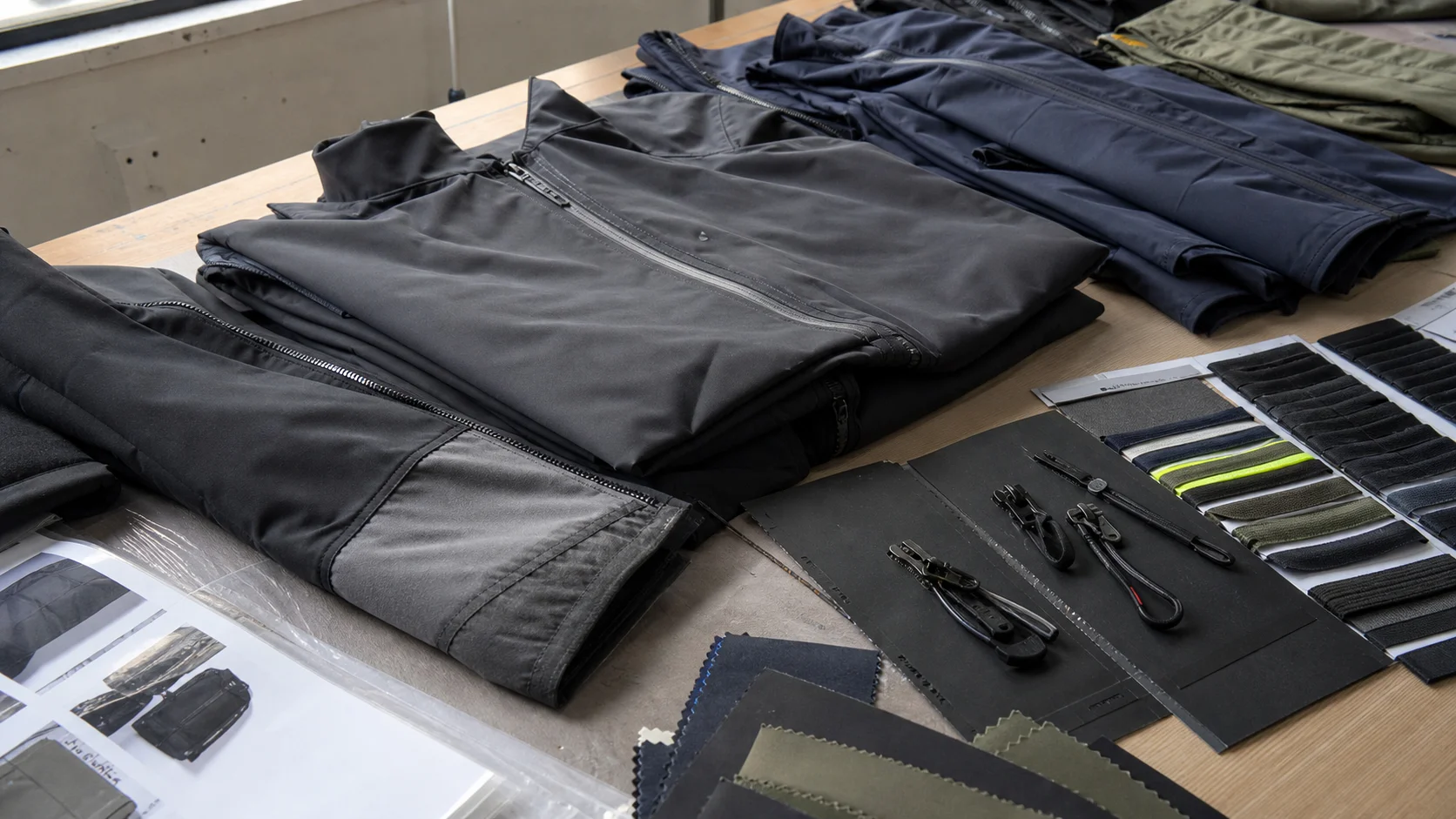
Bulk softshell jacket trim sourcing for transport hub buyers is not a minor purchasing detail. For airports, rail networks, ports, bus operators, logistics parks, and other high-movement facilities, trims affect garment life, wearer comfort, visibility, compliance, wash performance, and total replacement cost. A softshell jacket can be built from a strong bonded fabric, but weak zippers, poor reflective tape, unstable hook-and-loop, or mismatched drawcords can turn the garment into a complaint item within one season.
This sourcing review focuses on MOQ, cost, and sourcing decisions for buyers ordering in bulk. It is written for procurement teams, uniform managers, distributors, and B2B buyers who need practical control over trim specifications before placing a production order.
Transport hub uniforms are used in environments that punish weak garment components. Staff may move between indoor terminals, outdoor loading areas, cold platforms, vehicle bays, security zones, and maintenance corridors. A jacket may be worn by ground handlers, dispatch staff, port operators, shuttle drivers, parking teams, warehouse crews, traffic marshals, and customer-facing supervisors. Each role creates different trim demands.
The fabric gets most of the attention during sourcing, yet trims often create the first failure point. Zippers snag. Pullers break. Reflective tape peels after washing. Velcro loses grip. Elastic cuffs stretch. Snaps corrode. Drawcord ends crack. Labels become unreadable. In a transport hub, these failures are not just cosmetic. They can affect safety visibility, brand presentation, access-card handling, and staff morale.
Bulk sourcing also magnifies small mistakes. A $0.25 zipper upgrade looks minor on one jacket, but it becomes a meaningful line item on 5,000 units. A cheap zipper saving can look attractive during costing, but the cost advantage disappears if jackets need repair, replacement, or reissue. Transport hub buyers should treat trims as controlled components, not factory-selected accessories.
The practical rule is simple: specify every trim that affects function, safety, identity, or garment lifespan. Leave only low-risk decorative choices to factory discretion.
For buyers building a structured sourcing program, trim control should sit beside fabric testing, size set approval, and production inspection. If the order is linked to staff uniforms across multiple sites, the trim package should also be repeatable for reorders. Consistency matters when one transport network needs matching jackets across shifts, contractors, and regional hubs.
A bulk softshell jacket trim package usually includes zippers, pullers, reflective materials, pocket closures, cuffs, hem adjusters, labels, badges, hangtags, and packaging items. The right level of detail depends on order value, risk level, and wearer environment. Transport hub buyers usually need more precision than a general promotional apparel buyer.
The front zipper is the highest-use trim on most softshell jackets. For transport hub uniforms, specify zipper type, tape color, slider finish, puller style, teeth size, and whether the zipper is waterproof, water-resistant, or standard coil. Coil zippers are common for softshell jackets because they are flexible and cost-effective. Molded plastic zippers can feel more rugged but may be bulkier. Metal zippers are usually less common for active workwear softshells because they can add weight and may be less comfortable in cold conditions.
Typical specifications include No. 5 coil for lightweight to midweight jackets and No. 8 coil or molded plastic for heavier outerwear. A reverse coil zipper with a clean exterior appearance is common on softshell styles. Water-resistant zippers add cost and may reduce smoothness if low-grade materials are used. For transport hub roles exposed to rain, they can be worthwhile on chest pockets and main closures, but they should be tested for pull performance.
Pocket zippers should match the intended use. Security staff and operations supervisors may carry radios, ID cards, keys, gloves, small tools, or phones. A pocket zipper that looks neat in the sample room may fail if it is too small for gloved hands. Puller design matters. Rubberized pullers, cord pullers, or molded tabs are easier to handle in cold or wet conditions than very small metal tabs.
Buyers should specify puller length, logo requirements, color, and attachment method. Branded pullers improve identity but increase MOQ and tooling cost. Unbranded functional pullers are usually more economical and easier to replace during repeat orders.
Visibility is a major sourcing issue for transport hubs. Reflective tape may be required for workers near vehicles, aircraft service zones, docks, rail platforms, parking lanes, or night operations. Buyers should confirm whether the jacket needs to meet a recognized high-visibility standard or simply needs enhanced visibility as a corporate uniform feature.
Reflective trims can include segmented heat-transfer tape, sewn reflective tape, reflective piping, reflective zipper welts, or printed reflective logos. Sewn reflective tape can be durable but may reduce stretch and comfort. Heat-transfer reflective tape gives a cleaner look, but peeling risk increases if bonding, wash instructions, or fabric compatibility are poorly managed. Segmented reflective tape often improves flexibility on softshell fabric.
Hook-and-loop is often used on cuffs, storm flaps, patch panels, and radio loops. It is practical, but it can collect lint and lose grip. Low-grade hook-and-loop can make a jacket feel cheap quickly. For transport hub jackets, specify width, color, shape, stitch pattern, and required cycle performance if the trim will be used heavily.
Hook-and-loop cuff tabs should be tested after repeated opening and closing. If the jacket is for customer-facing teams, curled corners and fuzzy panels can make uniforms look worn before the fabric fails. For high-abrasion work areas, molded cuff tabs or snap systems may be a better choice, though they can add cost.
Cuffs may use elastic binding, hook-and-loop tabs, rib inserts, or simple hemmed sleeves. Hem adjusters usually include elastic cord, cord locks, eyelets, and end stoppers. These trims affect fit and weather protection. They also create inspection risks because cord locks and stoppers can detach if not secured correctly.
For transport hub buyers, elastic quality is important. Poor elastic recovery makes jackets look stretched and untidy. If the garment is expected to be washed frequently, elastic should be checked for shrinkage, twisting, and loss of stretch. Drawcords should be positioned safely and should not interfere with equipment, vehicle work, or machinery-adjacent duties.
Softshell jackets for transport hubs often need size labels, care labels, brand labels, department markings, security identifiers, name badge loops, radio mic loops, and access-card attachment points. These items should be included in the trim sheet. Care labels must match the actual fabric and trim limitations. A jacket with heat-transfer reflective tape, for example, may require more controlled washing instructions than a plain softshell.
Badges can be embroidered, woven, heat-transferred, rubberized, or removable. Embroidery is durable but can affect water resistance and add stitching bulk. Heat-transfer branding looks clean but needs wash testing. Removable badge systems are useful where roles or contractors change, but they require stronger hook-and-loop and consistent placement.
MOQ depends on fabric, trim customization, color, supplier structure, and whether the buyer orders through a manufacturer, trading company, or trim distributor. Buyers should treat the following ranges as common commercial reference points, not fixed rules. Actual MOQs vary by country, season, trim brand, and factory relationship.
Trim Item Typical MOQ Range Key Notes for Buyers Standard coil zippers 500 to 2,000 pieces per color/size Lower MOQ is possible for stocked colors and common lengths. Water-resistant zippers 1,000 to 3,000 pieces per color/length Color matching and coating quality can raise MOQ. Custom zipper pullers 1,000 to 5,000 pieces Mold fees or logo tooling may apply. Reflective tape 500 to 3,000 meters Certified tape usually has stricter sourcing and higher cost. Hook-and-loop tape 500 to 2,000 meters Stock widths and colors reduce MOQ pressure. Elastic cord and cord locks 1,000 to 5,000 pieces Custom colors or branded locks increase MOQ. Woven labels 1,000 to 5,000 pieces Small batch production is possible but unit cost rises. Heat-transfer logos 300 to 1,000 pieces per design MOQ depends on size, color count, and application method.For full softshell jacket production, garment MOQ may be around 300 to 1,000 pieces per style and color for many B2B programs. Custom trim packages usually push the practical MOQ higher. A buyer ordering 500 jackets with several custom zipper pullers, custom reflective placement, special labels, and unique packaging may face hidden trim surcharges even if the garment factory accepts the quantity.
A transport hub buyer with multiple departments can reduce MOQ pressure by standardizing trims across roles. For example, the same zipper, puller, cuff tab, label base, and packaging can be used across men’s, women’s, supervisor, and ground crew versions. Role differentiation can then come from color blocking, reflective layout, embroidery, or removable badges.
For a broader sourcing setup, buyers can review garment development and manufacturing support through Fabrikn services. A structured development process helps align garment MOQ, trim MOQ, sampling, and production timing before the order becomes difficult to adjust.
Trim cost is not only the price of each component. Buyers need to consider tooling, wastage, testing, application labor, compliance documentation, packaging, and replacement risk. The lowest trim quote may create the highest total cost if it causes production delays or quality claims.
Custom trims raise cost because they require dedicated production. Logo pullers, custom-molded tabs, color-matched zipper tape, branded snaps, rubber patches, and bespoke woven labels all add complexity. Customization makes sense when the garment is part of a long-term uniform program. It is less attractive for short-term contractors, trial orders, or temporary project uniforms.
Direct purchasing judgment: use standard trims for pilot orders and confirm wearer feedback first. Move to custom trims once the jacket spec is stable and reorder volume is likely.
Transport hub jackets often need to match corporate colors. Fabric, zipper tape, reflective backing, elastic binding, embroidery thread, and heat-transfer logos may all need coordinated shades. Exact matching increases lead time and may raise MOQ. A practical compromise is to use black, navy, charcoal, or tonal trims where possible, then reserve precise color matching for visible brand panels or logos.
Premium zippers, certified reflective tape, stronger hook-and-loop, durable cord locks, and high-quality heat transfers cost more. The upgrade is usually justified for jackets worn daily by operational staff. For occasional-use visitor jackets or short event assignments, a mid-grade trim package may be acceptable.
The wrong saving is easy to spot: a buyer specifies a high-performance softshell fabric, then pairs it with weak pocket zippers and poor cuff adjusters. That combination wastes fabric investment. Trim grade should match the expected garment life.
Some trims are cheap to buy but expensive to apply. Multiple reflective tape panels, complex zipper pockets, radio loops, badge patches, and adjustable cuffs increase sewing time. Heat-transfer trims may need controlled temperature, pressure, and dwell time. If the factory is not set up for consistent application, rejection risk rises.
Costing should separate component cost from application cost. A trim package that looks inexpensive on a bill of materials may still slow production if it requires too many operations.
Testing costs may apply for reflective performance, colorfastness, nickel release, wash durability, pull strength, and restricted substances. Buyers supplying transport hubs should be careful with claims. If a jacket is marketed as high-visibility, waterproof, flame-resistant, or compliant with a workplace standard, the trim package must support that claim.
In many cases, a buyer does not need the most expensive trim available. The buyer needs documented suitability for the intended use. That distinction keeps budgets under control.
Softshell jacket trim sourcing can be handled in several ways. The garment factory may source all trims. The buyer may nominate specific trim suppliers. A sourcing partner may coordinate factory, trims, testing, and production. Each route has tradeoffs.
Sourcing Route Advantages Risks Best Fit Factory-sourced trims Simple coordination and often faster costing Less control over brand, grade, and consistency Standard jackets and cost-sensitive orders Buyer-nominated trims Strong control over components and repeatability More logistics coordination and possible delays Long-term uniform programs Sourcing partner coordination Balanced control across garment and trim package Requires clear communication and decision ownership Multi-site B2B buyers and complex specificationsWhen reviewing suppliers, buyers should request trim cards, technical data, production lead times, available colors, MOQ details, testing history, and replacement availability. For key trims, ask whether the same item can be reordered six or twelve months later. A one-time low-cost zipper is not useful if the next production batch arrives with visibly different tape texture or slider finish.
Supplier review should also include packaging and labeling discipline. If trims arrive mixed by length, shade, or size, the garment factory may install wrong components. This is common when several jacket sizes use different zipper lengths. Bulk buyers should require clear item codes and packing lists for all critical trims.
For buyers comparing production routes, Fabrikn’s company background can help frame whether a sourcing partner’s model aligns with uniform development, supplier coordination, and B2B apparel production expectations.
Trim approval should happen before bulk purchasing. A clean-looking prototype is not enough. Transport hub buyers need a controlled sample process that checks function, appearance, application, and repeatability.
The trim sheet should list every visible and functional component. Include item description, supplier reference if available, material, color, size, placement, application method, and approval status. If the buyer accepts substitute trims, the allowed substitution rules should be written clearly.
Fabric and trim colors should be reviewed together under consistent lighting. Zipper tape, elastic binding, and reflective backing often look different from softshell fabric even when they share the same color name. Buyers should approve acceptable tolerance, not chase impossible perfection on every small component.
The prototype checks construction logic. It should confirm that trims are positioned correctly and that the jacket is functional for intended work roles. This is the stage to adjust pocket access, puller size, cuff comfort, badge placement, and reflective panel layout.
Do not over-read one prototype. Sample trims may come from available stock and may not represent final bulk components. The sample should still identify design issues before salesman sample or pre-production sample work begins.
Fit samples should be checked with typical work layers. Transport hub staff may wear shirts, fleeces, radios, harnesses, or high-visibility vests beneath or over jackets. Trim placement can affect comfort. Chest zippers may conflict with radios. Cuff tabs may catch on gloves. Hem cords may sit awkwardly under duty belts.
Wearer feedback is most useful when it is specific. “The jacket feels fine” is less helpful than “the pocket puller is too small with gloves” or “the badge patch sits too close to the radio loop.”
The pre-production sample should use bulk-intended trims, bulk fabric, final branding, final reflective placement, and final packaging. This is the sample to approve before cutting bulk fabric. If a key trim is substituted after PP approval, the buyer should request a revised approval sample or at least a documented trim submission.
At minimum, buyers should check zipper operation, puller strength, reflective adhesion, hook-and-loop grip, elastic recovery, and logo stability after washing. The wash method should match the care label. If jackets will be industrially laundered, the trim package must be reviewed for that environment. Domestic wash survival does not automatically mean industrial wash suitability.
Softshell jacket lead time depends on fabric availability, trim sourcing, sample rounds, approval speed, production capacity, testing, and shipping. Trim delays are a common reason bulk jackets miss delivery windows.
Typical development and production timelines can look like this:
Stage Typical Time Range Main Dependency Initial trim sourcing and costing 3 to 10 working days Spec clarity and supplier availability Prototype sample 7 to 20 working days Fabric, trims, and pattern readiness Custom trim development 10 to 30 working days Tooling, color matching, and approval rounds Pre-production sample 7 to 15 working days Bulk trim and fabric readiness Bulk trim production 10 to 35 working days MOQ, customization, and supplier workload Garment production 30 to 60 working days Order size, factory capacity, and complexityStock trims shorten lead time. Custom trims improve brand control but require more planning. A buyer needing jackets before a seasonal weather change should avoid unnecessary custom trim development unless the program already has approved components.
Lead time also depends on approval discipline. Many delays come from unclear comments, multiple decision-makers, or late changes to branding. If a transport hub buyer has safety, marketing, operations, and procurement stakeholders involved, approval authority should be defined before sampling starts.
For urgent requirements, the most reliable route is usually a standardized softshell design with stocked zippers, stocked reflective tape, standard labels, and limited logo customization. The tradeoff is less differentiation, but delivery risk is lower.
Inspection should not treat trims as small accessories. Many transport hub jacket defects are trim-related. A useful inspection plan checks incoming trims, inline production, final garments, and packed goods.
Before production, the factory should check trim quantity, color, size, length, and visible defects. Zippers should be tested for smooth opening and closing. Reflective tape should be checked for shade, width, and surface damage. Labels should be checked for spelling, size, care symbols, and country-specific requirements where applicable.
Wrong zipper lengths are a common risk across size ranges. If size S and size 3XL use different front zipper lengths, the factory must segregate trims carefully. Mixed zipper lengths can cause production stoppages or rework.
Inline inspection should focus on correct placement and secure attachment. Reflective tape should be aligned and properly bonded or stitched. Pocket zippers should not twist. Pullers should be attached consistently. Hook-and-loop panels should match left and right positions. Cord locks should function and be secured as specified.
For heat-applied trims, factories should control temperature, pressure, dwell time, and cooling. A reflective strip that passes visual inspection on day one may peel after washing if application conditions were wrong.
Final inspection should include functional testing, not just visual checks. Open and close zippers several times. Pull lightly on cord locks and zipper pullers. Check reflective tape edges. Confirm badges and labels are in the correct positions. Review shade consistency across trims and fabric panels. Inspect packed size ratios and barcode labels if the order ships to multiple transport sites.
Some trim issues only appear after washing. Reflective tape may crack. Heat-transfer logos may lift. Zipper coating may wrinkle. Elastic may lose recovery. Hook-and-loop may curl. Softshell fabric may remain acceptable while trims age faster. That mismatch is a procurement problem because staff judge the jacket as one product.
Buyers should request wash-tested samples for recurring uniform programs. The cost is justified when the order is large or when jackets will be reordered. If the order is small and time-sensitive, at least perform basic internal wash checks before full deployment.
The best trim sourcing decision is not always the premium option. It is the option that matches duty cycle, safety needs, budget, reorder plan, and delivery deadline. Transport hub buyers should sort jacket programs into risk levels before approving trims.
Program Type Recommended Trim Strategy Purchasing Judgment Daily operational staff Durable zippers, strong pullers, reliable reflective trims, tested labels Pay for performance because replacement cost is high. Customer-facing supervisors Clean zippers, neat branding, controlled color matching, discreet reflective details Balance appearance and function. Night or vehicle-adjacent teams Certified or high-grade reflective trims, secure closures, functional pullers Do not reduce cost on visibility components. Temporary contractors Standard trims, limited customization, simple labels Control cost and avoid overengineering. Multi-year uniform program Standardized approved trim package with reorder documentation Invest in consistency and supplier continuity.For large transport hubs, the strongest procurement approach is to create a controlled trim library. This library can include approved zipper types, approved reflective tape grades, standard puller styles, approved label formats, and preferred color references. Future jacket orders then move faster because buyers are not re-approving every small component from scratch.
A trim library also helps reduce cost. If several garments share the same zipper puller, woven label, cord lock, or reflective tape, the buyer can consolidate volume and improve MOQ efficiency. It also improves uniform consistency across departments.
Buyers should resist excessive customization at the first order stage. A pilot order should prove fit, trim function, wearer acceptance, and wash performance. Once the jacket is validated, customization can be added to strengthen identity and standardize future production. This staged approach reduces the risk of being locked into expensive trims that staff do not like.
When a project requires clarification on development, bulk sourcing, or order planning, buyers can use the Fabrikn contact page to start a sourcing discussion with the relevant specifications prepared.
A transport hub buyer should send a complete brief before requesting bulk softshell jacket pricing. Vague briefs produce vague quotes, and vague quotes usually hide trim substitutions. A stronger brief includes intended use, order quantity, size range, delivery date, branding needs, visibility requirements, and washing expectations.
For fabric, common softshell options include polyester-spandex bonded fabric, polyester mechanical stretch, fleece-backed softshell, and laminated softshell with water-resistant or wind-resistant performance. Trims must be compatible with the fabric. Heat-transfer logos may behave differently on fleece-backed or textured surfaces. Zipper tape color may shift visually against matte or brushed fabric. Reflective tape flexibility should match fabric stretch where movement is important.
Trim sourcing should also account for garment construction. Seam placement, pocket bags, storm flaps, chin guards, zipper garages, and inner plackets all affect how trims perform. A good zipper can still feel poor if the pattern creates tension at the hem or collar. A reflective tape can still peel if applied over a curved seam or high-stretch area without proper testing.
Cost reduction should be disciplined. Cutting trim quality blindly is a poor saving. Smarter cost control comes from standardization, simplification, and volume planning.
Black, navy, charcoal, and grey trims are usually easier to source than exact corporate colors. If a trim is not central to brand identity, use a standard color. This helps reduce MOQ, lead time, and shade variation risk.
Some size ranges require different zipper lengths, but unnecessary variation should be avoided. The more zipper lengths used, the higher the risk of mixing, shortages, and rework. Pattern development should consider trim efficiency without compromising fit.
Custom pullers look professional but can create tooling cost and MOQ pressure. For orders under roughly 1,000 pieces, standard pullers with branded embroidery or chest logo may be the better value. For multi-year programs, custom pullers become more reasonable.
More reflective tape is not always better if it restricts movement, increases cost, or creates wash risk. Place visibility trims where they support the work environment and safety objective. For formal high-visibility requirements, follow the relevant standard rather than guessing placement.
A softshell jacket does not need every trim to be branded. One strong chest logo, one sleeve mark, and a clean internal label may be enough. Over-branding can raise cost and make reorders harder if logo guidelines change.
Transport hub buyers should read trim quotes carefully. A low garment price may be built on unspecified trims. If the quote only says “good quality zipper” or “reflective tape included,” ask for details. These phrases are not specifications.
A serious supplier should be able to separate standard options from upgrades. They should also explain which trims are driving cost. If a quote is unclear, the buyer cannot compare it properly against another supplier. Price comparison only works when both quotes are based on equivalent trim packages.
Bulk softshell jacket trim sourcing for transport hub buyers is about controlling risk before it enters production. The strongest purchasing decisions start with a detailed trim sheet, realistic MOQ expectations, approved samples, and inspection points that match how the jackets will be worn.
Buyers should spend money where trims affect safety, daily function, and garment life. Reflective components, zippers, pullers, cuffs, and labels deserve attention. Decorative extras should be challenged unless they support brand value or long-term program consistency. A transport hub jacket needs to work across weather, movement, washing, and shift patterns. Trim sourcing is where much of that performance is either protected or lost.
The most practical approach is to standardize core trims, test the critical components, document approved items, and plan MOQ around future reorders. That keeps cost under control without turning the jacket into a disposable uniform item.
Get a free quote from Fabrikn — your trusted B2B clothing manufacturer with 10+ years of experience. MOQ as low as 200 pieces.
Get a Free Quote →Standard trims may start around 500 to 2,000 pieces or meters, depending on the item. Custom trims such as branded pullers, special reflective tape, or custom labels often require 1,000 to 5,000 pieces. Garment MOQ may be lower, but trim MOQ can still affect cost.
Main zippers, pocket zippers, reflective tape, pullers, cuffs, hem adjusters, labels, and badge systems are the most important. These trims affect daily function, safety visibility, garment appearance, and replacement risk.
Custom zipper pullers are useful for long-term uniform programs, especially when reorders are likely. For short runs or pilot orders, standard pullers usually offer better value and lower MOQ pressure.
Reflective tape is not always required, but it is often useful for staff working near vehicles, night operations, loading zones, rail platforms, or outdoor areas. If the jacket must meet a high-visibility standard, reflective type and placement should follow that standard.
Buyers can standardize trims across departments, use stock colors, avoid unnecessary custom components, simplify reflective layouts, and consolidate reorder volumes. Cost control works best when critical trims remain protected.
Buyers should approve a pre-production sample using bulk-intended fabric and trims. Zipper function, reflective placement, logo application, label accuracy, cuff performance, wash behavior, and packaging should be checked before production starts.
Custom colors, branded pullers, certified reflective tape, tooling, and approval rounds can delay trim readiness. If trims arrive late, garment production may stop even when fabric and patterns are ready.
A controlled trim library is usually the best strategy. Buyers should document approved zippers, reflective trims, labels, pullers, cuffs, and packaging so future orders are faster, more consistent, and easier to cost.