
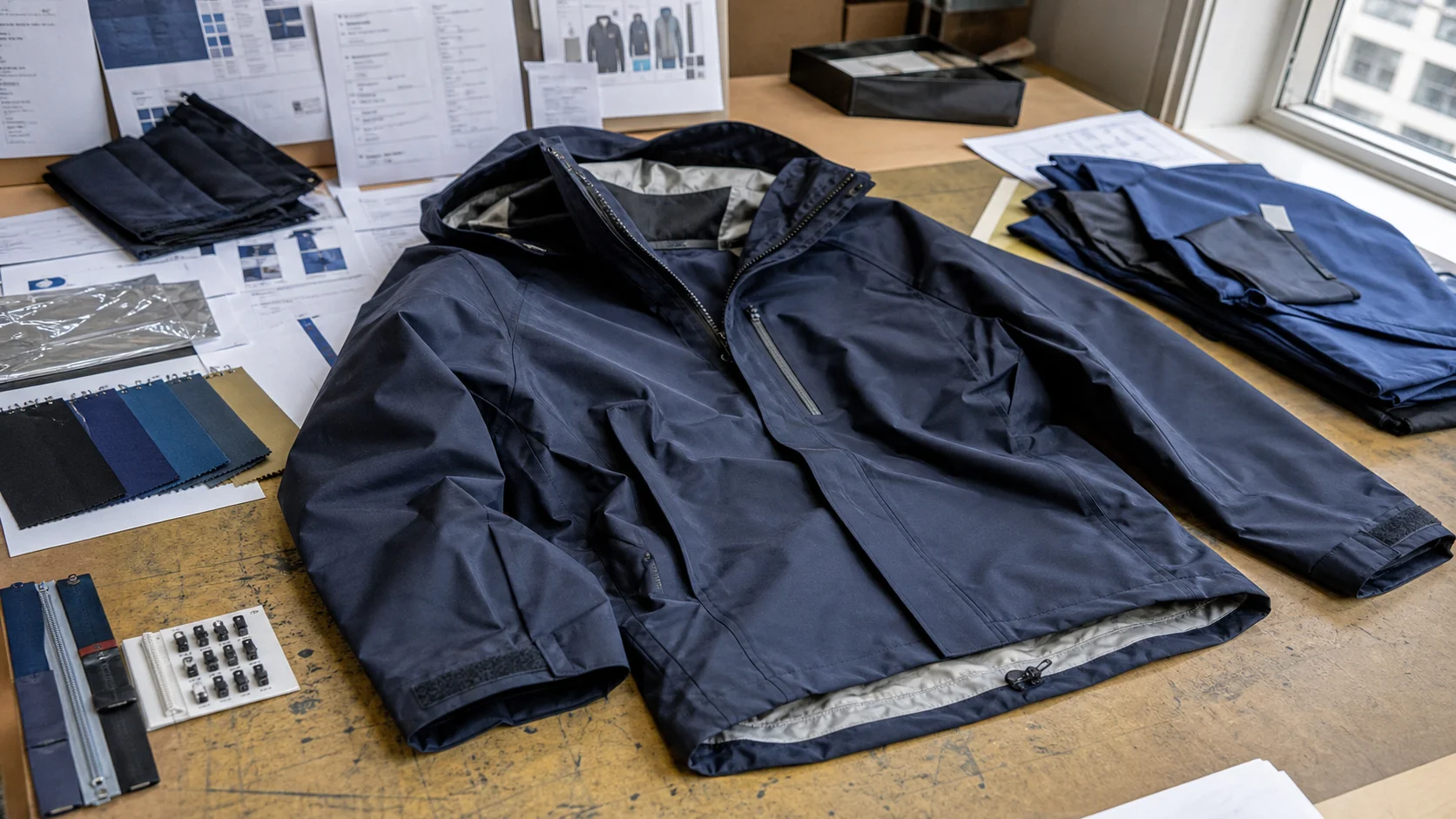
A 2500-word SEO outline for evaluating bulk storm jacket size grading for cleaning crews, with focus on fit distribution, mobility, layering, waterproof...
Storm Jacket Size Grading Review for Crew Buyers - Fabrikn production reference
Buying storm jackets in bulk for cleaning crews is not the same as ordering retail outerwear. A cleaning team bends, reaches, carries supplies, works near wet surfaces, and often wears layers under the jacket during early starts or overnight exterior work. If the size grading is too narrow, the jacket may look tidy on a hanger but restrict movement on the job. If the grading is too generous, sleeves snag, hems ride up under tool belts or aprons, and the brand presentation becomes inconsistent across the crew.
This storm jacket size grading review is written for purchasing managers, uniform coordinators, facility service companies, and distributors sourcing outerwear for cleaning crews. The focus is bulk buying: size scales, fit blocks, measurement tolerances, sample approval, minimum order quantities, lead times, trim choices, inspection risks, and the tradeoffs that matter when jackets are issued to real workers rather than sold one by one to consumers.
Storm jackets for cleaning crews sit in a difficult category. They need to protect workers from rain, wind, splashback, and cold air, but they cannot be so heavy or stiff that the wearer feels restricted. Cleaning crews often work in mixed environments: office buildings, hospitals, schools, parking areas, loading zones, public venues, kitchens, and exterior entrances. A jacket that works for a supervisor walking between sites may not work for a night crew member pushing carts, handling bins, or cleaning glass doors in wet weather.
Size grading is the process of increasing or decreasing measurements across the size range from a base size. In bulk manufacturing, this is usually managed through a graded measurement chart. For example, a medium may be approved as the base size, while small, large, extra large, and extended sizes are developed from that base. The quality of that grading determines whether the jacket fits consistently across the crew.
A common buying mistake is approving one attractive sample in size medium, then assuming every other size will follow correctly. That assumption is risky. Jackets can grade poorly in sleeve length, chest width, shoulder width, hem sweep, hood opening, armhole depth, and cuff circumference. A large may fit well, while a 2XL becomes too wide in the body without enough sleeve or bicep room. A small may shrink proportionally on paper but become too tight over a sweatshirt.
For cleaning crews, size grading affects safety, morale, productivity, and replacement cost. If workers avoid wearing the issued jacket because it pulls across the back or traps heat, the buyer has not solved the uniform problem. If the jacket is oversized to avoid complaints, the garment may create snagging risks and look poorly managed in client-facing environments.
Practical buying rule: approve the fit for movement, not only for standing posture. A cleaning crew jacket should be checked while reaching forward, lifting arms, bending, and wearing the intended base layer.
Cleaning crews place unusual stress on outerwear. The jacket is not used only for walking outdoors. It may be worn while unloading supplies, handling wet-floor signage, moving waste bags, cleaning entry mats, pressure washing exterior areas, or crossing between buildings during bad weather. The jacket may also be stored in lockers, folded into carts, or washed more often than ordinary staff outerwear.
Bulk storm jacket specifications should reflect this use pattern. A lightweight promotional shell may be acceptable for occasional rain protection, but it may fail quickly if the crew performs physical cleaning tasks in damp or abrasive conditions. A heavier waterproof jacket offers more protection, but it may reduce breathability and make workers uncomfortable during active shifts.
The best size grading review starts with a realistic job profile. Buyers should define whether the jacket will be used for indoor-to-outdoor transitions, exterior cleaning, parking lot support, overnight facility work, janitorial supervision, event cleaning, or all-weather operations. Each use case affects the fit and grading priorities.
Cleaning work also creates heat and moisture from the inside. A jacket may keep rain out but still feel wet if it traps perspiration. This is where sizing and fabric specification connect. A jacket graded with slightly more chest and back ease can improve comfort, but excessive volume may make the wearer look untidy. Breathable fabric, venting, mesh lining, or underarm eyelets can help, although each feature adds cost and production complexity.
In bulk storm jacket production, grading should be reviewed through a measurement chart before production starts. A typical chart includes body length, chest width, bottom width, shoulder width, sleeve length, armhole, bicep, cuff opening, neck width, hood height, hood width, and zipper length. For storm jackets, buyers should also review functional measurements such as pocket opening, storm flap width, drawcord length, and hem drop.
Most B2B orders use a base size for approval. For men’s or unisex jackets, medium or large is commonly used as the sample base. For women’s jackets, small or medium may be used depending on the target size range. The base size matters because every graded size depends on it. If the approved base sample is already too slim, the full size range will likely create complaints from workers who layer underneath.
Typical grading increments vary by supplier, pattern, and target market. For adult outerwear, chest width may increase around 2 inches in circumference per size, sometimes more for extended sizes. Body length may increase by about 0.5 to 1 inch between regular sizes. Sleeve length may increase by about 0.25 to 0.75 inch per size. These are broad commercial norms, not fixed rules. The right grading depends on the jacket block, fabric bulk, lining, and crew needs.
Measurement Area Typical Grading Concern Buyer’s Review Point Chest Too slim over uniforms or sweatshirts Check with intended underlayer, not only over a T-shirt Shoulder Pulling during forward reach Test cleaning movements and arm extension Sleeve length Too long on larger sizes or too short when reaching Review sleeve while arms are extended Hem sweep Too tight over hips or too loose at waist Confirm fit over work pants and belts Hood Poor coverage or blocked side vision Check with and without cap or beanie Armhole and bicep Restricted movement in active work Review with sleeve layering and lifting motionSize grading should not be treated as a purely mathematical exercise. A jacket pattern has balance points. Increasing width without adjusting armhole, shoulder slope, or sleeve cap can cause poor movement. Extending body length without adjusting zipper length and pocket position can make the larger sizes look stretched. A good grading review checks proportions and function together.
For cleaning crew storm jackets, certain measurements deserve stricter review than others. Chest width is important, but it is not enough. A jacket can have enough chest measurement and still fail because the armhole is tight or the sleeve pitch is wrong. Crew buyers should request a full measurement specification and use it during sample fitting and bulk inspection.
The chest measurement controls basic comfort, especially over polos, fleece layers, or work shirts. For active cleaning crews, the back width and cross-back movement are just as important. If the wearer reaches forward to wipe glass, carry supplies, or push equipment, the jacket should not pull sharply across the shoulder blades.
A relaxed fit may be more practical than a retail slim fit. That does not mean shapeless. It means enough ease for movement and layering. For most cleaning crew programs, the safest approach is a regular-to-relaxed workwear fit, especially if the same jacket is issued across many body types.
Storm jackets should cover the waist during bending and reaching. A back drop, where the rear hem is slightly longer than the front, can be useful for wet weather and movement. The drop should not be so long that it interferes with bending, sitting, or climbing stairs.
For cleaning crews, jacket length should be reviewed with the worker’s normal pants and any belt, apron, or utility pouch. If the front hem is too long, it may bunch when the wearer bends or pushes a cart. If too short, rain can enter at the waist and the jacket may ride up during movement.
Sleeves create many bulk order complaints. A standing sleeve measurement may look fine, but sleeves can pull back when workers extend their arms. Adjustable cuffs help manage sleeve length variation across wearers. Hook-and-loop tabs are common, though they can catch lint and may wear over repeated laundering. Elastic cuffs are simpler and lower cost, but they may feel tight over gloves or layered sleeves.
Cleaning crews may wear nitrile gloves, work gloves, or cold-weather gloves depending on the site. The cuff design should match that reality. A sleeve that cannot sit properly over or near gloves will create water entry and discomfort.
Storm jackets often fail at the hood. A hood that is too shallow exposes the face and neck. A hood that is too large blocks side vision and feels unsafe in parking lots, loading areas, or exterior walkways. If workers wear caps, beanies, or hair coverings, the hood should be tested with those items.
Drawcords, toggles, and hood adjusters add function but introduce safety and durability considerations. For certain facility environments, exposed cords may be discouraged. Buyers should decide early whether the hood needs a drawcord, elastic binding, detachable snaps, or a fixed three-piece construction.
Pocket placement is a fit issue as much as a storage issue. On larger sizes, pockets can drift too low if the grading is not managed carefully. On smaller sizes, pockets may sit too close to the hem. Cleaning crew jackets often need secure pockets for keys, badges, phones, or small tools. Zippered pockets cost more than open welt pockets, but they reduce loss during movement.
Buyers should test pocket access while wearing gloves and while the jacket is zipped. If a pocket is difficult to use during a shift, workers may stop using it or leave the jacket open, reducing weather protection.
The fit strategy should be decided before sampling. Many bulk jacket problems happen because the buyer asks for a clean modern look while also expecting the jacket to fit over hoodies and fleece layers. Both goals can be achieved only with careful pattern work and realistic tradeoffs.
A regular fit works well for client-facing cleaning teams, supervisors, and crews using the jacket mainly for commuting between buildings. A relaxed fit is better for active exterior tasks and broader size coverage. A layer-ready fit is suitable for cold or wet climates where the jacket is worn over fleece, sweatshirt, or thermal uniform pieces.
Fit Type Best For Tradeoff Regular fit Client-facing crews, facility supervisors, mild weather May feel tight over heavy layers Relaxed fit General cleaning crews, mixed body types, active work Less tailored appearance Layer-ready fit Cold climates, exterior cleaning, long outdoor exposure Bulkier look and higher fabric consumptionFor most bulk storm jacket programs for cleaning crews, relaxed fit is the practical middle ground. It reduces exchange rates, supports movement, and accommodates moderate layering. The buyer should still control sleeve length, hem width, and shoulder balance so the garment does not look oversized.
If the order is for a premium facility service brand, the best route may be a two-jacket system: a lighter shell for general use and a warmer layer for cold weather. This costs more upfront but can extend wearability across seasons and reduce the need to force one jacket to solve every condition.
Unisex storm jackets are common in bulk uniform orders because they simplify inventory. They also create fit compromises. A unisex pattern is usually based closer to a men’s block, which can make smaller sizes too broad in the shoulder and larger sizes too straight through the hip for some wearers. For crews with mixed body types, this can lead to uneven fit satisfaction.
The decision between unisex and gender-specific grading should be based on crew size, budget, inventory control, and presentation standards. A small facility team may prefer unisex sizing to keep stock simple. A large regional cleaning company may benefit from separate men’s and women’s fits if reorder volumes justify the added complexity.
Gender-specific jackets can improve fit, especially around shoulder width, bust, waist shaping, hip sweep, and sleeve length. The downside is higher SKU complexity. Buyers must forecast more sizes, manage separate samples, and inspect two patterns. If the supplier’s women’s block is poorly developed, the benefit may not justify the extra work.
Extended sizing also deserves planning. Many uniform programs under-order 2XL, 3XL, and 4XL sizes, then face urgent reorders. Larger sizes may carry higher unit costs because they use more fabric and may require adjusted patterns. Buyers should ask whether extended sizes follow the same grading rule or use a separate pattern adjustment. Simply scaling up a medium can create poor fit in the armhole, sleeve, and body length.
Minimum order quantity is one of the first commercial limits in bulk storm jacket sourcing. Typical MOQs vary widely by factory, fabric availability, decoration method, and whether the jacket is stock, semi-custom, or fully custom. For stock blanks with logo decoration, the MOQ may start around 24 to 100 pieces. For semi-custom jackets using available fabric and standard blocks, a practical MOQ may sit around 100 to 300 pieces. Fully custom storm jackets with custom fabric, trims, colors, and labels often begin around 300 to 1,000 pieces or more.
These ranges are only general buying references. A supplier using ready fabric and standard trims can often support lower quantities. A waterproof jacket requiring custom color fabric, seam taping, branded zipper pulls, and private labels usually requires higher volume. If the buyer needs many sizes across a small total order, MOQ pressure becomes more serious because each size receives too few units.
Size breakdown planning should be based on actual workforce data where possible. If no data is available, buyers often use a bell curve centered around medium, large, and extra large. Cleaning crews can have broad size diversity, so ordering only standard retail proportions may create shortages. Extended sizes should not be treated as an afterthought.
Total Order Typical Buying Situation Size Planning Risk 24-100 pieces Stock jacket with logo Limited size flexibility and fewer custom options 100-300 pieces Semi-custom program Need careful size split to avoid leftovers 300-1,000 pieces Custom production More control, but sample approval becomes critical 1,000+ pieces Program-level uniform rollout Inventory, reorders, and grading consistency matter mostA cautious buyer should order a small buffer in high-demand sizes if storage and budget allow. For cleaning crew jackets, large and extra large often move quickly, but the right mix depends on the workforce. Reorder strategy should also be discussed before committing. If the supplier cannot repeat the same fabric shade, trim, or size grading later, the uniform program may become inconsistent.
For companies developing a full uniform program, it may help to review production services and customization options before fixing quantities. The Fabrikn services page is a useful starting point for understanding how private label apparel production can be structured.
Storm jacket size grading cannot be separated from fabric and trim choices. A soft polyester shell with light coating behaves differently from a stiff waterproof laminate. A padded jacket needs more ease than an unlined shell. A mesh lining may slide over uniforms easily, while a brushed lining may grip layers and feel tighter.
For cleaning crews, common storm jacket fabric options include polyester pongee, polyester oxford, nylon taslon, polyester ripstop, and laminated softshell. Waterproof or water-resistant performance depends on coating, membrane, seam construction, and finishing. Buyers should be cautious with vague terms. “Waterproof” should be supported by a water column rating, seam sealing details, or test method when performance matters.
Typical specifications may include water resistance around 3,000 mm to 10,000 mm for many commercial jackets, with higher ratings available at higher cost. Breathability may be stated in grams, such as 3,000 g/m²/24h or 5,000 g/m²/24h, though test methods vary. For heavy-duty rain exposure, seam taping is often more important than fabric rating alone. A jacket made from waterproof fabric but sewn with unsealed seams can leak at shoulder, hood, and armhole seams.
Trim selection affects fit consistency. Heavy zippers can cause front body sagging on lightweight fabric. Thick seam tape can make seams stiff, especially around the hood and shoulders. Elastic drawcords at the hem can improve weather protection but may bunch the body if the hem sweep is too large. Every trim has a function and a consequence.
Logo decoration also affects garment performance. Embroidery can puncture waterproof fabric unless properly backed or placed away from high-exposure areas. Heat transfer logos can work well on many jackets, but compatibility with coatings must be tested. Screen printing may be economical for large orders, yet adhesion can vary by fabric finish. Buyers should request decoration tests before bulk production if weather resistance and brand appearance are both important.
Sample approval is where size grading problems should be caught. The process does not need to be complicated, but it must be disciplined. A buyer should not approve bulk production from a photo alone unless the order is a repeat of a proven product. For new storm jacket development, physical samples are strongly recommended.
The specification sheet should include fabric, lining, trims, color, size range, measurement chart, decoration details, packaging, labels, and compliance requirements. Buyers should check that the size chart uses garment measurements, not only body measurements. Garment measurements are needed for production control.
The base sample should be fitted on a person close to the target base size. For cleaning crews, the wearer should test reaching, bending, lifting, and arm movement. The sample should be tested over the intended underlayer. If the jacket will be worn over a polo and fleece, do not approve it over a thin T-shirt.
For custom production, size set samples are valuable. A size set may include small, medium, large, extra large, and one extended size. In lower MOQ programs, suppliers may charge sample fees for multiple sizes. That cost is often justified if the rollout is large or the workforce has broad sizing needs.
Logo placement should be reviewed by size. A left chest logo may look correct on medium but sit too high, low, or close to the zipper on other sizes. Back logos can distort if placed across seam lines or ventilation panels. Reflective trims and name patches should also be checked for size scaling.
The pre-production sample should use bulk fabric, bulk trims, final labels, approved color, and final decoration method. This is the last meaningful checkpoint before cutting. If the pre-production sample is approved with open comments, the buyer should document exactly what must change in bulk production.
Measurement tolerance should be agreed in writing. For jackets, common tolerances may be around plus or minus 0.5 inch for many width measurements and around plus or minus 0.75 inch for some length measurements, depending on the spec and construction. Tight tolerances are harder to achieve with padded, taped, or complex outerwear. Loose tolerances create fit inconsistency. The best tolerance is realistic and enforceable.
Buyers with a new program or uncertain specification can use Fabrikn’s contact page to discuss production requirements before finalizing the order brief.
Lead time for bulk storm jackets depends on order type, fabric availability, decoration, sample rounds, factory capacity, inspection schedule, and shipping method. Stock jacket decoration can sometimes move in a few weeks if inventory is available. Semi-custom jackets may take roughly 6 to 10 weeks after approvals. Fully custom storm jackets often require 8 to 14 weeks or longer, especially if fabric is dyed, laminated, printed, or tested.
The sample stage can add meaningful time. A first fit sample may take 1 to 3 weeks depending on complexity and supplier workload. Revisions may add another 1 to 2 weeks per round. Size set samples and pre-production samples extend the timeline but reduce bulk risk. Buyers who skip these steps to save time may pay later through exchanges, rework, or rejected goods.
Fabric lead time is often the hidden driver. If a supplier has black polyester oxford in stock, production can move quickly. If the buyer needs a custom navy shade with waterproof coating and matching seam tape, sourcing time increases. Reflective trims, waterproof zippers, branded labels, and custom packaging can also affect schedule.
Timeline Factor Potential Impact Buyer Control Point Fabric availability Can shorten or delay production by weeks Confirm stock fabric or reserve bulk material early Sample revisions Adds time but reduces fit risk Give clear comments with measurement references Decoration testing May delay approval Test logo method on actual shell fabric Seam taping Increases production complexity Confirm which seams are taped and inspect adhesion Inspection booking Can affect shipment date Schedule inspection before final packing deadline Shipping method Air is faster but costly; sea is slower but economical Plan launch date backward from required deliveryFor seasonal uniform rollouts, buyers should not treat production lead time as the only schedule. Internal sizing collection, sample wear testing, purchase approval, deposit payment, artwork approval, inspection, shipping, customs, and distribution to sites all take time. A practical sourcing calendar includes each stage rather than relying on the factory production window alone.
Inspection for storm jackets should cover measurements, workmanship, fabric defects, seam sealing, zipper function, color consistency, labeling, packing, and decoration quality. Cleaning crew jackets are work garments, so cosmetic perfection must be balanced with durability and function. That said, visible defects can damage a facility service brand, especially when crews work in client-facing locations.
Measurement inspection should include multiple sizes, not only the base size. The inspector should compare finished garments against the approved size chart and tolerance. Larger sizes and smaller sizes deserve special attention because grading errors often show at the ends of the range.
Common inspection risks include twisted sleeves, uneven hems, puckered seam tape, poor zipper alignment, loose threads, skipped stitches, shade variation, inconsistent logo placement, and incorrect size labels. Waterproof jackets add more risks: leaking seams, poor tape adhesion, needle holes near decoration, and delamination if fabric quality is weak.
AQL inspection can be used for bulk orders, but the buyer should define critical points clearly. For a storm jacket, a broken zipper, wrong size label, missing waterproof seam tape, or major measurement failure may be more serious than a minor thread end. If jackets are packed by site or employee group, carton markings and size ratio checks become important.
Cleaning companies should also consider wash and wear risk. Some waterproof coatings weaken with harsh laundering, high heat, or chemicals. If jackets will be cleaned commercially, care label instructions should match real maintenance practices. A jacket that requires delicate handling may not be suitable for a high-turnover cleaning operation.
The right storm jacket is rarely the cheapest jacket that meets a color and logo requirement. Crew buyers should judge the full program cost: fit success, replacement rate, worker acceptance, weather performance, reorder consistency, and brand presentation. A low unit price can become expensive if sleeves are wrong, zippers fail, or half the team needs exchanges.
For most cleaning crew buyers, the strongest value comes from a midweight storm jacket with practical water resistance, reliable zipper quality, adjustable cuffs, usable pockets, and a relaxed workwear fit. Fully taped waterproof construction is worth considering for crews with frequent rain exposure. For mainly indoor teams, partial weather protection may be enough and can reduce cost and heat buildup.
Buyers should be careful with overly technical specifications if the use case does not require them. High waterproof ratings, waterproof zippers, custom laminates, and complex venting can improve performance, but each feature adds cost, lead time, and inspection burden. A simpler jacket made well may outperform a complex jacket made poorly.
Color choice also has practical implications. Black, navy, charcoal, and dark green hide dirt better than bright shades and are easier to coordinate with uniforms. Bright colors improve visibility but show stains and may require stronger shade control. If high visibility is legally or contractually required, buyers should source certified garments rather than relying on reflective piping alone.
Logo placement should support both branding and garment performance. Left chest embroidery is traditional, but it may compromise water resistance if placed on waterproof fabric without proper handling. Heat transfers can look clean, but adhesion should be tested. Large back logos increase visibility but may crack or peel if the method is not compatible with the shell.
For buyers comparing supplier capability, it is worth reviewing company background, production model, and communication process. The Fabrikn about page can help buyers understand the manufacturer’s broader apparel sourcing position before starting a storm jacket program.
A clear specification reduces confusion between buyer and supplier. The checklist below can be used as a starting point when preparing a request for quotation or sample brief.
Specification Area Recommended Detail Product type Storm jacket for cleaning crew uniforms Fit Regular-relaxed or layer-ready workwear fit Size range XS-4XL or based on workforce data Shell fabric Polyester or nylon with water-resistant or waterproof finish Lining Mesh, taffeta, fleece, or light padding depending on climate Seam construction Critical seam taping if rain exposure is frequent Closure Front zipper with storm flap Cuffs Adjustable tabs or partial elastic for movement and weather control Hood Fixed or detachable, tested for visibility and coverage Pockets Zippered hand pockets and optional internal pocket Branding Embroidery, heat transfer, or print tested on shell fabric Inspection Measurements across sizes, zipper function, seam tape, logo placementThis checklist should be adjusted by climate, budget, and worker task. A crew cleaning indoor offices in mild weather does not need the same jacket as a crew handling exterior sanitation in heavy rain. The buyer’s job is to match the specification to the actual work, then protect that specification through sampling and inspection.
A structured buying process keeps the program from drifting. Storm jacket orders can involve many decisions, and undocumented decisions lead to problems during production. The buyer should keep one master file with the approved size chart, fabric standard, trim details, artwork, label placement, sample comments, and inspection criteria.
The most practical purchasing judgment is to spend time before cutting fabric. Once bulk fabric is cut, grading corrections become expensive or impossible. Sample review may feel slow, but it is cheaper than issuing jackets that workers avoid wearing.
A bulk storm jacket size grading review for cleaning crews should focus on movement, layering, size consistency, and inspection discipline. The jacket must serve workers who bend, reach, carry, and move through wet conditions. A good-looking sample is not enough. The size range must work across real crew bodies, and the approved measurements must survive bulk production.
For most crew buyers, the best specification is practical rather than overbuilt: a durable water-resistant or waterproof shell, reliable zipper, adjustable cuffs, useful hood, secure pockets, and relaxed workwear fit. If rain exposure is heavy, upgrade seam sealing and test waterproof performance. If brand presentation is critical, control logo placement and size grading with more samples.
The strongest buying decision is not simply choosing a jacket. It is building a repeatable storm jacket program with the right MOQ, size mix, sampling process, fabric standard, and inspection plan. That is what reduces complaints, improves crew adoption, and keeps uniform costs under control over multiple seasons.
Get a free quote from Fabrikn — your trusted B2B clothing manufacturer with 10+ years of experience. MOQ as low as 200 pieces.
Get a Free Quote →Size grading is the process of scaling jacket measurements up or down from a base size. It controls chest width, sleeve length, body length, shoulder width, hood size, hem sweep, and other measurements across the full size range.
A regular-relaxed workwear fit is usually the safest choice. It gives enough room for movement and moderate layering without making the jacket look excessively oversized.
Stock jackets with logo decoration may start around 24 to 100 pieces. Semi-custom jackets often require about 100 to 300 pieces. Fully custom storm jackets commonly start around 300 to 1,000 pieces or more, depending on fabric, trims, and supplier capacity.
Unisex jackets simplify inventory and can work well for small or mixed teams. The tradeoff is fit compromise, especially in shoulder, sleeve, and hip areas. Larger programs may benefit from separate men’s and women’s fits if order volume supports the extra SKUs.
Chest, back width, shoulder, sleeve length, armhole, bicep, body length, hem sweep, cuff opening, and hood dimensions are all important. For cleaning crews, movement-related measurements are especially critical.
The sample should be worn over the intended work layers. The wearer should reach forward, lift arms, bend, zip and unzip the jacket, use the pockets, adjust the hood, and test sleeve comfort with gloves if gloves are part of the job.
No. Waterproof jackets offer better rain protection but can cost more, feel less breathable, and require better seam construction. Water-resistant jackets may be enough for crews with light exposure or short outdoor transitions.
Embroidery can puncture waterproof fabric and may create leak points if placed in exposed areas. Buyers should test decoration methods on the actual shell fabric and consider heat transfer or controlled placement when weather protection matters.
Stock decorated jackets can sometimes be completed in a few weeks if inventory is available. Semi-custom production may take roughly 6 to 10 weeks after approval. Fully custom jackets often need 8 to 14 weeks or more, depending on samples, fabric, trims, and shipping.
The main risks are measurement variance, poor zipper function, seam tape failure, inconsistent logo placement, shade variation, wrong size labels, uneven stitching, and incorrect packing by size or site.