
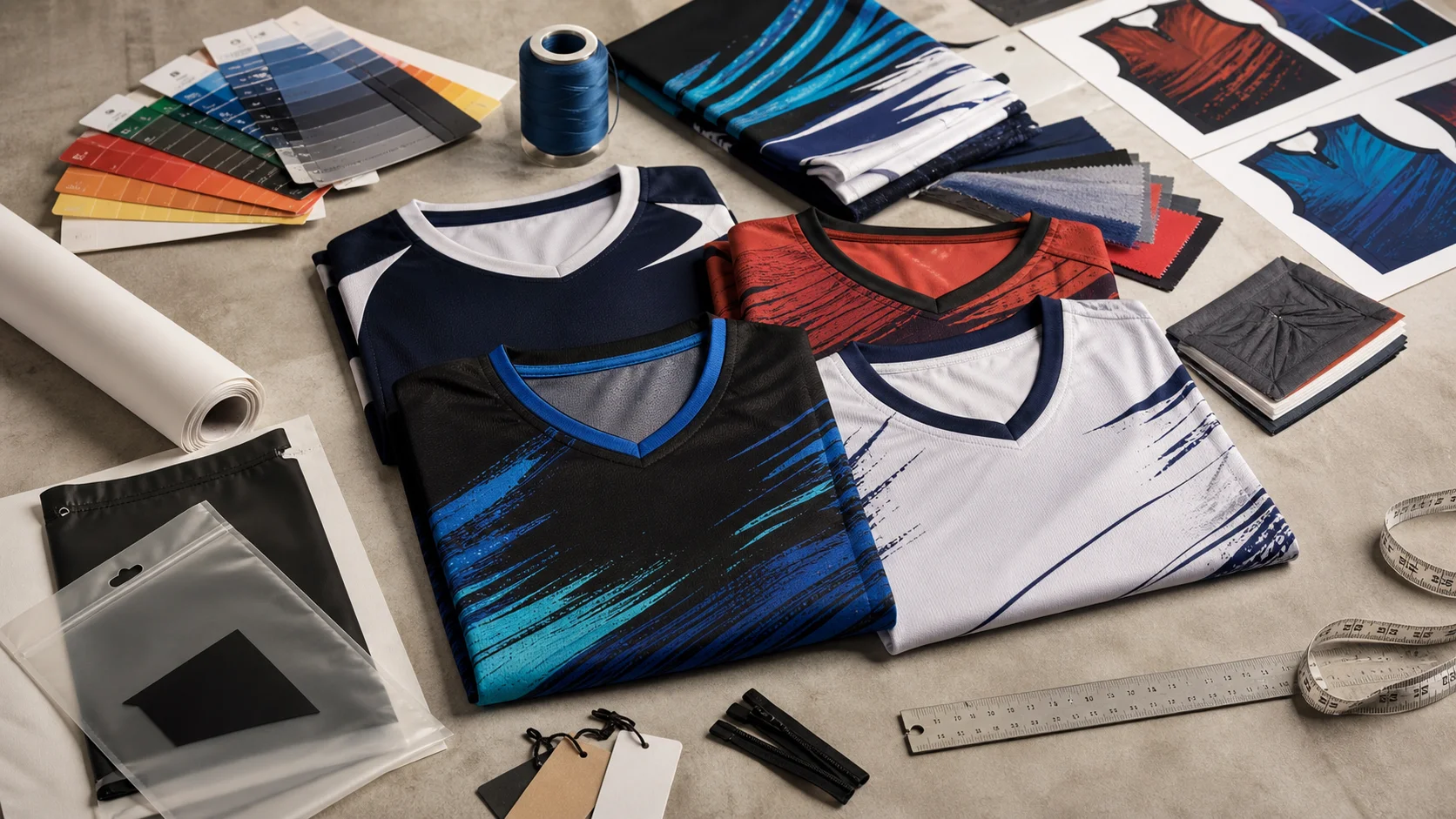
A detailed outline for sourcing bulk sublimation chef coats as culinary merchandise, with product-specific guidance on fabric performance, print zones, trim decisions, compliance, and sustainability considerations.
Bulk Sublimation Chef Coats for Sourcing Teams - Fabrikn production reference
Bulk sublimation for chef coats has moved beyond simple logo placement. For sourcing teams handling culinary merchandise, hospitality uniforms, restaurant group rollouts, cooking school programs, and branded retail capsule lines, sublimation offers a practical route to high-visibility graphics without the hand feel of heavy surface prints.
The appeal is easy to understand. Sublimation can deliver all-over patterns, sharp brand colors, name panels, and themed visual concepts that fit foodservice branding. A conventional embroidered logo still has a place, especially for premium executive chef jackets, but embroidery alone does not solve full-panel artwork, seasonal campaigns, or visually coordinated culinary merchandise collections.
That said, chef coats are not standard fashion tees. They sit in a demanding product category where heat, repeated washing, stain exposure, and professional appearance all matter. A sourcing team choosing bulk sublimation for chef coats needs to evaluate not just graphic quality, but garment engineering, fabric behavior, trim durability, and whether the item is truly suitable for back-of-house use.
Purchasing judgment matters here. If the goal is a promotional culinary uniform for events, pop-ups, retail gifting, or branded kitchen activations, sublimation can be highly effective. If the goal is a heavy-duty daily uniform for a high-heat commercial kitchen, the sourcing decision becomes more nuanced. In many cases, the best result is a hybrid product strategy: sublimated zones for branding and lighter-use applications, paired with more traditional chefwear construction for core operational uniforms.
Culinary merchandise sits between uniform sourcing and branded apparel development. That creates a wider specification burden than many buyers expect. The product has to communicate a brand story, but it also has to survive industrial or frequent domestic laundering and maintain a clean, structured look during service.
For sourcing teams, the most common commercial requirements include:
A buyer should also separate use cases early. A restaurant merchandise line sold to consumers may accept a lighter fabric and fashion-forward silhouette. A working chef coat for line cooks, culinary schools, or catering crews usually needs stronger seam construction, easier care, and better resistance to puckering and shrinkage.
This is where supplier capability matters more than catalog variety. A sourcing partner that can guide fabric selection, trim choice, artwork setup, and approval sequencing will usually reduce risk more effectively than a vendor offering the cheapest opening quote. Teams comparing development options can review service scope on /services/ and assess whether support extends beyond simple order taking.
Sublimation is a heat-transfer printing process where dye turns into gas and bonds into polyester fibers. The result is a print that becomes part of the fabric rather than sitting on top of it. That is why sublimated graphics generally feel smoother and hold visual sharpness well when the correct fabric base is used.
For chef coats, this creates both an advantage and a limitation.
The advantage is design freedom. Sublimation can produce:
The limitation is fiber content. Sublimation performs best on polyester or high-polyester blends, and color vibrancy is strongest on white or very light base fabrics. Traditional chef coats are often made in cotton-rich or cotton/poly twills because buyers value breathability, familiar hand feel, and classic structure. A sourcing team pushing full sublimation onto the wrong fabric platform will run into weak color payoff, wash inconsistency, or a garment that feels less suitable for culinary work.
That leads to a straightforward sourcing conclusion: sublimation works best for chef coats when the product is designed around the print method from the beginning. Trying to retrofit a conventional heavyweight chef jacket into a fully sublimated product often creates avoidable compromises.
In practical sourcing terms, there are usually three workable approaches:
The third option is often the most commercially sensible for hospitality groups. It keeps branding impact high while limiting some of the comfort and appearance concerns associated with all-polyester chefwear.
Fabric specification is where sourcing teams either control risk or inherit it. A chef coat that looks good in artwork form can still fail in production if the fabric is too sheer, too rigid, too hot for the kitchen, or too unstable under transfer heat.
Common bulk options for sublimated chef coats include:
Each has tradeoffs. Knits can improve comfort and movement, but they may not deliver the crisp chef-coat silhouette some brands want. Wovens usually look more professional in a kitchen setting, but they require tighter control over seam distortion, shrinkage behavior, and panel matching after print and cut.
Trim and component decisions deserve equal attention. Buyers should specify and confirm:
A common sourcing mistake is approving attractive mockups without deciding whether the coat should function like a true kitchen uniform or a branded merchandise piece. If the garment is intended for real service use, look closely at collar stand firmness, cuff shape retention, underarm mobility, and stain visibility on printed grounds. Busy artwork can disguise spills, but it can also make the coat look less premium if placement is not controlled.
Practical buying rule: if the chef coat must perform through repeated washing and active kitchen wear, prioritize fabric stability and seam quality before visual complexity.
MOQ is one of the first issues sourcing teams raise, especially when testing culinary merchandise concepts across different business units. For bulk sublimation chef coats, MOQs vary widely depending on fabric sourcing, print setup, number of SKUs, size breakdown, and whether the garment uses stock blocks or custom patterns.
Typical MOQ ranges in the market often look like this:
Order Type Typical MOQ Range Comments Stock pattern with simple customization 100 to 200 pieces Often easier for pilot programs Custom sublimated chef coat style 200 to 500 pieces Common for balanced costing and development effort Multi-style or multi-color chain rollout 500+ pieces Usually needed for stronger price breaksLower MOQs are possible in some cases, but unit cost usually climbs fast, and the supplier may simplify construction or reduce customization flexibility to make the project workable.
Sampling should never be treated as a single-step formality. For chef coats, a more reliable approval sequence usually includes:
That process can feel slow, but skipping steps often causes expensive rework. Print placement drifting into plackets, pocket misalignment, collar mismatch, and unexpected hand feel are all issues that are easier to catch before bulk cutting.
Lead times depend on several factors:
As a cautious working range, buyers often see around 2 to 4 weeks for development and sample approvals, then 4 to 8 weeks for bulk production after final approval. More complex programs can run longer. A launch-critical project should not assume the shortest quoted timeline will hold if artwork changes are still open.
Sublimated chef coats present a distinct inspection profile. The visual nature of the product means many defects are obvious, but that does not make them easier to solve once goods are packed.
Key risks include:
Inspection planning should reflect the garment’s construction. For a chef coat, random visual checks are not enough. Buyers or third-party inspectors should review:
A simple but important point: chef coats are viewed at close range. Front placket skew, print mismatch around buttons, or uneven topstitching can damage perceived quality faster than on casual merchandise. If the product will be worn by kitchen staff in open-view hospitality settings, appearance standards should be closer to uniform-grade than promo-grade.
Within Sustainable Fashion, sublimated chef coats require a balanced discussion rather than broad claims. Sublimation can reduce some of the issues associated with heavy surface printing, and it can support made-to-order or controlled-batch production that limits excess inventory. Yet the process typically relies on polyester-based materials, which raises clear fiber-source and end-of-life questions.
For sourcing teams trying to improve sustainability performance, the useful questions are practical:
Recycled polyester can be a sensible option for sublimated chef coats, especially in merchandise programs where brand storytelling matters. The tradeoff is that not every recycled fabric performs equally in print clarity, opacity, or long-term appearance. Buyers should ask for actual bulk-relevant sample testing instead of relying on generic sustainability positioning.
Durability also matters for sustainability. A chef coat that lasts longer and holds color through wash cycles may have a better practical outcome than a lower-cost product that needs rapid replacement. The purchasing decision should consider service life, not just material category.
Teams that want more structured development input or sourcing guidance can usually start that conversation through /about-us/ and follow up with project-specific requirements once product direction is clearer.
Unit pricing for bulk sublimation chef coats is shaped by more than fabric weight and order volume. The major cost drivers typically include:
There is a clear tradeoff between visual ambition and production efficiency. Full-panel prints with exact seam continuation look impressive, but they increase marker planning pressure, cutting precision requirements, and rejection risk. A cleaner design with controlled print zones may reduce waste and improve repeatability.
Another tradeoff sits between authentic chefwear construction and merchandise-style simplification. If the target customer is a culinary school, food festival, or restaurant brand store, a lighter and less technical coat may be commercially appropriate. If the buyer expects daily back-of-house wear, reducing construction quality to protect budget often becomes a false economy.
From a sourcing standpoint, the strongest value usually comes from matching product specification to real use conditions. Overbuilding a promotional garment wastes budget. Underbuilding a working uniform creates replacement cost, complaints, and inconsistent brand presentation.
Many sourcing problems begin with vague briefs. “We need sublimated chef coats” is not enough. A usable RFQ or development brief should define commercial, technical, and visual requirements with minimal ambiguity.
A strong brief should include:
It is also wise to ask direct technical questions early:
Those questions quickly reveal whether a supplier is evaluating the project seriously or just chasing inquiry volume.
For bulk sublimation chef coats, execution quality depends heavily on development control. Sourcing teams are not only buying a garment; they are buying process discipline. That includes artwork handling, material guidance, sample management, quality checkpoints, and communication speed during revisions.
In practice, that is why experienced buyers compare support structure as closely as they compare piece price. A lower-cost quote can become expensive if approvals are unclear, print placement shifts in production, or bulk quality does not match the sample standard.
When reviewing sourcing support, look for clarity around:
For teams preparing an actual chef coat program, a direct inquiry through /contact-us/ is usually the fastest way to test response quality, discuss MOQ realities, and verify whether the supplier can support the intended construction and branding level.
Bulk sublimation for chef coats can be an effective sourcing solution for culinary merchandise, branded hospitality apparel, and selected uniform programs. The method offers strong visual flexibility and can support distinctive branding, especially when the garment is developed around the print process from the start.
The best buying decisions come from understanding the tradeoffs clearly. Polyester suitability, kitchen comfort, wash performance, seam alignment, MOQ structure, and approval discipline all matter. A chef coat is not just a canvas for graphics. It is a working product with specific appearance and durability demands.
For sourcing teams operating in Sustainable Fashion, the practical route is to combine responsible material choices, realistic order planning, and durability-focused product development. That approach usually produces better commercial results than chasing either the lowest quote or the most ambitious artwork without technical control.
In short, successful bulk sublimated chef coat sourcing depends on a balanced brief, a supplier that understands both print and garment construction, and a buying team willing to judge function and branding together.
Get a free quote from Fabrikn — your trusted B2B clothing manufacturer with 10+ years of experience. MOQ as low as 200 pieces.
Get a Free Quote →Yes, but full sublimation works best on polyester or high-polyester fabrics. The main question is whether the resulting garment still meets comfort, appearance, and durability needs for real kitchen use.
Typical MOQs often range from 100 to 200 pieces for simpler stock-based programs and 200 to 500 pieces for custom styles. Exact minimums depend on construction, fabric, and artwork complexity.
They can be, but suitability depends on fabric weight, breathability, construction quality, and washing demands. Many buyers find hybrid approaches more practical than treating all chefwear as a full-print product.
The most important stages usually include artwork approval, fit or proto sample review, and a pre-production sample made in the actual bulk fabric and trims. For larger orders, a size set and top-of-production review can reduce risk further.
It can support more controlled production and durable graphic application, but sustainability depends on the full product setup. Recycled polyester, realistic order planning, long wear life, and reduced packaging usually matter more than any single process claim.
The main risks include color inconsistency, print misalignment, seam mismatch, puckering, collar distortion, sizing errors, and weak trim attachment. These issues are easier to manage with clear specs and disciplined inspections.