
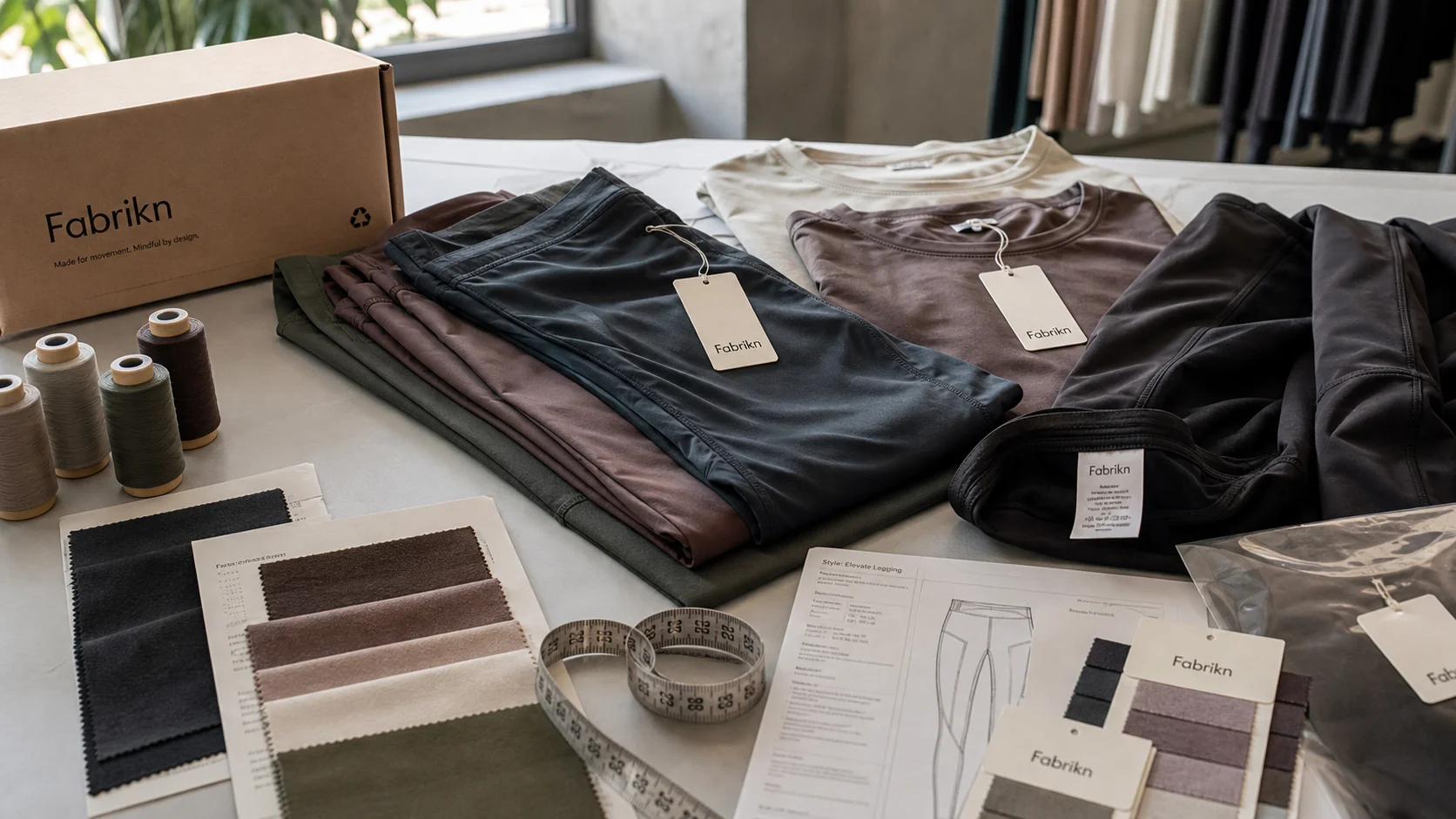
A practical outline for tournament merchandise distributors evaluating bulk tracksuit size grading costs, with the production variables that drive price,...
Bulk Tracksuits Size Grading Cost for Distributors - Fabrikn production reference
For tournament merchandise distributors, bulk tracksuits are not priced like a simple blank garment. Size grading changes fabric consumption, pattern work, sample approval effort, and sometimes trim usage. Those small differences matter once a program moves from a few hundred units to a multi-size run for teams, staff, volunteers, and retail tables. The real cost sits in the details: how many sizes are needed, how the block pattern is built, what fabric stretch allows, whether the style is unisex or gender-specific, and how strict the buyer is about fit consistency across the run.
This article breaks down bulk tracksuit size grading cost in practical terms. It is written for distributors supplying tournament merchandise, where timelines are tight, SKU counts can multiply quickly, and one grading mistake can create dead stock in the wrong sizes. The goal is not to oversimplify. It is to show where the money goes, what is negotiable, and where cutting corners usually backfires.
Size grading is the process of scaling a base pattern up and down across sizes while keeping proportion, fit intent, and garment balance intact. For tracksuits, that usually applies to jackets, pants, or both. A size set might begin with a base size such as M, then grade to XS, S, L, XL, 2XL, and 3XL. Every step changes measurements such as chest, body length, sleeve length, waist, hip, rise, inseam, and knee placement.
Tracksuits are less forgiving than they look. A woven shell with little stretch behaves differently from a brushed tricot, interlock, or poly-spandex blend. Small grading mistakes can make cuffs ride up, jackets twist, pant legs skew, or zipper lengths become awkward across larger sizes. For tournament merchandise, where one style may need to serve athletes, coaches, and supporters, that inconsistency is expensive.
Size grading cost is not a single line item. It is usually built into pattern development, sample corrections, marker planning, and production approval. Some suppliers quote it separately. Others bury it in the style development fee or the unit price. Distributors should ask which model is being used before comparing quotations.
Tournament merchandise is different from general retail activewear. Orders often need mixed size ratios, compressed lead times, event branding, and multiple decoration methods such as embroidery, print, woven labels, or heat transfer. The same tracksuit may be sold in advance, issued to staff, and kept for on-site replenishment. That creates pressure on grading because the size curve must match both sales expectations and actual attendance patterns.
The safest assumption is that tournament orders will be less balanced than a normal wholesale run. A retail buyer might order sizes in a predictable S to XL spread. A distributor serving a tournament may need more medium and large units for core teams, but also enough extended sizes to avoid embarrassment at the point of sale. Once you add women’s fit, youth sizing, or plus sizes, pattern development and marker use get more complex.
For tournament merchandise, a low unit price is useful only if the size curve is realistic. Excess smalls and missing 2XLs are not savings. They are stranded inventory with a deadline.
The more sizes you carry, the more work sits behind the pattern set. A simple 4-size run is cheaper to develop than an 8-size run. Each added size increases grading checks, marker planning, and production risk. The unit cost impact may be modest on paper, but the development cost can rise fast if the buyer expects repeated revisions.
Typical grading cost ranges vary by factory capability and style complexity. For a standard tracksuit, distributors often see a modest pattern and grading fee on a first order, then lower costs on repeat programs once the pattern is approved. A basic style may add a small development charge per size range, while a more complex cut-and-sew tracksuit with paneling, color blocking, piping, and multiple pockets can cost significantly more to grade and sample.
Unisex grading is usually simpler than separate men’s and women’s blocks, but only if the fit strategy is acceptable for the market. A unisex block can reduce development cost and simplify production. The tradeoff is weaker fit precision for some wearers, especially in the chest, hip, and sleeve balance. If the tournament buyer expects a more polished retail look, separate blocks may be worth the added cost.
Jogger-style pants, tapered legs, and elastic waistbands can also change grading behavior. A relaxed pant tolerates minor size shifts better than a sharply tapered silhouette. Jackets with raglan sleeves often grade more smoothly than set-in sleeves, though that depends on the actual pattern and fabric elasticity.
Fabric cost and grading cost are connected. A knit with mechanical stretch can hide small fit changes better than a stiff woven shell. Brushed poly tricot, double knit, fleece-backed fabric, and polyester-spandex blends each behave differently in production. The more the fabric recovers and drapes, the less visible some grading variation may be. That does not remove the need for proper grading. It just changes the risk profile.
Patterns made for fabrics with stretch should be tested in the correct fabric before bulk approval. If the sample is made in one fabric and production shifts to another, size balance can drift. Distributors should treat any fabric substitution as a grading review item, not a minor procurement change.
Embroidery, chest prints, back graphics, sleeve prints, and woven patches all affect size grading. A logo placed near a seam may move differently across sizes. Larger sizes can absorb bigger graphics more easily, while smaller sizes can look crowded. If the artwork is not scaled properly, the same decoration may look off-center or too dominant in smaller sizes. That creates rework risk and, in some cases, scrap.
Heat-applied transfers usually add less sewing complexity than applique or panel embroidery, but they still require placement control. The larger the size range, the more carefully the supplier should confirm artwork dimensions by size group.
Zippers, drawcords, cuff rib, elastic, labels, hangtags, and packaging can all create hidden cost differences. A longer jacket size may require more zipper length or a different zipper spec if the style changes across the range. Larger pant sizes may require different waist elastic lengths or more drawcord consumption. These are small numbers individually, but they add up across thousands of units.
Trim pricing is often the first place distributors see unnecessary leakage. A supplier may quote the garment well, then add charges for extended-size labels, longer zipper lengths, or separate size breakdown packing. Those should be asked for up front.
MOQ is one of the main commercial levers in tracksuit sourcing. For standard bulk tracksuits, many factories prefer a style MOQ in the low hundreds per color per design, with size breaks distributed across the run. Lower MOQs are possible, especially for repeat styles or simpler constructions, but they often carry higher unit costs. Orders with multiple colors, multiple logos, or separate men’s and women’s blocks tend to push MOQ upward.
For tournament merchandise distributors, the practical question is not just “What is the MOQ?” It is “What is the MOQ by color, by size range, and by decoration method?” A supplier that accepts 300 pieces total may still require 100 pieces per color or per logo version. That changes the business case.
Sample approval should be handled in stages:
Each sample round costs time and money. A distributor can keep development efficient by giving the factory a disciplined spec sheet with target measurements, tolerances, artwork files, logo placement, fabric composition, and trim references. Weak instructions create revisions. Revisions create cost.
Lead time depends on fabric availability, sample approval speed, decoration complexity, and the number of sizes being graded. Simple repeat orders can move faster than new developments. Custom fabric, custom dye lots, and specialized trims stretch the schedule. If a tournament calendar is fixed, the order should be built backward from the delivery date with a cushion for corrections.
A realistic bulk tracksuit lead time is usually longer when the order includes:
Distributors should also be careful with post-approval changes. Changing size ratios, hem specs, logo size, or fabric weight after sample sign-off can delay cut tickets and force a re-check of grading logic. In tournament work, late changes usually cost more than they save.
The most useful grading conversations start with fabric specification, not price. The fabric dictates how much the pattern can tolerate and how the final garment hangs. Common tracksuit fabrics include polyester tricot, poly-cotton blends, brushed fleece, interlock, and poly-spandex knits. Each one changes the fit equation.
Useful spec points to lock before quoting include:
Heavier fabrics can improve perceived quality, but they also raise freight cost and can create a stiffer fit in larger sizes. Lighter fabrics reduce shipping weight and can be more forgiving on size grading, yet they may feel less premium in tournament retail. The better choice depends on buyer expectation, climate, and price point.
Trim changes deserve the same discipline. A supplier may be able to source standard zippers cheaply, while custom-branded zipper pulls or printed elastic bands add cost and extend lead time. That is normal. The mistake is pretending trim is incidental when it is actually part of the size grading and production plan.
Multi-size tracksuit orders carry predictable inspection risks. Measurement drift is the obvious one, but it is not the only one. Panels can shift. Stitching tension can vary from size to size. Graphics can sit too high on smaller garments or too low on larger ones. Pant legs can twist if grading is not balanced between front and back pieces.
Common issues to watch include:
Inspection standards should define what counts as pass, repair, or reject. A small measurement deviation may be acceptable on a relaxed fit tracksuit, but not on a fitted teamwear style with close tolerance. The acceptable range should be agreed before production starts. Late debates waste time at the worst possible moment.
Cost Factor Typical Impact on Grading Cost Purchasing Judgment More size breaks Higher pattern and sample effort Worth it if sell-through is broad; risky if demand is concentrated Separate men’s and women’s blocks Moderate to high Better fit, stronger retail appeal, more development time Complex decoration Moderate Brand value can justify it if placements are fixed early Custom fabric or trim High Use only when differentiation or quality perception is material Repeat style with approved pattern Low Best cost position for distributors running recurring tournamentsThe cheapest grading approach is not always the best commercial approach. Distributors can save money in a few sensible ways. Reusing a proven block, keeping the fit family consistent, limiting the number of decoration placements, and standardizing trims all help. So does using a size curve based on real sales history rather than guesswork.
The wrong places to cut are usually the ones buyers notice immediately. Undersized larger sizes, awkward sleeve balance, flimsy zippers, and sloppy logo placement create complaints, returns, and reputational damage. That is especially true in tournament merchandise, where the buyer often sees the product in public and the margin for error is low.
Practical sourcing advice is simple: buy the right amount of development discipline at the start, then protect that work through production. A little more time spent on grade rules and spec clarity usually costs less than one rushed correction after bulk cutting has started.
Size grading is cheaper before the order is cut. Once bulk starts, every mistake becomes fabric, labor, freight, or all three.
For distributors comparing bulk tracksuit programs, the safest route is to work from a clear technical brief and request a structured quotation. Fabrikn’s services page is the place to review manufacturing support across development, sampling, and production. For project-specific questions, use the contact page and share your size range, fabric target, decoration method, and expected order volume. Background on the company and operating approach is available on the about page.
Before asking for a quote, prepare the basics: target fabric, size chart, size breakdown, artwork placements, trim preferences, packaging needs, target delivery date, and whether the order is for tournament retail, staff issue, or mixed use. That saves time and produces cleaner pricing. It also makes comparison between suppliers more useful, which is where distributors usually gain or lose margin.
Get a free quote from Fabrikn — your trusted B2B clothing manufacturer with 10+ years of experience. MOQ as low as 200 pieces.
Get a Free Quote →Many factories prefer a low-hundreds MOQ per style or per color, though the exact number depends on fabric, decoration, and whether the pattern is new or repeat-approved. Separate size ranges or multiple logo versions can push MOQ higher.
Tournament orders often need mixed size curves, faster turnaround, and stricter branding. That creates more pattern work, sample rounds, and production checks than a basic blank garment order.
More forgiving fabrics usually have some stretch or soft recovery, such as poly-spandex blends or certain knit constructions. Stable woven shells and low-stretch fabrics require tighter pattern control.
Yes, sometimes. A unisex block can reduce development effort, but fit quality may be weaker for some customers. It is a tradeoff between lower cost and better fit precision.
At minimum, buyers should review the base sample, size set sample, and pre-production sample. That sequence helps catch fit, grading, and trim issues before bulk cutting starts.
The main risks are measurement drift, logo misplacement, zipper misalignment, and fabric or dye lot variation. These issues become more expensive when discovered after bulk production begins.
For tournament merchandise distributors, the best bulk tracksuit program is usually the one with the clearest sizing logic, not the loudest price quote. Solid grading, disciplined sample approval, and realistic fabric choices do more for margin than chasing the lowest unit number and fixing the damage later.