
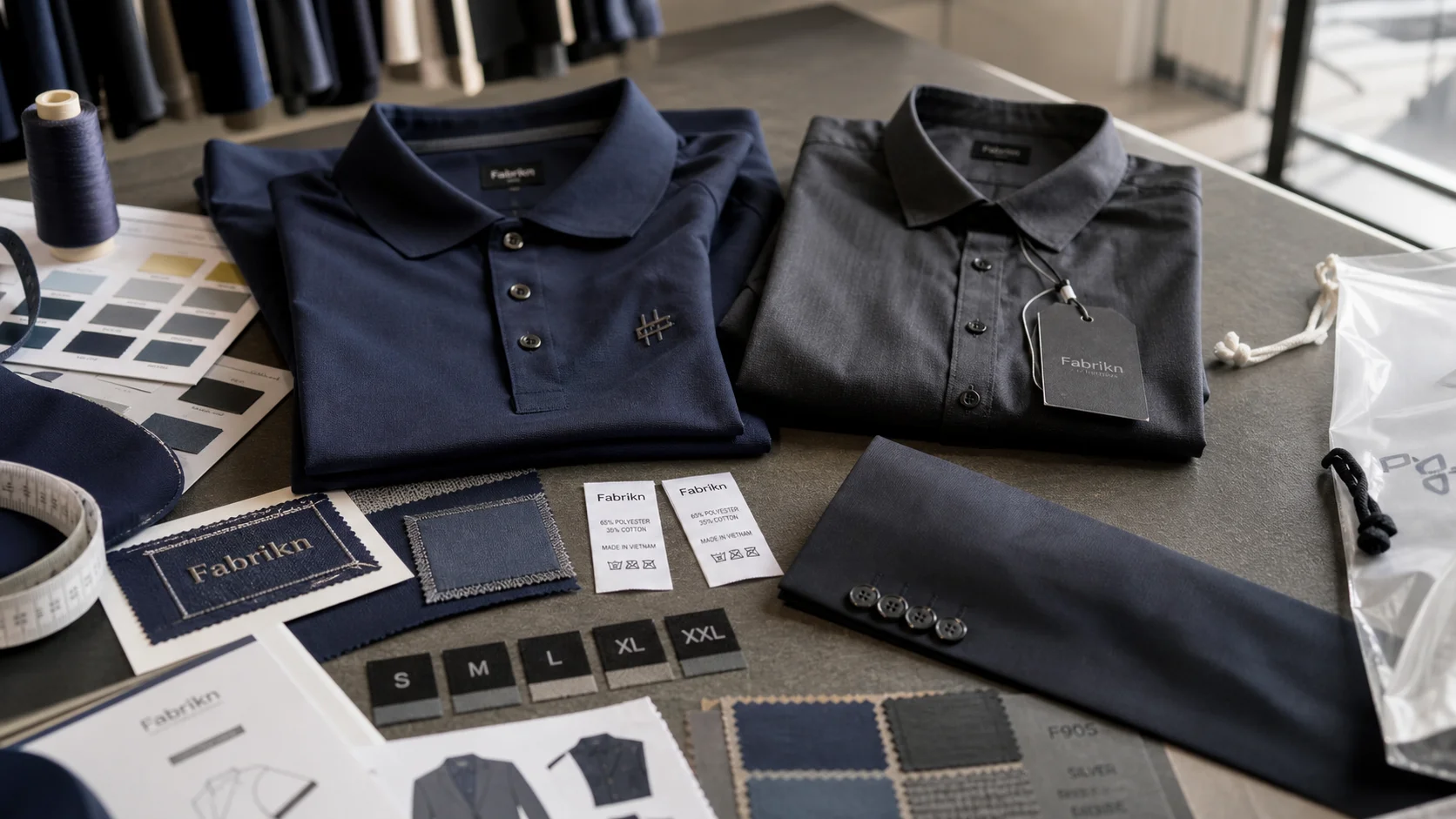
A practical outline for procurement teams evaluating shrinkage testing on bulk restaurant uniforms, with methods, acceptance criteria, wash protocols, and...
Bulk Uniform Shrinkage Testing for Restaurant Groups - Fabrikn production reference
Bulk uniform shrinkage testing is one of the simplest ways restaurant groups protect fit, reduce reorders, and keep staff presentation consistent across locations. In procurement, shrinkage is not a minor fabric note. It affects sleeve length, waistband comfort, apron drop, hem balance, logo placement, and whether a first-time fit still works after the third wash cycle. For restaurant groups ordering at scale, the cost of ignoring shrinkage usually shows up after delivery, not at the sample stage.
This matters especially in activewear and teamwear programs where garments move between kitchen heat, front-of-house presentation, and repeated laundering. A uniform that looks right on arrival can become too short, too tight, or out of spec after washing if the fabric, construction, and finishing were not tested properly. Bulk buyers need a practical testing plan before production locks in.
For sourcing support, review the services page, learn more on the about us page, or use the contact us page to start a procurement discussion.
Restaurant groups usually buy uniforms in repeatable packs: polos, T-shirts, chef coats, aprons, joggers, cargo pants, and sometimes branded outer layers. The challenge is not just initial size consistency. It is performance after laundering. If a shirt shrinks 4 percent in body length and 2 percent in width, the result may be acceptable in casual wear but problematic in uniform programs where presentation standards are stricter.
Procurement teams should treat shrinkage as a contract item, not a lab curiosity. A garment that passes color approval and logo approval can still fail after wash testing. A front-line employee does not care that the fabric was technically soft on delivery if it becomes short, twisted, or misshapen after laundering.
Bulk orders magnify the impact. A small defect in shrinkage becomes a large replacement cost when you are outfitting multiple locations. In restaurant groups, inconsistent size retention can also create inventory drift. A medium in one replenishment cycle may wear like a small in the next, which disrupts size planning and adds unnecessary stock pressure.
Testing should be built around the garment’s real use case. A restaurant group does not need a theoretical fabric report alone. It needs proof that the delivered garment will stay within size tolerance after a realistic wash cycle. The core checks are straightforward.
For woven uniforms such as chef pants, aprons, and shirts, shrinkage often shows up in length and shape retention. For knits and activewear-style teamwear, width shrinkage and collar recovery can matter more. The fabric construction should match the use case. A brushed fleece hoodie for a promo team has different shrinkage behavior than a poly-cotton kitchen tee or a stretch woven pant.
Good procurement practice is to ask for a pre-production wash test on lab dip-approved or strike-off-approved material, then repeat verification on bulk fabric or first production output. The test should reflect the intended care method. If uniforms will be washed hot and tumble-dried by the operator, the test must not use a gentle cycle that understates the real risk.
Fabric choice drives most shrinkage outcomes. Procurement teams should not expect all blends to behave the same way simply because the garments are from the same vendor or use the same pattern block.
Fabric type Typical shrinkage behavior Procurement note 100% cotton jersey Higher shrinkage risk, especially after first wash Needs tighter wash testing and size allowance Cotton-poly blend Moderate shrinkage, usually more stable than pure cotton Common for restaurant tees and polos Polyester knit Low shrinkage, but heat sensitivity can affect appearance Useful where size retention matters most Stretch woven with elastane Low to moderate shrinkage, but recovery and distortion matter Check waistband and knee performance carefully Brushed fleece Can shrink slightly and change hand feel after wash Watch for body length change and rib recoveryTypical shrinkage tolerance for many uniform programs sits in the 3 percent to 5 percent range for key dimensions, though exact tolerance depends on garment type, fabric, and care instructions. Some buyers require tighter control, especially for premium programs or tailored fits. That is sensible, but it can raise cost and rejection rates if the mill or factory is not using controlled pre-shrinking or compacting processes.
Sanforized or pre-shrunk fabrics usually reduce risk, but they do not eliminate it. Finishing quality still matters. Poor control in cutting, sewing tension, or garment washing can create size drift even when the fabric itself is stable.
The cleanest way to manage shrinkage is to approve samples in stages. One garment sample is not enough when the buying team is ordering for a restaurant group with multiple uniform categories and a long replenishment horizon.
The wash test should be done on the actual approved construction, not a simplified fabric swatch alone. A shirt can pass textile shrinkage testing and still fail garment-level expectations because of placket puckering, collar distortion, or seam slippage. That is why full-garment testing matters.
Procurement teams should also confirm whether shrinkage allowances are already built into the pattern. A factory may cut slightly longer body lengths or wider sleeves to absorb expected shrinkage. That is acceptable only if the allowance is documented and repeatable. Hidden pattern compensation creates confusion when future reorders are made from the same spec without the same production adjustment.
Sampling usually requires time. A practical timeline for first approvals can run 2 to 4 weeks depending on fabric sourcing, print or embroidery approvals, and wash test turnaround. If a restaurant group has a seasonal rollout or multi-site launch, that timeline should be built into the sourcing calendar early.
The procurement document should not stop at size labels and color names. Shrinkage control depends on a narrow set of technical details being fixed before bulk order release.
For restaurant uniforms, trim performance is a frequent weak point. Rib collars can wave after washing if the density is poor. Waistbands can lose structure if elastane content is low or sewing tension is inconsistent. Heat-applied logos may crack or shift if the garment shrinks more than the transfer system can absorb. These are not rare issues; they are common inspection findings when the buyer leaves details vague.
Bulk quantity also affects tolerance strategy. A small program may absorb a few rejections without much disruption. A large restaurant rollout does not have that luxury. A group order of several hundred to several thousand units should define acceptable quality limits clearly, including AQL expectations, measurement tolerances, and shrinkage thresholds after laundering.
Typical MOQ ranges vary by factory and garment type. Many cut-and-sew uniform programs begin around 100 to 300 pieces per style and color, while custom decorated programs or specialty fabrics may require 300 to 500 pieces or more. Some mills and factories can support smaller runs, but the unit cost usually rises. Buyers should weigh lower MOQ against the risk of paying more for a small pilot that never scales cleanly.
Shrinkage testing is not just a quality task. It affects lead time. If the buying team wants a full wash test before bulk release, production planning must account for lab dips, fabric booking, sample sewing, wash cycles, measurement reports, and approval delays. Tight timelines often produce bad behavior: skipped testing, rushed sign-off, or pattern adjustments made without proper re-verification.
Lead time usually depends on four variables.
A rushed order can still work, but the buyer should understand the tradeoff. Faster delivery often means less buffer for rework. If shrinkage comes back outside tolerance, the factory may need to re-cut, re-launder, or adjust finishing, which delays the shipment and can affect launch dates across stores.
That is why restaurant groups should make wash performance part of vendor comparison, not just a final QA step. The best supplier is not always the cheapest quote. It is the one that can repeat fit, print placement, and shrinkage behavior across reorder cycles.
Inspection before washing can miss problems that appear only after the garment has been through a realistic care cycle. This is where many procurement programs get surprised. The carton looks fine, the size label is correct, and the branding is neat. Then the test wash exposes a mismatch.
Restaurants often prefer easy-care uniforms, which means the garments will go through repeated laundering under pressure. That can include hot water, commercial dryers, and frequent press finishing. A uniform that only survives gentle home laundering is not suitable for that environment.
Inspection risk also increases when factories source fabric and trims separately without tight lot control. Two fabric rolls labeled the same can still behave differently if there are fiber-length, finishing, or dye-batch differences. Buyers should ask whether bulk goods will be made from a single fabric lot or mixed lots, and whether measurement verification happens at roll and garment stage.
Shrinkage testing is cheapest before bulk release. After production is cut, sewn, decorated, and packed, every percentage point of surprise becomes a cost problem.
There is a real commercial tradeoff here. Better shrinkage control can mean better fabric, more process steps, and higher unit cost. A restaurant group buying at scale has to decide where quality control is worth paying for and where it is not.
For a value uniform program, moderate shrinkage tolerance may be acceptable if the garment is cut with proper allowances and the re-order process is stable. For a premium branded rollout, tighter shrinkage control is usually justified because store presentation and employee comfort matter more. The wrong place to save money is on testing. The right place to evaluate savings is in the fabric spec, the finish spec, and the level of audit discipline.
A sensible procurement rule is simple: if the uniform will be worn daily, washed often, and seen by customers, it should be treated as a controlled product. That means written test criteria, clear size tolerances, and repeatable approval records. Otherwise, the first savings will often be erased by replacement orders and complaints.
For sourcing teams, search behavior usually centers on practical phrases rather than branded marketing language. Relevant keywords include bulk uniform shrinkage testing, restaurant group uniform procurement, shrinkage control for teamwear, uniform wash testing, custom restaurant uniforms, pre-shrunk uniform fabrics, and bulk apparel quality inspection.
Search intent is usually commercial and operational. Buyers want supplier capability, sample process clarity, MOQ guidance, and test standards. Content that explains these points in plain terms performs better than broad fashion language because it matches the questions procurement teams actually ask.
For a restaurant group, the best content and the best supplier both answer the same question: will the garment still fit, hold shape, and look professional after repeated laundering?
Get a free quote from Fabrikn — your trusted B2B clothing manufacturer with 10+ years of experience. MOQ as low as 200 pieces.
Get a Free Quote →It is the process of measuring how much a uniform changes in size, shape, and appearance after washing and drying. In restaurant procurement, the goal is to confirm that the garment stays within acceptable tolerance before bulk release.
Many programs allow around 3 percent to 5 percent shrinkage on key dimensions, though tighter or looser tolerances may be specified depending on fabric, fit, and care instructions. The right number should be written into the purchase spec.
Both matter, but finished-garment testing is more useful for procurement. Fabric testing can miss problems caused by sewing tension, trim behavior, embroidery, or garment finishing.
Polyester-heavy knits and properly finished blends usually offer better size stability than untreated cotton. Even then, buyers should confirm how the garment behaves after realistic laundering.
It adds time for sample approval, wash cycles, measurement review, and any corrective changes. A practical buying schedule should allow for those steps before bulk cutting begins.
Ask for the fabric composition, shrinkage tolerance, wash test method, trim specs, sample approval steps, MOQ, production lead time, and whether the factory can repeat the same result on reorders.