
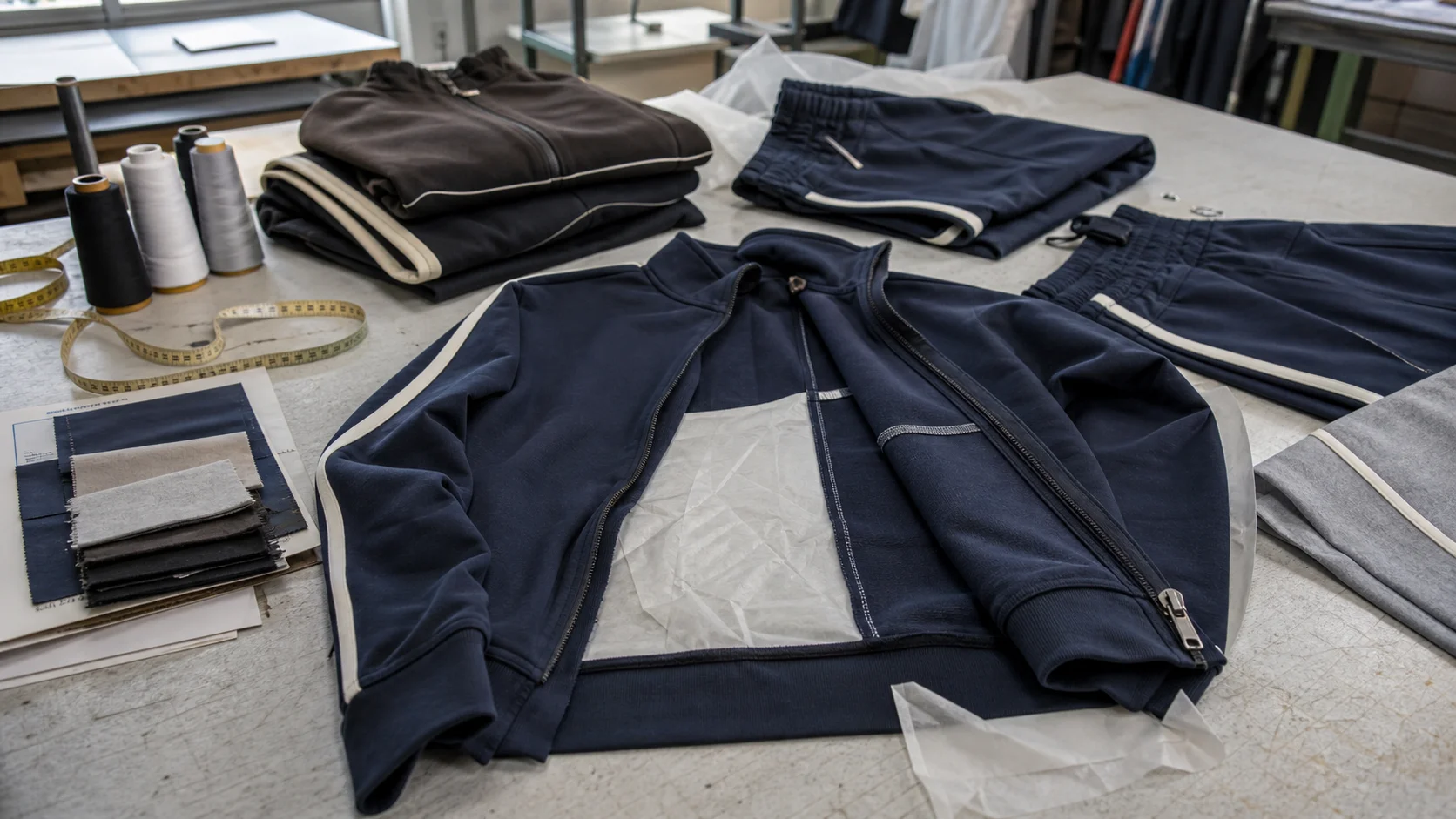
A focused outline for a 2500-word SEO article on embroidered bulk workwear coats for security and facility contractors, covering garment specs, decoration...
Bulk Workwear Coats Embroidery for Security Contractors - Fabrikn production reference
Security contractors buy workwear coats for the same reason they buy radios, boots, and signage: the garment has to do a job, hold up under repeated use, and present a controlled appearance to clients and site visitors. Embroidery adds a practical branding layer. It puts the company name, role, or badge mark on the coat without relying on a printed finish that may wear faster in heavy use.
For security facility contractors, bulk workwear coats embroidery is usually less about decoration and more about identity, accountability, and consistency across shifts. The right coat can help supervisors distinguish staff, improve client confidence, and support a more professional site standard. The wrong specification can create problems quickly: thread issues, poor logo placement, stiff fabric hand feel, or sizing gaps that trigger rework and delays.
Embroidery remains one of the most durable branding methods for coats used in security, facilities, and site support roles. It sits well on heavier fabrics, reads clearly at distance, and usually survives laundering and daily abrasion better than many print methods. That matters on outerwear, where collars, chest panels, and sleeves see repeated contact with bags, vehicle seats, radios, and harnesses.
Security contractors also tend to prefer embroidery because it looks consistent across mixed teams and multi-site programs. A coat with an embroidered company mark signals that the wearer belongs on site. That is useful in facilities where contractors, tenants, and visitors move through the same spaces and visual control matters.
Embroidery is usually the better choice when the coat fabric is stable, the logo is simple, and the garment will be worn hard. It is less suitable when the brand requires tiny text, photo-like detail, or a very lightweight shell that distorts under stitching.
The tradeoff is straightforward. Embroidery adds needle perforation and some stiffness. On thick fleece, softshell, and quilted work coats, that is usually acceptable. On ultralight rainwear or highly coated waterproof shells, dense stitching can compromise hand feel or water resistance if the build is not planned correctly.
Not every security role needs the same coat. Facility patrol staff, gatehouse teams, event security, and overnight supervisors often need different levels of warmth, water resistance, and visibility. A good bulk program starts with the job function, not the logo artwork.
Softshell coats are a common choice for day-to-day security use in moderate weather. They carry embroidery well, offer a cleaner profile than bulky insulated styles, and work across a wide size range. A medium-weight softshell often balances mobility with a professional appearance.
These are suited to colder sites and longer outdoor duty cycles. The thicker surface supports embroidery well, though placement should avoid seam-heavy areas and high-stress zones such as the lower hem or elbow articulation points.
These are useful where rain exposure is routine. The main concern is needle penetration. If the shell has a waterproof membrane or critical seam sealing, embroidery should be positioned carefully and reviewed against the coat’s performance requirements.
Security contracts often require visibility as well as identification. Hi-vis coats can be embroidered, but the placement must preserve the reflective tape layout and comply with the site’s visibility rules. In many cases, smaller chest branding works better than large back embroidery.
Bulk workwear coats fail most often at the specification stage, not the sewing stage. Buyers who lock in the right base fabric, trim package, and embroidery rules usually see fewer surprises in production.
For security contractors, common coat fabrics include polyester softshell, polyester fleece, poly-cotton canvas, and coated woven shells. Typical weights vary widely, but a practical range for outer workwear is often around 250 gsm to 450 gsm depending on weather exposure and warmth needs. Lighter fabrics can reduce bulk, while heavier fabrics improve warmth and structure.
Embroidery thread is usually polyester for better color fastness and wash resistance. Rayon can look good, but polyester is more practical for workwear. Thread color should be matched against the coat fabric and the brand color standard, with a strike-off approved before bulk stitching begins.
Backing is not optional on most coat embroidery. It controls puckering and helps the logo sit flat. The right stabilizer depends on the face fabric, the logo density, and whether the coat has stretch. Dense logos on softshell often need more careful stabilization than a simple left-chest name mark.
Left chest embroidery remains the most common placement for security coats. Typical logo widths often fall between 70 mm and 110 mm, though larger marks can work on back panels when the garment structure allows it. Sleeve branding is useful for visibility in crowded environments, but it is more exposed to abrasion.
Coat trim decisions matter more than many buyers expect. Two-way zippers improve movement. Velcro storm flaps reduce wind ingress. Adjustable cuffs and hem cords help fit over base layers. When the coat is worn over uniforms, the body width should allow enough layering without appearing oversized.
Specification Area Common Buyer Choice Tradeoff Fabric Softshell, fleece, or coated shell Softshell is versatile; coated shells protect better from rain but can be harder to embroider cleanly Thread Polyester embroidery thread Durable and wash-safe; less sheen than some decorative threads Logo placement Left chest Most practical for identification; limited brand visibility at distance Branding scale 70 mm to 110 mm wide Clear enough for recognition without overloading the coat Closure Two-way zip with storm flap Better mobility and weather protection; adds cost and bulkMOQ depends on the garment type, color mix, size spread, and embroidery complexity. A simple security coat program may start from 100 to 300 pieces per style and color, while custom fabric, special trims, or multiple logo placements can push the practical minimum higher. Some suppliers will accept lower quantities, but unit price often climbs fast when the order falls below their standard production break.
For contractors buying across multiple sites, a better approach is often to consolidate by core style and then vary only the embroidery name or department mark. That gives the factory more stable production and usually improves cost control. Separate coat styles for every site can create expensive fragmentation.
Bulk buyers should ask for clarity on whether MOQ applies per color, per embroidery design, or per size run. Those rules are not always the same. A supplier may quote 200 pieces overall, but still require 100 pieces per color or per logo version.
A disciplined sample process is the difference between a controlled bulk order and a warehouse full of avoidable defects. With security workwear, buyers should not skip steps just because the garment looks simple.
Start with the coat spec sheet, logo file, embroidery dimensions, placement map, size range, and color reference. Vector artwork is usually required for clean digitizing. The buyer should confirm whether the logo needs flat embroidery, 3D puff, name personalization, or a mix of techniques.
The supplier should provide a stitch file or a strike-off for approval. This is where text spacing, logo proportion, and thread colors are checked. Fine detail can disappear once sewn, so a logo that looks acceptable on screen may not read well on fabric.
This sample confirms fit, fabric hand feel, trimming, label position, and embroidery placement. For security coats, pay attention to whether the embroidered area distorts near the chest curve or zipper line. A coat can look fine flat on the table and still pull awkwardly when worn.
If the order includes a full size run, the buyer should inspect representative sizes before bulk cutting continues. This is particularly important if staff must layer the coat over uniforms or winter clothing.
Lead time is rarely just one number. It depends on fabric availability, trim sourcing, embroidery complexity, sample approval speed, and how much of the garment is custom versus stock supported. A straightforward bulk coat order with simple chest embroidery may move in a few weeks after approval. Custom fabric, imported trims, or multiple revisions can extend the schedule materially.
Security contractors should plan around site start dates, seasonal weather, and contract mobilization. Rushing an outerwear order is a poor bargain if the garments arrive with unresolved sizing or branding issues. A short delay at the sampling stage is often cheaper than a bulk rejection later.
Embroidery density also affects production pace. Large filled logos take longer to stitch and can slow output. If the branding does not need a heavy fill, a simpler stitch plan can improve throughput and reduce the risk of fabric distortion.
Inspection on embroidered workwear coats should not stop at logo appearance. Buyers need to check the full garment, because outerwear failures tend to show up in the field, not on a hanger.
One common risk is over-embroidery on a weak or stretch-prone panel. A logo that seems harmless on paper can deform the garment if the face fabric is too light or the stabilizer is wrong. Another frequent issue is inconsistent placement across size grades. Small differences are obvious on a uniform program where every coat is worn side by side.
Buyers should also ask how the factory handles needle damage, seam repair, and rejected embroidery during inline inspection. The answer matters because rework on coated or waterproof fabrics can be more visible and more costly than on standard woven garments.
Security facility contractors usually need branding that is visible, restrained, and easy to approve across multiple stakeholders. That means the logo must work for procurement, operations, and site management at the same time.
Left chest embroidery is the default because it supports identification without overwhelming the garment. Back embroidery can improve visibility from a distance, but it is not always necessary and can add cost. Sleeve branding is useful where staff need to be distinguished in motion, though abrasion from equipment and repeated washing can shorten its clean appearance.
Text-based branding should stay simple. Long legal names, multiple lines of copy, or tiny taglines often look cramped on a coat and reduce legibility. If the site requires department names or role identifiers, a separate badge panel or small secondary mark may work better than forcing everything into one embroidery block.
Good outerwear branding is usually clear before it is clever. If the embroidery cannot be read quickly, it is not doing much for a security contractor.
The best sourcing approach is to treat the coat and the embroidery as one technical package. Split sourcing often causes avoidable mistakes, especially when the garment supplier and the embroiderer are not aligned on placement, stabilizer, or size grading. A single vendor or a tightly coordinated production route is usually easier to manage.
Ask for a quotation that separates garment cost, embroidery cost, sampling cost, and packaging cost. That makes it easier to compare vendors on a like-for-like basis. A very low garment price can be misleading if embroidery revisions, thread changes, or packing requirements are charged later.
Packaging also matters in bulk workwear programs. Security contractors may need coats folded by size, labeled by wearer, or packed for site distribution. If the order is shipping to multiple locations, carton marks and size ratio controls should be confirmed before production starts.
For suppliers and buyers who need a broader production overview, the following pages are useful starting points: fabrikn.com/services/, fabrikn.com/about-us/, and fabrikn.com/contact-us/.
Get a free quote from Fabrikn — your trusted B2B clothing manufacturer with 10+ years of experience. MOQ as low as 200 pieces.
Get a Free Quote →Softshell and fleece-lined coats are common for general security use because they balance warmth, mobility, and embroidery compatibility. For wetter sites, a coated shell or waterproof outer layer may be better, provided the embroidery placement does not compromise performance.
Many suppliers treat 100 to 300 pieces per style as a practical bulk starting point, though the real MOQ depends on fabric, color, and logo complexity. Orders below standard production thresholds usually carry a higher unit cost.
In most outerwear programs, yes. Embroidery generally holds up better under washing and abrasion, especially on heavier fabrics. The garment structure still matters, and the wrong embroidery on a light shell can cause puckering or damage.
Yes, but the design should stay readable. Small names, departments, and role text work best when the font is simple and the placement is not crowded by other elements. Very small lettering can become hard to read once stitched.
Lead time depends on sample approval speed, fabric availability, trim sourcing, and embroidery load. A simple order can move relatively quickly after approval, while custom outerwear or revised artwork can extend the schedule.
Check logo size, placement, thread color, fit over uniform layers, zipper function, seam quality, and whether the embroidery distorts the fabric. A sample should be judged on the body, not only on a table.
Bulk workwear coats embroidery for security facility contractors is a specification-led purchase. The strongest programs keep the branding simple, the coat fabric suitable for embroidery, and the approval process tight. That approach reduces rework, protects the schedule, and gives the contractor a uniform that looks professional in the field.