
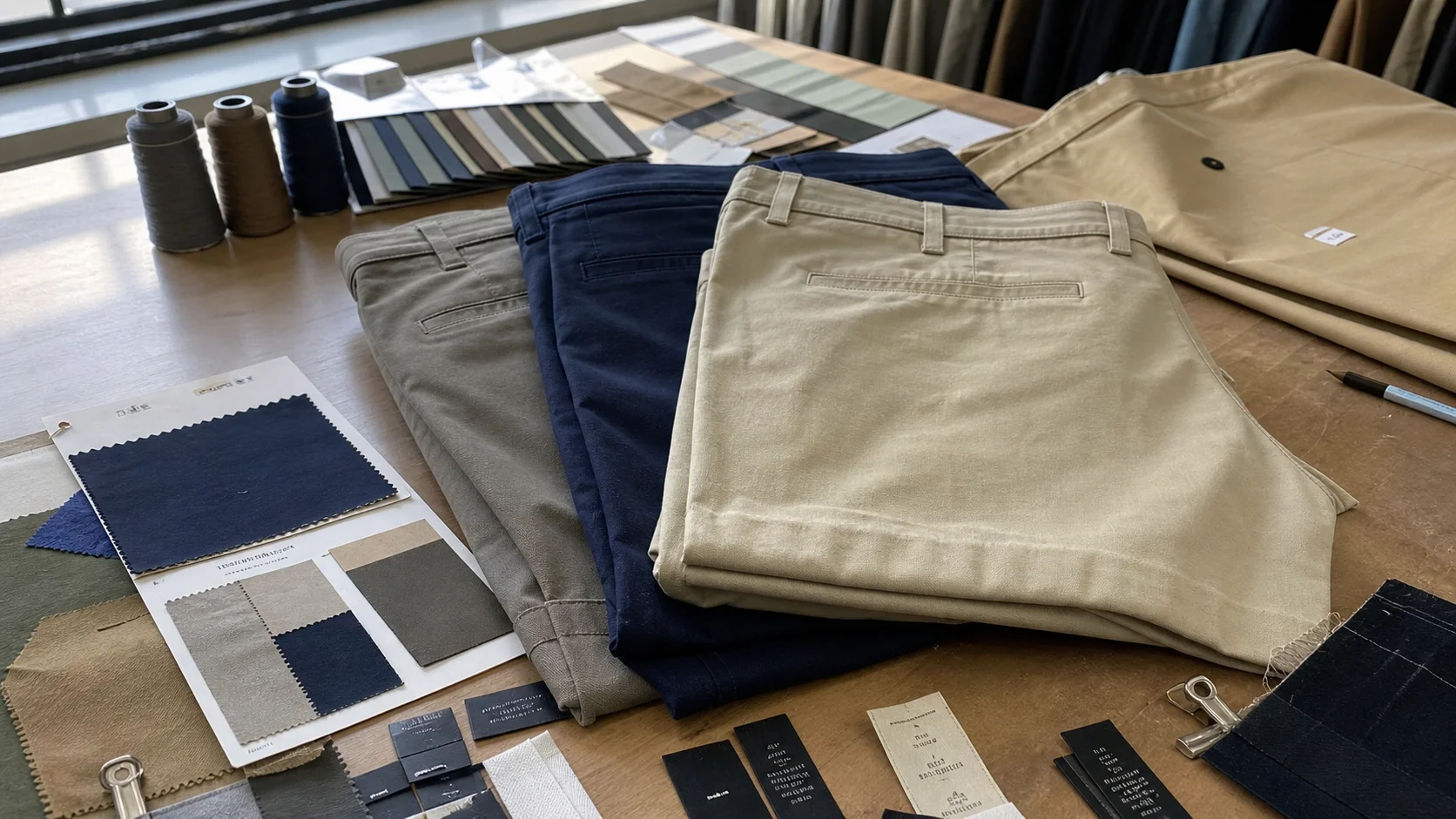
A product-specific outline for warehouse teams buying bulk workwear coats, focused on seam strength testing, stress points, construction choices, and...
Bulk Workwear Coats Seam Strength Testing - Fabrikn production reference
Bulk workwear coats seam strength testing matters more than most buying teams expect. Warehouse coats take repeated stress at the shoulders, armholes, side seams, cuffs, pockets, and front closures. If seams fail early, the garment stops being a piece of protective workwear and becomes a replacement cost, a comfort complaint, and a consistency problem across the team. For warehouse operations teams ordering at scale, seam performance should be treated as a sourcing requirement, not a finishing detail.
This is especially relevant in Decoration & Printing, where embroidery, heat transfer, screen print, or patch placement can change how a coat behaves under load. Decoration can add localized stiffness, needle perforations, adhesive layers, or extra seams around branding areas. The right approach is to confirm that the garment construction, fabric, thread, and decoration method all support the intended use before the order is approved.
Seam strength is the amount of force a stitched seam can handle before it opens, slides, or ruptures. In practice, buyers care about two related outcomes: whether the seam itself holds, and whether the fabric around the seam fails first. For workwear coats, a good result is not just a high number on a lab report. The garment has to survive repeated wear, laundering, hanging, pulling, climbing, and the rough handling common in warehouse settings.
Coat seam strength is influenced by fabric weight, weave or knit structure, thread type, stitch density, seam allowance, needle size, reinforcement method, and whether decoration has been added. Heavy fabric does not automatically mean strong seams. A poorly set stitch line on a dense fabric can still fail if the seam allowance is too narrow or the thread choice is mismatched to the cloth.
For bulk sourcing, seam strength should be read together with construction quality. A strong seam on paper is useful only if the garment pattern, trims, and decoration process do not weaken it later.
Warehouse teams put workwear coats through a different kind of stress than office or light industrial users. Coats may be worn over layered clothing, snagged on shelving, exposed to friction from pallets or carts, and washed often. A seam failure in this setting can expose the wearer to discomfort, reduce professionalism, and interrupt uniform availability.
The purchasing risk is straightforward. Bulk orders often look fine at sample stage, then show inconsistent seam quality after production starts. If the supplier has not locked the stitch spec, thread spec, and inspection standard, the finished lot may vary enough to create returns or rework. That is costly in decorated workwear, because replacement pieces may not match the original branding exactly.
Buying teams should ask a simple question early: is the coat being purchased for appearance, light duty, or repeated warehouse use? The answer changes the target seam construction, acceptable tests, and the tolerance for decoration on stress points.
Not all seams are equal. Certain areas deserve more attention because they carry movement and load.
Warehouse coats with embroidery or applied logos often have extra stitching in the chest or back panel. That can be fine if the decoration is placed away from stress lines. It becomes a risk if a logo overlaps a seam, pocket edge, or closure area. The buyer should review the flat drawing, not just the photo, before approving bulk production.
Factories and test labs may use different methods depending on the market and garment type. The main point is consistency. One supplier may quote a pass/fail seam strength result from one method, while another reports a different method entirely. That makes direct comparison unreliable unless the test standard is named.
Test Method What It Measures Buyer Use Seam slippage test How much yarn or fabric moves apart before the seam opens Useful for woven coats and outer shells Seam breaking strength Force required to break the stitched seam Common for general construction comparison Tensile fabric test near seam Whether the fabric fails before the stitches Shows if the cloth is the weak point Wash durability check How seams hold after repeated laundering Important for reusable warehouse coatsGood sourcing practice is to ask which standard the factory uses, what the minimum acceptable value is, and whether the test is done on pre-production samples or random production pieces. A lab report without context is not enough for a bulk purchase decision. The test setup needs to match the intended end use.
Some buyers also request pull testing on decoration zones, especially for logos near the chest or sleeve. That is sensible when decoration is part of the uniform package, because print or embroidery can alter stitch behavior and sometimes create extra rigidity in a small area.
Fabric construction is one of the biggest variables in seam performance. Heavier woven fabrics, canvas blends, twills, and brushed poly-cotton shells tend to handle warehouse use better than very light materials. The right fabric depends on warmth, abrasion resistance, and laundering needs. Soft hand feel is useful, but it should not come at the expense of seam stability.
Thread choice matters as much as fabric choice. Polyester thread is common because it has decent strength and holds up well in wash cycles. Cotton thread can be used in some garments, but it is less common for durable workwear coats. Stitch type also matters. A chain stitch may behave differently from a lockstitch under stress, and seam allowances should be wide enough to support the intended load.
Trims can create hidden problems. Zippers must be matched to fabric weight. Snaps need proper backing. Interfacing around collars, plackets, and pocket openings should not be so stiff that it creates stress points next to softer fabric. If the coat uses reflective tape, heat-sealed labels, or laminated patches, those additions should be checked for compatibility with the seam path.
A practical buying rule is this: the more features a coat has, the more likely the seam map becomes a weak point. A simple coat with fewer panel changes is often easier to keep consistent in bulk.
Bulk workwear orders should not move straight from quote to production without a proper sample sequence. The sequence usually begins with a proto sample or sales sample, then a fit sample, then a pre-production sample if the order is large or the specs are more demanding. For decorated coats, an approved decoration strike-off or logo proof should be part of the process.
The important part is not the number of samples alone. It is whether the sample reflects the final fabric, trim, thread, and decoration method. A coat made in a substitute cloth can mislead the buyer into thinking the seam structure is fine when the real bulk material behaves differently.
Sampling is also where a buyer should push for changes if seam quality looks inconsistent. Once bulk cutting starts, changes become expensive. On decorated coats, moving a logo or changing stitch width after approval can trigger artwork revision, re-screening, or re-embroidery. That cost is easy to underestimate.
For companies sourcing through fabrikn.com, it is reasonable to review the service scope first at /services/ and raise early questions through /contact-us/. Broad company background and manufacturing positioning can be checked on /about-us/ before sample discussion begins.
Typical MOQ ranges for bulk workwear coats vary by construction complexity, fabric source, and decoration method. A simple undecorated coat may start around 100 to 300 pieces per color, while more technical or heavily customized decorated orders often sit higher, sometimes 300 to 1,000 pieces or more. That is not a rule. It is a common sourcing range, and suppliers will set their own minimums based on cutting efficiency and trim purchasing.
Lead time depends on more than sewing time. Fabric mill production, dyeing, testing, decoration setup, and packaging all affect the calendar. A straightforward repeat order may move faster if fabric is in stock and decoration is unchanged. A new style with custom fabric, custom labels, and logo placement will take longer, especially if sample approval is slow.
The tradeoff is clear. Faster lead times usually mean less room for revision and fewer options on trims or fabric. Lower MOQ can help manage cash flow, but it may raise unit cost and reduce negotiation leverage on packaging, testing, or backup stock. Buyers should decide which issue matters most before asking for quotes.
Inspection is where seam strength problems often become visible too late. A factory can pass a visual check and still have weak construction if the stitch density, seam allowance, or thread tension is inconsistent. That is why inspection plans should include both appearance and construction criteria.
Common risks include skipped stitches, loose thread ends, uneven seam allowances, broken or missing reinforcement, and decoration that hides seam defects. In warehouse coats, pocket corners and underarm seams deserve closer attention because the failure rate is often higher in those locations.
Another risk is variance across sizes. Larger sizes may put more strain on seams and can reveal issues that smaller samples do not show. Buyers should not assume size medium tells the full story. A proper bulk inspection should sample across the size curve.
If the coat is intended for repeated warehouse use, do not accept a production lot on visual approval alone. Ask for seam verification on representative pieces from the first and middle production runs.
Because this article sits in Decoration & Printing, the decoration process deserves direct attention. Embroidery is durable but can stiffen the fabric locally and create needle perforation lines. Heat transfer can look sharp, yet it depends on adhesive performance and wash resistance. Screen printing is often cost-effective for larger quantities, but print layers must be compatible with the coat fabric and any water-repellent finish.
Decoration should never be placed casually over a stress seam without checking garment use. Chest logos may be acceptable on a stable panel. Sleeve prints can be risky if the sleeve seam already takes repeated load. Back graphics can work well if they do not interfere with ventilation or yoke construction.
For bulk workwear coats, the cleanest route is to approve decoration after the coat structure has been confirmed. That means the buyer should review the seam map, the logo area, and the intended wash cycle together. Decoration that survives one fitting is not enough. It needs to survive warehouse use.
Warehouse operations teams can reduce risk by asking for a clear technical package before commitment. The goal is not overengineering. It is to stop avoidable problems early.
Direct sourcing judgment matters here. If a supplier cannot state the seam spec clearly, that is a warning sign. If the quote changes materially after the sample review without a documented reason, that deserves scrutiny. If the decoration team and garment team are not aligned, the buyer may end up with a good-looking coat that is weaker than expected in service.
Bulk workwear coats seam strength testing is not a niche technical exercise. It is a purchasing control point that protects uniform budget, wearer comfort, and production consistency. Warehouse operations teams should treat seam strength as part of the specification, not as an after-the-fact quality issue. The right fabric, thread, seam construction, and decoration method can produce a coat that holds up. The wrong combination can look acceptable and still fail early.
Strong sourcing decisions usually come from clear specs, realistic sample approval, and inspection that focuses on the stress points that matter. For decorated workwear, that discipline becomes even more important because printing and embroidery can help branding while also creating extra risk if they are not planned around the seam structure.
Get a free quote from Fabrikn — your trusted B2B clothing manufacturer with 10+ years of experience. MOQ as low as 200 pieces.
Get a Free Quote →There is no universal number that fits every coat. The target depends on fabric weight, garment design, expected wear, and wash cycle. The better question is whether the seam passes the relevant test standard for the intended use and whether the fabric fails before the seam in the right areas.
Yes. Decoration can affect seam behavior, stiffness, and wash durability. Coats with embroidery, heat transfer, or screen print should be checked with the final decoration in place, especially near pockets, sleeves, and chest panels.
Many suppliers quote somewhere between 100 and 300 pieces for simple styles, with higher minimums for custom fabrics, special trims, or heavy decoration. The actual MOQ depends on material sourcing and production setup.
Most bulk programs benefit from at least a proto or fit sample and a pre-production sample. Decorated coats often need a logo proof or strike-off as well. The exact sequence should match the complexity of the order.
The biggest risk is usually inconsistency at the stress points: shoulders, armholes, side seams, pockets, and closures. A coat can pass a quick visual check and still fail under warehouse use if the seam spec is not controlled tightly.
A practical starting point is the supplier’s service page, company background, and contact channel. For fabrikn.com, the relevant pages are /services/, /about-us/, and /contact-us/.