
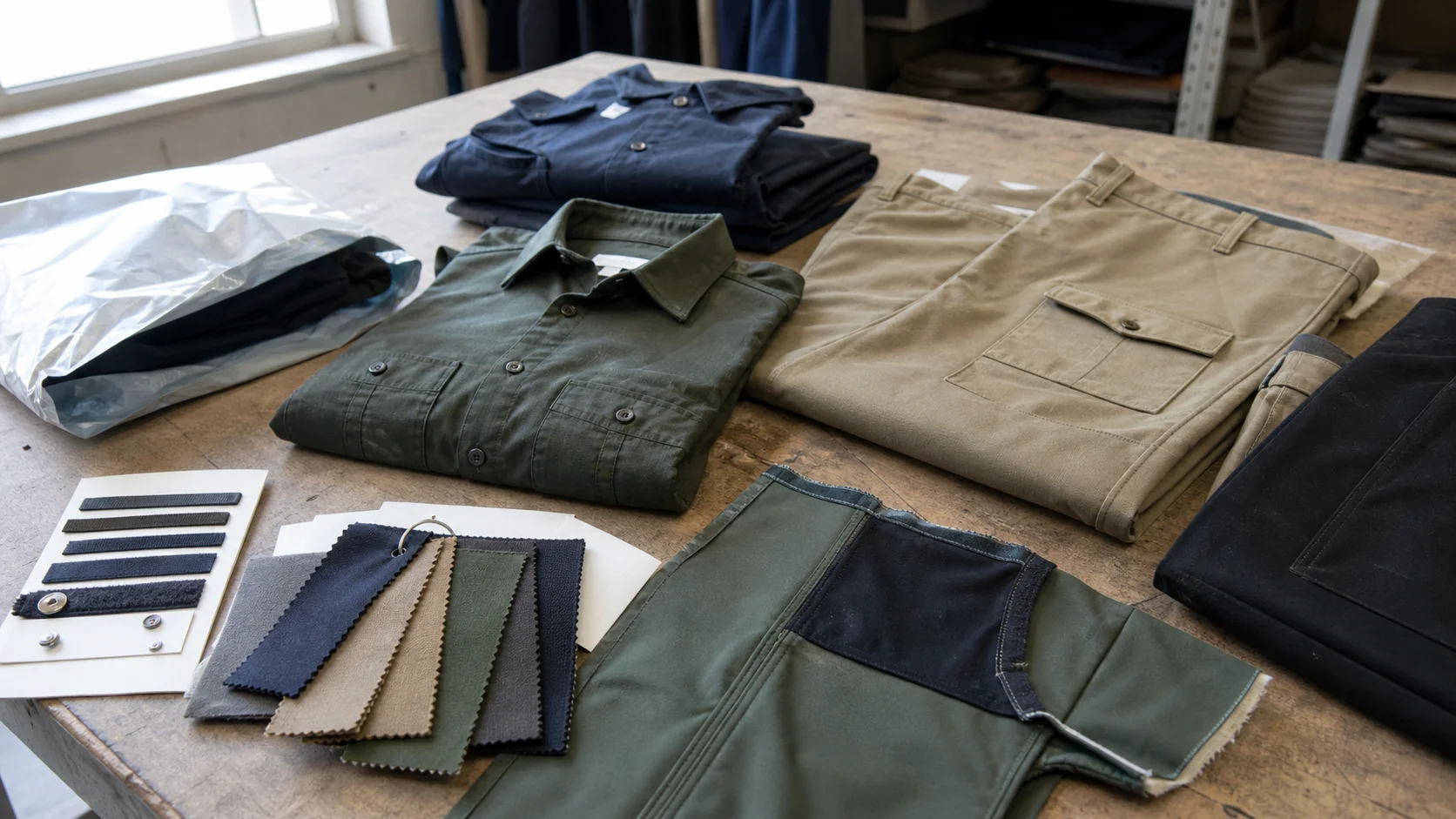
A product-specific bulk ordering outline for outdoor school buyers sourcing durable workwear uniforms, including fabric specs, sizing, decoration, seasonal...
Buy Bulk Workwear Uniforms for Outdoor Schools - MOQ, Cost & Sourcing manufacturing guide
Outdoor schools need uniforms that work harder than standard classroom apparel. Students and staff move through mud, rain, cold mornings, sun exposure, field activities, climbing areas, forest trails, gardens, animal care zones, and practical workshops. A bulk workwear uniform order must balance durability, comfort, child safety, brand presentation, budget control, and delivery reliability.
This guide is written for school procurement teams, outdoor education managers, operations directors, and uniform buyers comparing workwear uniform suppliers for bulk orders. It covers MOQ expectations, cost drivers, sourcing decisions, sample approval, fabric and trim specifications, lead-time planning, and inspection risks that are common in outdoor school uniforms.
For buyers who need supplier support beyond product selection, review the production and sourcing capabilities listed on Fabrikn’s services page, or use the contact page when you are ready to discuss a bulk uniform requirement.
Outdoor school uniforms are not only identity garments. They are working clothes. A student may wear the same jacket during morning assembly, a woodland lesson, a wet-weather hike, lunch, and an afternoon workshop. Staff uniforms may need to look professional for parents while still surviving repeated kneeling, carrying, tool handling, washing, and weather exposure.
The best bulk uniform programs start with use cases, not catalogue images. A school should define where each garment will be worn, who will wear it, how often it will be washed, and whether the item is seasonal, daily, or occasional. This avoids overbuying technical features for light-use garments and under-specifying the pieces that carry the most wear.
Purchasing judgment: spend more on outer layers, reinforced trousers, and staff work jackets. Save budget on basic tees, polos, and mid-layers where the fabric can be durable without being overly technical.
Outdoor schools also need consistency across size ranges. Children’s sizes, adult staff sizes, and sometimes unisex cuts must sit within one coordinated uniform system. That has sourcing implications. Not every supplier can offer the same color, fabric, trims, and branding methods across youth and adult sizing. Buyers should confirm this early, especially when the uniform must match school colors closely.
MOQ, or minimum order quantity, depends on whether the school is buying stock garments with decoration, semi-custom garments using available fabrics, or fully custom production. Outdoor school buyers often want the appearance of a custom uniform while working with a school budget. The right compromise is usually a mix of stock-based items and selective custom workwear pieces.
Order Type Typical MOQ Range Best For Main Tradeoff Stock garment with logo 25-100 pieces per style/color Polos, tees, fleeces, caps, basic jackets Limited control over fabric, fit, and color continuity Semi-custom uniform 100-300 pieces per style/color School-branded work trousers, vests, hoodies, mid-layers More choices, but still limited by available materials Fully custom production 300-1,000+ pieces per style/color Outerwear, technical workwear, full uniform programs Higher development cost and longer lead time Custom fabric or dyed-to-match color 500-2,000+ pieces or fabric MOQ equivalent Schools requiring exact color matching and long-term repeatability Fabric MOQ can exceed immediate garment demandThese ranges are typical, not guaranteed. A supplier may accept lower quantities if fabric is in stock, the style is simple, or the buyer combines several sizes under one colorway. A higher MOQ may apply when the school requests custom-dyed fabric, special waterproof membranes, reflective tape, reinforced panels, or multiple branded trims.
For small outdoor schools, the practical route is often to consolidate demand across staff, students, volunteers, and future intake. Another option is to use the same core garment across multiple year groups and identify roles through embroidery, heat transfer, sleeve print, or color-coded patches instead of separate garment styles.
Bulk uniform cost is not driven by garment quantity alone. The price reflects fabric weight, construction complexity, decoration method, testing requirements, packaging, freight, and how much development work the supplier must do before production starts.
Outdoor uniforms often require heavier fabrics than standard schoolwear. A basic cotton polo may use 180-220 gsm fabric, while a durable workwear polo may sit closer to 220-260 gsm. Hoodies may range from 280-360 gsm. Work trousers may use 240-320 gsm poly-cotton twill or canvas, with heavier weights for reinforced versions.
Water-resistant jackets, softshells, and insulated outerwear add cost because they involve layered fabrics, coatings, membranes, seam considerations, and more quality control. A low-cost jacket may look acceptable at delivery but fail after washing or abrasion if the coating is weak.
Outdoor school garments often need reinforced knees, bartacked stress points, secure pockets, adjustable cuffs, storm flaps, elasticated waists, ID label areas, and safe closures. Each feature adds cutting, sewing, trim, and inspection time. The cheapest design is rarely the best value if garments fail during term time.
Embroidery is durable and professional, especially for polos, fleeces, jackets, and staff garments. It can be less suitable for lightweight waterproof fabrics because needle holes may affect water resistance. Heat transfer is useful for logos, names, and reflective details, but buyers should confirm wash durability. Screen print can be cost-effective for large quantities of tees and hoodies, though it requires artwork setup and color control.
Schools often underestimate packaging complexity. A bulk order delivered in mixed cartons is cheaper than individually packed garments sorted by student, class, or staff member. If the supplier must pack by size set, department, campus, or name list, that service should be priced clearly. It can save administrative time, but it is not free.
Cost Driver Lower-Cost Choice Higher-Cost Choice Buying Judgment Fabric Standard stock fabric Custom technical fabric Use technical fabric only where the activity requires it. Branding One-position logo Multi-position embroidery and transfers Prioritize chest logo and optional back print for visibility. Construction Basic seams and pockets Reinforced panels and secure storage Reinforce trousers and outerwear before adding decorative trims. Packing Bulk cartons by size Individual packs by student or class Pay for sorted packing if internal distribution is a bottleneck.A complete outdoor school uniform program usually includes base layers, mid-layers, outer layers, legwear, accessories, and staff-specific items. Not every school needs every category at launch. Buyers should build the range around climate, activity level, safeguarding rules, and laundry expectations.
Polos and tees are high-volume items. They should be comfortable, washable, and colorfast. For outdoor use, consider cotton-rich blends for comfort or polyester-rich blends for faster drying. A 60/40 cotton-poly blend is a common compromise. For hotter climates, moisture-wicking polyester may be useful, but some schools prefer natural hand feel and a less sporty appearance.
MOQ is often lower for stock polos and tees, commonly starting around 25-100 pieces per color. Custom colors or fabric weights raise the quantity requirement. Confirm shrinkage tolerance, neckline recovery, pilling resistance, and whether the garment twists after washing.
Mid-layers are important for outdoor schools because they are worn frequently and visible in photos, assemblies, and field activities. Anti-pill fleece is a practical option for younger students, while hoodies may be more acceptable for older students or informal outdoor programs.
Check whether hood cords are allowed. For children’s garments, drawcords around the hood and neck can create safety concerns and may be restricted by local regulations or school policy. A safer design uses elastic binding, fixed hoods, or no hood at all.
Softshells work well for staff and older students. They look professional, offer wind resistance, and provide light water resistance. They are not the same as waterproof rain jackets. Buyers should avoid presenting softshells as full rainwear unless the fabric and seams support that claim.
Common specs include three-layer bonded fabric, stretch content, fleece backing, water-repellent finish, and zipped pockets. Embroidery can look strong on softshell, but test logo placement to avoid puckering or distortion.
Rain jackets and outdoor coats need closer specification. Buyers should request water resistance rating, breathability rating if relevant, seam sealing details, hood design, cuff closure, and washing instructions. Fully waterproof garments usually require sealed seams, not just water-resistant fabric.
For schools, durability may matter more than elite technical ratings. A very high-performance lightweight shell can tear quickly in rough outdoor play. A slightly heavier fabric with better abrasion resistance may be the better purchase.
Trousers receive heavy wear at outdoor schools. Look for reinforced knees, gusseted crotch, bartacks at stress points, secure pockets, and fabric with enough strength for kneeling and climbing. Poly-cotton twill, stretch canvas, or nylon blends may be appropriate depending on age group and climate.
Fit is a frequent problem. Children and staff need movement, but overly loose trousers catch on equipment. Elasticated backs, adjustable waists, or size grading across short, regular, and long inseams can reduce returns. MOQ rises when multiple inseam lengths are required.
Some outdoor schools need high-visibility vests, reflective trims, or brightly colored outerwear for field trips and roadside walking. Reflective tape quality should be checked after washing. Placement matters: tape hidden under backpacks has limited value.
For formal high-visibility safety compliance, buyers should not rely on appearance alone. Ask the supplier which standard applies in the destination market and whether documentation is available. If the garments are for general visibility rather than certified PPE, label and communicate them accordingly.
Fabric is where many uniform programs succeed or fail. Buyers often approve a garment based on hand feel and color, then discover issues after repeated wash cycles. Outdoor school uniforms should be specified with enough detail to protect the buyer without overcomplicating the order.
Exact specifications depend on budget. A buyer sourcing economical outdoor uniforms may not run every laboratory test, but the purchase order should still record agreed fabric composition, weight, color, and performance claims. If a supplier advertises a jacket as waterproof, ask what that means in measurable terms.
Purchasing judgment: do not pay for advanced waterproof-breathable fabric on every garment. Use it for rainwear and staff outerwear. For daily student layers, prioritize wash durability, fit stability, and color consistency.
Color is another sourcing risk. School colors often need consistency across polos, fleeces, jackets, and trousers, but different fabrics absorb dye differently. A navy cotton-rich polo, navy polyester fleece, and navy softshell may not match perfectly. Buyers should approve color by product category instead of expecting identical shade across all materials.
Trims include zippers, buttons, snaps, drawcords, elastic, reflective tape, labels, badges, hook-and-loop closures, and pullers. These small components affect safety, durability, and user satisfaction. A weak zipper can make a jacket unusable even when the fabric is still good.
For outdoor school jackets, specify zipper type, color, puller style, and whether the zipper is reverse coil, molded plastic, or metal. Molded plastic zippers are common in workwear and outerwear because they are durable and easier to handle with gloves. Reverse coil zippers can look cleaner but may be less rugged in some applications.
Hook-and-loop closures are practical but collect lint and debris. Snaps are durable but may be difficult for younger children. Buttons are repairable but less suitable for wet and muddy outerwear. Choose closures based on age group and activity, not only appearance.
Name labels reduce lost property. Size labels must be clear, especially when distributing bulk cartons. Care labels should match actual fabric and decoration. If heat transfers or waterproof coatings require lower wash temperatures, the care label needs to state it.
For staff uniforms, role labels or color-coded trims can help visitors identify instructors, first-aid staff, and outdoor leads. This can be done through embroidery, patches, or sleeve prints without creating entirely separate garment styles.
Common placements include left chest, back yoke, sleeve, and lower hem. For school uniforms, left chest branding is usually the safest default. Large back prints improve visibility during trips, but they add cost and may limit reuse if the school changes branding.
Embroidery is durable but can pucker on stretchy or lightweight fabrics. Heat transfer offers clean detail and works well for complex logos, but wash performance must be tested. Woven badges look traditional and can be durable, though edges may lift if poorly applied.
A workwear uniform supplier for outdoor schools should understand garment durability, school purchasing cycles, size planning, decoration, and bulk delivery. The supplier does not need to be the cheapest. The better supplier is the one that can translate your use case into a workable specification and deliver consistent product at the agreed quality level.
Start by checking whether the supplier can handle your order type. A decorator may be excellent for stock polos and fleeces but limited for custom trousers or technical outerwear. A manufacturer may be strong in custom production but inefficient for small repeat orders. Some buyers need both: stock items for flexibility and custom items for core identity.
Company transparency also matters. Buyers can review background information on Fabrikn’s about page when assessing fit, communication style, and service scope. A supplier’s website will not answer every production question, but it can help shortlist partners before requesting a quote.
Sampling is not a formality. It is the control stage that prevents expensive errors in bulk workwear orders. Outdoor schools should use samples to test fit, movement, washing, branding appearance, and staff acceptance before confirming production.
The buyer should provide garment type, target wearer, quantity estimate, size range, color, logo files, activity use, climate, and required delivery date. If the school has a uniform policy, include it. If safety rules restrict cords, reflective elements, or hood types, state those rules at the start.
The supplier should recommend stock, semi-custom, or custom options. This is where cost discipline matters. A practical supplier should tell you when a feature is unnecessary, too expensive for the order size, or likely to create production risk.
For stock garments, this may be a blank sample in the correct size and color. For custom garments, it may be a prototype using available fabric. Check sleeve length, body length, waist fit, mobility, pocket access, zipper function, and comfort when layered.
Approve logo size, placement, thread color, transfer color, badge position, and print durability. A digital mockup is useful but not enough for final approval on important orders. Physical branded samples show whether the logo distorts, puckers, cracks, or conflicts with seams.
For custom production, the pre-production sample should represent the final garment, fabric, trims, color, size label, care label, packaging, and branding. Bulk production should not start until this sample is approved in writing.
If the order includes many children’s and adult sizes, request a size set or at least key sizes. Fit grading can change unexpectedly between small and large sizes. This is especially important for trousers, outerwear, and garments intended for layering.
Approval Stage What to Check Common Risk Blank sample Fabric, fit, color, comfort Garment looks good but does not allow movement Logo sample Placement, size, durability, color Embroidery puckers or transfer cracks after wash Pre-production sample Final construction and trims Bulk production uses different components Size set Grading and size consistency Large sizes are too long or small sizes restrict movementLead time depends on product type, order volume, material availability, decoration method, sampling rounds, factory capacity, freight route, customs clearance, and school approval speed. The buyer controls some of these factors, especially decision timing and sample feedback.
Stock garments with simple logo decoration may be completed in 2-4 weeks after artwork approval, assuming inventory is available. Semi-custom orders often need 6-10 weeks. Fully custom workwear may require 10-16 weeks or more, especially if fabric needs dyeing, trims need sourcing, or several sample rounds are required.
Order Scenario Typical Lead Time After Approval Main Dependency Stock polos with embroidery 2-4 weeks Garment inventory and logo approval Stock fleece plus size sorting 3-5 weeks Inventory, decoration capacity, packing detail Semi-custom trousers 6-10 weeks Fabric availability and size range Custom waterproof jackets 10-16+ weeks Fabric, seam sealing, trims, testing, inspectionBack-to-school timing creates pressure. Many buyers request quotes late, approve samples slowly, then expect urgent delivery. Rush production increases the risk of mistakes in logo placement, size packing, and inspection. It can also raise freight cost if air shipment becomes necessary.
A safer procurement calendar starts range planning 5-6 months before the required wear date for custom items and 2-3 months before for stock-decorated items. Build in time for school leadership approval, parent communication, size collection, sample review, and contingency stock.
Purchasing judgment: if delivery date is fixed and close, reduce complexity. Choose available garments, limit logo positions, use standard colors, and avoid custom fabric.
Outdoor school uniforms should be inspected more carefully than standard promotional apparel. The garments face repeated wear, outdoor abrasion, washing, and safety scrutiny. AQL inspection or a structured internal inspection can catch many issues before distribution.
Check shade variation within the order and across sizes. Bulk fabric rolls can vary slightly, and mixed production batches may create visible differences. For school uniforms, small variation may be acceptable, but large shade differences between jackets or polos can look unprofessional.
Inspect for fabric defects such as holes, stains, slubs, coating marks, delamination, pilling, and poor recovery in stretch fabrics. For waterproof or water-resistant garments, review seam sealing and coating consistency.
Common issues include skipped stitches, open seams, uneven hems, twisted legs, weak bartacks, poor pocket alignment, broken threads, and puckering near logos. Outdoor trousers should be checked at the crotch, knees, pockets, waistband, and seat. Jackets should be checked at zippers, cuffs, armholes, hood seams, and pocket openings.
Logo errors are highly visible and hard to ignore. Inspect position, size, color, spelling, alignment, thread trimming, transfer adhesion, and print sharpness. Compare bulk production against the approved sample. A small placement tolerance is normal, but inconsistent logo height across garments can look careless when students stand together.
Bulk garments should be measured against an approved size chart with tolerance. Trousers, jackets, and fitted mid-layers are higher risk than tees. If size grading is wrong, exchanges and complaints can consume the savings from choosing a cheaper supplier.
Schools need the correct quantities by size. A bulk delivery that is short on popular sizes creates immediate problems, even if the total unit count is correct. Check carton markings, packing lists, size labels, and any student or class sorting instructions.
A good ordering strategy reduces cost without weakening the uniform program. The most common mistake is treating every garment as equally important. Outdoor schools should decide which pieces define the uniform, which pieces protect students and staff, and which pieces simply support daily wear.
Start with a practical core: polo or tee, mid-layer, rain layer, trousers or outdoor pants, and optional hat or vest. Staff may need a more durable jacket or branded softshell. Avoid launching too many styles at once unless the school has strong distribution and inventory control.
Not every user needs the same garment quality. Staff and instructors may need heavier-duty outerwear because they wear it daily and represent the school to parents. Younger students may need easier-care garments with safer closures. Older students may need better mobility and stronger trousers for intensive outdoor modules.
Every color and logo position adds complexity. A disciplined program might use one navy or forest green base color, one chest logo, and one optional high-visibility back print for trip garments. This keeps MOQ manageable and improves repeat ordering.
Outdoor uniforms wear out unevenly. Trousers, rainwear, and fleece cuffs may need replacement sooner than polos. Order a small buffer in common sizes if budget allows. For custom garments, confirm whether the supplier can repeat the same fabric and color later. If not, future replacements may look different.
Size mistakes are expensive. Use fit samples or measurement guidance before final order placement. For student uniforms, consider growth allowance, layering, and term timing. A jacket ordered too close-fitting before winter may become unusable quickly.
Buyer Goal Best Sourcing Choice Risk to Manage Lowest upfront cost Stock garments with simple logo Less control over color and continuity Balanced durability and price Semi-custom core garments MOQ may require careful size planning Strong school identity Custom outerwear and branded mid-layers Longer development timeline High outdoor performance Technical fabrics and reinforced construction Higher unit cost and stricter inspection needsBefore requesting a final quote, prepare a clear buying brief. Suppliers can quote more accurately when they understand quantities, performance expectations, decoration, packing, and delivery requirements. Vague requests usually produce vague pricing, and the cheapest quote may exclude important details.
For buyers comparing multiple suppliers, keep the brief consistent. If one supplier quotes custom jackets with sealed seams and another quotes stock water-resistant jackets, the prices are not directly comparable. Ask each supplier to state assumptions clearly. This makes the sourcing decision cleaner and reduces conflict later.
Outdoor schools should buy uniforms as a working system, not as disconnected garments. The right supplier helps balance MOQ, cost, performance, and repeatability. The right specification puts durability where it matters most. The right approval process catches mistakes before they become bulk-order problems.
For most outdoor school buyers, the strongest sourcing strategy is selective investment. Use stock or semi-custom garments for high-volume basics. Invest in better outerwear, trousers, and staff-facing pieces. Keep colors and branding disciplined. Approve physical samples. Inspect bulk goods before distribution.
When a school needs a structured sourcing conversation, a quotation brief, or support with bulk apparel production planning, start with the capabilities on Fabrikn’s services page and then contact the team through Fabrikn’s contact page.
Get a free quote from Fabrikn — your trusted B2B clothing manufacturer with 10+ years of experience. MOQ as low as 200 pieces.
Get a Free Quote →Typical MOQ depends on the order type. Stock garments with a school logo may start around 25-100 pieces per style and color. Semi-custom items often require 100-300 pieces. Fully custom workwear, technical jackets, or custom-dyed garments may require 300-1,000+ pieces, sometimes more if fabric MOQ is high.
Stock garments with embroidery or print often take 2-4 weeks after artwork approval if inventory is available. Semi-custom uniforms usually take 6-10 weeks. Fully custom outdoor jackets, trousers, or waterproof garments may take 10-16 weeks or longer, especially when sampling, fabric sourcing, or testing is required.
Stock uniforms are faster and usually cheaper. Custom uniforms offer better control over fabric, fit, trims, and school identity. Many outdoor schools use a hybrid approach: stock polos and fleeces, then semi-custom or custom trousers, jackets, and staff workwear.
Good choices depend on the garment. Polos often use cotton-poly blends for comfort and durability. Fleeces should be anti-pill polyester. Trousers may use poly-cotton twill, stretch canvas, or nylon blends. Rainwear should use water-resistant or waterproof fabric with appropriate seam construction. Buyers should confirm fabric weight, shrinkage, colorfastness, and wash performance before ordering.
Embroidery is durable and professional for polos, fleeces, softshells, and staff garments. Heat transfer works well for detailed logos, large back prints, and some technical fabrics. Embroidery may not suit lightweight waterproof garments because needle holes can affect water resistance. A physical branding sample is the safest approval method.
Reduce style count, consolidate colors, limit logo positions, use stock fabrics where possible, and invest only in features that match real activity needs. Buyers can also improve pricing by ordering across student and staff groups together, planning earlier, and avoiding rush freight.
The main risks are weak seams, poor zippers, fabric shade variation, shrinkage, logo placement errors, pilling, failed water resistance, incorrect size grading, and packing shortages. Trousers and outerwear need the closest inspection because they carry the most wear and have more construction details.
A practical buffer is often 5-10% in common sizes, depending on budget and storage space. Custom garments may need a larger buffer because repeat production can be slower and may involve MOQ. Stock garments can usually be replenished more easily, but color and size availability should still be checked.
Include garment types, quantities by size, color requirements, logo files, decoration placements, delivery date, fabric expectations, packaging needs, safety requirements, and whether samples are required. A detailed quote request helps suppliers price accurately and makes competing offers easier to compare.
Only some garments require formal PPE certification, such as certified high-visibility clothing or protective workwear for specific hazards. General school visibility garments are not automatically PPE. Buyers should clarify the intended use and ask the supplier for applicable standards and documentation when certification is required.