
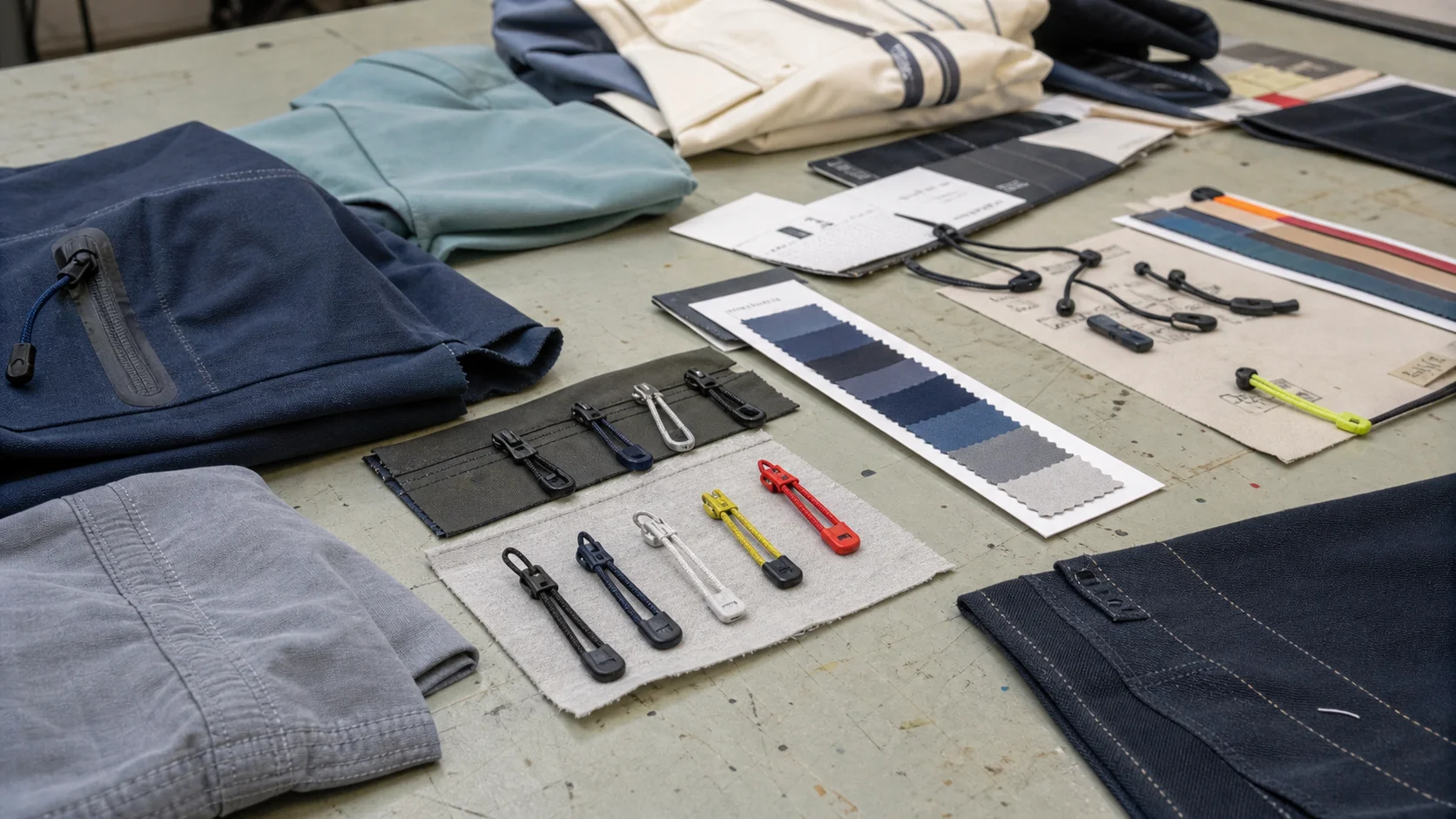
A product-specific SEO outline for auditing bulk zip puller charm colorfastness before issuing decorated gear to cleaning crews exposed to detergents,...
Zip Puller Charm Colorfastness Audit for Buyers - Fabrikn production reference
Zip puller charms look like a small apparel or accessory detail, but in bulk uniform programs for cleaning crews they carry a practical quality risk. A charm that bleeds dye, sheds coating, or transfers pigment under detergent exposure can stain workwear, damage brand perception, and create rework for buyers who need repeatable supply.
For cleaning crews, the environment is tougher than normal fashion use. Garments and bags are exposed to disinfectants, alkaline cleaners, sweat, repeated laundering, wet hands, and friction against gloves or utility belts. A zip puller charm may sit on a jacket, apron, pouch, laundry bag, tool bag, shoe cover case, or service uniform. If colorfastness is not checked before bulk production, the defect often appears only after the product is already in field use.
A bulk zip puller charm colorfastness audit is not only a laboratory exercise. It is a purchasing control process. Buyers need to check the charm material, the dye or plating system, the printed logo method, the attachment hardware, and the way the finished item behaves after washing, rubbing, chemical contact, and storage. The best audit is practical: it focuses on the conditions cleaning crews actually face, not only a decorative appearance check under factory lighting.
In the Decoration & Printing category, zip puller charms may involve molded PVC, silicone, TPU, polyester tape, woven labels, rubberized patches, metal charms with enamel fill, cord pullers, heat-transfer branding, screen printing, pad printing, laser engraving, or epoxy coating. Each option has a different colorfastness profile. Buyers should avoid treating all charms as interchangeable trim.
Purchasing judgment: for cleaning crew programs, color stability under wet rubbing and detergent exposure is more important than a glossy finish or a very low trim price. A charm that costs slightly more but survives laundering usually has a lower total cost than a cheap charm that creates claims.
Brands and uniform distributors sourcing decoration components can review broader production support through Fabrikn services, especially when trims, printing, and garment assembly must be aligned before approval.
Colorfastness failure rarely comes from one simple cause. It is usually the result of weak material selection, unstable pigment, insufficient curing, poor surface sealing, or exposure conditions that were not considered during development. Cleaning crew products combine several of these risks.
The most visible failure is color transfer from a dark zip puller charm onto a light garment panel. Navy, black, red, orange, and deep green charms are common risk colors. If the charm rubs against white, grey, pale blue, or hi-vis fabric while wet, staining can appear around the zipper area. This is especially relevant on work jackets, service aprons, and utility pouches.
Cleaning crew uniforms are often washed with stronger detergents than retail apparel. Some crews also use bleach-based, peroxide-based, quaternary ammonium, or alcohol-based cleaning products during work. A zip puller charm does not need to be soaked in chemicals to fail; repeated contact from wet gloves or overspray can soften coatings and loosen pigments.
Bulk charms may pass initial shade approval and still fail after being packed tightly in polybags or cartons. Heat, humidity, pressure, and plasticizer migration can cause color offset between charms or onto zipper tape. This risk is higher with soft PVC, rubber-like materials, heavily dyed cords, and printed surfaces without adequate curing.
Many buyers focus on whether the brand color is correct. They also need to check whether the logo ink stays bonded to the puller surface. Screen printing or pad printing on silicone, TPU, PVC, and coated polyester often requires correct primer, curing time, and surface treatment. If the ink is not compatible, the logo may smear or flake after rubbing.
Colorfastness risk increases when suppliers use different trim batches within one order. A small pilot lot may pass, while the bulk lot uses another pigment source, coating supplier, or cord dye lot. Buyers should require lot traceability, especially for repeat uniform programs.
Zip puller charms for cleaning crew products are usually selected for grip, brand visibility, cost, and durability. Colorfastness should be part of the selection matrix from the start.
Material or Method Typical Use Main Colorfastness Risk Buyer Judgment Soft PVC Custom molded logo charms Plasticizer migration, pigment bleed, surface tackiness Good for low-cost branding, but needs migration and wet rub checks Silicone Flexible premium-feel pullers Ink adhesion issues if printing is not treated correctly Stable material, but printed logos need careful testing TPU Clear or rubber-like branded pullers Dye transfer and surface abrasion Useful for modern trims, but confirm detergent resistance Polyester Cord or Tape Functional cord pullers and zipper extensions Dyestuff bleeding on wet rubbing or washing Often reliable if properly dyed, but dark shades need test reports Metal with Enamel Premium logo charms Enamel chip, plating tarnish, corrosion Less dye bleed risk, higher scratch and corrosion concern Screen or Pad Print Logo on molded puller Smearing, cracking, poor curing Accept only after rub, tape, wash, and chemical wipe checks Heat Transfer Logo on textile puller Peeling, adhesive yellowing, color loss Works best on compatible woven or knit surfacesSoft PVC is common because it supports molded shapes, raised logos, multi-color designs, and moderate unit costs. The tradeoff is migration risk. Pigment, plasticizer, or surface residue can move when the puller is pressed against another trim or fabric. Buyers should be careful with saturated red, black, navy, and neon shades. A charm that feels oily or tacky should not move into bulk production without additional testing.
Silicone has a clean hand feel and strong flexibility. The base material is often more stable than soft PVC, but decoration can be the weak point. Standard inks may not bond well unless the supplier uses suitable silicone ink or surface treatment. For buyers, the pass/fail question is not only whether the silicone body keeps its color; the printed or filled logo must also survive rubbing and washing.
Polyester cord is widely used for utility products because it is lightweight, functional, and easy to assemble with plastic or rubber tabs. Solution-dyed or well-dyed polyester can perform well, but low-grade dark cords can stain light zipper tape. Buyers should ask whether the cord is disperse dyed, solution dyed, or treated after dyeing. The supplier should confirm colorfastness to washing and rubbing before bulk cutting.
Metal charms generally do not bleed like textile or rubber materials. Their risks are different: plating rub-off, corrosion from cleaning chemicals, enamel chipping, and sharp edges damaging fabric. For cleaning crew programs, plated charms should be tested against moisture and mild chemical wipe exposure. Nickel release and restricted substances may also matter depending on the destination market.
A useful audit starts before production and continues through final inspection. Buyers should not wait until finished goods are packed. The earlier the charm is tested, the easier it is to change pigment, ink, coating, or material.
Start by confirming where the zip puller charm will be used. A puller on a dry storage pouch faces different stress than a puller on a washable uniform jacket. For cleaning crews, the product may go through industrial laundering, home laundering, or wipe-down cleaning. It may contact chlorine-free disinfectants, diluted bleach, alcohol wipes, or alkaline cleaning fluid. The audit brief should state the expected exposure clearly.
The supplier should submit a trim specification sheet before sampling. This should include base material, pigment type where available, color reference, logo method, coating, hardness for molded material, cord diameter, metal finish, zipper attachment method, and packaging method. A vague description such as “rubber puller with logo” is not enough for bulk control.
For molded and dyed trims, buyers usually approve color against Pantone, customer standard, or approved physical sample. Digital color approval is risky for dark trims and fluorescent colors. If a charm must match garment panels, zipper tape, embroidery, or printed branding, approve the combination under D65 light and store lighting if retail presentation matters.
Pre-production samples should be made using intended bulk materials and decoration processes. This step is where many problems are caught. If the sample is handmade with a substitute ink or lab-made pigment batch, it may not represent bulk production. Buyers should require confirmation that the pre-production sample uses the same production route planned for the order.
Inline checks should look for shade drift, surface tackiness, print curing, coating consistency, burrs, and attachment strength. For printed pullers, a simple rub check during production can identify under-cured ink before thousands of pieces are packed.
Final inspection should include appearance, colorfastness spot checks, pull strength, measurement, logo position, shade lot segregation, packing method, and carton labeling. If the charm is already attached to finished garments or bags, inspect for immediate staining around zipper tape and adjacent fabric.
Formal testing should be chosen based on buyer requirements and destination market. Common references include colorfastness to rubbing, washing, perspiration, water, and migration. For cleaning crew use, practical in-house screening is also valuable, especially before sending samples to a third-party lab.
Audit Check What It Reveals Typical Buyer Expectation Dry rubbing Loose surface pigment or weak print Minimal visible transfer to white cloth Wet rubbing Bleeding under damp use Grade 4 or better is often preferred for uniform programs Wash test Color loss, staining, coating damage No staining on adjacent fabric after approved wash cycle Detergent soak Reaction to cleaning chemistry No dye bleed, swelling, tackiness, or logo damage Chemical wipe Surface durability against field exposure No smearing after defined wipe count and solution Heat migration Transfer during storage and shipping No offset onto white fabric or zipper tapeRubbing tests are among the most relevant checks for zip puller charms. A white cotton cloth is rubbed against the charm surface under controlled pressure. Dry rubbing checks loose pigment and weak coating. Wet rubbing checks behavior when the puller is damp from washing, sweat, or wet gloves. Cleaning crew buyers should pay close attention to wet rubbing because this is where many low-cost trims fail.
The charm should be washed attached to the actual garment or bag if possible. If the final product uses light fabric, test with that light fabric, not only a dark sample. The test should check both color change of the charm and staining of nearby materials. A charm that fades slightly may be acceptable for some utility products; a charm that stains a white uniform panel is usually a rejection risk.
Perspiration testing is useful when pullers are handled frequently or worn close to the body. Water exposure is also relevant because cleaning staff may handle uniforms with wet hands. Some dyes appear stable in dry display conditions but release color after water contact.
Cleaning crew products deserve a stricter practical screen than ordinary fashion trims. Buyers can request a defined wipe test using a mild detergent solution and, where relevant, a disinfectant type that reflects real use. The test should be agreed in writing before the purchase order. Avoid unrealistic chemical claims unless the supplier can support them with proper testing.
For printed logos, a tape pull test is a fast way to detect weak adhesion. The tape is applied to the printed area, pressed consistently, and removed at a steady angle. If ink lifts easily, the decoration process is not ready for bulk production. This does not replace formal testing, but it is a useful factory-floor control.
A purchase order should not rely on a photo and a unit price. For bulk zip puller charms, the specification should be detailed enough that another inspector can verify the product without asking the merchandiser what was intended.
Purchasing judgment: if the supplier cannot define the ink, coating, or base material clearly, the trim should be treated as a higher-risk item. Low documentation does not always mean poor quality, but it does reduce buyer control when complaints arise.
Buyers coordinating decoration, trims, and final product assembly can use the Fabrikn contact page to discuss sourcing requirements, technical packs, and production review steps.
MOQ and sampling vary by material, mold requirement, color count, and decoration method. Buyers should confirm the commercial structure before spending too much time on artwork approval.
For stock cord pullers or simple zipper extensions, MOQs may start around 500 to 1,000 pieces per color, depending on supplier inventory. Custom molded PVC or silicone charms often require 1,000 to 3,000 pieces per design or color, sometimes higher if the design uses multiple colors or a custom mold. Metal charms with custom logo or enamel may also start around 1,000 to 3,000 pieces, with plating and mold charges separated. Highly customized programs, special color matching, or strict testing requirements can push practical MOQs to 5,000 pieces or more.
These ranges are typical market guidance, not a fixed rule. A supplier may accept a lower MOQ with a surcharge, stock material, or shared production color. The tradeoff is that small custom lots may receive less favorable unit costs and longer setup timing.
Lead time depends on mold development, artwork complexity, material availability, color matching, testing schedule, and factory production capacity. Stock pullers may be ready in one to three weeks after approval. Custom molded charms commonly need two to four weeks for mold and sample development, then two to five weeks for bulk production after approval. Third-party testing can add several working days or longer, especially when retesting is required.
Buyers should build approval time into the calendar. A delayed logo approval, late color standard, or failed wet rub test can move the ship date. Rushing colorfastness checks is a false economy when the finished product is meant for crew uniforms, facility service programs, or repeat B2B replenishment.
Final inspection should not only count pieces and compare the logo. For cleaning crew use, the inspector should treat the puller as a functional and decorative trim that can affect the whole product.
Inspectors should compare samples from multiple cartons against the approved standard. Shade variation may indicate mixed batches. A minor shade difference might be acceptable for isolated spare parts, but it can be highly visible when pullers are attached across a uniform set.
Open inner bags and check whether charms have left marks on each other, the zipper tape, tissue paper, or polybag. Dark charms packed tightly against light materials deserve special attention. If staining is already visible in the carton, field performance will not improve.
Soft PVC and rubber-like trims should feel dry and stable. A tacky surface can attract dirt, hold chemical residue, and transfer pigment. It may also indicate curing or formulation problems.
Inspectors can perform a controlled thumb rub, cloth rub, or tape check according to the agreed inspection protocol. If print comes off easily during inspection, it will likely fail during cleaning crew use.
A colorfast charm is still a problem if it breaks off in service. Pull strength should be checked for cord loops, molded holes, metal rings, and slider attachment points. A weak attachment can create product complaints and safety concerns.
Metal and molded trims should be checked for burrs, sharp corners, and rough gate marks. These defects can scratch the user, snag gloves, or damage fabric around the zipper.
Good supplier questioning reduces ambiguity before money is committed. The goal is not to overcomplicate a small trim purchase. The goal is to make sure the buyer knows what is being supplied and how it will behave in the intended cleaning crew environment.
Supplier answers should be documented in the tech pack, trim sheet, or purchase order file. Verbal assurances are weak protection when a shipment arrives with color transfer. For ongoing uniform programs, the supplier should maintain a history of approved materials and color lots.
Zip puller charms are often treated as a branding accessory, but for B2B cleaning crew products they sit at the intersection of decoration, function, and laundering durability. Buyers need to weigh the cost of testing against the cost of field failure. A very low unit price can be attractive on a quote sheet, especially when ordering thousands of pieces. The savings disappear quickly if the trim stains finished garments, delays shipment, or requires replacement.
For light-colored uniforms and washable bags, conservative material choices are safer. Polyester cord with proven dye stability, silicone with compatible decoration, or metal with corrosion-resistant finishing may be preferable to unverified soft PVC. For dark utility pouches that are not laundered often, a wider range of trims may be acceptable. The right choice depends on actual use, not a general ranking of materials.
Color selection also affects risk. Deep saturated shades and fluorescent colors are harder to control than mid-tone colors. Multi-color molded charms create more interfaces between pigments. Metallic prints and glossy coatings can look premium but may need stronger abrasion checks. A buyer who wants both a bright brand color and industrial wash durability should plan for extra sampling time.
A colorfastness audit is more useful when the records are clear. Keep the approved artwork, material specification, color standard, test report, pre-production sample approval, production lot details, inspection report, and shipment packing photos. If the order is repeated six months later, these records help prevent silent substitutions.
For buyers handling multiple uniform SKUs, a trim library is useful. Each approved charm should have a code, image, physical retained sample, supplier reference, color standard, and testing status. If a cleaning crew jacket, pouch, and laundry bag all use the same zip puller charm, the trim library reduces duplicated approvals and improves consistency.
Company background and sourcing scope can be reviewed through Fabrikn about us when evaluating production support for apparel, trims, decoration, and related buyer controls.
The strongest purchasing position is to define the risk before quoting, approve samples that reflect real production, and inspect against written standards. Cleaning crew products face hard use. A zip puller charm that survives that use is not accidental; it comes from controlled material selection, practical testing, and disciplined bulk inspection.
Get a free quote from Fabrikn — your trusted B2B clothing manufacturer with 10+ years of experience. MOQ as low as 200 pieces.
Get a Free Quote →It is a quality control process that checks whether a zip puller charm keeps its color and does not stain nearby fabric, zipper tape, or packaging during rubbing, washing, detergent exposure, storage, and normal use.
Cleaning crew uniforms and bags are exposed to wet handling, detergents, disinfectants, sweat, friction, and frequent laundering. These conditions increase the chance of dye bleed, print smearing, coating damage, and color transfer.
Soft PVC, low-grade dyed cords, dark rubber-like materials, and poorly cured printed surfaces often carry higher risk. The material itself is not the only issue; pigment quality, curing, coating, and packing method also matter.
Stock pullers may start around 500 to 1,000 pieces per color. Custom molded PVC, silicone, or metal logo charms often start around 1,000 to 3,000 pieces per design or color. Special colors, custom molds, and strict testing requirements can raise the practical MOQ.
Buyers should consider dry rubbing, wet rubbing, washing, water exposure, perspiration, detergent soak, chemical wipe screening, heat migration, and tape adhesion for printed logos. The exact test plan should match the product’s real use.
A previous report can be useful, but it should match the same material, color, coating, decoration method, and production process. A report for a different color or older material batch should not replace pre-production testing for a new bulk order.
Visible staining on white cloth, zipper tape, garment fabric, or packing material is a serious warning sign. Surface tackiness, ink smearing, strong chemical odor, mixed shade lots, and weak attachments should also trigger a hold or further review.
Buyers should lock the trim specification, approve real production samples, require colorfastness checks, keep sealed samples, inspect multiple cartons, and prevent material substitution. Clear purchase order requirements are stronger than relying on general supplier assurances.