
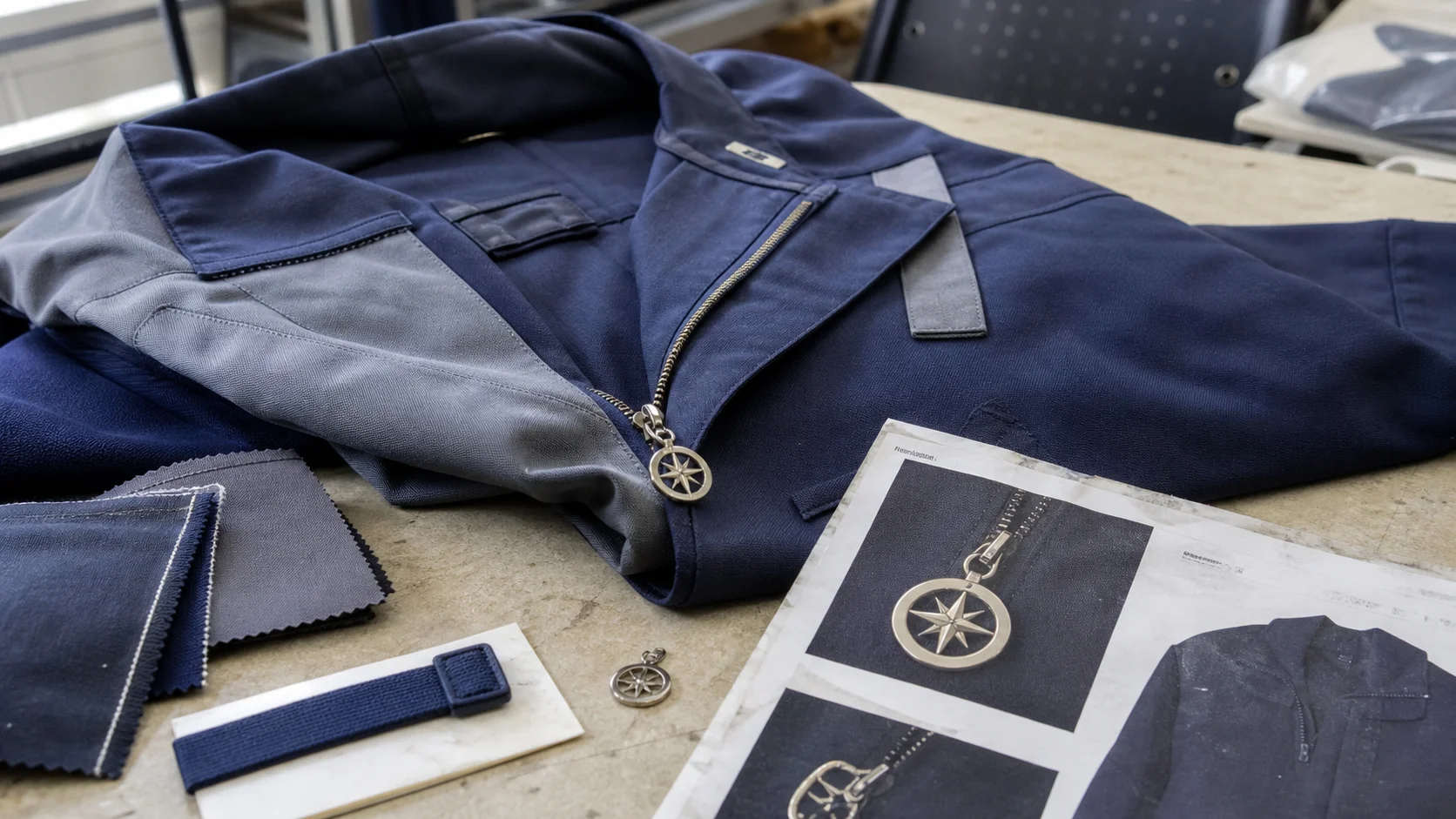
A practical review of zip puller charm size grading for facilities managers, focusing on fit, durability, production consistency, and how decoration...
Bulk Zip Puller Charm Size Grading Review - Fabrikn production reference
For facilities managers sourcing branded apparel, uniforms, or promotional textiles, zip puller charms are a small component with an outsized effect. They influence how a garment opens, how durable it feels in daily use, and how clearly a brand is represented on the final piece. A bulk zip puller charm size grading review is not just a trim check. It is a practical sourcing step that helps teams balance appearance, ergonomics, cost, and production reliability across multiple sizes, product types, and end-use conditions.
This review is especially relevant in Decoration & Printing because decorative hardware often sits at the intersection of branding and utility. A charm can carry a logo, signal a premium finish, or differentiate a garment line. It can also create problems if the size is too large for the garment scale, too heavy for the zipper system, or inconsistent from one production batch to the next. For facilities managers, the goal is simple: specify a charm that looks right, functions well, and remains stable in bulk production.
A zip puller charm is the visible end piece attached to a zipper pull, usually added for grip, decoration, identification, or brand presentation. In bulk apparel programs, the charm may be a simple molded tab, a woven puller, a metal tag, a printed logo piece, or a shaped accessory tied to the zipper slider. It can be subtle or highly decorative, depending on the garment and the buying brief.
Size grading matters because the same charm does not automatically work across all garments. A puller that suits a youth jacket may look oversized on a corporate polo pouch. A charm that feels premium on a heavyweight hoodie may be awkward on a lightweight tote. In bulk production, a good grading review checks whether the charm dimensions scale logically with garment size, zipper gauge, end-user handling, and branding requirements.
In trim sourcing, visual proportion is not enough. A charm must also match the zipper system, sewing method, and expected wear cycle.
For facilities managers, this is a procurement control issue. A charm that is too large can snag, increase packing issues, and raise defect rates. A charm that is too small may be hard to use, fail accessibility expectations, or disappear visually in the finished product. The right size grading review reduces avoidable rework.
Size grading in zip puller charms refers to adjusting the charm dimensions for different sizes, styles, or product families while keeping a common design language. The term is familiar in garment pattern development, but the same logic applies to decorative trims. A supplier may produce one master charm and then grade it by length, width, thickness, loop size, or graphic scale.
Most buyers review grading in one of three ways:
Single-size application: One charm size is used across all garment sizes. This works when the garment range is narrow or the charm is intentionally understated.
Proportional grading: The charm changes with garment size, often in small increments. This is common for outerwear, schoolwear, and premium collections.
Style-based grading: Different product groups use different charm sizes, even if the brand mark is the same. This is typical when one range includes shirts, bags, and jackets.
A practical review looks at whether the grading is truly functional or simply cosmetic. If a supplier offers multiple sizes, ask whether the differences affect tooling, unit cost, setup time, or minimum order quantity. The cheapest-looking option is not always the best value once sampling, corrections, and inspection losses are included.
Facilities managers should not approve a charm on artwork alone. The key dimensions determine fit, handling, and repeatability. A complete review should include the following points.
This is the first check. The charm should be visually balanced against the zipper tape and the garment panel. A long charm may dangle too far and interfere with movement. A short charm may be difficult to grip, especially for gloves or cold-weather use.
Thickness affects both appearance and performance. A thick molded charm can feel premium, but it may add bulk at the zipper end. Sharp edges are a risk if the trim sits against skin, bag lining, or machine-wash surfaces. Rounded edges and consistent finish are worth paying for.
The opening must fit the intended slider or cord. A tight loop causes assembly delays and inconsistent attachment. An oversized loop can shift, twist, or wear faster. This dimension should be measured in the approved sample, not estimated from a drawing.
If the charm carries decoration, the print field should be reviewed at final size. Shrinking the charm too much can distort fine lettering or weaken brand readability. Larger charms allow more detail, but decoration costs can rise if the print or mold is more complex.
Weight is often overlooked. A metal charm may add perceived quality but can stress lightweight zippers and change the way a garment hangs. A very light plastic charm may be economical but can feel cheap or flutter during wear. Weight should be reviewed alongside garment category and wash frequency.
The charm must not interfere with the zipper slider, top stop, or neighboring trims. This matters in jackets, bags, and workwear where the puller is used frequently and quickly. A charm that catches on seams or linings may pass visual inspection and still fail in use.
Decoration & Printing buyers often focus first on graphics, but the base material drives most of the result. Common charm materials include TPU, PVC, silicone, woven polyester, zinc alloy, aluminum, and plated steel. Each has tradeoffs.
TPU or PVC: Suitable for colorful molded logos and soft-touch effects. Good for casual apparel, bags, and rainwear. Check flexibility, odor control, and compliance requirements carefully.
Silicone: Clean look, soft hand, and decent durability. Works well for sport and lifestyle products. Printing detail can be limited by size.
Metal: Strong visual presence and a premium feel. Better for outerwear or upscale collections. Watch for sharp edges, plating wear, and added weight.
Woven textile pulls: Light and comfortable. Good for casual use and brand labels. May not suit premium metal-look programs.
Finish matters as much as material. Gloss, matte, soft-touch, electroplating, brushed texture, or printed color all affect the way the charm reads in bulk. A matte finish usually hides minor molding marks better than high gloss. Metal plating needs extra attention because minor color variation can be visible across cartons.
Decoration methods include embossing, debossing, screen print, heat transfer, UV print, laser marking, and molded color fill. Each method has a capacity limit. Fine type may look acceptable on a flat artwork proof and disappear on a tiny charm. That is why a size grading review should include a decorated sample, not only a blank prototype.
Minimum order quantities vary by material, tooling complexity, and decoration method. Buyers should treat the following as typical sourcing ranges rather than fixed rules:
Charm type Typical MOQ range Notes Basic woven puller 500 to 2,000 pcs Usually easier to trial, lower tooling burden Molded TPU/PVC/silicone charm 1,000 to 5,000 pcs Tooling and color matching may raise setup needs Metal charm with plating 1,000 to 3,000 pcs Inspection of finish consistency is important Custom shaped premium charm 3,000 pcs and up Tooling and decoration complexity often drive minimumsSample approval should follow a disciplined sequence. A facility manager should expect, at minimum, artwork confirmation, size sheet approval, first sample review, revised sample if needed, and pre-production reference sign-off. For more complex trims, a production sample or golden sample is worth the extra step. It becomes the reference point for bulk inspection.
Lead time depends on the material, tooling, decoration method, and how many revision rounds are needed. Simple pullers may be sampled quickly, while custom molded or plated options can take longer. Delays often come from vague artwork, missing size references, or late decisions on finish. A clean approval cycle saves more time than pushing a supplier to start early with incomplete details.
To review supplier capability and trim support, buyers can start with Fabrikn’s services, then move to direct discussions through contact-us. Background on the company and sourcing approach is available at about-us.
Bulk production reviews should focus on defects that are easy to miss in small samples but expensive in volume. Zip puller charms are small, so inspection discipline matters.
Size variation: Small differences in length, width, or loop size can create inconsistent appearance and assembly difficulty.
Color mismatch: Printed or molded colors may vary between sample approval and mass production, especially across separate production runs.
Weak attachment points: A charm that tears, cracks, or opens too easily can lead to field failure and returns.
Surface defects: Scratches, sink marks, flash, plating marks, and print smudges are common trim rejection points.
Wrong scale placement: A logo may be centered on the sample and drift during production if there is no clear spec for positioning.
Compatibility issues: The charm may fit the approved zipper on paper but fail with actual hardware from another batch.
Inspection risk rises when multiple factories or subcontractors are involved. One vendor may make the charm, another may attach it, and a third may pack and ship the order. Each handoff adds a chance for mismatch. A complete trim approval file should include dimensions, material grade, artwork position, color reference, packing method, and a clear pass/fail standard.
Facilities managers should also account for environmental exposure. Some programs face frequent washing, outdoor use, chemical contact, or high abrasion. In those cases, a charm that looks excellent in the showroom may fail in service. Washing tests, pull tests, and rub checks are worth requesting for higher-risk applications.
A useful specification sheet reduces back-and-forth and protects the buyer during production. It does not need to be long, but it must be precise. Include the following:
Product type and intended garment category
Charm material, finish, and color reference
Exact dimensions with tolerances
Attachment method and loop size
Logo artwork file and print or mold position
Required grade sizes, if more than one version is needed
Packaging requirement and carton labeling
Inspection standard and defect limits
One common mistake is leaving grading unspecified. Buyers may write “size to be confirmed” and assume the supplier will interpret the styling correctly. That approach usually creates avoidable variation. If the same charm is used on multiple garment sizes, define where the size changes and how far the charm can vary. Even a small tolerance can affect branding alignment.
Another mistake is over-specifying details that do not matter. If a non-critical inside face will never be seen, it may not need the same finish quality as the front logo face. Good sourcing is about directing quality where the customer can actually see and feel it.
Facilities managers often need to choose between a decorative look and a practical trim. The right answer depends on the end use.
Smaller charms usually reduce material cost and may lower snag risk. They also keep the garment cleaner in appearance. The downside is readability. Logos can become hard to identify, and users may struggle to grip the zipper.
Larger charms show branding more clearly and can provide better handling. They often suit outerwear, bags, and premium casualwear. The tradeoff is bulk. Large charms can swing, catch, or feel too decorative for work uniforms or technical garments.
Metal usually looks more substantial and holds shape well. Soft materials are lighter, quieter, and often safer near skin or flexible panels. For repeated washing and rough handling, the choice should be based on performance evidence rather than appearance alone.
A sourcing editor’s view is that the lowest-cost charm is rarely the best bulk choice if it drives low-level complaints across the product life cycle. Trims are small, but they touch the user every time the zipper is opened. That makes consistency more valuable than a small unit-price saving.
Not every garment needs the same charm profile. A good grading review considers the product category first.
Workwear and uniforms: Choose moderate-sized, durable charms with clear grip and low snag risk. Avoid overly fashionable shapes unless brand presentation demands it.
Outdoor jackets and performance wear: Use secure attachment, weather-resistant materials, and finishes that remain stable after exposure and washing.
Schoolwear and youth apparel: Keep the charm lightweight, smooth-edged, and easy to use. Safety and comfort matter more than decorative complexity.
Promotional textiles: Prioritize fast branding visibility and manageable cost. The charm may carry the whole logo impression, so print clarity is essential.
Bags and accessories: Larger charms are often acceptable here, but attachment strength and wear resistance should be verified carefully.
For facilities teams buying across several categories, it is often wiser to standardize on a small family of charm sizes rather than order a custom size for every SKU. That approach simplifies sourcing, reduces approval effort, and makes inspection easier. Standardization also helps when stock needs to be replenished quickly.
Supplier communication should stay practical. Ask for dimensioned drawings, decorated samples, tolerance ranges, and a production photo reference before bulk approval. If the supplier cannot explain how the charm is made, attached, and checked, the risk is higher.
It also helps to clarify which elements are fixed and which can change. For example, the logo shape may be fixed, but the back face texture or packing format might be negotiable. That gives room to control cost without weakening the product. If a supplier offers grading suggestions, compare them against the actual garment set and the expected end use, not just the sample photograph.
When the project is complex or the order size is large, a short early discussion can prevent a long correction cycle. Buyers looking for deeper trim support can review Fabrikn’s services or reach out directly through contact-us. Company background and sourcing context are also available on about-us.
A bulk zip puller charm size grading review is a small but important part of apparel sourcing. It protects the buyer from scale mismatch, decoration failure, attachment problems, and inconsistent bulk output. For facilities managers, the best result comes from combining clear dimensions, realistic MOQ expectations, sample approval discipline, and honest inspection criteria.
The strongest purchasing decisions are usually not the most decorative ones. They are the ones that fit the garment, survive use, and arrive in bulk with the same look as the approved sample. That is the standard trim buyers should keep in mind whenever a zipper pull becomes part of the brand story.
Get a free quote from Fabrikn — your trusted B2B clothing manufacturer with 10+ years of experience. MOQ as low as 200 pieces.
Get a Free Quote →It means adjusting the charm size across different garment sizes or product categories so the trim stays proportionate, functional, and visually consistent.
Basic woven pullers may start around 500 to 2,000 pieces. Molded, plated, or custom-shaped charms often require 1,000 to 5,000 pieces or more, depending on tooling and decoration.
Review dimensions, material, finish, logo placement, attachment fit, color, edge quality, and how the charm performs on the actual zipper hardware.
There is no single best option. TPU, PVC, silicone, woven textiles, and metal each suit different end uses. The right choice depends on cost, appearance, durability, and washing conditions.
Size variation, color mismatch, weak attachment, surface marks, logo distortion, and zipper compatibility issues are among the most common problems.
Yes, especially for uniforms, outdoor wear, and high-use items. Pull tests, wash checks, and visual inspections help reduce field failures.
Sometimes. A single size is workable when the product range is narrow or the charm is intentionally simple. Wider size ranges often need at least two grade options.