
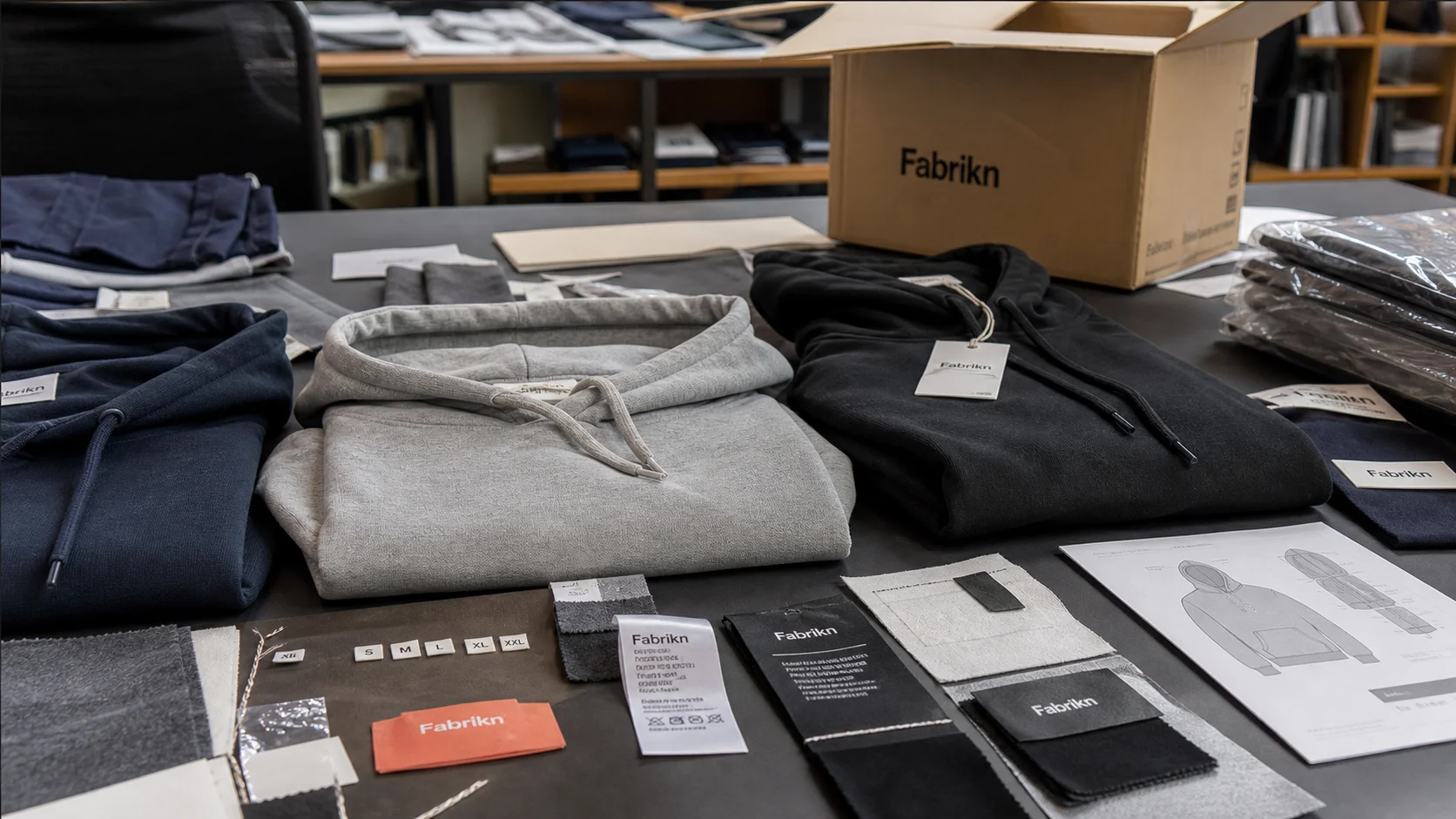
Buyer Criteria for Selecting a Wholesale Garment Supplier with checks for samples, fit, MOQ, QC evidence, pricing terms, and delivery risk.
Fast answer: Buyer Criteria for Selecting a Wholesale Garment Supplier should be judged by production evidence, not by a generic sourcing promise. The buyer needs sample proof, cost breakdowns, QC checkpoints, and delivery buffers in writing.
Ask for recent sample photos, measurement tolerances, fabric or print test assumptions, decoration test notes, packing examples, and a named inspection checkpoint. These details show whether the team can repeat an approved sample at bulk volume.
Separate garment cost, decoration, labels, packaging, sampling, testing, freight, and rush charges. When every cost line is visible, it becomes easier to reduce colorways, adjust size depth, or reserve more time for sampling.
Choosing a wholesale garment supplier is one of the most important decisions a fashion brand, retailer, distributor, or private-label business can make. The supplier you select influences your product quality, margins, customer satisfaction, and ability to grow. When your business is in an early stage or operating in a fast-moving market, flexible minimum order quantities, often called flexible MOQs, can make the difference between a manageable launch and a risky inventory commitment.
Flexible MOQs give buyers the freedom to test designs, reduce excess stock, and adapt to demand more quickly. But low minimums alone are not enough. A supplier that offers flexibility on paper may still fall short in quality, communication, delivery, or consistency. That is why buyers need a structured evaluation process based on the full set of supplier criteria, not just the headline MOQ number.
This guide explains the most important buyer criteria for selecting a wholesale garment supplier with flexible MOQs. Whether you are launching a new label, expanding an existing assortment, or sourcing garments for a retail program, these factors will help you make a smarter, lower-risk decision. If you want to learn more about our manufacturing capabilities, visit our services page or explore about us.
MOQ, or minimum order quantity, is the smallest volume a supplier will manufacture for a specific style, fabric, or color. Traditional garment manufacturing often favors large production runs because they reduce unit cost and improve factory efficiency. However, not every buyer needs or can support large-scale ordering from the beginning.
Flexible MOQs are especially valuable for:
From a buyer’s perspective, flexible MOQs provide strategic advantages. You can produce smaller batches, refine fit and design before scaling, and avoid overcommitting to slow-moving products. This is particularly useful in apparel, where sizing, color preferences, and style trends can shift quickly.
That said, buyers should be cautious. A low MOQ should never be the only reason to choose a supplier. Some suppliers reduce MOQs by limiting customization, using readily available materials only, or charging premium pricing. Others may not have the operational discipline to deliver consistent quality in smaller production runs. The goal is to find a partner that balances flexibility with reliability.
When evaluating a wholesale garment supplier with flexible MOQs, buyers should focus on a combination of operational, commercial, and relationship-based criteria. The ideal supplier is not just willing to take a smaller order; they should also be capable of supporting your product goals, growth plans, and quality expectations.
Not all MOQ structures are created equal. Some suppliers advertise low MOQs overall, but only for simple garments or certain fabric categories. Others may have different thresholds for knitwear, woven items, printed products, or customized garments. Buyers should ask exactly how MOQs vary by style, color, size breakdown, fabric, and decoration method.
Key questions include:
A supplier with genuine flexibility will be transparent about these differences and help you understand where you have room to negotiate.
Garment manufacturing is highly specialized. A supplier with strong experience in T-shirts may not be the right fit for tailored outerwear, activewear, children’s apparel, or luxury basics. Buyers should look for suppliers that have proven expertise in the exact product category they need.
Category experience matters because it affects fabric handling, fit development, sewing methods, finishing, and compliance with end-use performance requirements. For example, a supplier making structured jackets will need different technical knowledge than one producing lightweight jersey tops.
Ask for samples, product references, and case examples relevant to your category. This helps confirm that the supplier understands the construction and quality standards your market expects.
The quality of a garment starts with the raw materials. Buyers should evaluate whether the supplier can source the right fabrics, trims, labels, and packaging to match their product vision. Flexible MOQ suppliers often work with a mix of stock-supported materials and custom sourcing options.
Important sourcing considerations include:
If your brand depends on a certain handfeel, drape, stretch level, or sustainability claim, make sure the supplier can verify material specifications before production begins.
Flexible MOQ suppliers must still maintain strong quality control. In fact, smaller orders can sometimes receive less attention if the factory is not properly organized. Buyers should evaluate the supplier’s quality assurance process from sample approval through final inspection.
Look for systems that include:
A reliable supplier will have documented standards and will communicate how they address size variation, stitching issues, color inconsistency, and packaging errors. Ask how they manage quality in small-batch production, since flexibility should never come at the expense of consistency.
For buyers working with flexible MOQs, sampling is often a key part of the decision-making process. The supplier should be able to create proto samples, fit samples, and pre-production samples efficiently. Slow sample turnaround can delay launches and make it harder to validate concepts.
Evaluate the supplier’s ability to:
Strong sampling support indicates that the supplier can translate your ideas into production-ready garments, which is essential when order quantities are small and every unit matters.
Buyers often focus on price and MOQ first, but quality and consistency should carry equal or greater weight. A small order with poor quality can be more damaging than a larger order with good margins. It can lead to returns, negative reviews, and brand damage that is costly to fix.
Consistency means that each piece in your order matches the approved sample as closely as possible. This includes fabric weight, color, stitching, fit, label placement, and finishing. When a supplier works with flexible MOQs, the risk of inconsistency can increase if their production processes are not well controlled.
To assess production standards, ask for:
You should also consider whether the supplier can maintain consistency across multiple reorders. A supplier that can make one good sample is not necessarily a good long-term manufacturing partner. Reorder consistency is especially important for brands building repeat business and core product programs.
Many buyers seeking flexible MOQs are not only looking for lower quantities; they also need customization. This may include private labeling, custom fit adjustments, special washes, embroidery, screen printing, packaging, hang tags, or bespoke trims. The supplier should be able to support the level of customization your brand requires.
Product development capabilities become even more important if you are launching original designs. In this case, the supplier should offer technical guidance, pattern development, grading support, and fabric recommendations. A good partner will help improve manufacturability while protecting your design intent.
Questions to ask include:
For many buyers, the best supplier is one that offers creative flexibility without requiring large volume commitments. If you need help aligning product development with manufacturing requirements, you can also reach out through our contact page.
Supplier communication is one of the clearest indicators of a strong business relationship. Buyers should expect timely, clear, and professional communication from the first inquiry through order completion. A supplier that is slow to respond, vague about terms, or inconsistent in updates can create unnecessary delays and misunderstandings.
Transparency is equally important. Buyers need to know how pricing is calculated, what is included in the quote, what the lead times are, and where potential risks may arise. This is especially true with flexible MOQs, where pricing can be more variable than in high-volume production.
A transparent supplier should explain:
Strong communication also includes proactive problem-solving. If a fabric is unavailable or a trim is delayed, the supplier should offer alternatives quickly and clearly. This kind of support is especially valuable for smaller buyers who may not have a large internal sourcing team.
Low MOQ production often comes with a different pricing structure than mass production. Buyers should expect unit costs to be higher when quantities are lower, but that does not mean the supplier is expensive overall. The right question is whether the supplier offers good value for the quality, service, and flexibility provided.
To evaluate commercial terms, consider:
Buyers should also compare the total landed cost, not just the garment price. A supplier with a lower unit price may be less attractive if it charges high sample fees, slow delivery, or poor defect handling. Flexible MOQ partnerships work best when the supplier provides a balanced commercial offer that supports early-stage growth.
It is also wise to ask how pricing changes as volume increases. A scalable pricing model allows your business to grow without switching manufacturers too soon.
One of the most overlooked buyer criteria is the supplier’s ability to deliver on time. Flexible MOQs are useful only if the supplier can still meet production deadlines. Buyers should ask for realistic timelines and understand what factors may cause delays, such as fabric sourcing, sample approval cycles, or seasonal congestion.
Reliable suppliers should be able to explain:
Scalability is especially important for brands that plan to test small and grow quickly. A supplier that excels at low-volume runs but cannot support larger orders later may create a future bottleneck. Ideally, the supplier should be able to support your brand through multiple growth stages, from pilot runs to repeat production.
Supply chain reliability also includes raw material continuity. If a supplier depends on unstable sourcing channels, your future reorder schedule may be disrupted. Ask how they manage supplier relationships, material backups, and contingency planning.
Even when a supplier advertises flexible MOQs, buyers should watch for warning signs that indicate hidden risk. These red flags do not automatically disqualify a supplier, but they should prompt closer review before committing.
Common red flags include:
Another warning sign is when a supplier seems eager to close a deal but avoids specifics about product details, payment structure, or corrective action if issues arise. Buyers should always trust evidence over sales language. A professional supplier will welcome detailed questions and answer them directly.
The best way to choose a wholesale garment supplier with flexible MOQs is to use a structured comparison method. Instead of relying on impressions alone, create a supplier scorecard and evaluate each candidate against the same criteria.
Your scorecard might include the following categories:
Assign each category a rating based on your priorities. For example, a startup launching a new line may rank MOQ flexibility and sampling support higher than volume pricing. A growing brand may prioritize quality consistency and scalability more heavily. This approach helps you make a decision based on your business stage rather than on generic supplier promises.
It is also helpful to test the supplier with a small but meaningful order. This reveals how they handle communication, sampling, approvals, production timing, and problem resolution in practice. A trial order can provide more insight than a long proposal or polished website.
Flexible MOQs can open the door to smarter, lower-risk garment sourcing, but only if the supplier behind them is capable, responsive, and consistent. The best wholesale garment supplier is not simply the one with the lowest minimum order. It is the one that aligns with your product category, quality standards, customization needs, pricing expectations, and growth plans.
By evaluating MOQ flexibility, material sourcing, sampling support, quality control, communication, commercial terms, and scalability, buyers can make a more informed choice and build a stronger supply chain. Whether you are launching a new label or expanding an established brand, the right supplier relationship can support your long-term success.
If you are actively comparing manufacturing partners, learn more about our garment manufacturing services or get in touch with Fabrikn to discuss your project requirements.
Get a free quote from Fabrikn — your trusted B2B clothing manufacturer with 10+ years of experience. MOQ as low as 200 pieces.
Get a Free Quote →MOQ stands for minimum order quantity. It is the smallest number of units a supplier is willing to produce for a specific style, fabric, or order configuration.
Flexible MOQs help new brands reduce inventory risk, test market response, and launch products without committing to large production volumes.
No. A lower MOQ is helpful, but buyers should also evaluate quality, communication, lead times, customization, and pricing structure before choosing a supplier.
Ask for samples, inspection procedures, product references, measurement tolerances, and information on how defects are managed during production.
You should ask about MOQs, sample fees, lead times, material options, customization capabilities, payment terms, and quality control processes.
Some can, and some cannot. It is important to ask whether the supplier can scale with your business as your order volumes increase.
You can visit our contact page to discuss your requirements, or explore more about Fabrikn and how we support garment sourcing and production.