
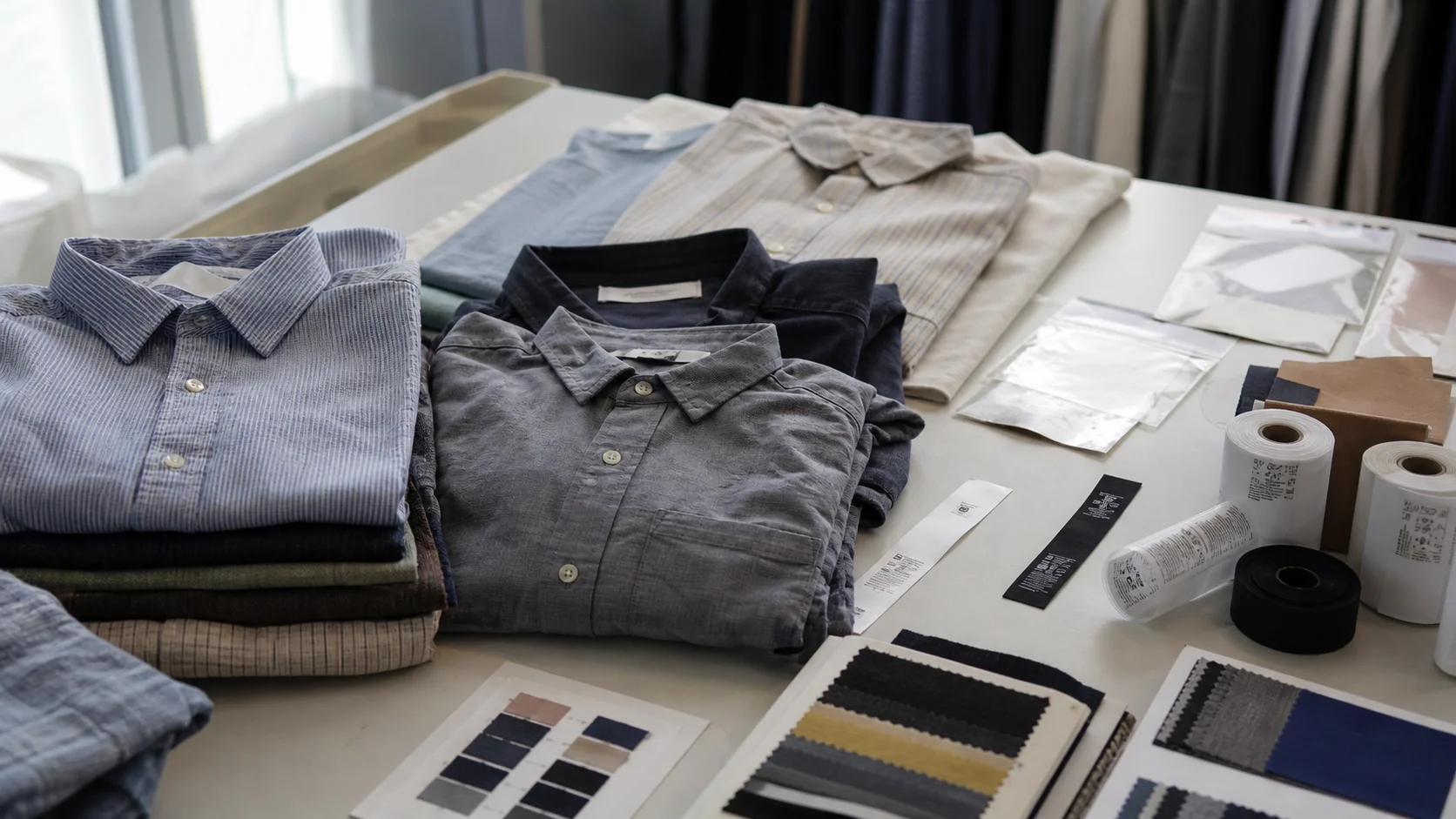
Care Instructions on Clothing Labels with checks for samples, fit, MOQ, QC evidence, pricing terms, and delivery risk.
Fast answer: Care Instructions on Clothing Labels: Symbols, Fiber Text, Language, and Placement should be judged by production evidence, not by a generic sourcing promise. The buyer needs sample proof, cost breakdowns, QC checkpoints, and delivery buffers in writing.
Ask for recent sample photos, measurement tolerances, fabric or print test assumptions, decoration test notes, packing examples, and a named inspection checkpoint. These details show whether the team can repeat an approved sample at bulk volume.
Separate garment cost, decoration, labels, packaging, sampling, testing, freight, and rush charges. When every cost line is visible, it becomes easier to reduce colorways, adjust size depth, or reserve more time for sampling.
A beautiful dress can lose the sale the moment a shopper turns it over and can’t make sense of the care instructions on clothing labels. That tiny strip of fabric carries more weight than most brands admit, because it tells the buyer whether the garment will be easy to own or a headache waiting to happen.
I’ve seen excellent seams, balanced shrinkage, and clean finishing go straight into a return box because the label looked like a code nobody wanted to decode in a laundry room at 11 p.m.
That’s retail. The product can be solid, but if the label fails in the first 30 seconds, the customer feels risk. Missing fiber content, vague symbols, weak contrast — all of it turns into the same thing: doubt. Then come the complaints, the “how do I wash this?” emails, and the refund that starts with uncertainty and ends with a lost sale.
Premium channels read ambiguity as laziness. Mass market reads it as a headache. A shopper paying $180 for silk wants detail down to the wash bag and iron temperature. A shopper buying a $22 tee wants plain English and no surprises. Both punish uncertainty. I’ve seen that pattern in factories from Portugal to Vietnam, and the price point changes the tone, not the expectation.
Last year, at a label and packing operation in Bangladesh, the fabric line wasn’t the problem. The packaging line was. Final folding tables were moving 4,000 pieces per shift, and care labels were being inserted after a rushed QC sign-off. One operator said they corrected 120 misprinted labels in a day. Not a textile failure. A packaging failure wearing the garment’s name tag.
That’s why I treat care labeling as packaging, not an afterthought. It travels with the garment, shapes the first wear, and often decides whether the buyer feels informed or abandoned. According to ISO standards on product communication, standardized communication reduces process variation; in apparel, variation is exactly what returns feed on.
Five core care categories do the heavy lifting: washing, bleaching, drying, ironing, and dry cleaning. Each has a symbol family, and each symbol has to survive poor lighting, small print, and a buyer who wants an answer fast. A wash tub means the garment can be laundered. A crossed-out tub means do not wash. A triangle covers bleaching. A square with a circle tells you about tumble drying. The iron icon sets the heat. The circle alone, or with letters, signals dry cleaning instructions.
Brands trip up when they mix systems without translation. US labels lean heavily on text plus symbols, while UK and EU labels usually expect more symbol literacy. In parts of Asia, especially export production for global brands, I’ve seen labels that combine three convention sets on one tiny tag. Clear? Not even close. It turns into a puzzle.
One wrong icon can change the care outcome completely. A cotton jersey that should be washed cold at 30°C can shrink 4-7% if a buyer reads a hot-wash symbol as permission. Silk with the wrong bleach marker may lose 15-20% of surface brightness after one wash. Viscose, famously unforgiving, can twist or grow if the label suggests aggressive machine drying. Synthetics tolerate more, but a heat symbol set too high can still distort elastane recovery and ruin fit.
According to ASTM, standardized symbols and test methods exist for a reason: they reduce misinterpretation across markets. Yet the label only works if the buyer can read it. Plain-language text matters for accessibility, for older shoppers, and for anyone who doesn’t know what a square-with-a-dot means. I’ve watched store associates spend 2 minutes explaining a label because the print was too small to read on the hanger.
Text also cuts mistakes in categories where fabric behaves badly under pressure. A viscose blouse may need “wash inside out, cold, line dry” even if the symbol alone says “gentle cycle.” A polyester active top may tolerate machine wash but hate softener. Cotton poplin may need medium iron after air drying, while a wool-blend blazer may demand professional cleaning only. Symbols are fast. Text is insurance. The best labels use both, without cluttering the tag into illegibility.
Price does not guarantee useful guidance. I’ve handled a $200 shirt with a decorative label stitched in a fancy font, while the actual wash instruction hid in 5-point type under the side seam. I’ve also seen a $20 fast-fashion tee with clear fiber content, simple wash language, and a tag that survived three laundry cycles without fraying. One was beautiful. The other was usable.
Budget brands often compress information to save space and pennies. A standard woven label may cost $0.03-$0.08 per piece, while a more detailed multi-language version can rise to $0.12-$0.18 depending on size and finishing. Luxury brands go the other way, over-designing with matte black labels, embossed logos, and tiny symbol rows that look refined on a table but fail in a laundry room. Confusion shows up in both extremes.
Regional expectations matter too. European shoppers tend to accept symbol-heavy labels and often expect a dense care panel. North American labels usually carry more text, because many buyers trust plain instructions over icons. In Japan and South Korea, I’ve seen careful attention to fine detail, but the label can still be too small for the average shopper to inspect without tugging at the garment.
The business impact isn’t abstract. In one assortment of 42 SKUs I reviewed, label-related customer service tickets made up 6% of all post-purchase contacts. Two-thirds came from just 8 items, mostly silk blends, coated fabrics, and dresses with embellished trims. When the label was clearer, returns dropped by 1.5-2.0 points and repeat purchase intent improved because customers felt the brand had warned them honestly.
And the cleanest labels? Usually the simplest. After visiting factories in Italy, India, and Cambodia, I found that the best labels rarely carried the most branding. They used one language, one symbol system, and enough contrast to read in low light. Brands chasing prestige sometimes add foil, gloss, or oversized logos that steal attention from the very line that protects them. For private label clothing, simplicity usually sells better than ornament.
For wholesale clothing manufacturer programs, the manufacturer, factory, and supplier all need the same care copy before production starts. That alignment becomes even more important for bulk runs and custom orders from China, where one small approval error can affect thousands of units.
Fabric is only the beginning. A garment with 95% cotton and 5% elastane may behave very differently once it includes a screen print, bonded hem, metal trim, or embroidered logo. I’ve seen a 320 GSM French terry hoodie pass wash testing, then fail after the silicone print cracked in the third cycle because the label ignored decoration limits.
Blends change the rules. So do coatings, laminations, sequins, and seam tapes. A denim jacket with a wash finish may tolerate enzyme wash better than stone wash from a hand-feel standpoint, but the hardware can still corrode if the care text is sloppy. A viscose dress with rayon lining may need one rule for the shell and another for the lining, even though buyers will only see one label.
Pre-production checks are where the truth shows up. I look for wash tests, abrasion tests, colorfastness tests, and shrinkage checks before anyone approves final label wording. A 2% shrink in width may not sound serious until it lands on a fitted tee in size small. A cheap copy-paste label from a competitor can look right and still be wrong for your construction.
Late-stage packaging decisions make it worse. If a factory finalizes hangtags 48 hours before shipment, there’s no room to correct a care statement, retranslate the copy, and reprint a new roll without delay. That’s how compliance risk sneaks in. Not usually a sourcing failure. An approval process failure, and it often starts with trying to save 1 day.
For brands using cut and sew manufacturing, the label should be reviewed alongside the tech pack, not after the sample photo is approved. A garment that includes bonded seams, stretch lace, or anti-pilling fleece deserves a label built from test data, not assumptions. The smartest teams treat the care label as part of product engineering, because that is exactly what it is.
The cheapest label is often the most expensive mistake. I’ve seen brands save $400 on label artwork and printing across a small run, then lose $6,000-$12,000 in rework, customer service time, and markdowns when care directions were wrong. The economics are blunt. A good label rarely costs much; a bad one spreads costs across the whole chain.
Typical cost buckets look like this. Translation: $25-$150 per language set. Legal or compliance review: $100-$500 depending on market scope. Testing: $150-$600 per fabric or construction type. Label printing: $0.03-$0.18 per unit. Attachment and QA: $0.01-$0.05 per unit. None of that feels large until you multiply it by 5,000 pieces and three markets.
Reprinting late is where budgets bleed. A label correction after bulk production may cost 2-4 times more than fixing it before the first bulk run, because you pay rush fees, freight, and labor to relabel finished goods. If 1,200 units need relabeling at $0.22 each plus 2 days of labor, the savings from a cheaper initial file disappear almost immediately.
Returns are worse. A single shrinkage complaint on a $35 sweater can trigger a refund, inbound freight, and a lost customer. If only 8% of a 3,000-piece order becomes “care issue” stock on the customer service side, that can mean 240 contacts, 40 returns, and a lot of goodwill burned for a problem that started with a bad sentence on a label.
For brands developing custom baby clothing manufacturing, the stakes rise fast. Parents read care instructions on clothing labels more carefully, wash more frequently, and return faster if guidance is unclear. Better care instructions reduce complaints and protect margin. Not a soft benefit — a packaging upgrade with measurable payback in 1 season.
Write like a person doing laundry, not like a lab technician. “Machine wash cold, wash inside out, line dry, cool iron if needed” is easier to follow than three lines of dense instructions packed with symbols and exceptions. Real shoppers don’t memorise textile code. They scan, decide, and act in under 10 seconds.
Placement matters. The label should be readable without hunting under a seam, and the print must survive abrasion, steam, and repeated handling. I prefer a contrast ratio that still reads in dim light, a font large enough to remain legible after 20 washes, and tag material that doesn’t curl into a hard edge. If the inner label scratches the neck, buyers cut it out. Then your guidance disappears.
The hierarchy should be simple: brand, size, fiber, then care. That order matches how buyers inspect a garment on the rail. A cluttered hangtag that leads with marketing copy and buries fiber content in tiny type creates friction. I’ve seen stores lose a sale because the shopper couldn’t confirm whether a knit was cotton or acrylic before making a decision.
Common categories deserve specific wording. Denim usually benefits from “wash inside out, cold, line dry” because indigo transfer and fading are real. Knits need shrink guidance. Activewear often needs “do not use fabric softener” to protect stretch recovery. Delicates should say “hand wash” only if the construction truly supports it. If not, use a gentle cycle instruction and say so plainly.
Packaged content must agree. Swing tags, inner labels, and outer cartons cannot contradict each other. If the hangtag says “dry clean only” and the inner label says “machine wash cold,” the customer will trust neither. Clear contact the team for a free quote pathways help brands build the right label set before production starts, not after buyers complain about conflicting instructions.
When brands plan custom, wholesale, or bulk programs, they should also compare label language against the production spec and the supplier’s test report. That is the easiest way to keep care instructions on clothing labels accurate across factory output in China and other sourcing regions.
Start with a 7-point pre-launch checklist. 1) Confirm fiber composition. 2) Validate fabric tests. 3) Check market-specific rules. 4) Review artwork and icon sets. 5) Translate all text. 6) Approve label placement and size. 7) Inspect the final sample under real lighting. If any step slips, the label isn’t ready. I’ve never seen a rushed approval save money later.
Next, audit old SKUs without starting from zero. Rank top-return items from the last 6-12 months. Pull the 10 worst offenders and check whether the label text, symbol, or placement caused the issue. Fix the highest-risk items first: silk, viscose, coated fabrics, embellished pieces, and children’s wear. A 20-item cleanup can solve a disproportionate share of complaints.
Assign one owner. Not three. The person responsible for accuracy should sit across sourcing, product development, and packaging, and should be able to stop release if the label is wrong. When responsibility is shared by default, mistakes get shared too. I’ve seen factories move 8,000 units with the wrong wash line because nobody owned the final sign-off.
Before the next cycle, align the factory, printer, and compliance team on one document version, one art file, and one approval date. Keep the label test result, the translation, and the sample photo together. If you’re working with new styles, I’d rather see a 2-day delay than a 2,000-piece reprint. Better labeling is one of the lowest-cost packaging upgrades a brand can make, and the effect shows up in fewer complaints, fewer returns, and stronger repeat purchase rates.
For teams building from scratch, use a supplier checklist that includes MOQ, quality, production timing, and whether the manufacturer can support custom and private label revisions without delaying bulk delivery. That process keeps care instructions on clothing labels aligned from sampling through final packing.
Brands that want external benchmark guidance can also review OEKO-TEX Standard 100 for chemical safety and Trade.gov country commercial guides for market-entry considerations before finalizing label language.
They tell the buyer how to wash, dry, iron, bleach, and dry clean a garment safely. The five core care categories are standard across most markets, but the exact symbols and wording can vary by region. A wrong interpretation can lead to 2%-7% shrinkage or visible damage on sensitive fabrics.
For most brands, translation, review, testing, printing, and attachment can range from a few hundred dollars for a small run to several thousand for multi-market production. Label printing alone may be $0.03-$0.18 per unit, while compliance review and testing can add $150-$600 per fabric type. Late reprints often cost 2-4 times more.
Simple labels can be approved in 3-5 days if tests already exist and one market is involved. Multi-language or multi-region programs usually take 1-3 weeks because translation, compliance review, and sample checks add steps. If a garment needs fresh wash testing, expect another 5-10 days.
You can use a similar product as a reference, but you should never copy it without validating the actual fabric, trims, print method, and construction. A garment with bonded seams, viscose, or elastane can need a very different care line from a lookalike style. One copied line can create returns and compliance risk.
They should be placed where buyers can find them quickly, usually on an inner seam label, neck label, or side seam label, depending on the garment. The wording must also match the swing tag and packaging insert. Conflicting placement or contradictory instructions reduce trust and increase service tickets.