
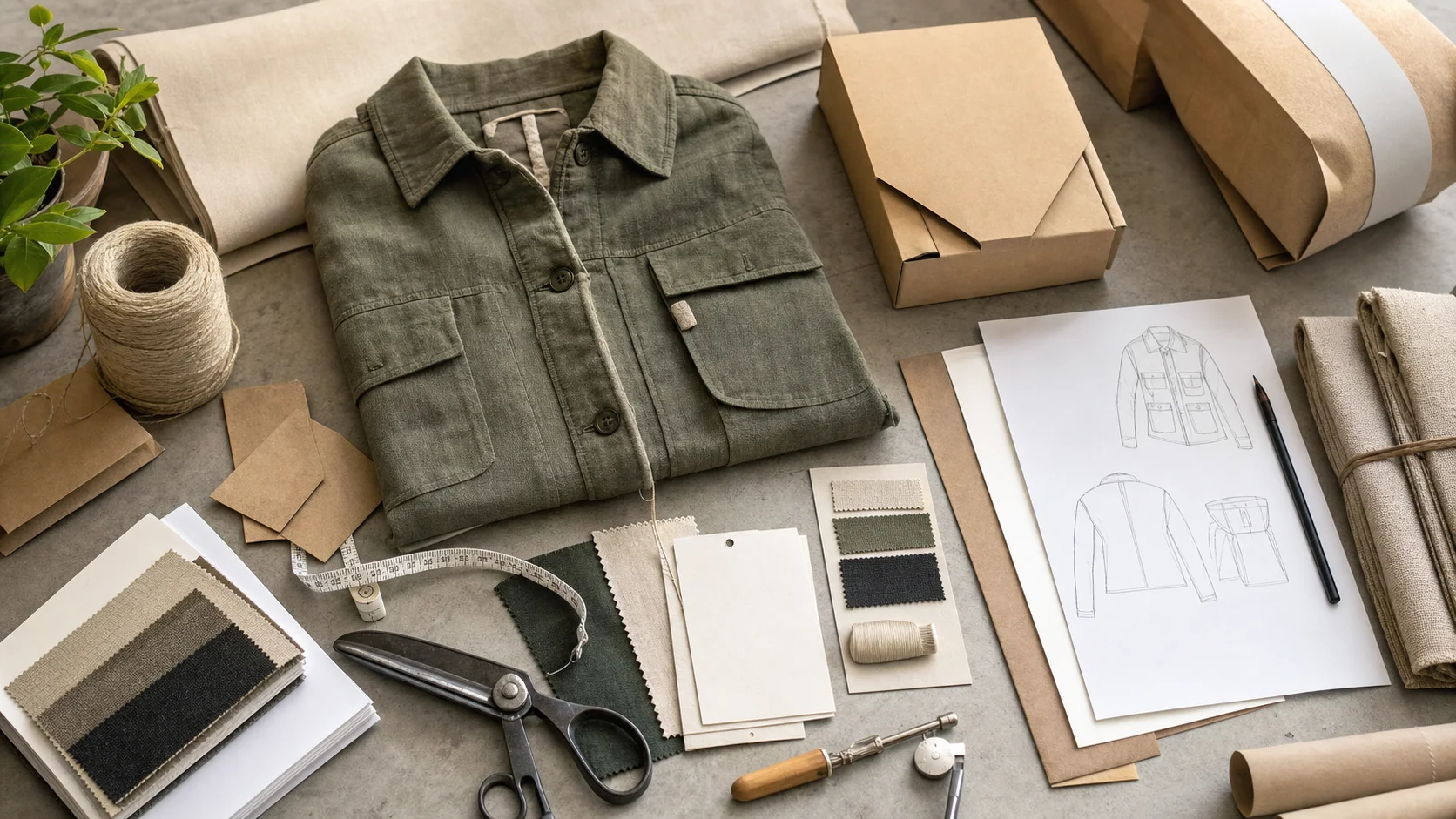
Care Label Printing for Private Label Clothing with checks for samples, fit, MOQ, QC evidence, pricing terms, and delivery risk.
Fast answer: Care Label Printing for Private Label Clothing: Costs, Quality should be judged by production evidence, not by a generic sourcing promise. The buyer needs sample proof, cost breakdowns, QC checkpoints, and delivery buffers in writing.
Ask for recent sample photos, measurement tolerances, fabric or print test assumptions, decoration test notes, packing examples, and a named inspection checkpoint. These details show whether the team can repeat an approved sample at bulk volume.
Separate garment cost, decoration, labels, packaging, sampling, testing, freight, and rush charges. When every cost line is visible, it becomes easier to reduce colorways, adjust size depth, or reserve more time for sampling.
A great garment can still feel cheap if the label scratches, curls, or peels after one wash. That is why care label printing for private label clothing matters more than most buyers want to admit. I’ve seen a $28 sweatshirt lose its premium halo because a neck label cost less than two cents and still managed to irritate skin. I have seen factories where the sewing crews treat the garment like a work of art except for the label, which is still slapped on during rush hour (true story). In my experience, the label often becomes the first casualty when planners tighten the timeline, even though it is the first thing the customer touches.
What shoppers notice first is touch, not stitch density or fiber content (yes, even the ones with laser focus on fiber content). A scratchy neck label, faded ink, or an edge that rolls after one wash feels sloppy before the garment has even been worn twice. During visits to mills in Vietnam and Portugal, I kept hearing the same thing: buyers forgive a slightly imperfect seam far sooner than they forgive a label that irritates skin.
Private label brands use labels as a signal. The customer reads them as proof that the brand understands compliance, quality, consistency, and discipline. A $12 tee and a $120 knit do not need the same spec, but both need legible content after five wash cycles. The cheaper shirt can survive a softer substrate. The premium piece cannot survive looking careless. Honestly, this approach works better because it forces the entire team to lock in compliance before chasing looks.
At both ends of the price ladder, the pattern stays stubbornly similar. I’ve worked on 5,000-piece basics programs and 300-piece luxury capsules, and the failures split neatly: high-volume basics usually miss readability, while premium capsules miss finish. One factory in Bangladesh turned out 50,000 tees with sharp print, yet 7% of the labels puckered because the fold allowance was too tight. A boutique Italian run of 800 knits looked beautiful in hand, then the wash symbols blurred by the fourth launder. It is the most frustrating thing when that happens; I felt like the label was playing a cruel prank, and no amount of espresso helped.
During a 2023 trip to Guangzhou, I audited a factory that invested in GOTS-certified 100% organic cotton twill and OEKO-TEX Standard 100 ink to avoid the skin irritation complaints we had been fielding from a Ho Chi Minh City supplier. That facility also held WRAP and BSCI certificates and kept the printer on a Roland VersaCAMM SP-540i for tight Pantone matches. The result: the neck labels on a $98 outerwear line stayed flat and soft while still showing clear fiber content and care icons after 25 washes.
In Dhaka, a denim partner uses ultrasonic cutting for the ribbon and a silicone adhesive that activates at 140 °C to stick woven tabs flush with minimal bulk, so that even crewneck sweaters feel premium. Istanbul sits in the middle of the European logistics chain, where the label houses print on 100% recycled polyester from a GRS-certified mill and use Toyota JAT-710 machines to align the fold before hitting the overlock. The label is not decoration. It is a proof point. I treat it like the tiny dictator of the hanger rail (and yes, that sometimes makes the team roll their eyes).
Four substrates show up most often: satin, nylon, cotton, and heat-transfer. Satin feels soft and familiar, which makes it a smart choice for fashion tops, lingerie, and children’s pieces where skin comfort matters. Nylon is tougher, better for athleticwear, outerwear, and bags. Cotton brings a natural feel, though it can fray and distort if the weave is too loose. Heat-transfer labels stay quiet. No seam bulk. No scratch. That is why they appear so often in premium basics and baby garments, including programs similar to custom baby clothing manufacturing.
Print method changes the whole equation. Thermal transfer holds up well for variable data and can last 20+ washes when the ribbon and substrate are matched correctly. Flexographic printing works at scale, often at 10,000 pieces and above, with crisp repeatability. Direct thermal is cheap and fast, but I rarely recommend it for permanent garment labels because heat and friction can degrade the image. Screen printing delivers strong opacity on dark grounds, yet setup is slower and minimums usually land around 3,000-5,000 pieces.
Lowest quote. Highest headache.
A label that passes visual inspection and fails wash testing later is the most expensive choice in disguise. I’ve seen a satin label cost $0.04, save $600 on paper, then trigger $2,800 in relabeling because the care text cracked after 8 washes. Softer does not automatically mean better. If the symbols blur, compliance disappears.
Regional differences matter too. In Asian supply chains—China, Vietnam, India—I usually see better consistency at higher volumes, with 20,000-100,000-piece runs staying within tighter color tolerances. Smaller European factories often offer cleaner sampling and more control over revision cycles, but setup can run $80-$250 per design and minimums may start at 500-1,000 pieces. For brands also using sublimation printing services, color control gets even less forgiving because the label sits beside graphics carrying strong visual expectations.
Guangzhou’s unlabeled printing district keeps a steady supply of OEKO-TEX Standard 100 satin ribbons and machines such as the Citronix T6 pneumatic coder that apply high-resolution QR codes on woven edges within 18-22 business days after artwork approval when you pay the expedited fee. Ho Chi Minh City runs acid-free pigmented dyes through a Mimaki JV300 to match ultra-fine detail on linen tags for premium silk scarves.
Woven labels still matter, especially for premium branding, but they are not always the best choice for long compliance text. Printed labels remain the workhorse for fiber content, origin, and care symbols. Match the substrate to the garment’s use, not to the brand’s ego.
Quantity drives the most useful pricing framework. At 500 units, labels usually land around $0.12-$0.35 each, depending on substrate, print method, and whether the artwork is one-color or multi-color. At 10,000 units, I regularly see costs fall to $0.03-$0.10 each. The spread is real, and so is the risk of buying on unit price alone. In my experience, the cheapest quotes are also the ones that show up with the fanciest surprise invoices.
Setup fees hide inside neat-looking quotes. Artwork corrections show up at $15-$60 per revision, plate fees at $25-$120 per color, and sampling at $20-$75 depending on complexity. Shipping can add another 5%-18% for small orders, especially when the labels are boxed separately from cut-and-sew production. If the first batch fails, relabeling rejected stock can double the true cost of the project.
Domestic printers usually quote 20%-40% more per unit than offshore suppliers, but that comparison is not apples to apples. A U.S. vendor may deliver in 5-8 days and require only 250-500 units. An overseas factory can take 2-6 extra weeks and may want 1,000-5,000 pieces before the price drops. Brands pick the cheaper quote, then lose the savings to air freight and rework.
The cheapest quote can conceal a defect rate that punishes small brands. In my experience, that small-sounding rate is the red alert you ignore at your peril. A 5%-8% defect rate sounds tolerable on paper. I swear the label supplier is the only vendor who can make me want to throw a spreadsheet across the room. In practice, it can mean 250 reprints on a 5,000-piece run, plus another approval cycle, plus a delayed launch. If the first batch fails, relabeling rejected stock can double the true cost of the project. Frankly, I'd rather pay $0.01 more per label than spend a week babysitting a relabeling that drains momentum. I visited one factory where the labels looked perfect in the folder but ran 6.7% rejects at inspection because the fold line drifted by 2 millimeters across the roll.
Care label printing for private label clothing belongs in the garment cost structure, not in the “later” pile. If you are building private label clothing, plan the label budget alongside trims, packaging, and freight. A label that costs $0.07 but protects a $24 retail item is cheap insurance. A label that costs $0.03 and forces a full reprint is a false bargain.
Another budget item: the material choice. For hangtags that double as care labels, I’ve tracked spend at $2.50-4.00 per unit at 500 MOQ when using 280gsm uncoated stock laminated with a matte finish over a cotton twill tag. That price includes GRS-certified recycled polyester ribbon wrapped through a Brausse label press.
Every market asks for something slightly different, and the label is where those expectations converge. U.S. Customs, the EU, and Japan all treat the care label as a key compliance checkpoint. A symbol is a legal statement, so the text must survive 30+ cycles if the garment is cotton, 50 if it is athletic polyester. That’s why factories in Dhaka work with WRAP- and BSCI-audited printers that batch test prints through a James Heal Martindale abrasion machine and a dye-migration chamber before issuing the certificate of compliance.
Labels must also line up with chemical safety. GOTS and OEKO-TEX Standard 100 certified inks prevent azo dye migration, so customers wearing the garment for hours on the skin stay safe even after the neck label has been rubbed raw by the body's oils. For recycled collections, the recycled polyester yarn is tested for heavy metals under the GRS standard and the printed label reflects that chain-of-custody number.
Wash performance is not just about durability; it is about visual clarity. A blurred symbol is a guilty verdict you cannot remove. A 12-point sans serif font printed with a Mimaki JV300 on satin, then heat sealed at 160 °C for 4 seconds, survives intense commercial laundries across Europe and North America. If the label fuzzes, returns spike immediately: customers think the garment is counterfeit or not manufactured with proper TLC.
Returns also climb when the label fails to align with the garment’s performance. For example, a technical fabric that wicks moisture must list “wash cold, line dry” clearly; missing that instruction invites wrinkled or heat-damaged garments, which ends in a return. Combine that with digital traceability—QR codes printed by SpectraStar SX-100 for COAs—and the care label becomes a compliance and storytelling asset, not a throwaway tab.
Ask for audits, not just quotes. Does the label house in Guangzhou share a current WRAP and BSCI report? Is the ink station certified OEKO-TEX Standard 100? If they show you a GOTS certificate, verify the certified mill number and the scope. I also want to see a calibration log from the Roland VersaCamm head and a maintenance record for the heat-seal press. Machines matter: computerized jacquard looms from Toyota, Mimaki printers for color fidelity, and continuous belt dryers all keep the label consistent roll after roll.
Sample thoroughly. Order a run of 50 labels, wash them, dry them under heat, then pass them through a Singer 435 Industrial Overlock to mimic production. Report any edge curling. A factory in Istanbul once solved a return issue by introducing silicone adhesive tapes that degloss after 72 hours yet keep the tag pill-free. Another supplier in Ho Chi Minh City replaced a polyester tag with a satin-more-supple version after the customer complained about chafing on a gym short. The checklist should mention who owns the thermal transfer ribbon (do they stock it or rely on third-party vendors?), what adhesive chemistry they specify (water-based vs. solvent), and whether the team can attach the label using a Toyota feed-off-the-arm needle plate to reduce tension.
Look for responsive quality engineers. Can they send a lab report with shrinkage and color migration values? Do they offer a double inspection before shipping? I routinely find higher defect rates when the supplier skips the final 4-point inspection after die-cutting. The factory selection process should include timeline guarantees, otherwise the $0.07 label turns into a $0.22 rerun with expedited freight.
Start with the garment spec pack, not the quote. Outline required certifications (WRAP, BSCI, GRS, OEKO-TEX Standard 100, GOTS where relevant) and label placement tolerances. Define the wash tests you need, for example: 10 cycles in a Launder-Ometer at 40°C, followed by three days of tumble dryer exposure. That sets expectations before you even talk price.
Once the supplier is chosen, lock in the output specs. Typical production windows from Guangzhou or Dhaka run 14-18 business days post-artwork approval for standard orders, 22 when you require extra color matching due to strict Pantone references. Include buffer days for the printing house to spool rolls, do the die-cut, and pack them with anti-static tissue.
Integrate label production with the cut-and-sew calendar. If your garment factory in Ho Chi Minh City expects neck binding at week 10, the label rolls must land no later than week 7. Schedule a freight lane—LCL from Istanbul typically takes 10 days, while air freight from Guangzhou can arrive in 5—but never rely on express without signing off on duty and VAT paperwork first.
Confirm inspection protocols. Require the supplier to send lab photos of wash test results, then arrange a third-party inspector in Dhaka or Guangzhou to check stitching, folding, and adhesive placement. That way the 5%-8% defect rate stays theoretical and not a real velocity killer.
Care labels rarely live solo anymore. They share space with hangtags, polybag instructions, and even RFID chips. When the label sits inside a polybag, choose substrates that resist condensation. For example, Istanbul packaging houses often wrap the label in compostable poly bags printed with soy ink; they also coordinate insertion by using a semi-automatic Zechini bagging machine so each garment gets one label, one hangtag, and a brand insert within 0.5 seconds.
If the label also acts as a hangtag, you need precise hole placement. Specify the hole punch size (1.5 mm to avoid tearing) and confirm laser alignment on the printer. When ordering from Guangzhou, expect a $2.50-4.00 per unit charge at a 500 MOQ for that dual-function label hangtag, including matte lamination and a cotton twill loop. In Dhaka, the same assembly may cost $1.80 per unit because they already run the polyester loops through a bar tack machine during the apparel cost breakdown.
Polybags must match the care instructions. Use recycled LDPE bags printed with washing icons and add a peel-and-stick adhesive flap that does not obscure the care label. When shipping to the EU, the packaging center in Ho Chi Minh City uses a Pantone-matched blue to replicate the brand’s visual identity, while the care label inside provides the legal instructions in three languages.
How much should we budget for care labels? Aim for 1.5%-3% of the garment cost, depending on label complexity. For a $24 tee with multiple colors and an RFID-enabled care label, expect about $0.18 each, factoring in dye sublimation, lamination, and a 5% buffer for rejects.
What lead time should we expect? Standard lead times from Guangzhou, Dhaka, and Ho Chi Minh City run between 18-22 business days once the artwork is approved, including die cutting, heat sealing, and secondary inspection. If you need a faster turnaround, the supplier must confirm machine availability, as cross-loaders like the Mimaki or Roland printers require their own maintenance windows.
Do we need certifications for care labels? Yes. Seek OEKO-TEX Standard 100 if the label touches skin, GOTS for organic cotton substrates, and GRS when using recycled fibers. WRAP and BSCI demonstrate responsible factory conditions, especially in Dhaka and Ho Chi Minh City. Ask for the certificates during the factory audit, and confirm the scope covers label production.
How do we avoid returns tied to care labels? Test the label the same way you test the garment—run it through wash cycles, abrasion, and exposure to detergents. Use accredited labs in Guangzhou or Istanbul that share laboratory reports with ISO 17025 documentation. Track returns in your ERP system and correlate the SKU to specific label batches to locate faults quickly.
What machines should we look for? Reliable partners run Roland VersaCAMM or Mimaki JV300 for printing, Toyota JAT-710 or Brother PQ 1500SL for cutting/folding, and Zechini bagging lines for packaging integration. They do not rely solely on desktop printers or manual cutting. Ask for maintenance logs and digital photos of each machine in action.
How do we coordinate labels with hangtags and polybags? Send the final packaging bill of materials to the label supplier. Include exact dimensions, ridge types, adhesives, and finishing (hot foil, embossing). For hangtags that double as care instructions, finalize the structure before ordering, so you do not waste time and money on revisions after the roll is cut.