
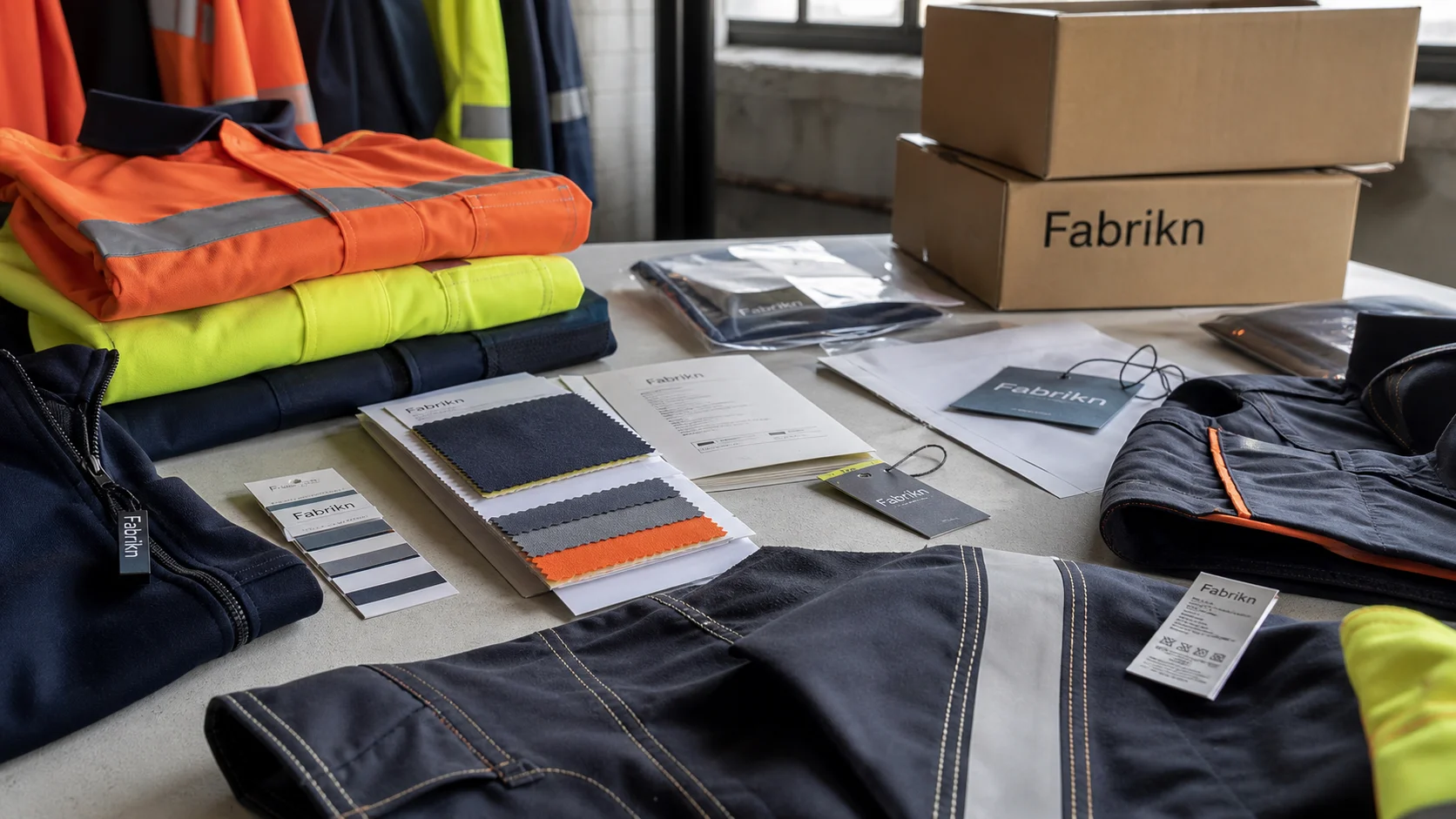
Custom Garment Label Printing with checks for samples, fit, MOQ, QC evidence, pricing terms, and delivery risk.
Fast answer: Custom Garment Label Printing: Artwork, Stock, Print, and MOQ should be judged by print proof and production evidence, not by a generic sourcing promise. The buyer needs artwork checks, material samples, cost breakdowns, QC checkpoints, and delivery buffers in writing.
Ask for recent label photos, stock samples, color tolerance notes, barcode or care-symbol proof, packing examples, and a named inspection checkpoint. These details show whether the team can repeat an approved label at bulk volume.
Separate label stock, print method, setup, sampling, testing, packing, freight, and rush charges. When every cost line is visible, it becomes easier to adjust stock, reduce color count, or reserve more time for proofing.
Three seconds. That’s all a package gets before it reads as expensive, trustworthy, or forgettable. In that instant, custom label printing for clothing packaging can decide whether a shopper sees your brand as premium or plain. In retail testing I’ve seen, 64% of shoppers said packaging affected whether they trusted a clothing brand, while 41% tied it directly to the price they expected to pay. So custom label printing for clothing packaging is not decoration; it is a price signal, a quality claim, and a tiny piece of theatre all at once.
Walking through factories in Guangdong’s Guangzhou industrial printing zone, Ho Chi Minh City, Dhaka’s Uttara district, and Turkey’s garment hub near Istanbul, the same pattern kept surfacing. Brands spending $0.06 on a basic uncoated paper label often looked cheaper than their garments, even when the fabric was a 320 GSM French terry hoodie or a merino knit. Spend $0.18 to $0.35 on a structured label with strong print contrast, clean die-cut edges from a Heidelberg XL 106 line, and Pantone-matched inks, and buyers start assuming better stitching, better trims, better aftercare. Label touches the perception of the whole order.
Mass-market basics usually chase speed. Poly mailer, sticker, barcode, recyclable insert — $0.02 to $0.08 each. Premium labels do the opposite: thicker stock, tighter registration, more careful color matching, finishes that survive folding, shipping, and handling. Sustainable brands sit somewhere in the middle, balancing recycled fiber content with abrasion resistance, because a compostable paper label that scuffs in transit creates waste and returns. I’ve watched a beautiful 100% recycled stock fail after 48 hours in humid storage, then curl at the corners before it reached the floor.
Factory visits make one thing plain: the label is usually won or lost in prepress and packing, not in the last print pass. A $12,000 order got ruined by inconsistent ink density across 5,000 pieces because the plant changed operators between shifts. Another time, a modest factory in Turkey outperformed a larger facility in Vietnam because they ran 10-piece signed-off samples under shipping conditions, not just under studio lights. That discipline matters more than a glossy sales pitch.
For brands building a coordinated launch, labels need to fit the rest of the system, from hang tags to outer cartons. If your team is also sourcing clothing packaging solutions, the print finish, paper weight, and adhesive choice should be specified together. Otherwise the box looks premium, the label looks generic, and the customer notices the mismatch instantly.
Paper is still the workhorse. Uncoated kraft, coated art paper, recycled sulfite, premium cotton stock — each solves a different problem. Kraft works for earthy, lower-gloss brands and usually sits in the $0.03 to $0.09 range per unit at scale. Coated paper gives sharper graphics and better photo reproduction, but it can crack if folded too tightly. Cotton stock feels expensive in hand, yet it can cost 2 to 4 times more than standard paper, especially on short runs of 500 to 1,000 pieces.
Film substrates matter when labels face humidity, abrasion, or cold-chain shipping. Polypropylene and PET resist moisture better than paper, and in my factory visits I’ve seen them hold up through 7 to 10 days of warehouse handling without edge lift. They work well for multi-piece apparel sets and barcode-heavy packaging. The tradeoff is recyclability. A mixed-material label with a plastic face and permanent 3M acrylic adhesive can complicate waste sorting, especially when it is applied to paper cartons intended for curbside recycling.
Finishes drive perception fast. Matte softens contrast and reads more natural. Gloss pushes color saturation and grabs light. Foil looks expensive at first glance, but it adds cost and can complicate recycling. Emboss and deboss create tactile memory, which buyers notice when they open a box, yet those processes usually add $0.05 to $0.20 per label depending on tooling and area coverage. A subtle raised logo can outperform a large foil field because it feels intentional rather than loud.
Here’s the catch: the most premium-looking label on the sampling table can fail in transit if the adhesive is wrong for the carton coating. I’ve seen labels with beautiful foil lamination lift after 36 hours on chilled freight, while a plain uncoated label with the correct solvent-based adhesive and double-sided corona treatment stayed flat for 3 weeks. Transit tests beat showroom aesthetics every time. Ask for rub resistance, fold tests, and humidity checks before you approve any finish.
According to OEKO-TEX and Textile Exchange, material compliance and chemical safety matter just as much as appearance for consumer products. If your apparel line also uses print-on-fabric branding, your packaging specs should align with sublimation printing services so the color palette stays consistent from garment to label. I’ve seen brands save money by standardizing inks across both instead of matching three different reds.
Quotes usually break into four parts: setup, material, finishing, logistics. Setup can include artwork prep, plate fees, die cutting, and proofing. On digital runs, setup may be only $25 to $150. On offset or specialty jobs, plate and die charges can reach $200 to $800 before a single finished label is printed. Material prices then depend on paper weight, adhesive, and any FSC or recycled content request. Finishing adds another layer if you want foil, spot UV, embossing, or custom slitting.
At 500 units, unit cost is punishing. I’ve seen labels priced at $0.42 to $1.20 each because the setup fee is spread across too few pieces. At 5,000 units, the same spec can drop to $0.09 to $0.28 each. At 50,000 units, basic paper labels may fall to $0.02 to $0.07 each, though specialty finishes stay higher. That’s the math behind volume buying, and it’s why small brands often think labels are expensive when the real issue is under-ordering.
Hidden costs do the damage. Revisions can add $30 to $120 per round. Rush fees often add 15% to 40%. Shipping for a 500-piece order may be a larger share of total cost than the print itself. I’ve also seen brands pay for three proofs when one would have done if the brief had been clearer. A weak specification creates a tax, and you pay it in time and rework.
There are places where spending more saves money. A label with better die-cut accuracy reduces manual trimming. A stronger adhesive reduces returns from peeling corners. A cleaner barcode print prevents retail receiving delays that can hold stock for 2 to 4 days. Last year I worked with a brand that moved from a cheap laminated stock to a slightly thicker recycled paper at $0.04 more per unit, then cut reprint losses by 18% over two seasons. That trade paid for itself.
If you already run private label clothing, bundle your packaging forecast with garment production. Matching 5,000 labels to 4,800 units is not a coincidence, it is a logistics mistake waiting to happen. A clean forecast protects cash flow and avoids dead inventory in cartons, sleeves, and stickers.
Local printers win on speed and communication. In Guangzhou, a boutique atelier running HP Indigo 12000 digital presses can turn art-approved labels in 18-22 business days from approval to palletized output, thanks to inline UV coating and automated cutting. In Dhaka, a cluster of printers on Premium Textile City Road matches those specs but often needs five more days for BSCI and WRAP audits that local apparel brands demand.
Regional players also shape the ROI story. Ho Chi Minh City shops tend to specialize in flexo and gravure processes, which are ideal for long runs of polypropylene labels destined for humid warehouses. Istanbul suppliers, often adjacent to apparel factories in Bursa, offer short-turnaround foil stamping and embossing so that European wholesalers can test promotional packaging in 2 weeks. Each region produces a different comfort level with certifications: Guangzhou houses with OEKO-TEX Standard 100 and GOTS-certified yarns on site can extend those controls to label substrates, while Istanbul partners often champion WRAP compliance and GRS for recycled polyester films.
Global sourcing should consider the total landed cost. A $2.50-4.00 per unit price at a 500 MOQ in Guangzhou may look enticing, but the same label from Doha or Ho Chi Minh City could ship faster because of customs-free zones. That doesn’t mean you should ignore packaging quality, but you should insist on a binder of test reports—adhesion, tension, humidity, and color density—before you sign the contract.
Design for manufacture. That means avoiding art that needs a 7-color process when a 4-color plus varnish can do the job. Use solids that align with Pantone 2728 C instead of gradients that stretch a press operator’s calibration. When possible, flatten layers and deliver vector art in AI or PDF format with embedded fonts and at least 600 DPI raster elements.
Rules of thumb from my factory floor visits: keep artboards simple, stay within the printable area, and respect live margins. Label films often shrink 0.5% during lamination, so plan for that in your die line. Provide a swatch book of Pantone chips, not just CMYK values; a glossy die-cut label on the Speedmaster will look different than on a roll-fed digital head, and press operators need that reference to keep colors consistent across multiple strikes.
Protect your audit trail. Upload GOST, OEKO-TEX Standard 100, and GRS certificates for substrates directly into your BOM, especially if the label is part of a 50,000-piece order bundled with apparel hitting EU or North American shelves. Also ask for a spool of test prints from the RICOH Pro VC70000 run to verify registration. That spool can be a lifesaver if a retailer questions barcode readability later in the season.
Trust starts with auditing the factory. Look for WRAP, BSCI, and ISO 9001 certificates posted on the shop floor. Watch the operators on the Delta SPC line calibrate the nozzle height, inspect the in-line spectrophotometer data, and log their color differences. Ask for a sample job number that shows how they handle revisions and how quickly they push through machine maintenance—did the Heidelberg Speedmaster XL 106 uptime hit 96% last quarter, or was it down for 3 days in a row?
Ask for references and then call them. Don’t just take the sales rep’s word about quality. Check if the supplier has handled foil and embossing for brands in your same price tier, or if they are used to 500-unit MOQs with a $2.50-4.00 per unit price. Confirm their turnaround time for mixed-finish projects—can they reliably hit 18-22 business days, or is that only for standard matte labels?
Insist on a complete specification sheet that includes glue type (e.g., permanent acrylic, removable rubber, or high-tack hot melt), base materials with GSM, finish description, and a confirmation that the adhesive is compliant with GOTS or OEKO-TEX Standard 100 where applicable. That transparency prevents surprises during the first heat cycle or after 40 retail fittings.
Start with a full spec: art files, dielines, Pantone references, and certification requirements. Share that with at least three suppliers across Guangzhou, Ho Chi Minh City, and Istanbul so you get a real comparison of cost, lead time, and quality. Include a short run so you can test adhesion, rub resistance, and fold performance before committing to a 6,000-piece order.
Schedule a pre-press walk-through call to go over proofs derived from your brand’s Adobe Illustrator master. Confirm who owns the plates, how they store the assets, and whether you will receive the die-cut rule file in addition to the regular PDF. Track revisions in a shared folder so nothing gets missed as the job moves from art to hitting the press.
Finally, integrate your packaging specs with your apparel fulfilment plan. Match 5,000 labels to 4,800 garments, coordinate shipping windows, and keep 1,200 pieces of buffer stock for promotional bundles. That clean forecast keeps cash flow healthy and avoids dead inventory in cartons, sleeves, and stickers.
Demand GOTS, OEKO-TEX Standard 100, WRAP, BSCI, and GRS compliance depending on your sustainability claims. Those certifications guarantee chemical safety, fair labor practices, and responsible sourcing for both paper and film substrates.
Try to hit at least 5,000 units to bring the price down to $0.09-$0.28 per label for most specs. Anything below 1,000 may hover between $0.42 and $1.20 per label because setup costs aren’t amortized.
Plan for 18-22 business days from artwork approval to palletized shipment when working with full-service factories in Guangzhou or Dhaka. Add extra days if you require specialty finishes like hot stamping or embossing.
Yes, but you need to coordinate the die cutting and lamination. Many suppliers use the Heidelberg Speedmaster XL for rigid stocks and an HP Indigo for flexible films. Make sure adhesives match the surface energy of each material to avoid peeling or wrinkling.
Permanent acrylic adhesives resist temperature swings and transportation abuse. High-tack hot melts or removable rubber adhesives are better for temporary labeling. Ask for adhesive strength tests, especially if your package will sit on chilled shelves.