
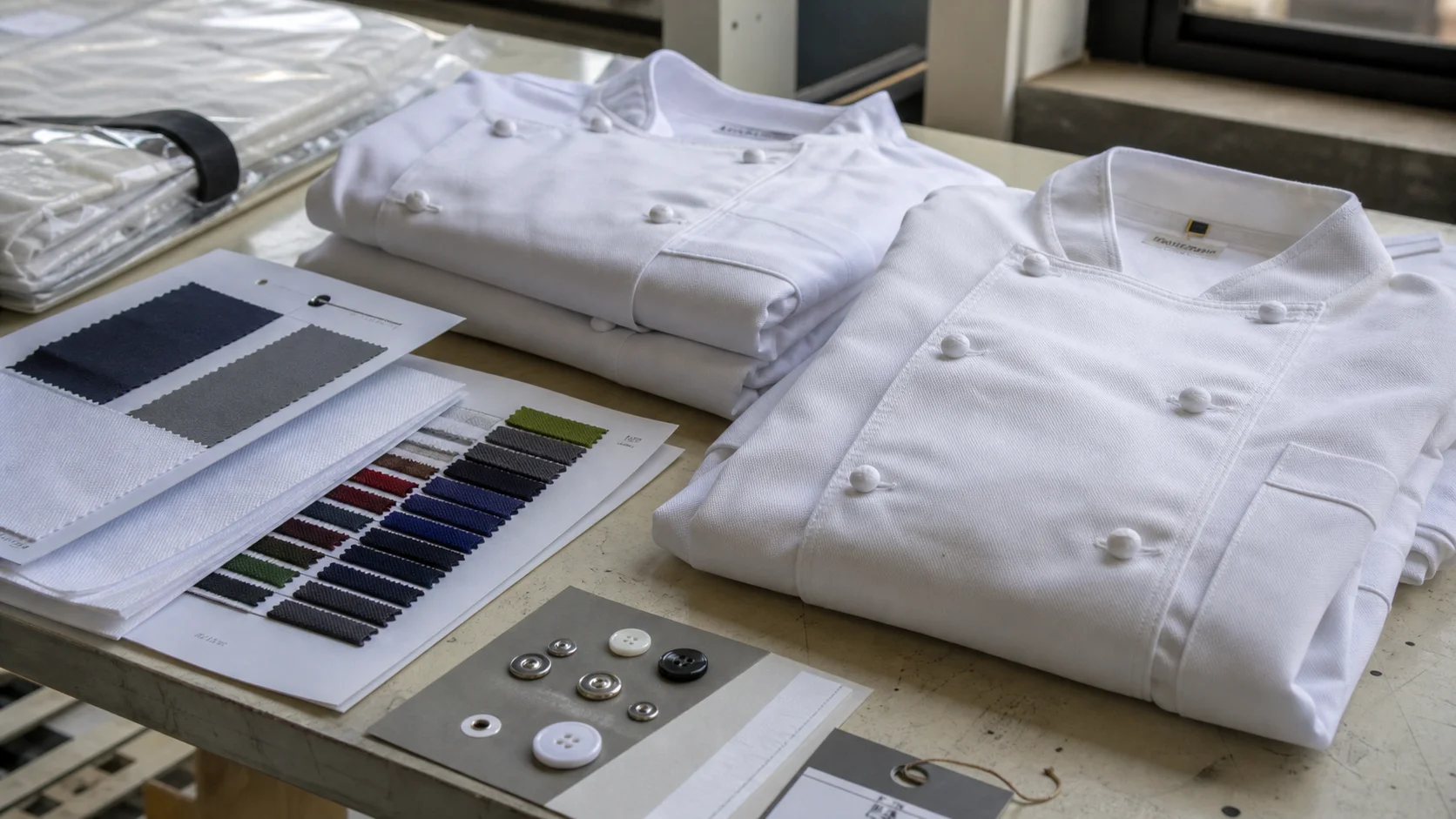
A quality and inspection focused outline for outdoor school buyers ordering chef coats in bulk, covering fabric durability, fit, closures, safety details,...
Chef Coat Bulk Order Guide for School Buyers - Quality & Inspection manufacturing guide
Buying chef coats in bulk for an outdoor school program is not the same as topping up uniforms for a restaurant kitchen. School buyers need garments that are durable, washable, size-inclusive, safe for practical lessons, and acceptable to finance teams, teachers, parents, and sometimes external inspection bodies. When the program includes outdoor cooking, camp kitchens, field lessons, farm-to-table classes, or open-air catering practice, the coat specification needs more careful review.
This guide is written for procurement teams, school administrators, culinary department heads, uniform coordinators, and distributors sourcing chef coats for education use. It focuses on quality and inspection decisions: fabric weight, stitching, trims, sizing, samples, packaging, bulk production checks, and realistic ordering tradeoffs.
School chef coats have a harder job than many commercial uniforms. Students may be new to garment care, uniforms may be issued and returned across terms, and coats are often washed in mixed laundry conditions. A restaurant can adjust purchasing quickly if one style fails. A school buyer may be locked into a budget cycle, a term start date, and a uniform policy that is difficult to change mid-year.
The best purchasing decision is not always the cheapest coat. A low-cost chef coat can be acceptable for short programs, one-off events, or introductory workshops. For a multi-term culinary pathway, hospitality academy, boarding school kitchen program, or outdoor education department, poor fabric and weak stitching usually become visible quickly. Shrinkage, missing buttons, sleeve seam failure, and inconsistent sizing create avoidable admin work.
School buyers also need to think about equity. A student uniform should not make some students feel exposed, restricted, overheated, or poorly fitted. Size range, sleeve length, body length, and closure security matter. For outdoor school environments, comfort and movement become even more important because students may be cooking, carrying equipment, setting up service areas, or moving between classrooms and outdoor stations.
Practical purchasing judgment: if the coats will be used weekly for a full school year, specify better fabric and construction before negotiating decoration. A logo on a weak garment does not improve the uniform program.
The keyword in an outdoor school buyers chef coat bulk order guide is “outdoor.” Outdoor use does not automatically mean the coat should be heavy. In many climates, the opposite is true. Students may be working near heat, under sun, beside grills, or in semi-covered teaching areas. A coat that feels acceptable in an air-conditioned fitting room may become uncomfortable during outdoor practical lessons.
Outdoor school use increases the importance of breathability, stain control, secure closures, and easy movement. Wind can expose loose fronts. Dust, smoke, food oils, and grass stains can affect appearance. Students may layer the coat over T-shirts, polos, thermal tops, or school uniforms depending on the season. The chef coat should allow movement without being oversized to the point of looking untidy or becoming a safety issue.
One useful tradeoff is to separate the “daily class coat” from the “presentation coat.” A daily coat can be practical, durable, and cost-controlled. A presentation coat for competitions, open days, or hospitality service can use cleaner detailing and heavier decoration. Not every student program needs both, but schools with public-facing culinary events may save money by avoiding over-specification of every coat.
Fabric is the core quality decision in a bulk chef coat order. Many school buyers start by comparing garment price, then later discover that fabric performance determines whether the purchase was successful. For school use, the fabric must balance comfort, durability, washability, opacity, and cost.
For most schools, a poly-cotton twill between about 160 gsm and 210 gsm is a practical starting point. Lighter fabrics can work for hot outdoor programs, but white fabric must be checked for opacity. Heavier fabrics around 220 gsm or above may look more substantial, yet they can be uncomfortable for younger students or outdoor cooking in warm weather.
White remains the most common chef coat color because it signals cleanliness and aligns with culinary tradition. For outdoor school use, white shows stains quickly. Black, charcoal, navy, or dark grey can reduce visible staining, but darker fabrics absorb heat outdoors and may fade faster if laundering is harsh. A school should choose color based on actual use conditions, not just catalog appearance.
Soil-release finishes can be useful for culinary programs, but they should not be treated as a substitute for proper laundering. They may also add cost and need confirmation through wash testing. For school buyers with strict budgets, a reliable mid-weight poly-cotton with solid stitching is often a better investment than a heavily marketed finish on a weaker base fabric.
Construction quality separates a chef coat that survives a school year from one that looks tired after a few washes. Bulk school orders should define construction points clearly before production. If the specification is vague, the supplier may use the cheapest acceptable interpretation.
For schools, snaps are often easier for younger students and faster during changing periods. They can also reduce the chance of lost detachable buttons. The drawback is that low-quality snaps may rust, loosen, or pull out of the fabric. If snaps are chosen, request confirmation of snap material, finish, pull strength, and washing suitability.
Traditional cloth knot buttons or plastic buttons may be acceptable for older culinary students, especially where a professional kitchen appearance is important. The purchasing risk is replacement. If buttons are detachable, the school may need spare sets. If buttons are sewn on, poor attachment can become a recurring complaint. Spare trims should be included in the bulk order.
Direct buying advice: for large student programs, do not approve a closure system from photos alone. Test the sample with actual students opening, closing, sitting, reaching, washing, and drying the coat.
Sizing is one of the most common failure points in chef coat bulk orders for schools. Student bodies include different ages, body shapes, heights, and comfort preferences. A unisex chef coat can simplify inventory, but it may not fit all students well. A school buyer should decide whether simplicity or fit accuracy matters more for the program.
Unisex chef coats are common for education because they reduce SKU complexity. They are easier to stock, distribute, and reorder. The tradeoff is that some students may find the body too boxy, the shoulders too wide, or the sleeve length unsuitable. Gender-specific or tailored fits can improve appearance, but they complicate ordering and inventory management.
For outdoor school activities, movement matters more than a slim fit. Students may bend, carry trays, lift pots, set up tables, or work at uneven outdoor stations. A coat that looks neat while standing still may pull across the back or restrict the arms during practical work.
A typical school order may include extra units of the most common middle sizes. For adult or senior student sizing, buyers often order deeper quantities in S, M, L, and XL, with smaller quantities in XS, 2XL, 3XL, and above. Younger student programs may need a youth size range, but buyers should confirm whether the supplier’s “youth” sizing matches local student measurements.
Oversizing is not a safe fix. Long sleeves near flames or loose fronts near food prep can create problems. If sleeve length varies widely in the student group, consider short-sleeve chef coats for warm outdoor programs or long sleeves with secure cuff construction for more formal culinary settings.
Minimum order quantity depends on whether the school is buying blank stock, customized stock, or fully made-to-order chef coats. A buyer should not assume that all bulk orders are manufactured from scratch. Many suppliers decorate existing stock for smaller orders and reserve custom production for larger volumes.
These ranges are typical, not universal. MOQ depends on fabric sourcing, factory capacity, cutting efficiency, decoration method, size spread, and trim availability. A supplier may accept a lower MOQ at a higher unit price. A school buyer should compare the total landed cost, not just the garment price.
Price is usually affected by fabric weight, fiber content, size range, construction, closure type, decoration, packaging, freight, and inspection requirements. Larger sizes may cost more if the supplier applies a surcharge for extended sizes. Embroidery pricing may depend on stitch count, logo size, number of colors, backing, and placement.
For buyers comparing suppliers, it can be useful to review manufacturing support and sourcing capabilities through pages such as Fabrikn services. The main point is to clarify whether the supplier is offering stock fulfillment, custom manufacturing, or a hybrid model. Those are different buying routes with different risks.
A chef coat sample is not a formality. It is the buyer’s best chance to catch quality and fit problems before bulk production. School buyers should create a clear approval process and avoid rushing straight from quote to purchase order.
Not every small order will need all five sample stages. For stock coats with a small embroidered logo, one physical garment sample and one decoration approval may be enough. For a large outdoor school program using custom fabric, size grading, and logo decoration, skipping the pre-production sample is risky.
The sample should be reviewed by more than one person. A procurement officer may focus on price and compliance. A culinary instructor may notice sleeve function, heat comfort, and pocket placement. A uniform coordinator may spot distribution issues. If possible, test the sample on students in the expected age range. This should be handled respectfully and practically, with attention to comfort and privacy.
Written approval should identify the exact sample being approved. Record the sample date, size, fabric composition, fabric weight, trim details, logo file version, and any requested changes. Verbal approval creates disputes later, especially if production differs from the buyer’s expectation.
Lead time is not only sewing time. School buyers often underestimate how long approvals, fabric sourcing, decoration, packing, transport, and internal distribution can take. Term start dates are fixed, and late uniforms create pressure on teachers and administrators.
These are planning ranges only. Public holidays, peak uniform season, port congestion, fabric dyeing delays, embroidery rework, and late payment approvals can extend timelines. If the school needs coats for a fixed event, build a buffer. A practical buffer is usually two to four weeks for customized orders, and longer if the order is imported.
Lead-time risk increases when buyers make late changes after sample approval. A small logo placement change may seem easy, but it can require new embroidery files, revised approval, and production rescheduling. Changing the size ratio after fabric has been cut may be impossible without extra fabric and added cost.
Purchasing judgment: if timing is tight, reduce customization. A standard chef coat delivered on time is usually better than a perfect custom coat arriving after the first practical assessment.
Quality inspection should be planned before production, not after cartons arrive. School buyers do not always need a complex inspection program, but they do need clear acceptance criteria. Without measurable standards, quality disagreements become subjective.
For bulk garment inspection, buyers often use AQL sampling. A common apparel inspection approach may use AQL 2.5 for major defects and AQL 4.0 for minor defects, but the final standard should be agreed with the supplier or inspection partner. Smaller school orders may not justify formal AQL inspection, yet they still benefit from a structured checklist.
Inspection risk is higher when an order includes many sizes, multiple logo placements, custom colors, or mixed packing instructions. The more variables in the order, the more points can go wrong. A school buyer should not rely only on a final carton count. Count accuracy matters, but garment quality and size distribution matter more once uniforms are issued.
Chef coat measurement tolerance should be agreed before production. Common tolerances might be around plus or minus 1 cm for smaller points and plus or minus 1.5 to 2 cm for larger body measurements, depending on the garment and fabric. The supplier should confirm what is realistic. Very tight tolerances can raise cost or cause unnecessary rejection; loose tolerances can create fit complaints.
Measure garments on a flat surface using a consistent method. Chest width, body length, shoulder width, sleeve length, cuff opening, collar height, and bottom opening are typical points. The approved size chart should state whether measurements are taken half-width or full circumference.
Packing is not glamorous, but it can decide whether a school rollout is smooth or chaotic. A bulk carton of mixed chef coats may be cheaper to pack, yet it creates extra sorting work for school staff. Pre-sorted size packs, class packs, or student packs can reduce distribution time, especially for large programs.
Size labels should be easy to read. A small woven label hidden in the collar may look neat, but it slows distribution. Outer polybag size stickers or carton size markings can save hours during issue week. Care labels should be clear enough for parents, students, or laundry staff to follow.
If the order includes school branding, confirm logo placement on every size. A logo that looks correct on size M may sit awkwardly on youth sizes or very small adult sizes. The supplier should adjust placement rules by size if needed, while keeping the appearance consistent.
A good supplier should help the school reduce risk, not just quote a low price. Buyers should look for clear specifications, responsive sampling, realistic lead times, and transparent communication about limitations. If a supplier promises every feature, every size, rapid delivery, and the lowest price without asking detailed questions, treat that as a warning sign.
Schools sourcing through a manufacturing partner can use a discussion with the supplier to convert general uniform needs into a technical specification. Buyers who need help defining the order can start with a general inquiry through Fabrikn contact. The useful outcome of that conversation should be a clearer product brief, not just a price list.
It is also worth checking whether the supplier understands education buyers. School purchasing often involves purchase orders, approval committees, branding rules, delivery windows, and term dates. A supplier used only to small hospitality orders may still be capable, but the buyer needs to confirm whether the supplier can manage size complexity, documentation, and delivery timing.
Background information about the company’s approach can also help buyers assess fit. Pages such as Fabrikn about us may be useful when procurement teams need to understand who they are speaking with before moving into quotation and sampling.
Most chef coat bulk order problems are preventable. They usually come from vague specifications, rushed approvals, unrealistic delivery expectations, or poor size planning. The following mistakes are common in school purchasing.
Buying exactly one coat per student leaves no room for size exchanges, late enrollment, laundry loss, damage, or staff needs. A more practical approach is to add spare stock. The spare percentage depends on budget and program stability, but many schools benefit from at least a small reserve in common sizes.
A chef coat can look good before washing and fail after laundering. Shrinkage, twisting seams, puckered embroidery, faded color, and stiff collars often appear after wash tests. At minimum, wash the approved sample using the intended care method before approving bulk production.
Heavy fabric can feel premium in hand, but it is not always better. For outdoor school cooking, a heavy coat may cause overheating and reduce student compliance. Students who feel uncomfortable may roll sleeves, leave fronts open, or avoid wearing the coat properly. Medium-weight fabric with solid construction is often the better school option.
Some suppliers grade sizes poorly, especially at the extremes. XS may be too short, while 3XL may not increase correctly through the shoulder, sleeve, or body. If the program needs a wide size range, inspect size grading carefully during sampling.
Multiple logos, sleeve embroidery, name personalization, contrast piping, and custom labels can look attractive, but every detail adds cost and risk. For school bulk orders, clean and repeatable decoration is usually better than complicated decoration that delays delivery.
Before ordering, agree how the supplier will handle defects. Will they replace, repair, credit, or remake? What defect rate is acceptable? How quickly must the school report issues after delivery? These terms should be documented before shipment, not argued after issue day.
The right specification depends on climate, age group, budget, and program intensity. Still, many outdoor school culinary programs can begin with the following practical baseline.
Specification Area Practical Starting Point Fabric 65/35 poly-cotton twill or similar blend Weight 160 to 210 gsm depending on climate Color White for traditional programs; grey or navy for stain control where heat is manageable Fit Unisex relaxed fit with confirmed size chart Sleeve Short sleeve for warm outdoor use; long sleeve where protection or tradition is required Closure Quality snaps for ease of use or secure chef buttons for traditional appearance Pockets Chest pocket and sleeve pen pocket if needed by instructors Decoration One embroidered school or program logo on chest Labels Readable size label and clear care label Packing Sorted by size or class, with spare stock separatedThis baseline can be upgraded or reduced. A premium culinary academy may choose heavier fabric, tailored fits, custom buttons, and detailed branding. A short outdoor enrichment program may choose blank stock coats with minimal decoration. The correct choice is the one that fits use frequency, student comfort, school budget, and delivery deadline.
A clear workflow helps prevent missed decisions. The process below is suitable for most school chef coat bulk orders, especially when the coats will be used outdoors or across multiple classes.
Confirm who will wear the coats, where they will be used, how often they will be washed, and whether they are part of a formal uniform policy. Outdoor use, open-flame cooking, food service events, and student age group should all be included in the brief.
Define fabric, color, size range, sleeve length, closure, pockets, decoration, labels, packing, and quality standards. Avoid vague terms such as “good quality” or “standard chef coat.” These phrases do not protect the buyer during production.
Ask suppliers to quote against the same specification. If suppliers quote different fabrics or construction levels, prices cannot be compared fairly. Request MOQ by style, color, size range, and decoration method.
Review fit, fabric, construction, logo placement, and wash performance. Keep one approved sample as the control sample. The control sample should be available for comparison when bulk goods arrive.
The purchase order should include style description, fabric, color, size breakdown, decoration details, packaging method, delivery address, required delivery date, and approved sample reference. If the order is imported, clarify shipping terms and responsibility for duties or customs paperwork.
For larger orders, request production updates and, where appropriate, mid-production photos or inspection reports. Photos do not replace inspection, but they can catch obvious misunderstandings before shipment.
Check cartons against the packing list. Inspect a sample from each size and verify decoration. Report defects quickly and keep evidence organized with photos, quantities, size details, and carton references.
After distribution, collect feedback from instructors and students. Note fit problems, closure failures, shrinkage, and laundering issues. This information should guide the next reorder and prevent repeated mistakes.
Reorders can be easier than first orders, but they are not risk-free. Fabric batches can change. Color shade can shift. A supplier may change trims if the original button or snap is unavailable. Factories may adjust patterns or subcontract processes unless the specification is controlled.
For repeat school programs, keep a specification file. It should include the approved size chart, photos, fabric details, logo file, thread colors, label artwork, packaging instructions, and inspection notes from the last order. If the school changes suppliers, this file becomes even more important.
When placing a reorder, ask the supplier to confirm whether the fabric, trims, pattern, and decoration method are identical to the previous order. If the previous order had problems, revise the specification before reordering. Repeating a flawed order because it is familiar is not good procurement.
The best chef coat bulk order for school buyers is not the most customized product or the lowest unit price. It is the order that students can wear comfortably, instructors can manage easily, and administrators can reorder without constant firefighting. Outdoor use makes comfort, movement, fabric weight, and practical laundering even more important.
Buyers should prioritize fabric performance, construction strength, size planning, and inspection clarity. Decoration and branding still matter, but they should sit on top of a reliable garment specification. If the order is large, custom, or tied to a term start date, allow enough time for sampling and quality checks. If timing is tight, simplify the product rather than compressing every approval step.
A well-managed chef coat order reduces classroom disruption and supports a more professional learning environment. That is the practical value of good sourcing: fewer surprises, fewer complaints, and uniforms that do the job they were bought to do.
Get a free quote from Fabrikn — your trusted B2B clothing manufacturer with 10+ years of experience. MOQ as low as 200 pieces.
Get a Free Quote →A 65/35 poly-cotton twill between about 160 gsm and 210 gsm is a practical starting point for many outdoor school culinary programs. It balances durability, washability, cost, and comfort. Hot climates may need lighter fabric, while cooler programs may choose a slightly heavier cloth.
Blank stock orders may start around 10 to 50 pieces. Stock coats with embroidery often start around 24 to 100 pieces. Custom chef coats may require 100 to 300 pieces or more, while fully custom fabric or trim can require 300 to 1000+ pieces. Actual MOQ depends on supplier, fabric, size spread, and decoration.
Snaps are practical for younger students and fast changing, but they must be good quality to avoid loosening or rusting. Chef buttons offer a traditional appearance and may suit senior culinary students, but they can be lost or poorly attached. The best choice depends on age group, budget, and how formal the program needs to look.
Schools should avoid ordering exactly one coat per student. Extra stock is useful for size exchanges, late enrollment, damage, laundry loss, and staff needs. The spare quantity depends on program size and budget, but common middle sizes usually need the deepest reserve.
Stock orders may take 1 to 3 weeks, while stock orders with embroidery may take 2 to 5 weeks. Custom chef coats often take 6 to 10 weeks, and fully custom fabric or trim can take 10 to 16 weeks or longer. Sampling, approval speed, fabric availability, holidays, and shipping method all affect timing.
Inspection should cover quantity, size breakdown, measurements, fabric, stitching, closures, logo placement, labels, packaging, stains, holes, and overall workmanship. For larger orders, buyers may use AQL sampling or a structured inspection checklist before shipment.
White chef coats are traditional and show cleanliness, but they also show stains quickly. They can work outdoors if laundering is reliable and the school accepts visible wear. Darker colors hide stains better, yet they may absorb more heat and show fading over time.
Yes. A sample helps confirm fabric, fit, construction, logo placement, and wash performance. For custom orders, a pre-production sample should be approved before bulk cutting. Skipping samples increases the risk of sizing errors, fabric disappointment, and decoration mistakes.