
A product-specific outline for outdoor school procurement teams auditing chef coat suppliers for colorfastness risks, wash durability, sunlight exposure,...
Chef Coat Colorfastness Audit for School Buyers - Fabrikn production reference
Outdoor school programs put chef coats through tougher conditions than many buyers expect. A white or colored chef coat used indoors may only face kitchen heat, washing, and food stains. A school buyer sourcing for outdoor culinary classes, garden-to-table programs, summer camps, hospitality training, or open-air food service has a wider risk profile. Sunlight, sweat, repeated laundering, chlorine residues, rain, soil, and friction from aprons or backpacks can all expose weak dyeing and finishing control.
A chef coat supplier colorfastness audit for outdoor school buyers is not just a lab test request. It is a sourcing control process. The buyer needs to confirm whether the supplier understands the end-use, whether the fabric mill can support consistent dye lots, whether trims are compatible with repeated laundering, and whether the final garment can hold appearance across a school term. For education buyers, poor colorfastness becomes visible quickly because garments are often issued in groups. If one batch fades faster than another, the whole program looks poorly managed.
Colorfastness problems also create operational cost. Schools may need to replace garments earlier, separate laundry loads, handle parent or department complaints, or deal with uneven branding. Dark chef coats can crock onto aprons or underlayers. Colored piping can bleed into white panels. Embroidered logos can discolor after washing. Even white chef coats can yellow, grey, or pick up shade variation if optical brighteners and finishing chemicals are not controlled.
The purchasing judgment is straightforward: school buyers should treat colorfastness as a pre-production qualification issue, not a final inspection surprise. Final inspection can identify obvious shade differences, staining, and crocking symptoms, but it cannot fully correct a dyeing problem after garments are sewn. A supplier that resists fabric-level testing or cannot trace dye lots should be considered higher risk, especially for outdoor use.
For buyers building a broader quality program, it is useful to connect colorfastness checks with product development, inspection planning, and supplier communication. Fabrikn outlines sourcing and production support through its apparel manufacturing services, and school buyers can use similar control points when qualifying chef coat suppliers for education-sector programs.
A colorfastness audit should confirm three things: the product specification is clear, the supplier’s process can meet it, and the inspection plan can verify it before shipment. Many school uniform problems start because the purchase order says “colorfast fabric” without naming standards, grades, washing conditions, or shade tolerance. That wording is too vague for reliable manufacturing.
A practical audit should cover the full path from fabric sourcing to packed garments. For chef coats, the buyer should review fabric composition, yarn type, weave, dyeing route, finishing method, buttons or snaps, thread, labels, embroidery, contrast piping, and packaging. Each component can affect color performance. A durable shell fabric does not protect the order if the contrast trim bleeds after three industrial washes.
The audit should also consider the school’s laundering reality. Some schools use domestic washing machines. Some outsource to commercial laundries. Culinary programs may wash at higher temperatures to remove grease. Outdoor programs may expose garments to mud, sunscreen, grass stains, and sweat before laundering. A supplier’s standard test may not match these conditions unless the buyer defines them.
Buying decision: if the coat will be used outdoors, specify colorfastness to washing, rubbing, perspiration, and light at minimum. For white garments with colored trims, add staining assessment after washing. For dark garments, add dry and wet crocking checks before approving bulk fabric.
Not all chef coats carry the same colorfastness risk. White coats, black coats, colored coats, and trimmed coats fail in different ways. A buyer should map the risk before confirming the supplier and before agreeing to price. Lower unit prices sometimes come from cheaper fabric, unstable dyes, weak finishing, or poor shade control between lots.
Chef Coat Type Main Colorfastness Risk Buyer Control Point Purchasing Judgment White chef coat Yellowing, greying, trim bleeding, optical brightener inconsistency Wash testing, shade band approval, trim staining check Lower dye risk, but high appearance sensitivity Black chef coat Fading, wet crocking, lint visibility, shade variation Rubbing test, washing test, light exposure test Higher risk for outdoor classes and repeated washing Colored chef coat Light fading, batch shade differences, perspiration staining Lab dip approval, lightfastness test, dye lot control Good for branding, but needs stronger pre-production control White coat with colored piping Bleeding from piping into white fabric Composite wash test with trims attached Attractive design, but only safe with tested trims Embroidered school logo coat Thread bleeding, logo shade mismatch, puckering after wash Embroidery wash test on actual fabric Logo durability should be approved before bulk productionOutdoor school buyers should be especially careful with black, navy, red, burgundy, green, and bright brand colors. These shades can be more vulnerable to fading, crocking, or shade inconsistency depending on fiber content and dye class. A supplier may quote an attractive price on a colored poly-cotton coat, but the risk is not only the first delivery. The bigger issue is repeat orders. If the school reorders mid-year and the shade is visibly different, the uniform set becomes inconsistent.
For school buyers, the safest path is often a controlled palette: white, black, navy, or a limited set of approved brand colors. If the school wants a strong custom color, the buyer should require lab dips, bulk fabric shade bands, and retained standards for repeat orders.
Colorfastness cannot be separated from material specification. A supplier may say a chef coat is “poly-cotton,” but that does not define the fabric well enough for an audit. The buyer should request exact composition, fabric weight, construction, finish, shrinkage expectation, and dyeing method where relevant. Better specifications reduce disputes because both buyer and supplier know what must be tested.
Typical chef coat fabric weights range from about 160 gsm to 240 gsm, depending on climate, durability target, and price point. Lightweight fabrics may suit warm outdoor programs but can look transparent in white and may wear faster at stress points. Heavier fabrics can feel more durable, yet they may be uncomfortable for students in hot weather. The correct choice depends on how long students wear the coat, whether they cook near heat, and how often the garment is washed.
A common sourcing mistake is testing only the main fabric before production. That is incomplete for chef coats with school logos, colored sleeve panels, contrast collars, or decorative stitching. The correct approach is to test a composite sample that includes all fabrics and trims in the same arrangement used for bulk production.
School buyers do not need to become textile chemists, but they should know which tests matter. A supplier audit should name the relevant standards and acceptable grades. The exact standards may vary by market, buyer policy, and lab availability. Common frameworks include ISO, AATCC, and other recognized textile test methods. The important point is to avoid vague wording and agree on measurable results.
Test Area What It Checks Why It Matters for Outdoor School Use Typical Acceptance Target Colorfastness to washing Shade change and staining after laundering Chef coats are washed frequently, often after food and grease exposure Grade 4 or better is commonly requested for school uniform programs Colorfastness to rubbing Dry and wet crocking onto another fabric Dark coats can transfer color to aprons, shirts, and equipment straps Dry grade 4, wet grade 3-4 or better depending on color depth Colorfastness to perspiration Effect of acidic and alkaline sweat conditions Outdoor classes increase sweat exposure around collar, underarm, and back areas Grade 4 or better is a sensible target Colorfastness to light Fading caused by light exposure Outdoor school buyers face higher sunlight exposure than indoor kitchen programs Blue wool rating or equivalent should be set by end-use and color Colorfastness to chlorine or non-chlorine bleach Resistance to laundry chemicals Institutional laundry may use stronger chemicals than home washing Use only if the care label allows this treatment Dimensional stability after washing Shrinkage and shape change Fit problems appear quickly in student uniform programs Often within 3% for woven uniforms, depending on fabric and buyer standardAcceptance grades should be realistic. Very deep shades, garment-dyed items, pigment-dyed fabrics, and certain cotton-rich fabrics may struggle to meet high wet rubbing grades. If a supplier promises perfect results on every color without reviewing fabric, dyeing, and test method, that promise should be treated cautiously. The buyer should ask for recent test reports on comparable fabric and then test the actual order fabric before bulk cutting.
Colorfastness to light deserves more attention for outdoor school buyers. Indoor chef coats may not need heavy lightfastness control. Outdoor culinary education programs, farmers’ market events, school garden kitchens, and summer camps expose garments to sunlight for extended periods. Dark colors can fade unevenly at shoulders and sleeves. Bright brand colors can shift shade faster than expected. A school that wants long service life should define acceptable fading after light exposure and should avoid colors known to perform poorly under the intended conditions.
A supplier audit does not need to be complicated, but it must be structured. The buyer’s goal is to identify risk before the order is locked. A reliable supplier should be able to explain fabric sourcing, lab testing, sample approval, cutting controls, sewing controls, finishing, and final inspection. If the supplier cannot provide basic fabric details, the order is not ready for approval.
The audit should begin with a short use case. State whether the chef coats are for outdoor school kitchens, culinary classes, student catering, food science labs, garden programs, or mixed indoor-outdoor use. Include washing frequency, expected service period, and whether garments are individually owned or centrally laundered. Centrally laundered garments may face harsher conditions and should have stronger performance controls.
Ask for the fabric specification, trim list, size chart, care label proposal, construction details, and color standards. A supplier should not move directly from quote to bulk production without a technical file. For school uniform programs, even a simple tech pack is better than email-only instructions.
For custom colors, approve lab dips under controlled lighting. For yarn-dyed or printed components, approve strike-offs. Keep the approved color standard as a physical reference. Digital images are not reliable for final shade approval because screen settings and lighting distort color.
Pre-production testing should use the actual nominated fabric and trims. Testing old stock fabric or a similar quality is not enough. The buyer should require the supplier to identify fabric lot, composition, weight, and finish. If the order uses multiple colors or trims, each risk component should be checked.
The fit sample checks measurements and construction. The wash sample checks shrinkage, distortion, shade change, staining, and trim performance after laundering. For outdoor school use, a wear trial can be useful when schedule allows, though buyers should not rely only on informal wear. Lab results and physical sample review should work together.
Bulk cutting should not begin until fabric shade and test results are approved. The supplier should separate dye lots and avoid mixing shades within the same garment or shipment. Shade bands should be reviewed before cutting when color consistency is critical.
Final inspection should check appearance, measurements, stitching, stains, shade consistency, trim attachment, packaging, labeling, and carton markings. A rubbing check with white cloth can catch obvious crocking symptoms, but it does not replace lab testing. Final inspection is a guardrail, not a substitute for pre-production colorfastness control.
Buyers who need help structuring supplier qualification or inspection checkpoints can review Fabrikn’s company background and service model to understand how manufacturing support can be organized across sourcing, production follow-up, and quality review.
Sampling is where school buyers can prevent most colorfastness disputes. A good sample process separates visual approval from performance approval. A chef coat can look correct when new and still fail after washing, rubbing, perspiration, or sunlight exposure.
For school programs, the sealed sample should include all approved colors and trims. If the order includes white coats for junior students and black coats for senior students, both should be approved separately. If the school logo is embroidered, the embroidery sample should be washed and reviewed on the actual garment fabric.
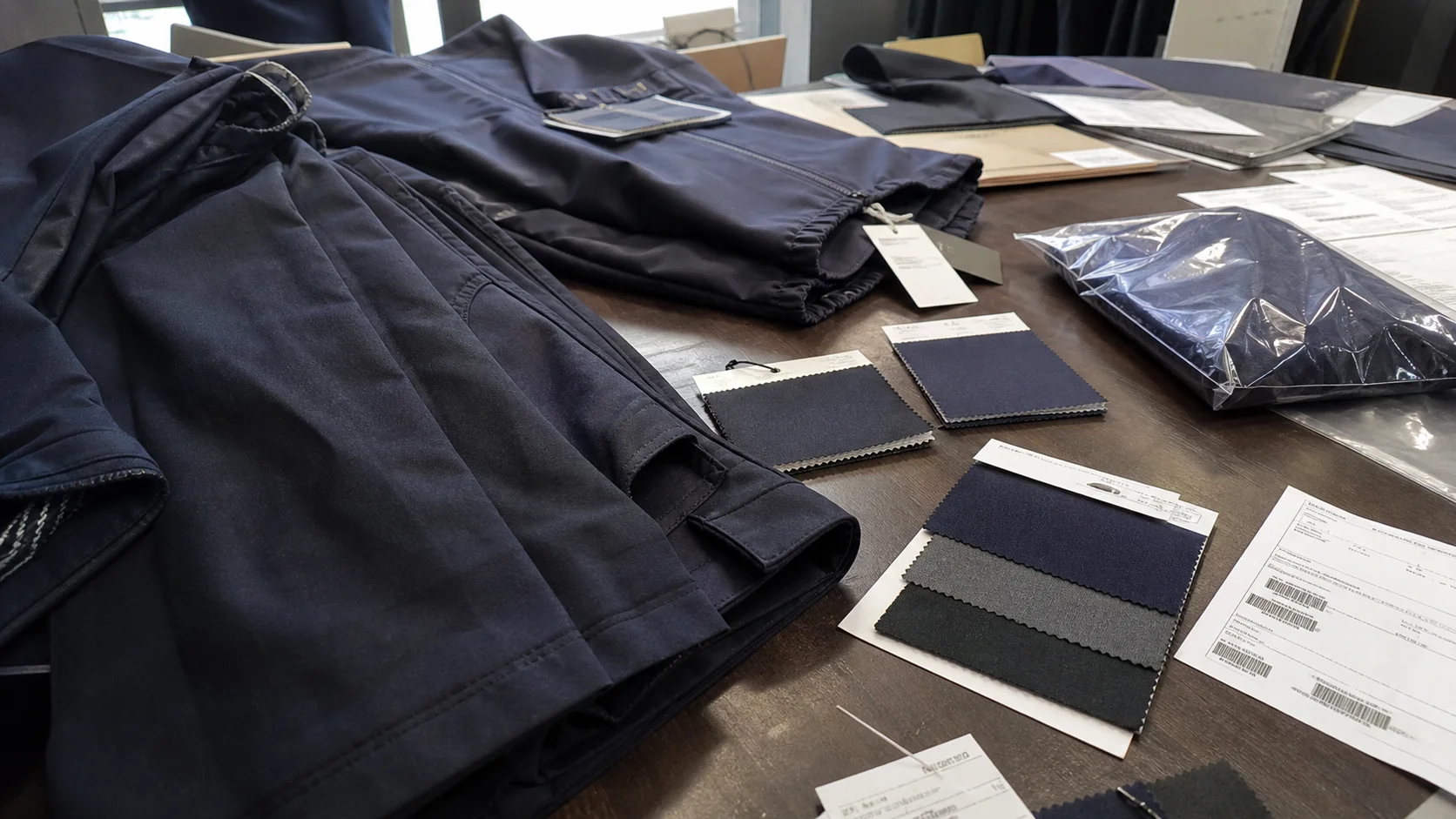
Bulk fabric should be checked against approved shade standards before cutting. A simple but useful control is a shade band review. The supplier groups fabric rolls by shade variation and submits swatches or roll-end cuttings for approval. The buyer can then decide whether the shade range is acceptable. For large orders, the supplier may need to allocate shade lots by size range, delivery batch, or school campus to reduce visible mismatch.
Buying decision: do not approve bulk cutting based only on a showroom sample. The garment used for selling may not match the fabric, dye lot, or trim quality used for production.
Colorfastness risks appear in several forms during pre-shipment inspection. Some are visible immediately. Others require targeted checks. Inspectors should review finished garments under consistent lighting and compare them to the approved sample. Strong sunlight, yellow warehouse lighting, and mixed light sources can make shade judgment unreliable.
AQL inspection can help quantify defect levels, but colorfastness needs more than standard visual counting. If the buyer has not performed lab testing earlier, the inspector may identify symptoms but cannot prove long-term wash performance before the shipment deadline. That is why serious school uniform programs should connect lab testing with inspection, instead of treating them as separate tasks.
Packaging also matters. White chef coats can absorb odors or discolor if packed with poor-quality cardboard, printed tissue, or unstable polybags. Dark garments can show lint if mixed with shedding materials. If garments are shipped for back-to-school distribution, cartons may sit in storage before issue. The buyer should require clean, dry packaging and clear carton markings by style, size, color, and purchase order.
Colorfastness requirements affect price, MOQ, and lead time. Buyers often ask for low MOQ, custom colors, fast delivery, and strong performance. Those goals can conflict. A supplier can usually move faster with stock fabric and standard colors. Custom dyeing gives better brand control, but it adds lab dip approval, fabric dyeing, testing, and shade management.
These MOQ ranges are typical market references, not fixed rules. Actual MOQ depends on fabric availability, mill requirements, trim sourcing, supplier capacity, size breakdown, and whether the buyer accepts stock materials. A supplier may offer a lower MOQ by using available fabric, but the buyer should confirm whether repeat orders can use the same quality and shade. Low MOQ is not a bargain if the second order cannot match the first.
The best purchasing strategy is to decide which features truly matter. For many school buyers, a durable standard chef coat with approved embroidery is a better buy than a fully custom color with weak testing. If the school needs a distinctive look, custom piping or logo placement may deliver enough identity without the risk of dyeing the entire garment in a difficult shade.
Price negotiation should not remove testing. If the budget is tight, reduce complexity first. Choose stock fabric, standard colors, fewer trims, or a simpler logo application. Cutting lab tests from the plan is usually the wrong saving because it moves the risk to the school after delivery.
A clear checklist helps school procurement teams compare suppliers fairly. It also prevents confusion between sales claims and production capability. The checklist below can be used during supplier qualification, sample review, and purchase order confirmation.
A supplier that can answer these points clearly is usually easier to manage. A supplier that gives only broad assurances may still be able to make the product, but the buyer will need tighter testing and inspection controls. The cost of those controls should be considered during supplier comparison.
Purchase order wording should convert expectations into measurable requirements. The buyer should avoid general phrases such as “good quality,” “no fading,” or “school grade.” These phrases are open to interpretation. Better wording names the fabric, color standard, test methods, acceptance grades, sample approval steps, and inspection reference.
A practical purchase order may include requirements such as: bulk fabric must match approved lab dip under agreed lighting; colorfastness to washing, rubbing, perspiration, and light must meet agreed grades; all contrast trims and embroidery must be tested with the main fabric; bulk cutting cannot begin before written approval of pre-production fabric; finished goods must match sealed sample; care label must reflect tested laundering conditions.
For school buyers working with a new supplier, it is sensible to split approval into milestones. Do not release full bulk production approval at the quotation stage. Approve design first, then color, then pre-production sample, then bulk fabric, then finished goods. This structure creates decision points where the buyer can stop the order before a small issue becomes a large claim.
If a buyer needs support reviewing supplier readiness, production feasibility, or inspection planning, the next step is to contact a sourcing partner early rather than after the order is already delayed. Fabrikn can be reached through its contact page for discussions around apparel sourcing and production requirements.
For outdoor school buyers, chef coat colorfastness is a durability, appearance, and budget issue. The most common mistake is waiting until final inspection to think about fading or bleeding. By then, the fabric has been dyed, cut, sewn, packed, and scheduled for delivery. The practical answer is to control color before production starts.
Buyers should prioritize tested fabrics, simple trim combinations, clear care instructions, and physical approval samples. Custom colors can work well, but they need more time and stronger controls. Stock colors reduce development risk, though they still require checking for rubbing, washing, and repeat-order consistency. White coats are not automatically risk-free because trim bleeding, yellowing, and greying can still damage the school’s uniform appearance.
The best supplier is not always the cheapest quoted option. A stronger supplier can explain fabric options, warn about difficult colors, arrange realistic tests, separate dye lots, and keep records for repeat orders. That operational discipline matters more than a polished catalog when the garments will be worn by students, washed repeatedly, and used outdoors.
A disciplined chef coat supplier colorfastness audit helps school buyers avoid preventable claims. It also improves communication with suppliers because expectations are measurable. The result is a cleaner approval path, fewer surprises before shipment, and chef coats that look consistent across the school program for longer.
Get a free quote from Fabrikn — your trusted B2B clothing manufacturer with 10+ years of experience. MOQ as low as 200 pieces.
Get a Free Quote →A chef coat colorfastness audit is a supplier and product review that checks whether the fabric, trims, dyeing, washing performance, rubbing resistance, perspiration resistance, and light exposure performance are suitable for the intended use. For outdoor school buyers, it should include both lab testing and production control.
The most important tests are usually colorfastness to washing, rubbing, perspiration, and light. If the coat has colored piping, embroidery, or contrast panels, staining and bleeding tests on the full component combination are also important.
White chef coats usually have lower dye fading risk, but they can still yellow, grey, stain, or pick up bleeding from trims and embroidery. White garments also show dirt and shade differences more easily, so washing and packaging controls still matter.
Typical MOQ may range from 50-300 pieces for stock white styles, 100-500 pieces for stock dark colors or embroidered styles, and 300-1,000+ pieces for custom dyed colors. Actual MOQ depends on fabric availability, trim requirements, supplier capacity, and size breakdown.
Stock fabric programs may take about 3-6 weeks after sample approval. Custom dyed fabric, lab dips, third-party testing, embroidery approvals, and busy back-to-school seasons can extend the schedule. Buyers should allow extra time for failed lab dips or retesting.
Final inspection can identify visible shade variation, stains, bleeding symptoms, and obvious crocking. It cannot fully prove long-term wash or sunlight performance. Colorfastness should be tested before bulk cutting, with final inspection used as an added control.
A major red flag is a supplier that cannot provide fabric details, test reports, dye lot control, or pre-production sample approval before cutting. Another warning sign is a supplier promising strong colorfastness on custom colors without asking about washing method, outdoor exposure, or test standards.
For outdoor use, dark colors, custom colors, contrast trims, or large orders, third-party testing is usually a sensible cost. It is cheaper to identify a colorfastness issue before production than to replace garments after students begin wearing them.