
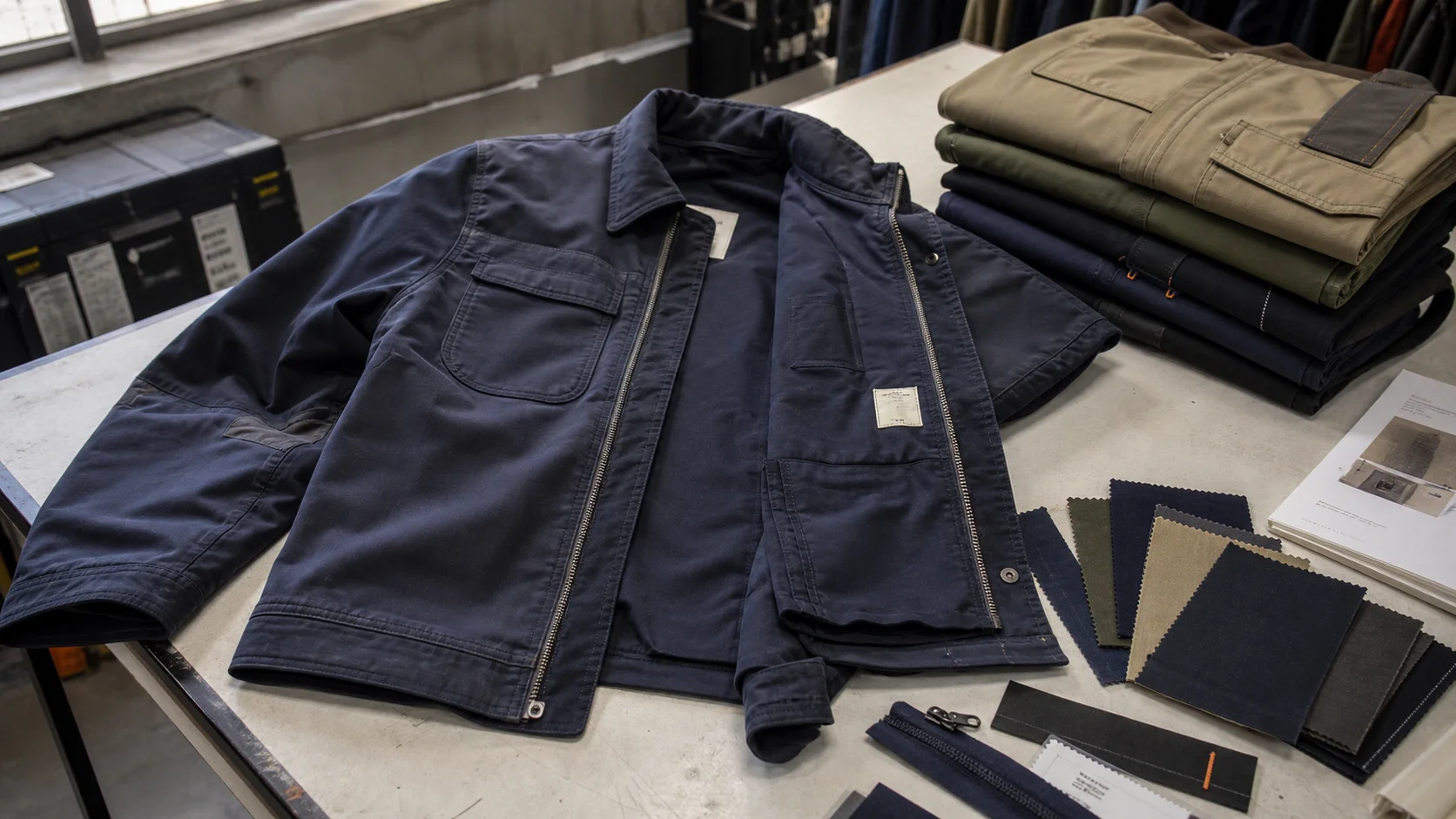
A practical landed cost breakdown for chef coats used by field service teams, including fabric, decoration, freight, duties, packaging, and replenishment costs.
Category: MOQ, Cost & Sourcing
For field service teams buying chef coats, the invoice price is only the starting point. Landed cost is the number that matters because it captures the full cost of getting approved garments into the hands of technicians, supervisors, and mobile crews on time. That includes sample development, fabric and trim choices, freight, duties, customs handling, labeling, packaging, quality checks, and the cost of rework when specs are unclear.
This checklist is written for sourcing teams that need durable, repeatable chef coats without overbuying inventory. It is also useful when comparing suppliers that quote very different unit prices but do not price the same scope. A low factory quote can turn into a poor buy if sampling runs long, trims are inconsistent, or cartons fail inspection. For broader sourcing support, refer to Fabrikn services, or use the contact page when a spec review is needed. Background on company capabilities is available on the about page.
Chef Coat Landed Cost Checklist for Field Service Teams - Fabrikn production reference
Landed cost is the total cost to receive a saleable garment at the destination warehouse or jobsite. For chef coats, that usually means more than factory FOB pricing. A clean landed cost model should include the garment price, all customization, packing, transport, duties, and the extra buffer required for defects, shortages, or delayed replenishment.
Field service teams should treat landed cost as a decision tool, not an accounting exercise. A coat that costs less at the factory can still be the more expensive option if it requires a longer approval cycle, more expensive embroidery, or a higher return rate because the sizing is unstable. In practice, the cheapest option is the one that arrives on time, meets spec, and does not create a second procurement cycle.
Landed cost is the price of certainty. If the quote does not include the steps between factory output and usable stock, the quote is incomplete.
Field service teams do not buy chef coats the same way restaurant chains or hospitality distributors do. The use case is different. Garments may be worn for service calls, mobile kitchen support, facility maintenance, catering operations, or temporary branded assignments. The program usually needs stable sizing, easy replenishment, and acceptable appearance under mixed wear conditions.
Three issues tend to shape the buying model:
That means sourcing should focus on controlled fabrics, repeatable trims, and simple decoration methods. A highly customized garment with specialty buttons, contrast piping, or multi-location embroidery can look strong on paper, but it is harder to source consistently at scale.
A usable landed cost model breaks the order into direct and indirect parts. The direct parts are easy to see. The indirect parts are where margin gets lost.
This is the factory price for the blank or minimally finished chef coat. It depends on fabric weight, construction, button style, seam quality, pattern complexity, and order quantity. A light poly-cotton coat with basic buttons will generally price lower than a heavier cotton-rich coat with reinforced seams and shaped panels.
Embroidery, heat transfer, woven labels, neck prints, and patch applications all add cost. Embroidery often has a setup charge, and multiple thread colors increase run time. If the brand standard requires front chest logos and name personalization, the cost can rise quickly across small size runs.
Packaging is often undercounted. Individual polybags, size stickers, barcode labels, hangtags, insert cards, and carton marks all affect the landed number. Field service teams should decide whether premium retail-style packaging is necessary or whether simple bulk packing is acceptable for internal distribution.
Air freight speeds up replenishment but can erase the value of a low factory quote. Ocean freight is usually lower cost, but it demands more lead time and better forecast accuracy. If a field service team has a hard launch date, the freight choice should be part of the sourcing discussion from the start.
Import duty rates depend on the product classification and destination market. Customs brokerage, clearance fees, document corrections, and storage charges can add meaningful cost if the paperwork is incomplete or the HS classification is inconsistent with the garment construction.
Cutting sample patterns, producing proto samples, revising fit, and approving lab dips or color standards are real costs. Teams that skip this budget line often pay for it later in delays and rework.
Pre-production inspections, in-line checks, final random inspection, and third-party audits all increase the landed total. These are not optional in a disciplined program. The cost is easier to justify than a rejected shipment.
A practical landed cost model reserves a small allowance for overage, replacement units, and minor defects. For controlled uniform programs, a 2% to 5% buffer is often more realistic than assuming every unit will pass first time.
MOQ affects every part of landed cost. A supplier may offer a low unit price at 1,000 pieces, but the same supplier might charge much more at 200 pieces because setup and cutting efficiency are spread over fewer units. Field service teams should think in terms of total program economics rather than single-piece pricing.
Typical MOQ ranges for chef coats vary by factory capability and customization level:
MOQ should be reviewed by style, color, and decoration. A supplier may quote one MOQ for the coat body and another for embroidery or custom trims. If the buyer does not separate those components early, the apparent minimum can become misleading.
For field service teams, smaller trial orders can make sense when the garment is new to the program. The tradeoff is price. Trial orders usually cost more per unit, but they reduce the risk of committing to the wrong fabric hand-feel, sizing block, or logo placement. A controlled pilot run is often cheaper than a large correction after distribution.
Garment spec decisions are the fastest way to either protect or destroy landed cost. Some choices have a modest impact. Others change the entire sourcing model.
Chef coats commonly use cotton, poly-cotton, or cotton-rich blends. Heavier fabrics may improve durability and drape, but they also raise material cost and can affect comfort in hot environments. A field service team should decide whether the garment is intended for short wear periods, full shift use, or repeated laundering in high-heat conditions.
Typical considerations include:
Traditional chef coat buttons, snap closures, concealed plackets, and metal hardware each affect price and repairability. If a team expects frequent replacement, a simpler closure system may be the better operational choice. Decorative hardware can look more premium, but it adds a failure point and may complicate matching in future reorders.
Reinforced stress points can reduce failure in service use. Double stitching, bartacks, and stronger pocket edges all cost more, but they can lower replacement frequency. This is a classic landed-cost tradeoff: higher unit price against lower long-term replacement cost.
Embroidery is durable and professional-looking, but it adds setup time and can complicate name personalization. Heat transfer may suit temporary or seasonal programs. Woven labels and printed neck labels can reduce irritation and improve compliance with internal branding rules. The right choice depends on wear expectations and reorder frequency.
A broad size range raises cutting complexity and can create excess inventory in slow-moving sizes. A narrow run lowers complexity, but it risks poor fit coverage. Field service programs usually need a tighter core size range with a clear replenishment policy for outlier sizes. That is often better than loading the first order with too many speculative units.
Sample approval is where many landed cost problems are prevented, or ignored. A proper process usually moves through several stages.
Skipping steps to save time often increases total cost. If the first bulk lot is wrong, the buyer pays for corrections, late freight, and potentially unsellable or unusable inventory. For field service teams, a slower approval cycle is usually preferable to a noisy launch with costly fixes.
Sample lead times vary by complexity and supplier workload. A straightforward coat may produce a first sample in 7 to 14 days. More customized programs can take longer, especially when custom fabric, special trims, or logo approvals are involved. Buyers should confirm whether the sample clock starts when the tech pack is received, when materials are sourced, or when artwork is approved. That detail matters.
Lead time is not a single number. It is a chain of dependencies. Any weak point can push the shipment date out.
Common lead-time drivers include:
A practical sourcing team should ask the supplier for a schedule broken into milestones rather than a single promised ship date. The timeline should show sample approval, raw material booking, production start, finishing, inspection, packing, and dispatch. If any step is hidden, the landed cost estimate is incomplete.
Quality control is where landed cost can rise sharply if the garment spec is weak. Chef coats may appear simple, but inspection usually catches variation in stitching, color consistency, measurement drift, logo placement, and packaging defects.
Key risks include:
Inspection should be aligned with the order risk. Low-complexity restock orders may only need a final random inspection. New programs, custom fits, or premium branding often justify more rigorous checks. The goal is not perfect garments. The goal is predictable acceptability.
The following checklist is a practical way to keep chef coat sourcing honest. If any line item is missing, the landed cost number is not ready for decision-making.
Cost Item What to Confirm Typical Risk Base garment price Fabric, construction, size run, and style revision level Hidden scope differences between quotes Sampling Proto, fit, and pre-production sample charges Extra rounds when spec is incomplete Decoration Embroidery setup, logo size, thread count, personalization Setup fees and rework from artwork changes Fabric and trims GSM, blend, color standard, buttons, labels, packaging Lead-time delays from non-stock materials Freight Air, ocean, courier, or consolidated shipping method Cost spike when delivery timing slips Duties and clearance HS code, customs broker, destination charges Unexpected import costs or hold-ups Inspection Internal QC, third-party inspection, or final audit Failure leads to rework or delay Buffer Allowance for defects, shortages, and replacements Stockout if no reserve is plannedA disciplined buyer should compare suppliers using the same template. If one supplier quotes a lower unit price but excludes labeling, inner packaging, or inspection, that quote is not directly comparable. A real landed-cost comparison standardizes the assumptions first.
Field service teams often have to choose between two imperfect options: a lower-cost garment that is easier to replace, or a more durable garment that costs more upfront. The right answer depends on wear pattern, wash frequency, and user visibility.
For internal crews that need a practical uniform, a midweight poly-cotton coat with straightforward branding is often the cleanest value choice. It tends to balance durability, comfort, and repeatability. For customer-facing staff in hot environments, fabric hand-feel and appearance may justify a slightly higher landed cost if the uniform lasts and presents well.
More customization should be justified by a business need, not by habit. Every special feature creates a sourcing dependency. Embroidered names, contrast piping, specialty snaps, and custom labels all raise complexity. If a team frequently replaces units, a simple and stable spec usually serves better than a fashion-driven one.
Inventory policy matters too. A common mistake is to buy one large batch across too many sizes and then discover that only a few sizes move. The better approach is to align size ratios with actual usage data, keep a modest reserve, and define when replenishment should be triggered. That improves landed cost by reducing dead stock and emergency freight.
When supplier quotes vary widely, the best response is not to chase the lowest number. The better response is to ask what is missing. If a supplier cannot explain the fabric composition, size tolerances, packaging method, or approval process in plain terms, the quote is not yet procurement-ready.
For teams that need sourcing support, the most efficient next step is usually a specification review rather than an immediate RFQ. That helps prevent quote drift and lets the supplier price the same garment the same way. If a program is still being shaped, use the services overview to frame the sourcing scope, then move through the contact form with the spec details that matter.
Chef coat landed cost is not a single number pulled from a factory quote. It is the full cost of making a usable garment program work across sampling, materials, decoration, freight, customs, inspection, and replenishment. Field service teams need that broader view because the real expense usually comes from delays, corrections, and inconsistent reorders, not from the base garment alone.
The practical approach is simple: standardize the spec, confirm the MOQ structure, approve samples carefully, map the lead-time dependencies, and compare suppliers on identical assumptions. That process takes more effort at the start, but it is the most reliable way to keep the program under control.
Get a free quote from Fabrikn — your trusted B2B clothing manufacturer with 10+ years of experience. MOQ as low as 200 pieces.
Get a Free Quote →Sampling mistakes and incomplete scope are usually the biggest hidden costs. A quote that leaves out packaging, embroidery setup, or freight can look attractive until the real landed number is calculated.
For simple styles, some suppliers can work at 100 to 300 pieces per color or style. Custom fabrics, branded trims, and broader size ranges often push the MOQ higher, commonly into the 300 to 1,000 piece range.
Poly-cotton blends are often the practical starting point because they balance cost, durability, and care. Higher cotton content can improve comfort, but it may raise cost and care requirements. The right choice depends on wear duration and wash frequency.
A basic program should usually pass through proto sample, fit approval, and pre-production sample review. New or highly customized programs may need more checks if the fabric, decoration, or sizing block is still being refined.
The main causes are fabric shortages, slow artwork approval, trim sourcing delays, and factory capacity constraints. Customs issues and inspection failures can also push delivery out if the shipment is not prepared correctly.
Unit price only measures the garment at the point of sale. Landed cost includes the full path to usable stock. A lower factory price can become more expensive after freight, duties, inspection, and rework are added.