
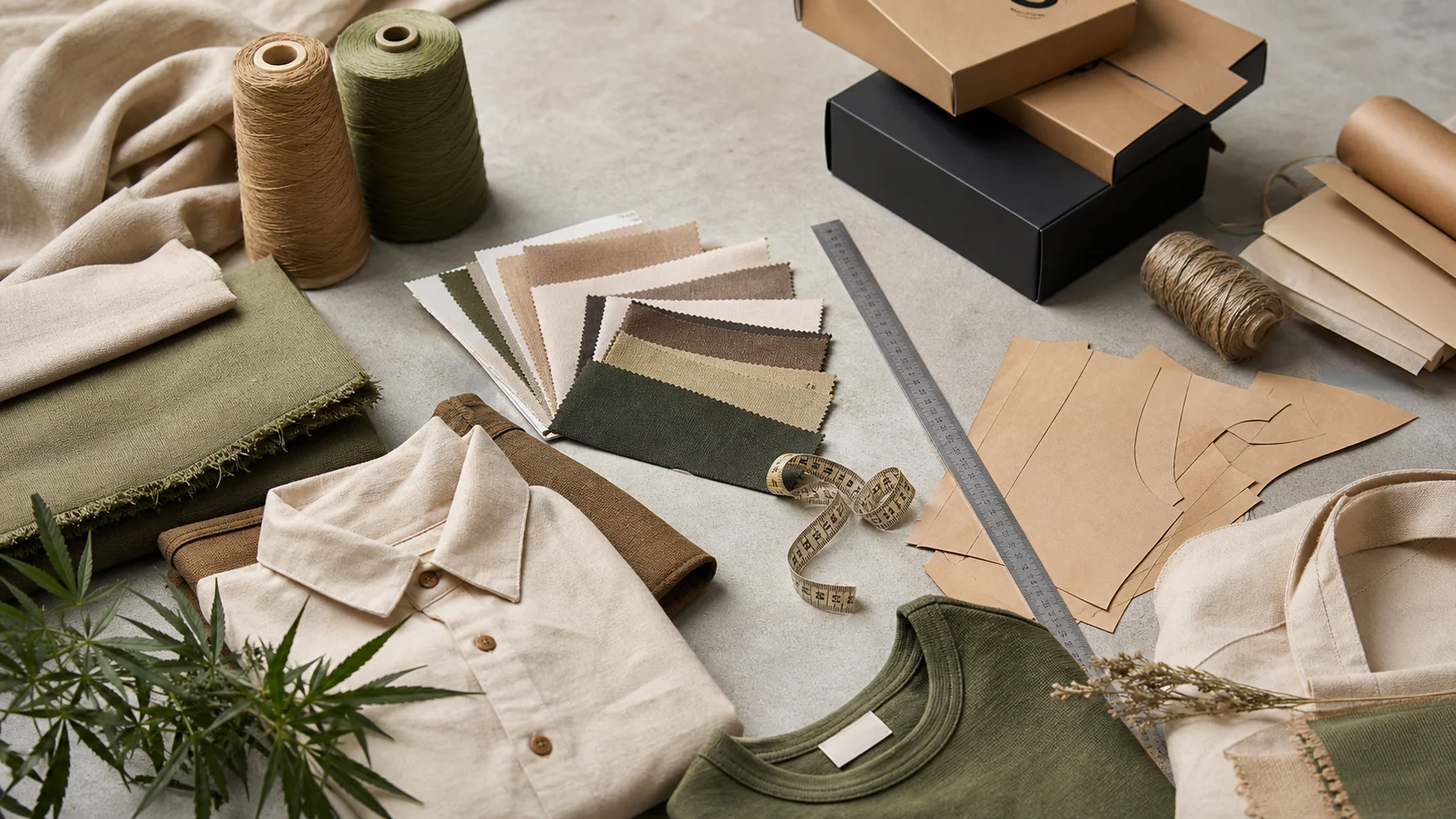
Clothing Brand Pricing Strategy with checks for samples, fit, MOQ, QC evidence, pricing terms, and delivery risk.
Fast answer: Clothing Brand Pricing Strategy should be judged by production evidence, not by a generic sourcing promise. The buyer needs sample proof, cost breakdowns, QC checkpoints, and delivery buffers in writing.
Ask for recent sample photos, measurement tolerances, fabric or print test assumptions, decoration test notes, packing examples, and a named inspection checkpoint. These details show whether the team can repeat an approved sample at bulk volume.
Separate garment cost, decoration, labels, packaging, sampling, testing, freight, and rush charges. When every cost line is visible, it becomes easier to reduce colorways, adjust size depth, or reserve more time for sampling.
Pricing apparel is one of the most important decisions a clothing brand can make. The right clothing brand pricing strategy does more than cover your costs. It supports profitability, communicates brand value, positions you in the market, and gives your business room to grow. The wrong pricing strategy can leave you with thin margins, limited cash flow, and a brand that struggles to compete or scale.
Whether you are launching a new fashion label, expanding a streetwear brand, or refining an existing apparel business, pricing should be treated as a strategic lever, not an afterthought. In the clothing industry, pricing affects everything from product perception to customer loyalty and inventory decisions. If you price too low, you may erode brand value and reduce profits. If you price too high without a clear value proposition, customers may look elsewhere.
This guide explains how to build a practical clothing brand pricing strategy that balances cost, market position, profit goals, and long-term growth. It also shows how working with the right manufacturing partner can support more accurate pricing from the start. If you need help with production planning, you can explore our clothing manufacturing services or reach out through our contact page.
In apparel, price sends a message. Customers often use price as a signal of quality, exclusivity, and brand identity. A premium price can reinforce craftsmanship and desirability. A value-driven price can help a brand attract volume and compete in crowded markets. The key is making sure your pricing supports the story you want your brand to tell.
Pricing also determines whether your business can survive operationally. Clothing brands face many costs beyond the garment itself, including sampling, packaging, shipping, warehousing, marketing, returns, platform fees, and payroll. If these costs are not reflected in your pricing, you may sell plenty of units but still lose money.
A strong pricing strategy helps you:
Effective apparel pricing begins with understanding the different layers of cost and value involved in each product. Many new brands focus only on factory cost, but that is just one part of the equation. To price properly, you need to account for the full cost to get a product ready for sale.
This includes the direct cost to produce each item. For clothing, it usually includes fabric, trims, labels, labor, printing or embroidery, and packaging. If you work with a manufacturer, this is often the base price you are quoted per unit.
Landed cost includes the full cost of getting the product to your door. This may include shipping, import duties, customs fees, freight, and inspection costs. For brands sourcing internationally, landed cost can significantly change the final unit economics.
These are the costs of running your business. They may include marketing, website management, team salaries, software, rent, and administrative expenses. Your pricing should contribute to these costs, not just production expenses.
Your price must include enough margin to leave profit after all costs are covered. Profit is not optional—it funds growth, absorbs risk, and provides flexibility when sales fluctuate.
Price should also reflect how the customer perceives your product. A garment with premium construction, unique design, or strong brand identity can often command a higher price than a basic item with similar material costs.
There is no single pricing formula that works for every apparel business. The best clothing brand pricing strategy depends on your audience, product type, channel, and brand position. Here are the most common pricing models used in fashion and apparel.
Cost-plus pricing is one of the simplest methods. You calculate your product cost and add a markup percentage to arrive at a selling price. For example, if a T-shirt costs $10 to produce and you add a 3x markup, you would sell it for $30.
This method is easy to use, but it can fail if the markup does not reflect market demand or if your overhead costs are high.
Keystone pricing typically means doubling the wholesale cost to determine retail price. It is common in retail and wholesale environments. While simple, it should only be used as a starting point because apparel brands often need more precise margin calculations.
Value-based pricing focuses on what customers believe the product is worth. If your brand has strong design, a loyal audience, or a premium image, customers may be willing to pay much more than the cost-plus formula suggests. This approach is especially useful for niche, fashion-forward, and luxury brands.
With competitive pricing, you set prices based on what similar brands charge. This is useful in saturated markets, but it can lead to price wars if your brand has no clear differentiation.
Tiered pricing involves offering different product levels at different price points. For example, a brand may offer basic tees, mid-tier hoodies, and premium outerwear. This helps brands reach multiple customer segments while increasing average order value.
To build a profitable clothing brand pricing strategy, you need a formula that works for your business model. Start with total unit cost, then layer in overhead and profit goals.
Add up all direct production expenses, including fabric, labor, trims, packaging, freight, and duties. This gives you a realistic product cost.
Estimate how much of your monthly business overhead should be assigned to each unit. For example, if you spend $10,000 per month on overhead and sell 1,000 units, you may need to allocate $10 per unit.
Decide what profit margin you need to support your business goals. Many apparel brands aim for healthy gross margins that leave enough room after discounts, fees, and returns. The exact number depends on whether you sell wholesale, DTC, or both.
Compare your proposed price against similar products in your category. Make sure the price fits your target customer’s expectations and your brand positioning.
If you plan to run sales, bundle offers, or wholesale discounts, your standard price must still protect profitability. Never set your regular price so low that promotions wipe out margin.
For brands at the development stage, pricing decisions are easier when production costs are transparent. If you want support from concept to production, learn more about Fabrikn’s background and approach.
Apparel pricing is shaped by several industry-specific factors. Understanding them will help you set smarter prices and avoid leaving money on the table.
A simple cotton T-shirt costs far less to make than a structured jacket with multiple panels, lining, zippers, and custom finishing. The more complex the product, the higher the production cost and the higher the required retail price.
Premium fabrics increase product value but also raise costs. Organic cotton, technical textiles, heavyweight fleece, and specialty blends all affect pricing. Customers often notice the difference, especially in premium apparel categories.
Higher volumes usually reduce unit costs. Smaller orders may carry higher per-unit pricing because factories have less efficiency and more setup work per style. This is an important consideration for startups with limited inventory budgets.
A luxury or premium brand can charge more because the customer is buying more than a garment. They are also buying identity, experience, and perception. A mass-market brand must be more careful with price sensitivity and competitive pressure.
Selling through your own website, marketplaces, retail stores, or wholesale accounts all require different pricing structures. Each channel has its own margin expectations and fees.
Pricing expectations can vary by region. What works in one market may not work in another, especially when factoring in currency conversion, tariffs, and local competitor pricing.
A brand targeting budget-conscious shoppers will need a different strategy than one targeting fashion enthusiasts or high-income consumers. Know who you are pricing for before setting your numbers.
Many clothing brands make avoidable pricing mistakes early on. These can reduce profits, damage brand perception, and create operational headaches.
One of the most common mistakes is calculating price by simply multiplying factory cost. This ignores overhead, marketing, shipping, returns, and business growth needs.
Some founders set low prices to attract customers quickly. While this may generate sales, it can also make the brand seem cheap and limit future pricing power.
If you frequently run promotions, your regular price must be high enough to maintain margin after markdowns. Brands that ignore this often discover their “sale” price is actually the only price customers are willing to pay.
E-commerce clothing brands must plan for returns, payment processing fees, and platform commissions. These costs can materially affect profitability.
While pricing should be thoughtful, it does not need to be overly complex. Too many tiers, discounts, and exceptions can confuse customers and make internal management difficult.
A great clothing brand pricing strategy should support long-term growth. That means pricing with enough margin to invest in marketing, new product development, inventory replenishment, and hiring. If your margins are too thin, growth becomes difficult even when sales are increasing.
Growth pricing also gives your brand flexibility. You can launch new products, test different channels, and absorb unexpected expenses without constantly stressing cash flow. Strong pricing creates a buffer that allows your business to adapt.
Some brands use entry-level products to acquire customers and premium products to drive profit. Others focus entirely on premium positioning from the start. The right approach depends on your goals, audience, and product mix.
If you are planning to scale production while protecting margins, a manufacturing partner that understands apparel economics can be a major advantage. High-quality production support helps minimize waste, improve consistency, and keep costs predictable.
Price is a core part of brand identity. Customers interpret price as a signal of quality, exclusivity, and relevance. If your product is priced too low, customers may question whether it is truly premium. If it is priced too high for your audience, demand may stall.
Your pricing should align with your brand story. For example:
When pricing and positioning align, customers understand what makes your brand different. That clarity makes marketing more effective and helps build loyalty over time.
Clothing brands that sell through both wholesale and direct-to-consumer channels need a pricing structure that works in both environments. Wholesale pricing is typically lower because retailers need room to mark up the product themselves.
Retail pricing is the full customer-facing price on your website or in your own stores. Wholesale pricing is generally set so that the retailer can sell at standard retail markup while you still maintain enough margin to profit.
To manage both channels successfully, brands should calculate wholesale and retail pricing separately and make sure the retail price supports the wholesale discount. If your retail price is too low, you may not have room to sell wholesale profitably.
Some brands create a pricing ladder like this:
This structure helps protect margins across all sales channels.
E-commerce introduces unique pricing challenges because customers can compare products instantly. Online shoppers may browse multiple brands before buying, which makes positioning and perceived value especially important.
For e-commerce apparel brands, pricing should account for:
Online brands also need to watch their conversion rates. A price that is too high for your current brand awareness may reduce conversions. But a price that is too low may generate clicks while weakening profitability. The goal is to find the point where demand and margin are both healthy.
Your manufacturer has a direct impact on your pricing strategy. Production quality, minimum order quantities, lead times, fabric sourcing, and communication all affect total cost and consistency.
A good manufacturing partner can help you:
When product development is handled professionally, pricing becomes more predictable. That makes it easier to build margins into your business model from the beginning.
If you are evaluating production support for your brand, consider reviewing Fabrikn’s apparel manufacturing services or speaking with the team through our contact page.
Pricing is not a one-time decision. Successful brands review and adjust pricing as the business evolves. Changes in material costs, customer demand, competition, and marketing efficiency can all affect what the right price should be.
To improve your pricing over time:
You can also use customer feedback and purchasing behavior to evaluate whether your pricing is too high, too low, or just right. If a product sells out too fast at full price, you may have room to raise it. If it sits for too long despite strong marketing, it may be overpriced or poorly positioned.
A strong clothing brand pricing strategy is essential for profitability, stability, and growth. The best apparel pricing balances production costs, overhead, market positioning, customer expectations, and long-term business goals. When your prices are built on a full understanding of cost and value, you give your brand the best chance to succeed.
Instead of guessing, use a structured approach. Know your total cost per unit, define your target margin, understand your audience, and align your pricing with your brand identity. Make sure your pricing can support promotions, wholesale, and future growth without compromising profit.
For clothing brands that want to scale with confidence, pricing and manufacturing should work together. If you need support bringing your products to market, explore our services, learn more about Fabrikn, or contact us to discuss your project.
Get a free quote from Fabrikn — your trusted B2B clothing manufacturer with 10+ years of experience. MOQ as low as 200 pieces.
Get a Free Quote →A clothing brand pricing strategy is the method a fashion or apparel business uses to set product prices based on costs, margins, market demand, and brand positioning.
Most brands calculate retail price by adding production cost, overhead allocation, and target profit margin, then checking the result against market expectations and customer willingness to pay.
The ideal margin depends on the business model, but apparel brands often aim for healthy gross margins that allow room for marketing, discounts, returns, and growth investments.
Competitor pricing is useful as a reference, but it should not be the only factor. Your costs, quality, brand position, and target customer should guide the final price.
Review pricing regularly, especially when costs, demand, or channel performance changes. Many brands adjust prices seasonally or when introducing new collections.
Yes. Small brands can charge premium prices if they offer strong design, quality, exclusivity, or a clear brand story that customers value.