
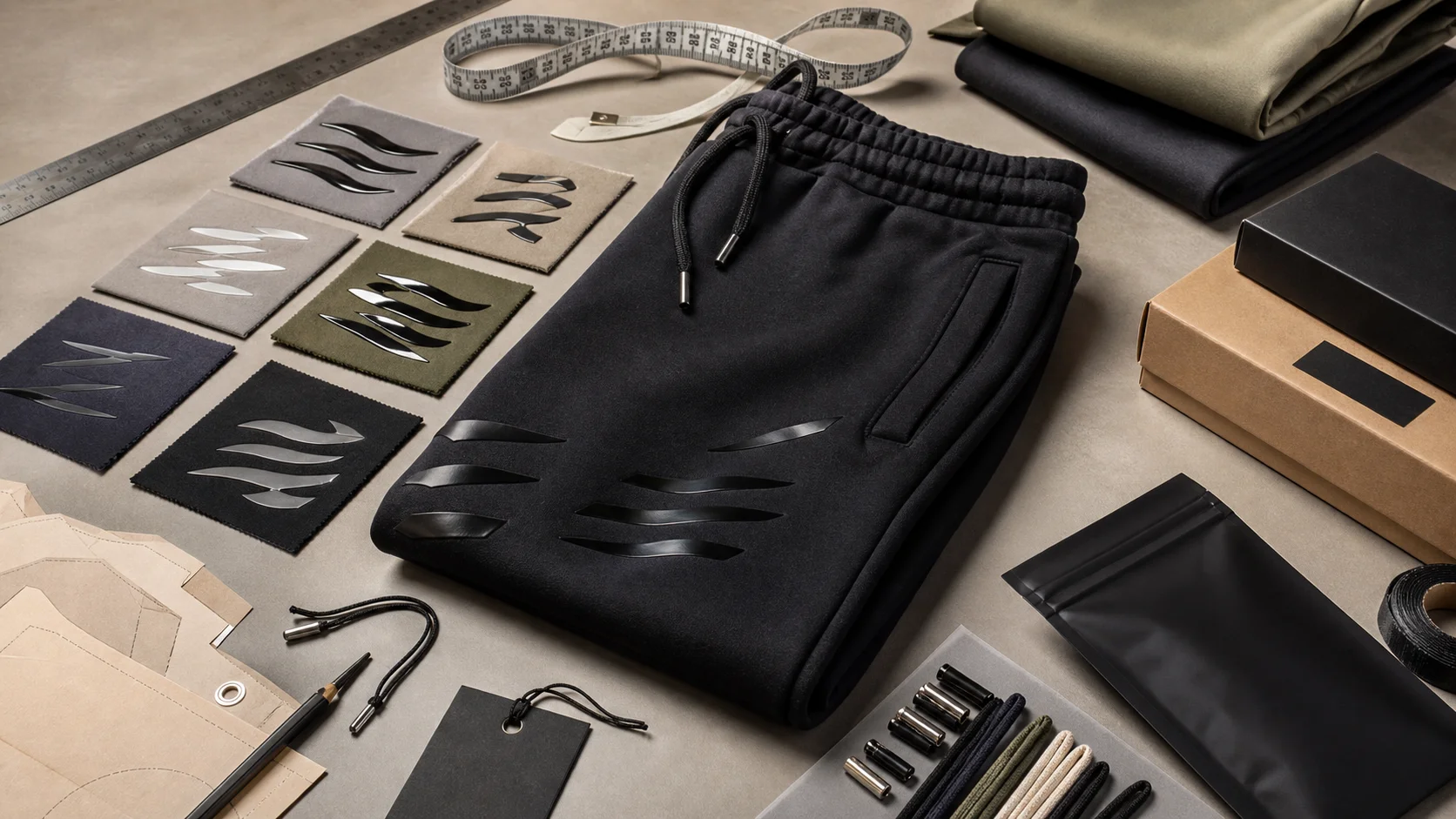
Clothing Brand Supplier Audit Checklist compared by sample evidence, fabric or trim specs, MOQ, AQL terms, cost lines, delivery timing, and rework...
Fast answer: Clothing Brand Supplier Audit Checklist: Tech Pack, Sample Gate, MOQ, and QC Terms should be judged by production evidence, not by a generic sourcing promise. The buyer needs sample proof, cost breakdowns, QC checkpoints, and delivery buffers in writing.
Ask for recent sample photos, measurement tolerances, fabric or print test assumptions, decoration test notes, packing examples, and a named inspection checkpoint. These details show whether the team can repeat an approved sample at bulk volume.
Separate garment cost, decoration, labels, packaging, sampling, testing, freight, and rush charges. Clear cost lines make it easier to reduce colorways, adjust size depth, or reserve more time for sampling.
If you are building or scaling a clothing brand, supplier selection is one of the most important decisions you will make. A reliable partner can help you meet deadlines, maintain quality, control costs, and protect your brand reputation. A weak supplier can create inventory delays, inconsistent products, and compliance issues that become expensive very quickly.
That is why a clothing brand supplier audit checklist matters. It gives you a structured way to evaluate factories and production partners before you commit to long-term sourcing. Instead of relying on samples alone or sales promises, you can review the supplier’s operations, capabilities, quality systems, communication style, and compliance standards in a consistent way.
In this guide, we will walk through a practical clothing brand supplier audit checklist for better sourcing decisions. Whether you are launching a small private label line or managing a growing apparel brand, this checklist will help you reduce risk and choose the right manufacturing partner.
In apparel manufacturing, product quality is only one part of the equation. A supplier also needs to deliver consistently, communicate clearly, comply with regulations, and adapt as your brand grows. Without an audit process, it is easy to overlook warning signs until after production begins.
A supplier audit helps you verify whether a factory can truly support your business. It gives you a clearer picture of:
For a clothing brand, choosing the wrong supplier can result in missed launch dates, returns, bad reviews, and cash flow problems. A structured audit helps you avoid those issues before they happen.
A strong clothing brand supplier audit checklist should go beyond a simple yes-or-no evaluation. It should cover operational, financial, quality, and compliance factors that affect the long-term success of your partnership.
At a minimum, your checklist should cover these areas:
Now let’s break these down into a practical audit framework you can use with any apparel supplier.
Not every supplier is the right fit for every garment category. Some factories specialize in cut-and-sew basics, while others focus on activewear, denim, knitwear, outerwear, or premium fashion pieces. A supplier may look impressive on paper but struggle with your exact product type.
Ask these questions:
Capacity issues often appear only after orders are placed. A supplier may accept your business but lack the capacity to handle peak seasons or larger reorders. Your audit should confirm whether they can scale with your brand.
Evaluate:
Lead times should be realistic and consistent. Ask the supplier to explain each stage of the process, from sample development to bulk production and shipping readiness. A trustworthy supplier should be able to define timelines clearly and explain what can cause delays.
Key areas to confirm:
Quality control is one of the most important elements in any clothing brand supplier audit checklist. A supplier should have a clear system for checking materials, monitoring production, and inspecting finished goods.
Look for a process that includes:
Samples are useful, but they should not be your only quality benchmark. A supplier that produces an excellent sample may still struggle to replicate it in bulk. Your audit should verify how they ensure consistency from sample to production.
Ask:
Fit issues are one of the fastest ways to damage customer trust in an apparel brand. Your supplier should demonstrate how they manage grading, measurement tolerances, and fit consistency across sizes.
Confirm whether they can provide:
A responsible supplier should operate legally and transparently. Depending on your market, this may include business registration, export authorization, tax records, and industry-specific certifications.
Request documentation for:
Consumers and retailers are increasingly concerned with ethical sourcing. Even if you are a small brand, your supplier’s labor practices can affect your reputation and your ability to grow into larger distribution channels.
Your checklist should ask whether the factory:
If your brand promotes sustainability, you need to verify supplier claims carefully. Ask for proof rather than assumptions. Many suppliers say they are eco-friendly, but a proper audit should confirm the details.
Review items such as:
A supplier can have good machinery and decent pricing but still create major problems if communication is slow or unclear. Delays in answering questions often lead to delays in production decisions and approvals.
During the audit, note:
Clear communication is essential when discussing tech packs, revisions, shipment dates, or compliance requirements. Misunderstandings can become expensive quickly. Your supplier does not need perfect language skills, but they do need clarity and responsiveness.
Some suppliers are reactive, while others manage production proactively. A strong manufacturing partner should guide you through the process, flag issues early, and keep you informed at every stage.
Ask how they manage:
Low unit pricing is attractive, but it does not always mean better value. Your audit should identify hidden costs, unclear charges, or weak service that may create problems later.
Review:
Supplier reliability matters as much as pricing. A factory with unstable operations, frequent staff turnover, or poor material sourcing relationships may struggle to support long-term growth.
Ask about:
Some manufacturers only produce garments, while others offer broader supply chain support. Depending on your needs, it may help to work with a supplier that can assist with packaging, labeling, warehousing, or export preparation.
Confirm whether they can support:
A pilot order is one of the best ways to validate your supplier before scaling up. Even if the factory passes your basic audit, a small production run can reveal how they perform under real conditions.
Use the pilot order to test:
Do not rely on general impressions alone. Create a scorecard for your clothing brand supplier audit checklist and rate each area on a scale, such as 1 to 5. This helps you compare suppliers fairly and avoid emotional decision-making.
Sample categories might include:
If you can visit the factory, an on-site audit is ideal. If not, a detailed virtual audit can still be highly effective when done properly. Either way, the goal is to gather evidence, not just promises.
A good supplier audit is not just about collecting information. It is about making a smart sourcing decision based on facts. After your audit, compare suppliers using the same criteria so your final choice is consistent and objective.
Here is a simple decision framework:
If you are still comparing production partners, you may want to review our services page to understand the support Fabrikn provides for clothing brands. You can also learn more about our team on the about us page or reach out directly through our contact us page.
Even experienced brand owners make mistakes when evaluating suppliers. Avoiding these errors can save time, money, and stress.
The biggest mistake is rushing. A few extra days spent auditing a supplier can prevent months of production issues later.
At Fabrikn, we understand that better sourcing starts with better supplier evaluation. Clothing brands need more than a factory that can sew garments. They need a manufacturing partner that understands quality, consistency, communication, and growth.
Whether you are developing your first collection or expanding an existing product line, our approach is designed to help brands make more informed sourcing decisions. From production support to clear communication, the right partner can simplify the process and improve outcomes across the supply chain.
If you are currently building your supplier list or reviewing production options, we invite you to explore our services and connect with our team through the contact us page.
A clothing brand supplier audit checklist is one of the most valuable tools you can use to improve sourcing decisions. It helps you go beyond first impressions and evaluate the factors that truly affect performance: quality, capacity, compliance, communication, pricing, and reliability.
By using a structured checklist, you can reduce supplier risk, protect your brand reputation, and build stronger long-term manufacturing relationships. The best suppliers are not just affordable; they are dependable, transparent, and capable of supporting your brand as it grows.
Use the checklist in this guide as a starting point, customize it for your product category, and apply it consistently across every supplier you consider. Better sourcing begins with better questions.
Get a free quote from Fabrikn — your trusted B2B clothing manufacturer with 10+ years of experience. MOQ as low as 200 pieces.
Get a Free Quote →A clothing brand supplier audit checklist is a structured tool used to evaluate apparel manufacturers before placing orders. It typically covers production capability, quality control, compliance, communication, pricing, and reliability.
Supplier auditing helps clothing brands reduce sourcing risk, avoid quality issues, confirm production capacity, and verify that a factory can meet business and compliance requirements.
It is a good idea to audit at least three suppliers whenever possible. Comparing multiple options helps you identify differences in quality, communication, pricing, and reliability.
In-person visits are ideal, but virtual audits can also be effective if you ask detailed questions, review documents carefully, and request live video tours or production evidence.
There is no single most important part, but quality control, communication, and production reliability are usually the most critical for clothing brands. These areas directly affect your product and customer experience.
Yes, but only if the supplier also meets your standards for quality, consistency, capacity, and compliance. The lowest price is not always the best value if it creates delays or defects.
Ask about production capacity, lead times, staffing, order history, and peak-season handling. A scalable supplier should be able to support growth without sacrificing quality or delivery performance.