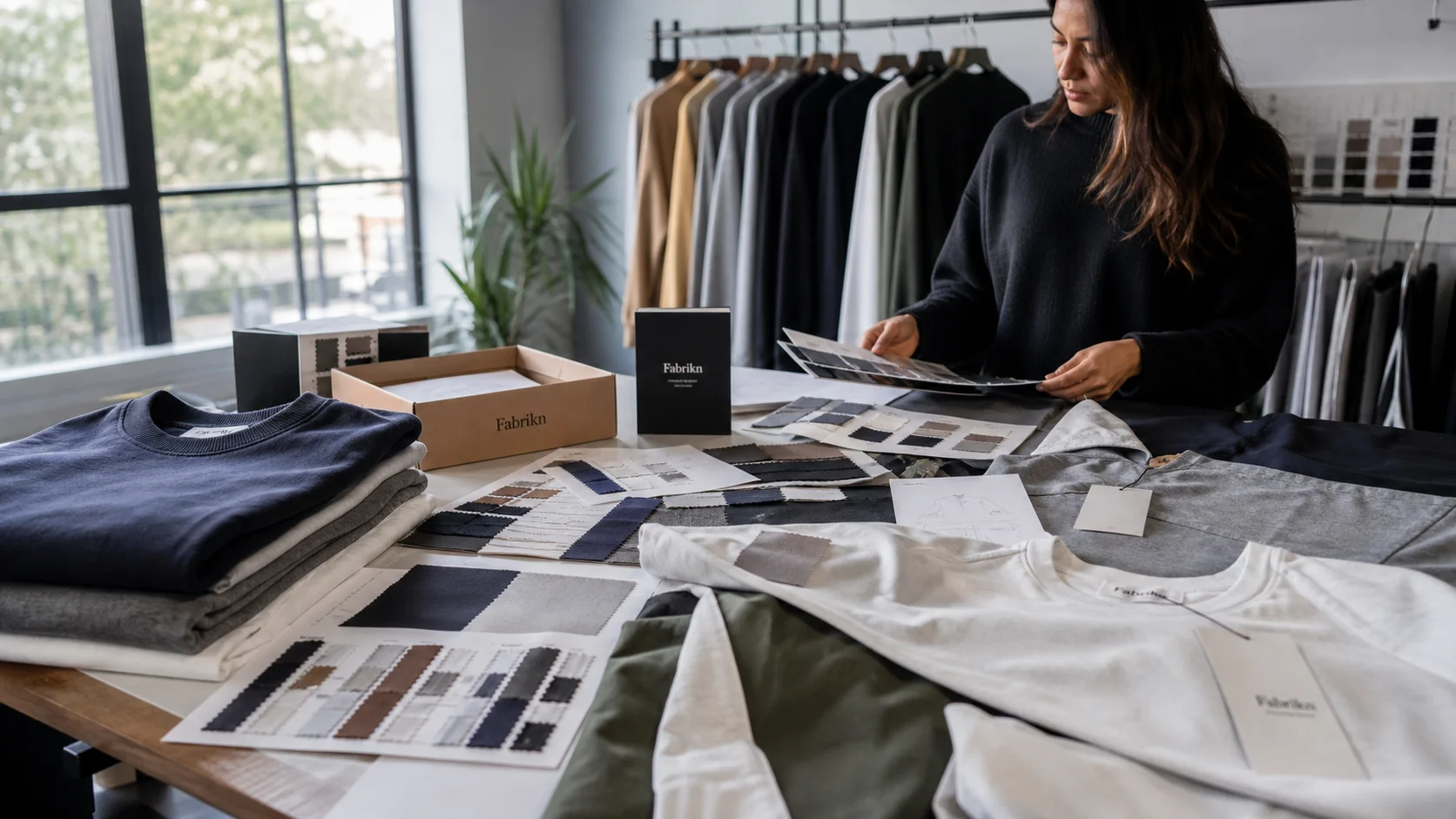
Clothing Brand Supplier Communication Template for with checks for samples, fit, MOQ, QC evidence, pricing terms, and delivery risk.
Buyer Fit Snapshot
Best fitclothing brand supplier communication template for for apparel buyers comparing samples, material specs, QC ownership, landed cost, lead time, and supplier risk where fit consistency, decoration durability, and delivery dates decide the vendor choice.
Files to prepareTech pack, size run, color list, artwork, label and packing notes, target quantity, inspection level, and required delivery window.
Sample gateApprove fabric handfeel, shrinkage, measurements, logo placement, wash result, packing method, and every change log before bulk cutting.
Quote riskLow unit prices can hide trim substitutions, rushed sampling, weak AQL rules, or unclear rework responsibility.
Fast answer: Clothing Brand Supplier Communication Template for should be judged by production evidence, not by a generic sourcing promise. The buyer needs sample proof, cost breakdowns, QC checkpoints, and delivery buffers in writing.
Production evidence to request before a deposit
Ask for recent sample photos, measurement tolerances, fabric or print test assumptions, decoration test notes, packing examples, and a named inspection checkpoint. These details show whether the team can repeat an approved sample at bulk volume.
How to make the quote easier to compare
Separate garment cost, decoration, labels, packaging, sampling, testing, freight, and rush charges. When every cost line is visible, it becomes easier to reduce colorways, adjust size depth, or reserve more time for sampling.
Table of Contents
Clothing Brand Supplier Communication Template for Overseas Factories: A Practical Guide
For clothing brands sourcing internationally, clear communication is one of the most important parts of the production process. A great product does not come from design alone. It also depends on how effectively a brand communicates with its supplier, especially when working with overseas factories across different time zones, languages, and production standards.
This guide explains how to build a practical clothing brand supplier communication template for overseas factories. Whether you are a startup placing your first order or an established brand scaling production, having a structured template helps you reduce errors, speed up responses, and protect your margins. It also improves relationships with factory partners and makes sourcing more professional.
If you are looking for a manufacturing partner, you can also learn more about our production support on the Fabrikn Services page or get in touch through our Contact Us page.
Why Supplier Communication Matters with Overseas Factories
When a clothing brand works with an overseas factory, communication becomes the bridge between creative vision and final product. Even small misunderstandings can lead to costly sampling mistakes, delays, fabric mismatches, incorrect measurements, or quality issues.
Unlike local production, overseas sourcing often involves:
- Different time zones
- Language and terminology differences
- Varied expectations around lead times and approvals
- Different production methods and quality standards
- Multiple stakeholders such as agents, merchandisers, and factory managers
A strong supplier communication template helps standardize the way your brand shares information. It ensures every message includes the details a factory needs to quote accurately, sample correctly, and produce on schedule.
Good communication also builds trust. Factories are more likely to prioritize brands that provide clear instructions, respond promptly, and understand the production process. Over time, that can lead to better prices, stronger cooperation, and more flexible support when problems arise.
What to Include in a Supplier Communication Template
A useful clothing brand supplier communication template should be simple, repeatable, and detailed enough to prevent confusion. You can use it for inquiries, sampling, bulk orders, and follow-ups.
Core information to include
- Brand name and company background
- Product type and category
- Design reference or style number
- Target quantities for sampling and bulk orders
- Fabric and trim specifications
- Size range and grading requirements
- Color requirements, including Pantone references if needed
- Artwork, labels, packaging, and branding details
- Target price range or FOB budget if applicable
- Expected lead time for sample and production
- Shipping destination and incoterms if known
- Quality expectations and testing requirements
Key documents to prepare
Factories usually work faster and more accurately when you send complete technical materials. Your communication template should refer to these supporting files:
- Tech pack or specification sheet
- Measurement chart
- Reference images or inspiration photos
- Artwork files in editable format
- Material swatches or fabric references
- Packaging instructions
- Label and hangtag artwork
When these details are organized in one message, your supplier can evaluate whether the project fits their capabilities and provide a more accurate response.
Practical Communication Templates for Clothing Brands
Below are practical communication templates you can adapt depending on where you are in the sourcing process. These templates are especially useful for overseas factories because they make your requests clearer and more professional.
1. Initial factory inquiry template
Use this when reaching out to a new supplier for the first time.
- Subject: Product Inquiry for [Product Name] Manufacturing
- Dear [Factory Name/Contact Person],
- My name is [Your Name], and I represent [Brand Name], a clothing brand based in [Country].
- We are currently looking for a manufacturing partner for [product type, e.g. hoodies, T-shirts, activewear].
- Product details: [brief description]
- Estimated order quantity: [MOQ or expected bulk quantity]
- Requested sample quantity: [number]
- Fabric preference: [material details]
- Target price range: [if available]
- Delivery target: [month/season]
- Please let us know if your factory can support this type of production and share your MOQ, sample cost, lead time, and available certifications.
- We would be happy to provide a tech pack and additional details upon request.
- Best regards, [Name, title, contact details]
This format works because it gives the supplier enough information to decide whether the project is relevant while keeping the request short and professional.
2. Sampling request template
Use this when you are ready to request a sample after confirming capability.
- Subject: Sample Request for [Style Name/Code]
- Dear [Factory Contact],
- Thank you for confirming your interest in our project.
- We would like to request a sample for the following style:
- Style name/code: [details]
- Quantity: [sample quantity]
- Fabric and trim details: [specifications]
- Measurements: [attach size chart]
- Logo/print/embroidery requirements: [details]
- Packaging requirements: [details]
- Please confirm sample cost, sample lead time, and any additional information required before production begins.
- We look forward to reviewing the first sample and will provide feedback promptly.
- Kind regards, [Your name]
3. Bulk order confirmation template
Once the sample is approved, the bulk order message should confirm all critical production details.
- Subject: Bulk Order Confirmation for [Style Name/Code]
- Dear [Factory Contact],
- We are pleased to confirm the bulk order for [product name].
- Approved sample reference: [sample date or code]
- Quantity: [total units per color/size]
- Color breakdown: [details]
- Size breakdown: [details]
- Confirmed fabric: [details]
- Confirmed trims: [details]
- Delivery deadline: [date]
- Shipping terms: [FOB/CIF/EXW, etc.]
- Please confirm the production schedule, payment terms, and final order summary.
- Thank you for your support. We look forward to a successful production run.
- Best, [Your name]
4. Follow-up and delay management template
Delays happen, especially in international production. What matters is how you communicate them.
- Subject: Follow-Up on [Style Name/Order Number]
- Dear [Factory Contact],
- I hope you are doing well. I am following up on the status of [order/style].
- Could you please share the latest update on:
- Fabric arrival
- Cutting and sewing progress
- QC inspection status
- Expected completion date
- If there are any issues affecting the schedule, please let us know so we can review possible solutions together.
- Thank you for your support and prompt update.
- Best regards, [Your name]
5. Quality issue escalation template
If there is a problem with the sample or production run, communicate with facts, not emotion.
- Subject: Quality Concern for [Style Name/Code]
- Dear [Factory Contact],
- Thank you for sending the latest sample/shipment.
- After review, we found the following issues:
- [Issue 1 with photo reference]
- [Issue 2 with photo reference]
- [Issue 3 with measurement reference]
- Please review the attached images and let us know your assessment.
- We would appreciate a proposed correction plan and timeline for rework or replacement.
- We value our partnership and would like to resolve this efficiently.
- Kind regards, [Your name]
Best Practices for Communicating with Overseas Factories
Templates are powerful, but they work best when paired with good communication habits. If you want overseas factories to respond quickly and accurately, follow these best practices.
Be specific and use measurable details
Avoid vague words like “good quality,” “nice fit,” or “premium fabric” unless you define them. Instead, provide exact construction details, measurement tolerances, fabric weights, composition percentages, and finishing requirements.
Use one topic per message
If possible, keep each email focused on one stage of the process. A message about sampling should not also contain unrelated questions about shipping and payment. Clear structure makes it easier for suppliers to respond efficiently.
Attach visual references
Overseas communication is much easier when you include reference images, annotated sketches, or marked-up photos. Visuals reduce assumptions and make design expectations easier to understand.
Confirm time zones and response expectations
Because factories often operate in different time zones, response times may vary. Set expectations early by stating when you need a reply and whether the request is urgent.
Use consistent terminology
Choose one term for each product feature and keep it consistent across your emails, tech packs, and annotations. For example, do not alternate between “main label,” “brand label,” and “neck label” unless you explain the difference.
Summarize decisions clearly
After calls or meetings, send a follow-up summary with the agreed points. This helps prevent disputes later and gives both sides a written record of decisions.
Keep a communication log
Track all supplier conversations, sample approvals, payment milestones, and delivery updates in one place. A simple spreadsheet or project management tool can save your team time and reduce errors.
Common Communication Mistakes to Avoid
Many clothing brands lose time and money because of avoidable communication mistakes. Here are the most common ones to watch out for.
- Sending incomplete tech packs
- Assuming the factory understands your brand standards without explanation
- Using unclear language or industry slang without context
- Failing to confirm measurements, fabric, and trims in writing
- Changing details after sample approval without updating all documents
- Ignoring time zone differences and expecting immediate replies
- Not asking for quotes on sample cost, bulk cost, and shipping separately
- Waiting too long to report quality issues
- Overloading one email with too many unrelated questions
A good template helps reduce these risks by creating a repeatable process. The more organized your communication, the easier it is for a factory to produce exactly what you want.
How to Build a Strong Long-Term Factory Relationship
Supplier communication should not be treated as a one-time task. The best brands build long-term factory partnerships based on trust, consistency, and mutual respect.
Here are a few ways to strengthen the relationship:
- Pay on time according to agreed terms
- Provide complete information from the beginning
- Give constructive feedback on samples
- Acknowledge good work and on-time delivery
- Stay transparent about future forecasts and reorder potential
- Work collaboratively when issues arise instead of assigning blame immediately
Factories are more likely to support brands that are organized and predictable. If you expect fast turnaround, high attention to detail, and flexibility during peak season, you also need to communicate professionally on your side.
For more background on how Fabrikn works with brands and production partners, visit our About Us page.
If your brand is still evaluating potential partners, direct communication can help you quickly assess whether a factory is a good fit. Contact a manufacturer directly when you need to:
- Ask about MOQ and price range
- Check if they can produce your product category
- Confirm sampling timelines
- Request certifications or compliance documentation
- Review production capacity for upcoming seasonal demand
- Discuss packaging, labels, or private label support
If you already have a product plan, the fastest way to get accurate feedback is to send a clear introduction along with your specs. You can begin that process through the Fabrikn Contact Us page.
Ready to Start Your Custom Clothing Project?
Get a free quote from Fabrikn — your trusted B2B clothing manufacturer with 10+ years of experience. MOQ as low as 200 pieces.
Get a Free Quote →
Comparison table for clothing brand supplier communication template for
Supplier optionBest fitWhat to verifyDecision signal
Cut-and-sew factoryCustom silhouettes, private-label capsules, and fit-sensitive programsPattern capability, size-set process, sewing-line capacity, and QC checkpointsThe factory can explain how samples move into bulk without guesswork
Decoration specialistEmbroidery, screen print, heat transfer, sublimation, and branded trimsArtwork limits, wash testing, color tolerance, and reject handlingThey show production proofs and test results before bulk approval
Full-package partnerTeams that need sourcing, development, packaging, and export supportMOQ, lead time, material sourcing, compliance documents, and communication rhythmYou get one accountable timeline instead of several disconnected vendors
Decision checklist before committing
- Define the target product, audience, order quantity, and selling channel before discussing price.
- Ask whether the supplier can document material source, sample revisions, bulk inspection, and export packing.
- Request a clear quote split between product cost, decoration, packaging, testing, and freight assumptions.
- Set approval points for artwork, trims, fit sample, pre-production sample, and final inspection.
- Keep one change log so the factory, brand team, and logistics contact work from the same version.
Frequently Asked Questions
What is a clothing brand supplier communication template?
It is a structured message format that helps clothing brands share product, sampling, and production details with suppliers in a clear and professional way. It reduces misunderstandings and speeds up factory responses.
Why is communication with overseas factories more difficult?
Overseas communication often involves time zone differences, language barriers, different production standards, and longer lead times. A template helps organize information so suppliers can understand your needs faster.
What should I send to a factory before requesting a quote?
You should send a product description, tech pack or spec sheet, estimated quantity, fabric preferences, size range, target price, and timeline. The more complete your information, the more accurate the quote will be.
How do I avoid misunderstandings with a factory?
Use clear terminology, include visual references, confirm all decisions in writing, and summarize key points after meetings or calls. Consistency is the best way to reduce confusion.
Should I use email or messaging apps to communicate with suppliers?
Email is better for formal requests, quotations, approvals, and records. Messaging apps can be useful for quick updates, but important decisions should still be confirmed by email.
How often should I follow up with an overseas factory?
Follow up based on the production stage and agreed timeline. If you do not receive a reply, a polite follow-up after 2 to 4 business days is reasonable, depending on urgency and time zone.
Can Fabrikn help with supplier communication and production support?
Yes. Fabrikn works with clothing brands that need a reliable manufacturing partner and structured production support. Explore our Services page or reach out through our Contact Us form to discuss your needs.