
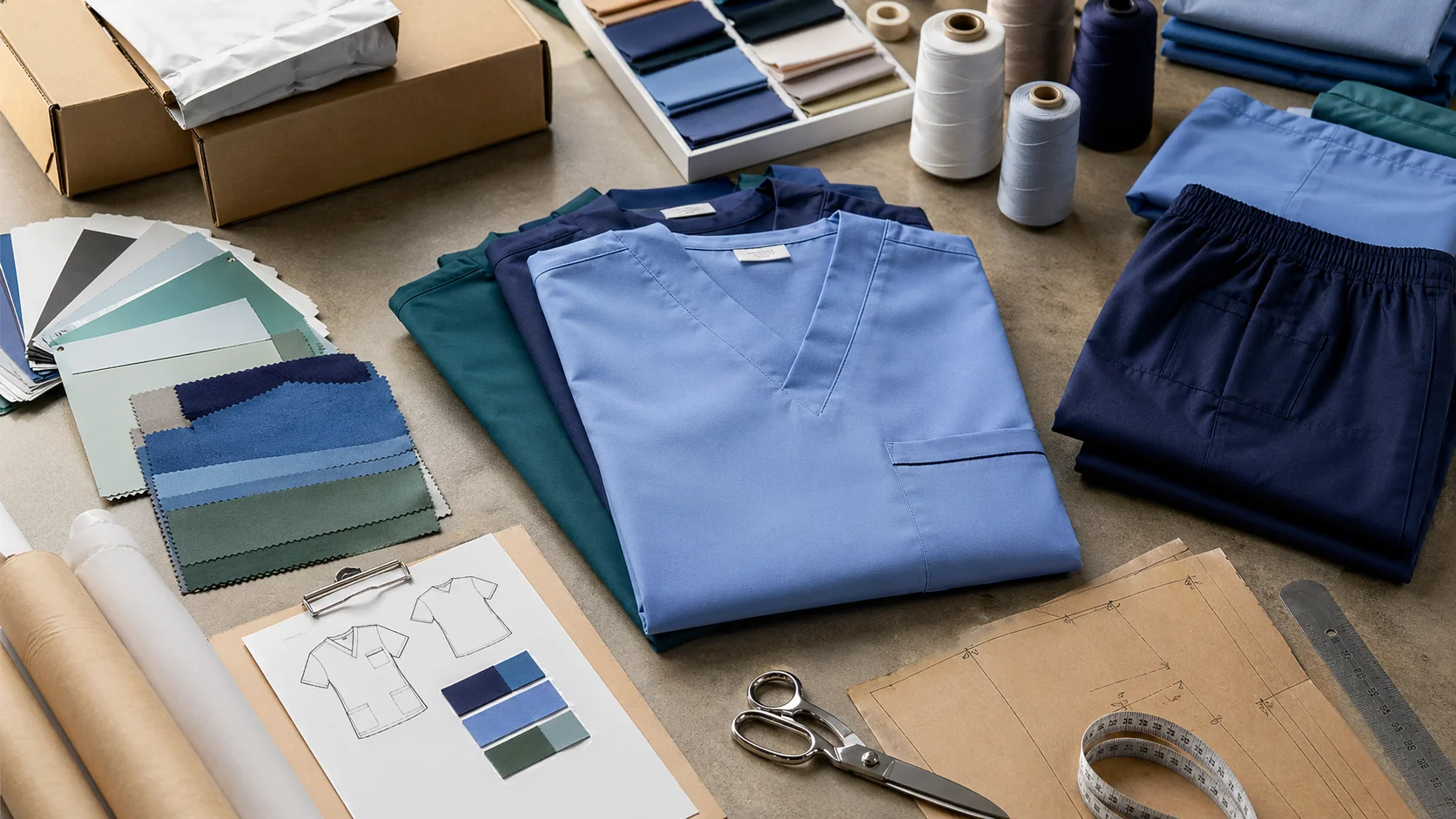
Clothing Brand Supplier Sourcing Checklist compared by sample evidence, fabric or trim specs, MOQ, AQL terms, cost lines, delivery timing, and rework...
Fast answer: Clothing Brand Supplier Sourcing Checklist: Tech Pack, Sample Gate, MOQ, and QC Terms should be judged by production evidence, not by a generic sourcing promise. The buyer needs sample proof, cost breakdowns, QC checkpoints, and delivery buffers in writing.
Ask for recent sample photos, measurement tolerances, fabric or print test assumptions, decoration test notes, packing examples, and a named inspection checkpoint. These details show whether the team can repeat an approved sample at bulk volume.
Separate garment cost, decoration, labels, packaging, sampling, testing, freight, and rush charges. Clear cost lines make it easier to reduce colorways, adjust size depth, or reserve more time for sampling.
If you are launching or scaling a clothing line, one of the most important decisions you will make is choosing the right supplier. A strong supplier can help you produce consistent products, meet deadlines, protect your brand reputation, and grow profitably. A poor supplier can create quality issues, shipping delays, customer complaints, and costly rework.
This guide provides a complete clothing brand supplier sourcing checklist to help you evaluate manufacturers and vendors with confidence. Whether you are a startup building your first collection or an established brand looking for a new partner, this article will help you understand what to look for, what to ask, and how to avoid common sourcing mistakes.
At Fabrikn, we work with brands that need reliable production support, strategic manufacturing guidance, and scalable solutions. If you want to explore professional manufacturing support, you can learn more about our services, view our about us page, or contact us to discuss your sourcing needs.
Many clothing brands rush into supplier selection based on price alone. That approach often leads to hidden costs later. A checklist gives you a structured way to compare suppliers fairly and make decisions based on more than just quotes.
A good sourcing checklist helps you:
In the fashion industry, sourcing is not just about finding the cheapest factory. It is about finding the right partner who can support your product vision, quality standards, and long-term growth strategy.
Before you start searching for suppliers, define exactly what your clothing brand needs. The clearer you are, the better your supplier conversations will be.
Different suppliers specialize in different product types. Some focus on casualwear, others on activewear, denim, knitwear, kidswear, luxury fashion, or basics. Make sure you know what category you are producing so you can target the right manufacturers.
Your target market affects fabric choice, construction quality, sizing standards, and price positioning. A premium brand may need higher-end finishing and materials, while a fast-moving basics brand may prioritize efficiency and consistency.
Know your target retail price before requesting supplier quotes. Your target price point will influence fabric selection, trims, labor costs, and margin expectations. If you do not understand your price structure, it becomes harder to judge whether a supplier is a good fit.
At minimum, prepare the following:
The more organized your product information is, the easier it is for suppliers to provide accurate feedback and pricing.
Once you know your requirements, begin researching suppliers. Your goal is to build a shortlist of factories or vendors that align with your brand.
When comparing potential suppliers, look for evidence of professionalism and relevance. Review their product categories, years in business, production capabilities, client types, certifications, and communication style. A supplier that clearly presents its services is usually easier to work with than one with limited information.
Choose suppliers based on:
A shortlist of 5 to 10 qualified suppliers is usually enough to begin a proper comparison.
Not all suppliers can handle the same level of complexity. Before moving forward, confirm that the supplier can actually support your product and growth goals.
A supplier may be able to produce many types of garments, but specialization matters. A factory with deep experience in tailored apparel may not be the best choice for performance sportswear. Ask for examples of similar products they have produced.
Can the supplier support your brand after launch if demand grows? Some suppliers are great for small batches but struggle with scale. Others may require larger quantities than your brand can support in the early stages. The best partner is one that fits your current needs and future growth path.
Quality is one of the biggest factors in supplier selection. A low price is not a bargain if the final garments do not meet your standards.
Ask suppliers how they manage quality at each stage of production. Good manufacturers typically have checks for fabric inspection, inline production, final inspection, and packaging review. Understanding their process helps you reduce defects and inconsistencies.
Depending on your market and product type, you may need suppliers with specific compliance standards or certifications. These may include fabric certifications, social compliance standards, or regional manufacturing requirements.
Before placing an order, examine sample garments carefully. Look at stitching, seams, symmetry, fabric quality, print alignment, labeling, sizing consistency, and overall finish. A strong sample is a good indicator, though not a guarantee, of production quality.
Brand reputation depends on more than product quality. You should also understand whether the supplier follows labor, safety, and environmental standards appropriate to your market. Ethical sourcing can become an important part of your brand story and customer trust.
Pricing is important, but it should always be reviewed alongside minimum order quantities and payment terms. A supplier may appear affordable until hidden costs or high order minimums make them impractical.
Ask for a complete cost breakdown. This should include sampling fees, development costs, fabric costs, trim costs, production costs, packing costs, shipping charges, and any customization fees. A full quote helps you make an accurate decision.
Minimum order quantity, or MOQ, is a key factor for clothing brands. If the MOQ is too high, you may struggle with cash flow and inventory risk. If it is too low, the supplier may not be able to offer competitive pricing. Choose a supplier whose MOQ matches your business model.
Ask about deposit requirements, balance payment schedules, and accepted payment methods. Common terms may include a deposit before production and final payment before shipment. Make sure the terms are manageable for your cash flow.
Be alert to costs such as express sampling, rush fees, label changes, revision charges, storage fees, or export documentation charges. These can significantly impact your final product cost.
Strong communication can make the difference between a smooth production cycle and a frustrating one. In sourcing, reliability is just as important as technical capability.
How quickly does the supplier respond to your inquiry? Slow communication at the beginning often becomes a bigger problem during production. Timely responses show professionalism and help keep projects on track.
Good suppliers answer questions clearly and provide specific information. If a supplier gives vague or inconsistent answers, that may be a warning sign. You want a partner who understands your needs and can communicate openly.
Notice whether the supplier does what they say they will do. If they miss deadlines during the quoting or sampling stage, it may indicate reliability issues later. Consistency is an important indicator of operational discipline.
Having one main contact person helps reduce confusion and speeds up decision-making. Clarify who will manage development, approvals, production updates, and shipping communication.
Sampling is one of the most valuable steps in your sourcing checklist. It allows you to inspect quality before committing to a larger order.
Depending on your stage, you may need a prototype sample, development sample, fit sample, sales sample, or pre-production sample. Ask the supplier which sample stage is most appropriate for your project.
Do not judge samples by appearance alone. Check fit, comfort, drape, durability, wash performance, and finishing. For clothing brands, these details directly affect customer satisfaction and return rates.
Wear-test or wash-test your samples if possible. This can reveal issues that are not visible at first glance, such as shrinkage, color fading, weak seams, or discomfort.
A good supplier will welcome feedback and help you refine the product. The sampling process is not just a test of the garment; it is also a test of how well the supplier collaborates.
Once you are satisfied with product quality and supplier fit, move into the operational details that protect your business.
Always document key terms in writing. This should include product specifications, prices, MOQs, lead times, payment terms, delivery deadlines, quality standards, and responsibilities if issues arise.
Ask for realistic lead times for sampling, production, and shipment. Build in buffer time for revisions, holidays, customs delays, or unexpected production changes. In fashion, timing matters as much as product quality.
Find out whether the supplier handles shipping, works with freight partners, or requires you to arrange logistics separately. Clarify who is responsible for customs documents, export preparation, and delivery coordination.
If your designs are unique, ask how the supplier handles confidentiality, pattern ownership, and brand assets. Protecting your creative work is essential when building a recognizable clothing brand.
The best supplier relationships are built over time. Once you find a dependable partner, invest in that relationship.
Provide clear forecasts, feedback, and updates. Suppliers value brands that communicate professionally and plan ahead.
Reliable payment helps build trust. Suppliers are more likely to prioritize brands that are organized and financially dependable.
If you plan to expand, tell your supplier early. This helps them prepare capacity, materials, and production planning. Long-term transparency can improve your service and pricing over time.
Strong supplier relationships are built on mutual respect. The best results happen when both sides work toward the same goal: producing excellent clothing and growing the brand successfully.
Even experienced clothing brands make sourcing mistakes. Avoiding these common errors can save time, money, and frustration.
Remember: the right supplier is not always the cheapest or the fastest. The right supplier is the one that helps your business deliver quality products consistently and sustainably.
Use the checklist below as a practical reference when evaluating clothing suppliers.
If a supplier meets most of these criteria, they are likely worth moving forward with. If they fail in several areas, continue your search.
Clothing brand supplier sourcing is one of the most important business decisions you will make. A structured checklist helps you reduce risk, improve product quality, and build a supply chain that supports long-term growth. By defining your needs, researching carefully, testing samples, and verifying reliability, you can choose a supplier that fits your brand today and scales with you tomorrow.
If you need support finding the right manufacturing partner, Fabrikn is here to help. Explore our services, learn more about our company on the about us page, or contact us to start the conversation.
Get a free quote from Fabrikn — your trusted B2B clothing manufacturer with 10+ years of experience. MOQ as low as 200 pieces.
Get a Free Quote →A good checklist should include product requirements, supplier research, capability review, quality checks, pricing comparison, MOQ evaluation, communication assessment, sample testing, contract review, and long-term partnership potential.
Look at response time, clarity in communication, sample quality, references, production transparency, and whether they meet deadlines consistently. Reliability is often visible early in the sourcing process.
No. The cheapest supplier may create problems with quality, delays, or hidden costs. The best supplier is the one that balances pricing, quality, reliability, and scalability.
Samples help you evaluate fit, construction, fabric performance, and overall workmanship before committing to production. They are essential for reducing risk and improving the final product.
Most brands should compare at least 5 to 10 suppliers, then narrow the list based on capability, quality, pricing, and communication fit.
MOQ means minimum order quantity. It is the smallest number of units a supplier is willing to produce per style, color, or design. MOQ affects pricing, inventory risk, and production planning.
Yes. Fabrikn supports clothing brands with manufacturing solutions and production guidance. You can review our services or contact us to discuss your sourcing goals.