
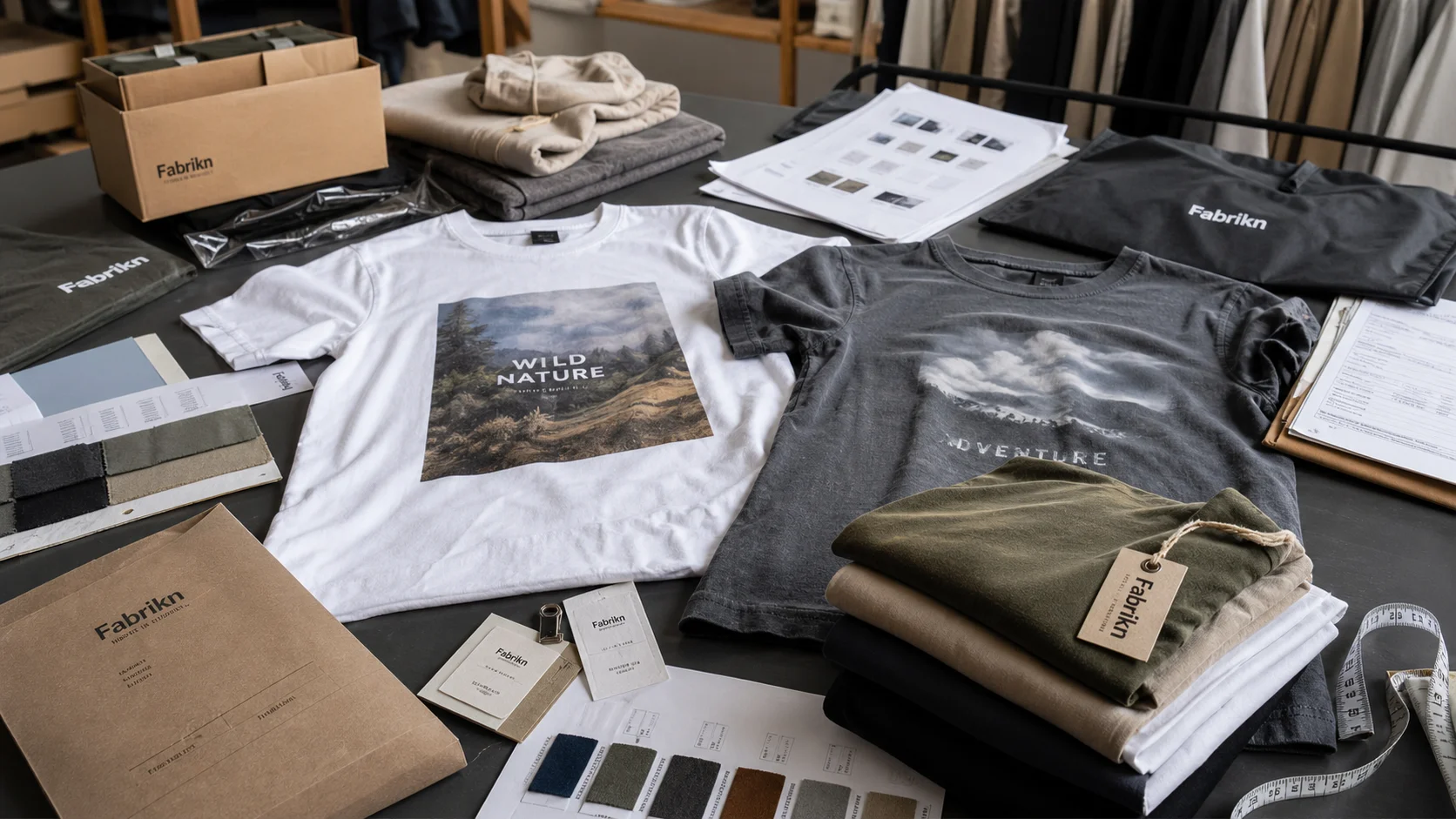
Clothing Brand Supplier Vetting Checklist compared by sample evidence, fabric or trim specs, MOQ, AQL terms, cost lines, delivery timing, and rework...
Fast answer: Clothing Brand Supplier Vetting Checklist: Tech Pack, Sample Gate, MOQ, and QC Terms should be judged by production evidence, not by a generic sourcing promise. The buyer needs sample proof, cost breakdowns, QC checkpoints, and delivery buffers in writing.
Ask for recent sample photos, measurement tolerances, fabric or print test assumptions, decoration test notes, packing examples, and a named inspection checkpoint. These details show whether the team can repeat an approved sample at bulk volume.
Separate garment cost, decoration, labels, packaging, sampling, testing, freight, and rush charges. Clear cost lines make it easier to reduce colorways, adjust size depth, or reserve more time for sampling.
If you are building or scaling a clothing brand, choosing the right manufacturing partner is one of the most important decisions you will make. The supplier you work with affects product quality, pricing, lead times, compliance, communication, and ultimately your brand reputation. A strong partner can help you grow with confidence. The wrong one can create delays, costly defects, and customer complaints that hurt your business.
This clothing brand supplier vetting checklist is designed to help founders, brand managers, and product teams evaluate potential manufacturers with confidence. Whether you are producing private label apparel, cut-and-sew garments, or custom collections, this guide will walk you through the key factors to assess before signing a production agreement.
Your supplier is not just a vendor. They are a core part of your brand infrastructure. Every garment that reaches a customer reflects on the manufacturer behind it, whether the shopper knows that or not. A poorly vetted supplier can lead to inconsistent sizing, poor stitching, inaccurate trims, shipping delays, and returns that eat into margins.
For clothing brands, supplier vetting is especially important because apparel production involves many variables: fabric quality, pattern accuracy, grading, sampling, dyeing, packaging, and finish standards. Even a small issue in one stage can affect the entire collection.
Good vetting reduces risk and helps you build a repeatable process. It also improves your ability to scale, since you are working with a supplier that can support growth instead of one that only works for small, unstable orders.
If you are currently sourcing a manufacturer, you may also want to explore Fabrikn’s services to see how a structured production partner can support your brand from development through delivery.
Before you compare manufacturers, clarify what you actually need. Many brands waste time contacting suppliers that are not a fit because they do not have a clear production brief.
Different manufacturers specialize in different types of clothing. Some focus on basics such as t-shirts and hoodies. Others specialize in technical activewear, streetwear, denim, tailoring, kidswear, or luxury fashion. The more specific your product category, the more important it is to find a supplier with relevant expertise.
Know whether you need low minimum order quantities, mid-size production runs, or large-volume manufacturing. A supplier that is perfect for startup brands may not be equipped for high-scale replenishment. Similarly, a large factory may not be the best fit if you are testing a new collection with small quantities.
Are you looking for help with design, pattern making, sampling, fabric sourcing, or full production? Some suppliers only produce from final tech packs, while others offer full-package services. Understanding your stage prevents misalignment and saves time.
A legitimate manufacturing partner should be transparent about who they are, what they make, and how long they have been in business. Credentials do not guarantee perfect performance, but they are an important starting point.
Look for a professional website, clear contact details, a physical address, and a business history that makes sense. If the supplier has a strong about page, documented experience, or client references, that can help validate their credibility. You can also review Fabrikn’s about us page as an example of how a manufacturing partner should present its background, capabilities, and values.
Ask how long they have been producing apparel and which categories they know best. A supplier with years of experience in your product type is more likely to understand construction methods, fabric behavior, and production challenges.
Do they work with startups, established brands, wholesalers, or private label businesses? Their current customer profile can tell you whether they are set up for your business model.
Quality control should be a central part of your supplier vetting checklist. Reliable manufacturers have systems in place to catch issues before goods are shipped.
Find out how they check fabric quality, color consistency, trim accuracy, and accessory correctness when materials arrive. If defects are missed at this stage, the final product may suffer.
A professional supplier should be able to explain their inspection process during cutting, sewing, finishing, and packing. Ask whether they use in-line checks, final random inspections, or third-party quality control services.
Quality expectations should not be vague. Ask how they define acceptable tolerances for measurements, stitch density, shrinkage, and color variation. The more specific the standard, the better the result.
Manufacturing capability goes beyond simply “can they make the product?” You need to know whether they can make it consistently, at the quality level you need, and at the quantities you require.
Some garments require specialized machinery or processes, such as flatlock stitching, embroidery, screen printing, heat transfers, washing, or garment dyeing. Make sure the supplier can support the exact construction and finishing methods your design requires.
The sample stage shows how the supplier translates design into a real garment. Strong manufacturers can produce accurate prototypes and revise them efficiently after feedback. Weak ones may struggle to interpret your tech pack or make changes correctly.
A supplier may seem ideal at 300 units but fail when you scale to 3,000 units. Ask about their production line capacity, peak season workload, and ability to repeat successful styles over multiple seasons.
Communication quality is one of the clearest indicators of a supplier’s reliability. If they are slow, vague, or inconsistent before you place an order, those problems often become worse during production.
How quickly do they reply to emails or messages? A supplier does not need to respond instantly, but they should be dependable and timely.
Good suppliers answer questions directly and explain next steps in a practical way. They should be able to discuss production, timelines, samples, and revisions without confusion.
Reliable manufacturers flag issues early. If there is a fabric delay, sizing risk, or production concern, they should communicate it before it becomes a larger problem.
Price matters, but the cheapest quote is not always the best value. A low quote may hide poor workmanship, limited support, or weak delivery reliability.
Ask what is included in the quote. Does it cover sampling, materials, labor, labels, packaging, freight, and duties? A clear breakdown prevents surprises later.
MOQ can significantly affect your launch plan and cash flow. Some manufacturers require large minimums, while others are more flexible. Choose a supplier whose MOQ matches your current stage and growth strategy.
Ask about deposit requirements, payment milestones, and balance due dates. Reasonable and transparent terms are a sign of a professional operation.
Samples are one of the most important vetting tools because they reveal the supplier’s real workmanship. Never commit to full production without reviewing samples carefully.
Inspect seam strength, stitch consistency, garment symmetry, label placement, and finishing details. These elements reveal whether the factory can execute to your standard.
Compare the sample against your size spec. If the fit is off in a sample, it can become a much larger problem in bulk production.
The fabric should match your intended price point, performance requirements, and brand positioning. The hand feel should support the product experience you want to deliver.
One sample round is rarely enough. Good suppliers are willing to refine the product based on feedback until it meets your approval.
Compliance protects your business from legal, reputational, and operational risks. It also matters increasingly to consumers, retailers, and investors who expect responsible production.
Ask how the factory handles worker safety, working conditions, and labor policies. Ethical production is not only the right thing to do; it is often essential for retail readiness.
Depending on your product and market, certifications may be relevant. Examples include material certifications, organic standards, social compliance audits, or environmental certifications.
If you are selling internationally, your supplier should understand country-specific labeling, fiber composition rules, and packaging requirements. A knowledgeable partner can help you avoid costly compliance errors.
Production quality is only part of the story. You also need a supplier who can deliver on time and manage logistics responsibly.
Get realistic estimates for sampling, bulk production, and shipping. Make sure lead times include material sourcing and revision rounds where applicable.
Determine whether the supplier offers air, sea, or courier shipping support. Ask who is responsible for export coordination, freight booking, and customs documentation.
On-time delivery is a repeatability issue. A supplier that consistently meets deadlines is far more valuable than one that offers attractive pricing but misses dates.
Asking specific questions helps uncover how a supplier operates. Use the following questions during your conversations.
The best manufacturers answer these questions confidently and transparently. If answers are incomplete, inconsistent, or overly vague, take that as a warning sign.
Part of supplier vetting is knowing what to avoid. Even if a supplier looks attractive on paper, certain warning signs should make you cautious.
If a supplier cannot clearly explain their process, they may not have one that is reliable enough for your business.
Extremely low quotes can indicate poor materials, hidden costs, or a factory that overpromises and underdelivers.
A manufacturer unwilling to provide samples is difficult to trust for bulk production.
If they do not use purchase orders, specifications, or written approvals, your risk increases significantly.
Slow replies, changing answers, or missed follow-ups usually become bigger problems during production.
Use this practical checklist when reviewing potential manufacturing partners:
If you want help identifying a manufacturing partner that fits your brand goals, you can reach out through Fabrikn’s contact us page for a conversation about your production needs.
Once you have reviewed several suppliers, compare them using a scorecard. Rate each one on product expertise, quality control, pricing transparency, communication, scalability, and compliance. The right partner is usually not the cheapest or the largest. It is the one that best aligns with your product, business model, and growth stage.
Also consider long-term fit. You are not just choosing a factory for one order. You are choosing a production partner who may help shape future collections, season replenishment, and business expansion. That means trust, consistency, and problem-solving ability matter just as much as cost.
Using a clothing brand supplier vetting checklist helps you avoid costly mistakes and build a stronger supply chain from the start. By defining your needs, checking credentials, reviewing samples, confirming compliance, and testing communication, you can identify a manufacturing partner that supports quality and growth.
For clothing brands, the right supplier is a strategic asset. Take the time to vet carefully, ask detailed questions, and compare options thoroughly. The effort you invest now can save you time, money, and stress later while helping your brand deliver a better product to market.
Get a free quote from Fabrikn — your trusted B2B clothing manufacturer with 10+ years of experience. MOQ as low as 200 pieces.
Get a Free Quote →A clothing brand supplier vetting checklist is a structured process for evaluating manufacturers before working with them. It helps you assess quality, reliability, pricing, communication, compliance, and production capability.
Look for relevant product experience, strong quality control, clear communication, reasonable MOQs, transparent pricing, and a sample process that proves they can meet your standards.
A trustworthy supplier is transparent about their business, answers questions clearly, provides samples, shares production terms in writing, and demonstrates consistent communication and professionalism.
Yes. Samples help you check fit, fabric, stitching, and overall quality before committing to a larger order. They are one of the most effective ways to reduce production risk.
The biggest red flags include vague answers, no sample process, poor communication, unrealistic pricing, lack of documentation, and unclear quality control procedures.
Yes. Fabrikn supports clothing brands with manufacturing services designed to help with development, production, and delivery. If you would like to discuss your project, visit the contact us page.