
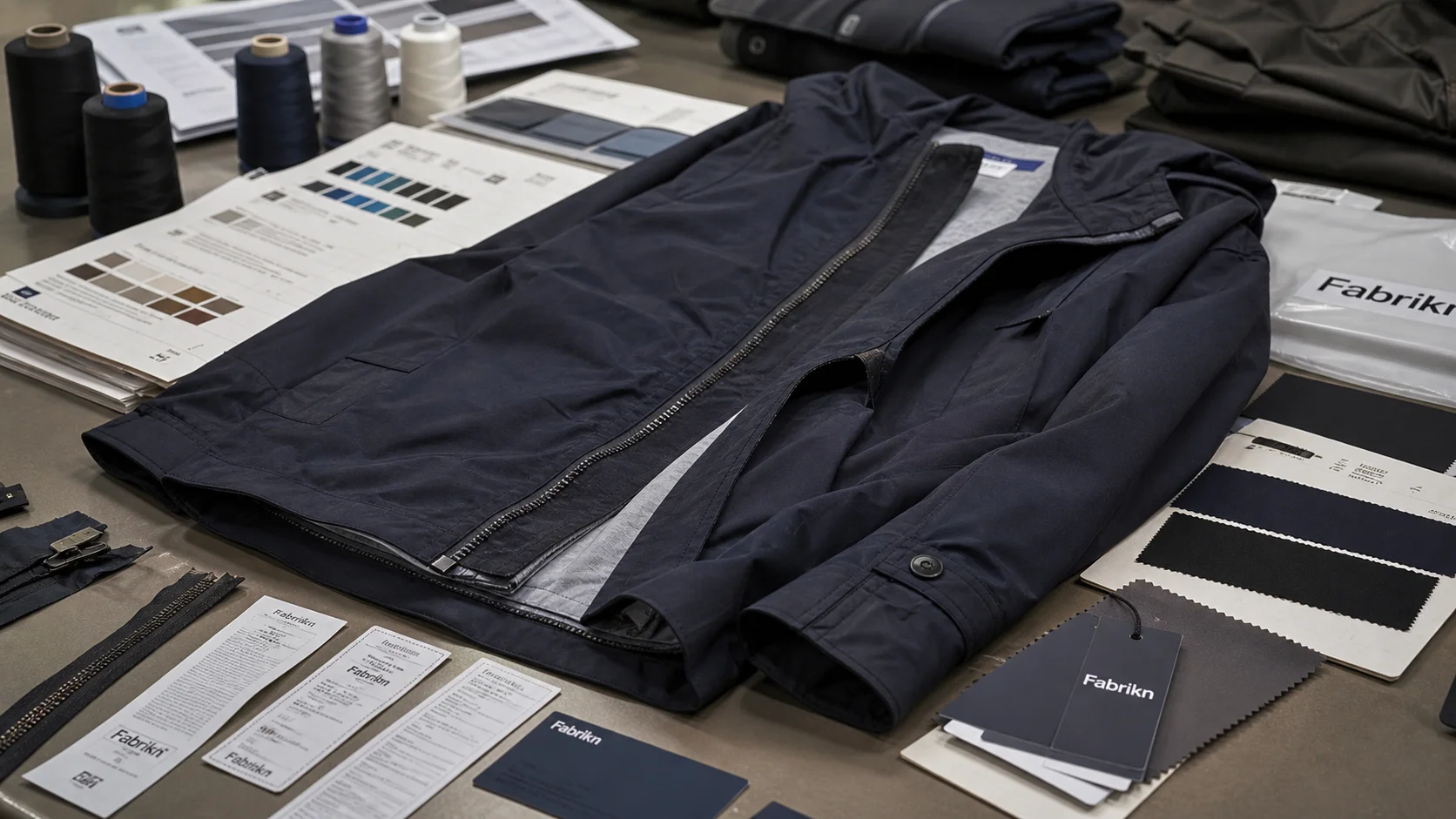
Clothing Factory Quality Control Checklist for Buyers with checks for samples, fit, MOQ, QC evidence, pricing terms, and delivery risk.
Fast answer: Clothing Factory Quality Control Checklist for Buyers should be judged by production evidence, not by a generic sourcing promise. The buyer needs sample proof, cost breakdowns, QC checkpoints, and delivery buffers in writing.
Ask for recent sample photos, measurement tolerances, fabric or print test assumptions, decoration test notes, packing examples, and a named inspection checkpoint. These details show whether the team can repeat an approved sample at bulk volume.
Separate garment cost, decoration, labels, packaging, sampling, testing, freight, and rush charges. When every cost line is visible, it becomes easier to reduce colorways, adjust size depth, or reserve more time for sampling.
For apparel brands, retailers, and sourcing managers, product quality is not just a finishing touch. It is the foundation of customer satisfaction, brand reputation, and repeat business. A single batch of defective garments can lead to costly returns, bad reviews, delayed launches, and lost trust. That is why every buyer needs a clear and practical clothing factory quality control checklist.
This guide is designed for buyers who work with garment manufacturers and want to reduce risk at every stage of production. Whether you are sourcing T-shirts, activewear, uniforms, fashion apparel, or private label collections, the same core quality control principles apply. By following a structured checklist, you can catch problems early, communicate expectations clearly, and ensure your factory delivers consistent results.
If you are looking for a reliable production partner, you can learn more about our capabilities on the services page or contact our team through the contact page.
Quality control in apparel manufacturing is the process of checking fabrics, trims, measurements, construction, finishing, packaging, and labeling to ensure garments meet agreed specifications. For buyers, this process is essential because clothing production involves many variables. Fabric can shrink. Stitching can vary. Colors can shift between dye lots. Labels can be applied incorrectly. Even a small issue in one part of the process can affect the entire order.
Strong quality control helps buyers in several ways:
Many buyers assume the factory is responsible for quality and that is enough. In reality, the best results come from shared accountability. The buyer defines the standard, the factory follows the standard, and both sides verify the output at key checkpoints.
Pre-production is the most important stage for preventing avoidable mistakes. Once bulk production starts, changes become slower and more expensive. Before giving approval, buyers should confirm that the factory has fully understood the product requirements.
The technical pack should include design drawings, size specifications, fabric details, stitching instructions, color references, labeling requirements, packaging expectations, and testing standards. Check that all dimensions are clear and that there are no contradictions between the design file and the bill of materials.
Fabric is one of the most common sources of quality issues. Buyers should verify fiber content, weight, hand feel, shrinkage, color consistency, pilling resistance, and wash performance. Request fabric swatches, lab dips, or strike-offs when needed. If the garment requires special performance properties, confirm those requirements before production starts.
Buttons, zippers, elastic, drawcords, snaps, heat transfers, embroidery threads, and care labels all need approval. Trims should match the design in appearance and function. A zipper that looks right but jams in use is still a defect. Inspect the quality of each accessory carefully, especially if the product will be worn frequently or washed often.
Size inconsistency is one of the top buyer complaints in apparel. Make sure the factory confirms the grading rules for each size and that measurements are realistic for the target market. Ask for a size chart and compare it against your fit standards. If possible, approve a fit sample before bulk production.
The pre-production sample should reflect the final approved version of the garment as closely as possible. This is the buyer’s chance to catch problems in fabric, fit, construction, branding, and finishing. Do not treat the sample as a formality. It should be used as the benchmark for bulk production.
Labels must be accurate and compliant with the destination market. Confirm country of origin, fiber content, size labeling, care instructions, and any required legal marks or warnings. If your market has specific compliance standards, make sure the factory understands them before cutting begins.
Packaging may seem minor, but it affects presentation, shipping efficiency, and retail readiness. Decide whether garments should be folded in a specific way, packed individually, sealed in polybags, tagged, boxed, or barcoded. The factory should have a clear packaging specification sheet.
A short meeting or written approval process can prevent misunderstandings. Use this stage to confirm all key points: approved sample, final fabric, trims, measurements, labeling, packing, and delivery deadlines. Everyone involved should know what counts as approved and what requires rework.
Once bulk production begins, buyers should not wait until the end to check quality. In-process inspections help catch issues early enough to fix them without affecting the whole order.
Cutting mistakes can create downstream defects in size, symmetry, and garment shape. Check that patterns are aligned correctly, pieces are cut to the proper dimensions, and fabric layers are consistent. Mis-cuts at this stage can lead to wasted material and inconsistent fit.
Stitching should be even, strong, and appropriate for the garment type. Look for skipped stitches, loose threads, broken seams, uneven seam allowances, and poor reinforcement at stress points. A neat-looking garment still needs durable construction, especially for activewear, workwear, and children’s apparel.
Workmanship covers how well the garment is assembled and finished. Buyers should inspect collar symmetry, sleeve alignment, pocket placement, seam neatness, topstitch consistency, and overall appearance. Small visual defects can make a garment look cheaper and reduce sell-through rates.
Color variation can happen between dye lots, panels, or production runs. Inspect garments under consistent lighting and compare against approved references. Make sure the factory has procedures for tracking dye lots and preventing shade differences within the same order.
Even if the first sample fits well, bulk garments may drift from the approved standard. Ask the factory to measure garments at regular intervals during production. Track critical points such as chest width, body length, sleeve length, waist, inseam, and shoulder width depending on the product type.
If your order includes screen printing, embroidery, heat transfer, or sublimation, inspect placement, alignment, color accuracy, edge quality, and durability. Decoration defects are often expensive to fix after production. Buyers should approve decoration samples and compare them to the production output.
Factories should track the number and type of defects found during production. Ask for inspection reports or quality logs. A rising defect rate may signal machine issues, operator errors, or material inconsistencies. Early visibility allows the factory to correct the problem before shipment.
If the same problem appears more than once, it should trigger a corrective action plan. This may include retraining operators, adjusting machines, replacing materials, or changing workflow. Buyers should not accept repeated defects as normal.
The final inspection is the buyer’s last opportunity to confirm that the order meets expectations. It should cover both product quality and shipping readiness. Ideally, the final inspection happens after production is complete but before goods leave the factory.
Inspect garments for stains, loose threads, wrinkles, broken stitches, uneven hems, misaligned logos, and visible damage. Compare random units to the approved sample. The finished product should look consistent across the entire shipment.
Take random measurements from different cartons and sizes. Compare them to the approved spec sheet and accepted tolerance range. Measurements should fall within agreed limits. A batch with correct appearance but incorrect sizing is still a quality failure.
Check all care labels, neck labels, hangtags, barcodes, size stickers, and carton labels. Mistakes in labeling can create compliance issues, retail confusion, or warehouse problems. Even minor label errors can delay distribution.
Packaging should match the buyer’s instructions. Confirm folding standard, bag size, insert cards, tissue paper, and carton packing quantity. If the garments are retail-ready, presentation matters. If they are shipped in bulk, efficiency and protection matter more.
Cartons should be strong enough to protect the goods during transport. Inspect carton size, strength, print accuracy, sealing, and palletization if applicable. Damaged cartons can lead to damaged products and chargebacks.
Verify that the right sizes, colors, styles, and quantities are packed in each carton and in the full shipment. Miscounts can create costly inventory problems after arrival. Make sure the shipment matches the order list exactly.
Many buyers use Acceptable Quality Limit, or AQL, inspections to sample goods before shipment. AQL helps determine whether the lot meets defined quality standards based on sample size and defect classification. This is especially useful for larger orders or when working with a new factory.
If you cannot inspect in person, request detailed photos, videos, and inspection reports from the factory or a third-party inspector. Visual proof of packaging, carton marking, product appearance, and defect handling can help you make a better shipping decision.
Even with a strong checklist, buyers must stay alert for warning signs that quality may suffer. Recognizing red flags early can save time and money.
A reliable supplier should welcome structure, not resist it. Clear quality control procedures protect both the buyer and the manufacturer.
The most effective quality control systems are not improvised at the last minute. They are built into the manufacturing relationship from the beginning. Buyers should create a repeatable process that documents expectations and responsibilities.
Use spec sheets, approved samples, tolerance charts, packaging instructions, and defect definitions to establish a shared standard. Written documentation reduces confusion and makes accountability easier.
Decide when inspections will happen: before production, during cutting, during sewing, after finishing, and before shipment. Each checkpoint should have a purpose and an owner.
Not every garment will be identical, so buyers need realistic tolerances. Define the allowed range for measurements, shade variation, print placement, and minor cosmetic deviations.
Buyers and factories should know how defects are reported, who approves corrections, and how changes are documented. Fast, clear communication prevents small issues from becoming major delays.
Track defect types, recurring issues, inspection results, and supplier response time. Over time, this data helps buyers identify patterns and improve sourcing decisions.
At Fabrikn, we understand that buyers need more than a manufacturer. They need a production partner that supports consistency, transparency, and dependable execution. Our process is designed to help clients reduce risk and improve confidence at every stage of garment production.
From sample development to bulk manufacturing and final packing, we work to align production with the buyer’s specifications. Learn more about our company approach on the about us page, or explore the range of support available through our services.
We encourage buyers to share detailed specs, approve samples carefully, and communicate quality expectations early. If you are planning a new clothing line or want to improve your current supplier process, our team is ready to help. Reach out through the contact page to discuss your project.
A clothing factory quality control checklist is one of the most valuable tools a buyer can use. It protects product quality, reduces costly surprises, and improves the likelihood of on-time, on-spec delivery. The best checklist is not just a one-time document. It is a working process that guides every stage of production, from initial sample approval to final shipment.
By focusing on fabric, trims, fit, workmanship, labeling, packaging, and inspection standards, buyers can make more informed decisions and build stronger manufacturing relationships. In a competitive apparel market, quality is not optional. It is a business advantage.
Get a free quote from Fabrikn — your trusted B2B clothing manufacturer with 10+ years of experience. MOQ as low as 200 pieces.
Get a Free Quote →A clothing factory quality control checklist is a document buyers use to verify that garments meet agreed standards during sampling, production, inspection, and shipping. It helps track quality requirements across the full manufacturing process.
Buyers should inspect at multiple stages: before production starts, during production, and before shipment. Waiting until the final stage makes it harder and more expensive to fix problems.
Common issues include incorrect measurements, poor stitching, fabric defects, color variation, label mistakes, and packaging errors. Many of these can be reduced through early approval and regular inspections.
Third-party inspections are not always required, but they can be very helpful, especially for large orders, new suppliers, or overseas production. They provide an independent review before shipment.
Fabrikn works with buyers to align production with approved specifications, maintain transparency during manufacturing, and support quality control from sample development to final packing. To start a conversation, visit our contact page.