
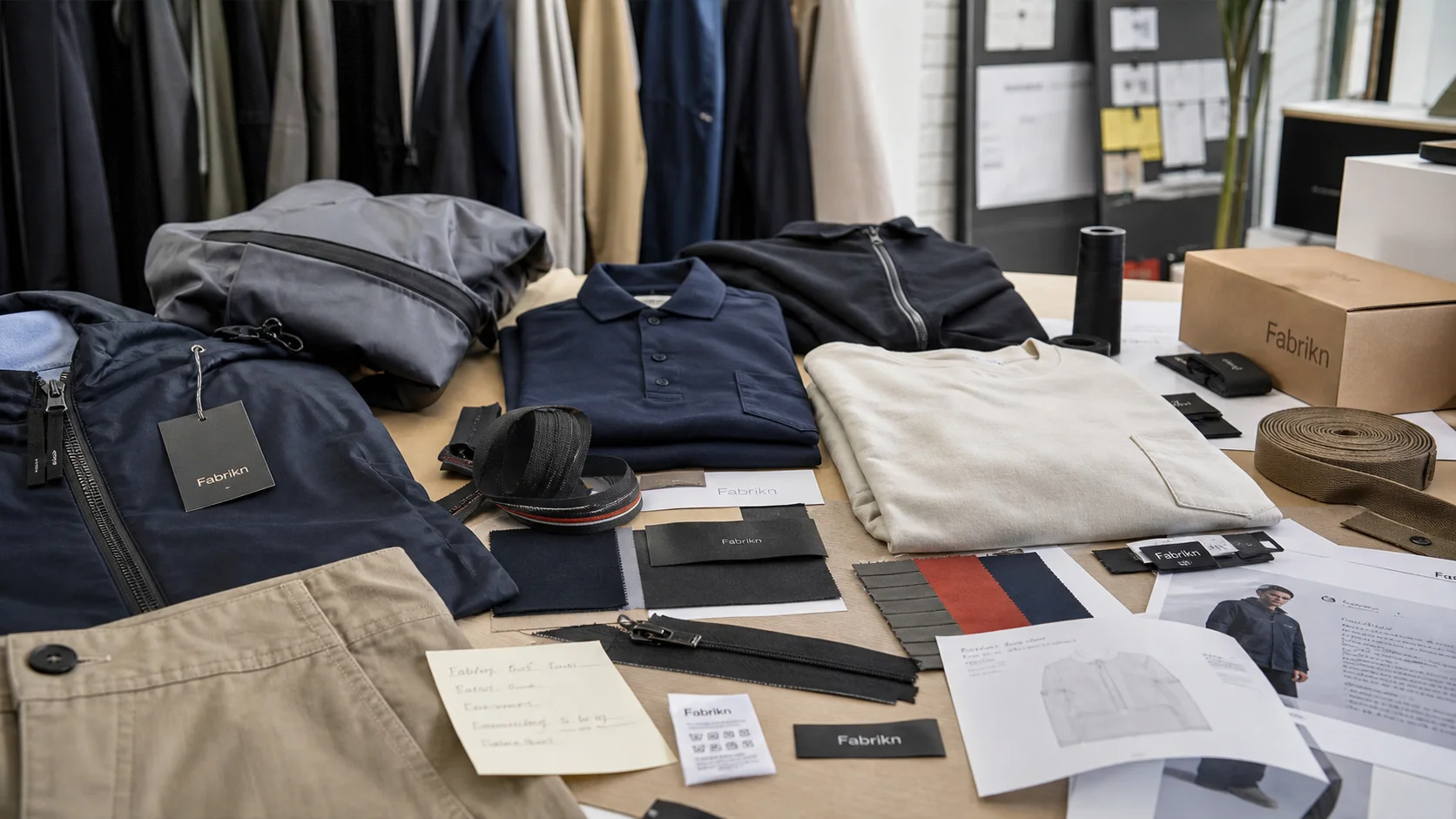
Clothing Manufacturer Lead Time Benchmark compared by sample evidence, fabric or trim specs, MOQ, AQL terms, cost lines, delivery timing, and rework...
Fast answer: Clothing Manufacturer Lead Time Benchmark: Sample Evidence, MOQ, Capacity, and Rework Terms should be judged by production evidence, not by a generic sourcing promise. The buyer needs sample proof, cost breakdowns, QC checkpoints, and delivery buffers in writing.
Ask for recent sample photos, measurement tolerances, fabric or print test assumptions, decoration test notes, packing examples, and a named inspection checkpoint. These details show whether the team can repeat an approved sample at bulk volume.
Separate garment cost, decoration, labels, packaging, sampling, testing, freight, and rush charges. Clear cost lines make it easier to reduce colorways, adjust size depth, or reserve more time for sampling.
Understanding clothing manufacturer lead time is one of the most important steps in planning a successful apparel line. Whether you are launching a new collection, restocking bestsellers, or preparing for a seasonal campaign, accurate production timing can make the difference between a profitable launch and a missed opportunity. This clothing manufacturer lead time benchmark guide explains how long apparel production typically takes, what affects timing, and how to set realistic expectations from the start.
For brands, retailers, and private label businesses, lead time is not just a factory concern. It affects inventory planning, sales calendars, cash flow, customer satisfaction, and overall brand reputation. A timeline that is too aggressive can lead to delays, rushed approvals, and quality issues. A timeline that is too long can cause missed trends, stockouts, and lost revenue. The goal is to create a schedule that is realistic, efficient, and aligned with your business goals.
At Fabrikn, we work with businesses that need dependable production planning and transparent communication. If you are still comparing manufacturing options, you can explore our services to understand how a professional clothing manufacturing partner can help streamline your process.
Clothing manufacturer lead time refers to the total time required to produce garments from the moment a project is confirmed until the finished goods are ready for shipment. In simple terms, it is the time between placing an order and receiving the completed product. Lead time can include many stages, such as sample development, fabric sourcing, pattern making, cutting, sewing, finishing, quality control, and packing.
Lead time is often confused with production time, but they are not the same. Production time usually refers to the actual factory process. Lead time is broader because it includes pre-production and post-production activities as well. For example, if fabric needs to be sourced from another supplier, or if samples require multiple rounds of revisions, the overall lead time becomes longer even if the sewing process itself is efficient.
When discussing lead time with a manufacturer, it is important to ask what is included in the estimate. Some factories quote only production days, while others provide an end-to-end timeline. Clarifying this early helps prevent misunderstanding and keeps your launch planning accurate.
Lead time benchmarks give brands a practical reference point for planning. They help you understand what is normal in the apparel industry, identify where delays may happen, and make smarter decisions about order timing. Without benchmarks, it is easy to underestimate how long a product will take to develop and produce.
Benchmarks are especially useful for growing brands. New businesses often expect production to move quickly because the design is already finalized. In reality, manufacturing involves many moving parts, and each one can introduce delay. By knowing typical timelines, you can build a better calendar and avoid last-minute rush orders.
Benchmarking also supports supplier evaluation. If one manufacturer quotes a lead time that is far shorter than industry norms, that may signal limited capacity, hidden risks, or unrealistic promises. On the other hand, a quote that is much longer than average may indicate inefficiency or low priority for your project. A benchmark helps you compare suppliers more objectively.
To understand clothing manufacturer lead time, it helps to break the process into stages. Each stage contributes to the final timeline, and delays in one area can affect every step that follows.
This stage includes design review, tech pack creation, sizing specs, artwork confirmation, and pattern development. If your product is custom or highly detailed, this phase can take longer. Poorly prepared technical files often cause delays later because the manufacturer must request clarifications or revise samples.
Sampling is one of the most important parts of the process. The first sample may not be perfect, and revisions are common. Depending on complexity, you may need one to three rounds of samples before approving production. Faster approvals from the brand side can significantly reduce total lead time.
Material availability is a major lead time driver. Stock fabrics move faster, while custom-dyed or specially finished materials can add weeks. Trims such as zippers, labels, buttons, elastics, and packaging materials may also need sourcing. If these items are imported, shipping delays can extend the schedule further.
Before bulk production begins, the factory reviews the approved sample, confirms specifications, and prepares the production line. This stage may include grading, marker making, cutting plans, and production scheduling. The more organized the documentation, the smoother this stage tends to be.
This is the main manufacturing stage where garments are cut, sewn, assembled, and finished. Bulk production time varies based on order quantity, garment complexity, factory capacity, and the number of colorways or size runs. Simple garments may move quickly, while technical apparel or multi-component items take longer.
Quality control happens throughout the process, but final inspection at the end is essential. If defects are found, the manufacturer may need to rework items, which adds time. Brands that require third-party inspections should factor those bookings into the timeline.
Once production is complete, the goods must be packed, labeled, and shipped. Freight method matters here. Air shipping is faster, while sea freight is more economical but much slower. Customs clearance and destination handling can also affect the final delivery date.
Lead time benchmarks vary depending on the product category, order size, material requirements, and level of customization. However, the following ranges can serve as a general guide for many apparel projects.
Basic cut-and-sew apparel: 4 to 8 weeks from approved sample to bulk completion
Private label basics with existing materials: 3 to 6 weeks
Custom-designed garments: 6 to 12 weeks
Technical or specialized clothing: 8 to 16 weeks
New product development with multiple sample rounds: 8 to 20 weeks or more
These are broad benchmarks, not guarantees. A simple t-shirt order using readily available fabric may be completed relatively quickly. A tailored jacket with custom hardware, specialty lining, and detailed fit requirements may require a much longer schedule. Brands should always ask for a timeline that reflects their exact product specifications rather than relying on average numbers alone.
It is also important to separate development lead time from production lead time. A fully new apparel line may require several weeks of design, sampling, and approval before bulk production even begins. In practice, the total project timeline can be much longer than the manufacturing phase itself.
Several variables can shorten or extend a clothing manufacturer’s lead time. Understanding them helps you plan more accurately and avoid unexpected delays.
Simple garments like basic tees, sweatshirts, and tote bags usually take less time than structured jackets, technical sportswear, or tailored pieces. More panels, more stitching operations, and more finishing details all add production time.
Larger orders usually require more factory time, especially if the production line must run longer or multiple shifts are needed. Small orders may be faster to complete, but they can still be delayed if the factory has a minimum order system or batches production by style.
Using in-stock fabrics and trims can significantly reduce lead time. Custom materials often require separate sourcing, dyeing, testing, and approval, all of which add time. Brands should check material availability before confirming launch dates.
Every round of revisions adds time to the overall schedule. Delays are common when feedback is vague or when changes are requested after a sample has already been approved. Clear feedback and consolidated comments help reduce back-and-forth communication.
Factories often experience peak periods before major shopping seasons. During these times, lead times may become longer because capacity is limited. Planning ahead is especially important if your brand launches around holidays, back-to-school periods, or seasonal fashion drops.
Fast response times from both the brand and the manufacturer help keep the process moving. Delays in approving samples, confirming colors, or answering technical questions can add days or weeks to the timeline.
Even if production is completed on time, logistics can affect final delivery. Freight delays, customs checks, port congestion, and weather disruptions may extend your actual receipt date. Build a buffer into your schedule if the goods need to arrive by a fixed deadline.
Creating a realistic production timeline requires more than asking, “How long will it take?” You need to build a timeline that reflects the full lifecycle of the product, from concept to delivery.
Instead of estimating from the present, begin with your required in-hand date and work backward. Include time for development, sampling, bulk production, quality checks, freight, customs, and any buffer for unexpected issues. This method helps you identify whether your target launch is achievable.
Every apparel project should include contingency time. A good rule is to add at least 10 to 20 percent buffer to the quoted timeline, especially for new products or first-time collaborations. Buffer time protects your schedule if a material is late or a sample requires revision.
Identify the elements that must happen before production can start. These are your critical path items, and they usually include sample approval, fabric readiness, fit approval, and artwork finalization. If any of these are delayed, the entire timeline shifts. Tracking them closely helps you avoid bottlenecks.
Once you and the manufacturer agree on a schedule, document it clearly. A written timeline should outline sample dates, approval deadlines, bulk start date, estimated completion date, inspection window, and shipping method. This creates accountability and prevents misunderstandings.
Do not use the same timeline for every item in your range. A cotton t-shirt, a fleece hoodie, and a performance jacket should each have their own production timeline based on complexity and sourcing needs. Product-specific planning is one of the most effective ways to improve accuracy.
Many brands want shorter lead times, but reducing time should never come at the cost of quality or consistency. The most effective approach is to remove inefficiencies, not essential steps.
Prepare complete tech packs: Clear measurements, construction details, and artwork files reduce clarification delays.
Use readily available materials: Stock fabrics and trims often move much faster than custom-sourced options.
Limit unnecessary revisions: Consolidate feedback and make decisions quickly to prevent repeated sample cycles.
Choose experienced manufacturers: Skilled teams can anticipate issues before they become delays.
Plan earlier than you think you need to: Starting early is the simplest way to avoid rush charges and bottlenecks.
Standardize repeat styles: Reorders of proven products are usually faster than entirely new styles.
Working with a manufacturer that values clarity and responsiveness can make a major difference. If you are evaluating a production partner, learning more about the company’s background can help. Visit our about us page to understand Fabrikn’s approach to reliable apparel manufacturing.
Even experienced brands make timing mistakes that affect production. Avoiding these issues can save money and reduce stress.
Many brands hear a factory quote and assume it includes everything. Always confirm whether sampling, sourcing, and shipping are included. If not, you may underestimate your total timeline.
Brands often delay projects by taking too long to approve samples, colors, labels, or packaging. Approval bottlenecks are one of the most common reasons timelines slip.
Fast production is valuable, but only if the product meets your standards. Rushing a launch can lead to poor fit, lower quality, or customer complaints that damage your brand reputation.
Factories and logistics networks become busier during peak seasons. If you plan too close to a major retail period, you may face delays even if your manufacturer is efficient.
Bulk production may finish on time, but freight and customs can still disrupt your delivery date. International brands should always plan for logistics buffers.
A strong manufacturer relationship helps keep lead times predictable. The best partnerships are built on clear communication, realistic planning, and mutual understanding of priorities.
Start with a detailed brief. Share your product goals, target launch date, fabric preferences, sizing requirements, packaging needs, and quality expectations. The more information you provide upfront, the more accurate the timeline estimate will be.
Ask questions early. If something is unclear about sourcing, construction, minimum order quantities, or shipping, bring it up before production starts. Early clarification is much easier than fixing a misunderstanding later.
Request milestone updates. A manufacturer should be able to keep you informed at key stages such as sampling, material approval, cutting, production, and inspection. Progress updates help you plan internal marketing, inventory, and sales tasks with more confidence.
Finally, treat lead time as a shared responsibility. The factory manages production, but the brand also influences speed through decision-making, approvals, and documentation quality. The smoother your internal process, the more likely your timeline will stay on track.
If you are ready to discuss your next apparel project, you can reach out through our contact us page to start a conversation with the Fabrikn team.
Clothing manufacturer lead time benchmarks are essential for setting realistic production timelines and avoiding costly planning mistakes. While every project is different, understanding typical ranges and the factors that influence them gives you a more reliable foundation for decision-making. By preparing complete documentation, choosing the right materials, allowing buffer time, and working closely with your manufacturing partner, you can create a production schedule that supports quality, consistency, and on-time delivery.
The best timelines are not the shortest ones. They are the ones that balance speed, accuracy, and business readiness. When you plan with realistic benchmarks, your brand is better positioned to launch successfully, manage inventory effectively, and build stronger long-term supplier relationships.
Get a free quote from Fabrikn — your trusted B2B clothing manufacturer with 10+ years of experience. MOQ as low as 200 pieces.
Get a Free Quote →Average lead time depends on the garment type, but many basic apparel items take around 4 to 8 weeks from approved sample to bulk completion. More complex products can take 8 to 16 weeks or longer.
Lead time may include product development, sampling, material sourcing, pre-production planning, bulk manufacturing, quality control, packing, and shipping. Always confirm what is included in the quoted timeline.
You can shorten lead time by preparing detailed tech packs, using available fabrics, reducing sample revisions, approving decisions quickly, and working with an experienced manufacturer.
Timelines change due to fabric availability, order size, garment complexity, sampling revisions, factory capacity, seasonal demand, communication delays, and shipping disruptions.
Yes. Adding buffer time is one of the best ways to protect against unexpected delays. A 10 to 20 percent buffer is often a practical starting point, especially for new styles or first-time orders.
Compare the quote with industry benchmarks, ask what is included in the timeline, and review whether the manufacturer has considered sourcing, sampling, approvals, production, and shipping. If a timeline seems unusually short, ask for a detailed breakdown.