
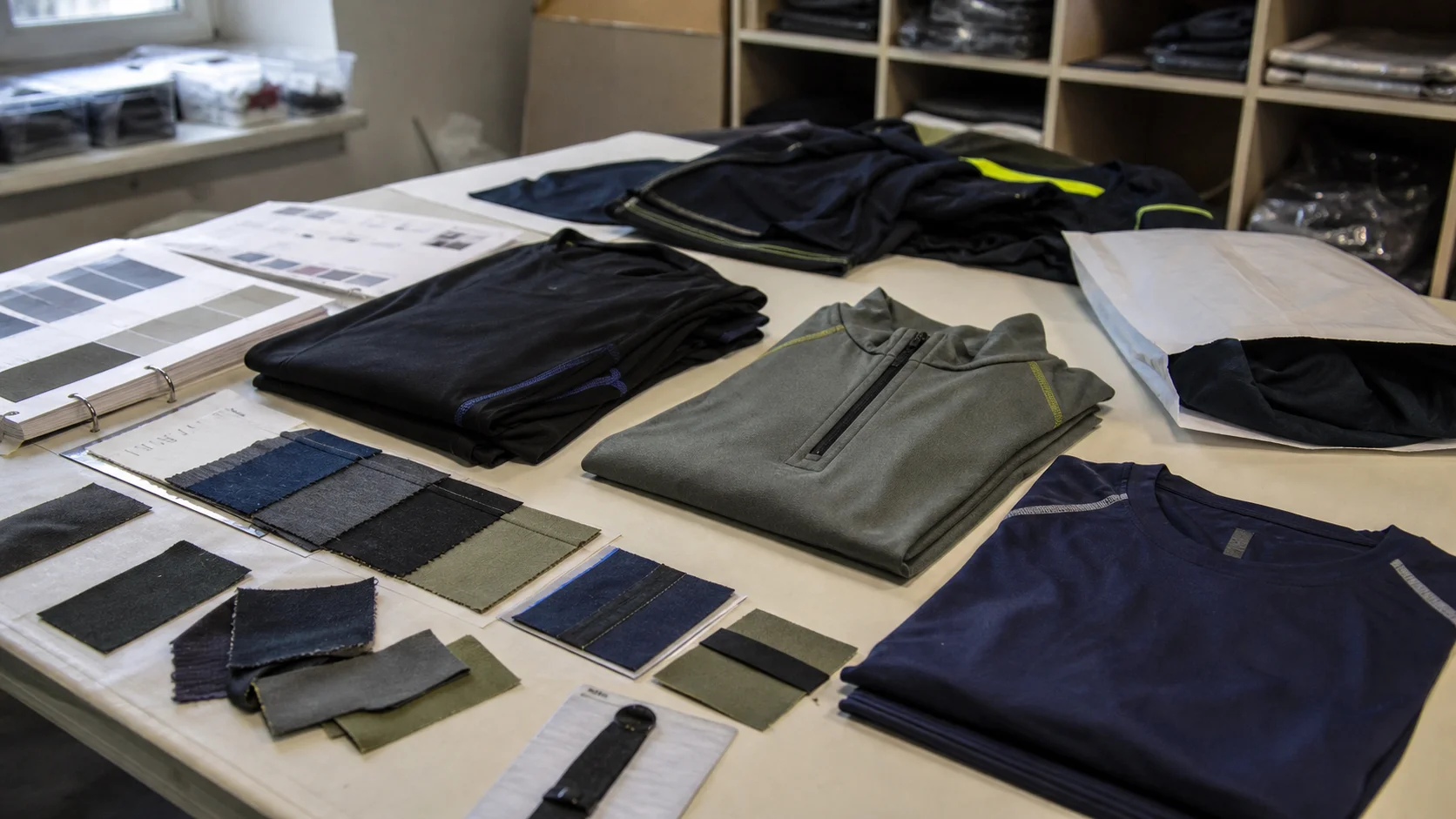
A practical SEO outline for auditing colorfastness in construction safety team base layer sets, covering fabric risks, test methods, wash durability, shade...
Construction safety teams depend on base layer sets that stay stable through heat, sweat, abrasion, and repeated laundering. A colorfastness audit is not a branding exercise. It is a practical check that determines whether the garments will keep their shade, limit dye transfer, and hold up to the wash cycle patterns common in field use. For procurement teams, this matters because poor colorfastness shows up quickly as complaints, inconsistent uniform appearance, stained outer layers, and premature replacement cost.
In a construction setting, base layers are usually worn close to the skin and under high-visibility or weatherproof outerwear. That combination creates a tougher performance demand than ordinary casual apparel. Moisture management, stretch recovery, and seam comfort matter, but colorfastness sits near the top of the risk list because it affects both appearance and wearability. A good audit looks at the fabric, the dye system, the trim package, the sewing thread, and the wash route used after production.
For teams building a sourcing program or tightening vendor controls, the most useful approach is to treat colorfastness as part of a broader quality gate. That means clear test methods, realistic acceptance thresholds, lab dip approval, and pre-production sample review before bulk cutting begins. If the process needs a supplier benchmark, start by reviewing the scope of fabric and garment services offered by the factory, then move to sample control, testing, and inspection planning.
Base Layer Set Colorfastness Audit for Safety Teams - Activewear & Teamwear manufacturing guide
Construction safety teams work in conditions that are hard on garments. Base layers are exposed to perspiration, friction from outerwear, constant movement, and frequent washing. When dye is not well fixed to the fiber, the garment can bleed onto skin, underlayers, or adjacent garments. That creates an immediate quality problem and, in some cases, a comfort issue if color migration leaves residue or stiffens the fabric hand.
Colorfastness also affects visual consistency across a team. Even when base layers are hidden under outerwear, they are still part of the uniform system. One lot washing darker than another can make replenishment orders look mismatched. In enterprise purchasing, that inconsistency is often treated as avoidable waste.
For safety teams, there is another layer of concern. Some programs pair base layers with hi-vis shells, jackets, or work pants. Dye transfer from a low-quality base layer can stain lighter outerwear or leave shading at the collar and cuffs. Once that happens, the issue is usually visible before the garment reaches end of life, which is a poor result for any controlled uniform program.
Procurement judgment: if a supplier can pass fit and sewing quality but cannot explain colorfastness testing in a clear, repeatable way, the program is exposed. Color claims without a test report are not enough for field wear.
A useful colorfastness audit for construction safety teams should cover more than a single wash test. The goal is to confirm that the entire base layer set performs consistently under the conditions it is likely to see in service. That means looking at the fabric, the dye recipe, the construction details, and the finishing process.
Not every program needs the same depth of testing. A lightweight seasonal undershirt may need a simpler audit than a premium thermal base layer sold into colder climates. The point is to match the test burden to the end use. Safety teams do not benefit from over-testing a low-risk item, but they do benefit from identifying where a failure would affect the wearer most.
Many buyers use color change and staining ratings on the common 1 to 5 scale, with higher scores indicating better performance. In practice, some brands set minimums around 3-4 for color change and staining on core tests, while stricter programs may ask for 4 or better on selected methods. The exact threshold depends on the fabric, color depth, and intended use. Dark shades often present more risk than light shades, and blends with high elastane content can behave differently after heat exposure.
Testing should be chosen for the stress the garment will actually face. A base layer that is washed often and worn against the body needs a different emphasis than a fashion tee. The most common methods below are relevant for safety team programs.
Wash fastness checks how well the color holds after laundering. Common methods include ISO 105-C06 and AATCC 61, depending on the market and lab setup. These tests simulate repeated home or industrial laundering using controlled conditions. For base layer sets, this is often the primary test because it reflects normal use. Poor results usually point to weak dye fixation, inadequate after-washing, or unstable pigments.
Perspiration testing looks at how the fabric reacts to acidic and alkaline sweat conditions. This matters because base layers sit directly against skin for long periods. If the dye is prone to migration, the garment can stain adjacent panels, labels, or the wearer's skin. Sweat resistance is especially important for dark colors and high-performance synthetic blends.
Dry and wet crocking tests measure color transfer through friction. Base layers rub against the body, outerwear linings, and other garments during wear and laundering. If crocking resistance is weak, the color may transfer to lighter materials or leave visible marks at high-contact areas such as the underarm, neck, and side seams.
Light fastness is more relevant for items exposed to strong daylight during storage, transport, or use. It is not always the first concern for inner layers, but it can matter for garments used in bright outdoor environments or sold with exposed packaging windows. Dark shades can fade unevenly if the dye system is not stable.
Colorfastness should not be assessed in isolation. A garment may retain color but fail in shrinkage or torque after washing. That matters because distortion can change how a base layer sits under safety gear. Audit reports should capture both color and dimensional performance so the buyer sees the full picture.
Test Area What It Reveals Typical Risk for Base Layers Buyer Focus Wash fastness Color retention after laundering Bleeding, fading, shade change Cycle count, detergent, temperature Perspiration fastness Performance against sweat chemistry Staining, local dye migration Acidic and alkaline results Crocking fastness Color transfer from rubbing Marking on shells and skin contact zones Dry and wet rub ratings Light fastness Fade resistance under light exposure Uneven fade during storage or outdoor use Shade stability over timeColorfastness performance starts at the material decision stage. The fiber blend, knit structure, and finishing route influence how much risk the buyer carries. A base layer set used by construction safety teams usually needs a balance of stretch, recovery, moisture control, and stable color behavior. That balance is not automatic.
Polyester-spandex and nylon-spandex blends are common in performance base layers because they dry quickly and hold shape well. They can also deliver predictable dye performance when processed correctly. The caution is that some synthetic constructions show staining or crocking problems if the dyeing and fixation steps are not tightly controlled. Brighter colors may need more testing than neutrals.
Cotton blends can feel familiar and comfortable, but they often present more shrinkage and wash variability. If the program favors natural fiber comfort, the audit should check whether the dye system holds up after multiple wash cycles and whether the garment structure remains stable. Cotton can be dependable, but it is rarely the low-risk option by default.
Wool and merino blends are valued for thermal performance and odor resistance in colder climates. Colorfastness is still important, especially if the program uses darker shades. The audit should confirm that the wash route, dye class, and finishing chemistry are suitable for the fiber content. Heat and agitation can introduce performance drift if the process is not disciplined.
The fabric may pass while the trim package creates the problem. Elastic, care labels, heat transfers, and sewing thread can all affect the final result. Some printed labels bleed or crack during laundering. Thread may show color contrast after wash if the shade tolerance is loose. Buyers should request trim testing or at least trim approvals before bulk release.
A strong audit process starts before production, not after shipment. The first step is lab dip approval or shade band approval, depending on the factory workflow. If the buyer skips this stage, bulk lots may drift beyond acceptable tolerance and the failure only becomes visible after cutting or washing.
Each step closes a different risk. A lab dip confirms color intent. A fit sample checks garment balance. A pre-production sample verifies that the chosen dye lot, knit roll, and trim combination can survive the process. Top-of-production inspection shows whether the floor is actually making what was approved.
For sourcing teams that need a direct line to factory coordination, contact us is useful when the question is not marketing but manufacturing control. The best vendor conversations are specific: what dye method is used, what test standard applies, what shade tolerance is acceptable, and what happens if first-pass testing fails.
MOQ and lead time should be treated as linked variables, not separate buying notes. A custom color base layer set usually needs more material planning than a stock blank. If the supplier is sourcing custom dyed fabric, minimum order quantities often rise because dye setup, knitting minimums, or color batch economics become part of the cost structure. For private-label programs, common MOQs can range from a few hundred pieces per color to several thousand, depending on fabric type, print method, and trim complexity.
Lead time depends on what must be approved and what is already in stock. If the supplier holds greige fabric and standard trims, the timeline can be shorter. If the order requires custom shade development, special thread matching, or newly sourced trims, the schedule moves out. A realistic buying calendar should include sample approval, lab testing, bulk fabric booking, production, final inspection, and freight.
Here is the tradeoff: a lower MOQ can make a trial program easier, but it may limit color consistency and price leverage. A larger MOQ can improve continuity and unit cost, but it increases inventory exposure if the shade or fit needs revision. Safety teams usually do better with a controlled pilot run first, followed by a replenishment plan after field feedback and wash testing are confirmed.
Colorfastness problems often show up in predictable places. Buyers who know where to look can catch issues earlier and reduce claim risk. The same garment can pass one review and fail another if the inspection method is too narrow.
Different fabric rolls can carry slight shade shifts even when they are within internal tolerance. In a base layer set, that can create visible panel mismatch at the torso, sleeves, or gusset. The issue becomes more serious when one lot is used to top up a replenishment order months later.
Stress points and thick seam assemblies can absorb dye differently. This creates a halo effect, shadowing, or a slightly different tone at the seam line. The risk grows when the knit is dense or the construction uses multiple thread types.
If the fabric is not pre-shrunk or if finishing is inconsistent, the garment can change shape after the first wash. That does not only affect fit. It can expose shade variation by altering how the garment drapes under light.
Labels and prints can bleed into surrounding fabric. This is easy to miss in a short inspection and often appears after the first launder. Any program that relies on printed size marks or care branding should test those elements before bulk approval.
Inspection rule of thumb: if the garment only looks good before washing, it is not ready for a safety team order.
The simplest way to keep an audit disciplined is to use a direct supplier checklist. This is not about adding paperwork for its own sake. It is about making sure every batch is judged against the same expectations.
Teams that want background on the supplier’s operating model can review the company profile at about us. The real value of that page is not branding. It is whether the supplier presents a coherent process for development, testing, and production control. If that process is vague, the audit burden shifts back to the buyer.
Documentation makes the colorfastness audit usable after the order ships. A one-time test report is useful, but the program needs traceability if the same style is reordered later or moved to another colorway. Without records, the buyer cannot tell whether a later problem came from a fabric change, a dye house substitution, or a trim swap.
Keep a file set that includes approved lab dips, test reports, cutting tickets, fabric lot numbers, inspection records, and shipment references. If a failure appears in the field, these records shorten root-cause analysis. They also help determine whether the issue is isolated or systemic.
Good records are especially important for safety-team programs because the uniforms often support a broader compliance structure. Even when the base layer is not regulated in the same way as outer safety equipment, the buyer still needs continuity. Inconsistent shade or dye transfer can undermine confidence in the whole uniform program.
A base layer set colorfastness audit should be practical, not decorative. The focus belongs on how the garment behaves after washing, sweating, rubbing, and repeated use. For construction safety teams, the main risk is not only fade. It is the combination of bleed, staining, trim failure, and inconsistent replenishment.
Buyers get the best result when they push testing upstream. Start with fiber and dye selection, confirm sample approval before bulk production, and insist on traceable lab results. A supplier who can support that process is easier to manage than one that treats colorfastness as a final-line issue.
When the program is built well, the garment remains steady, the team looks consistent, and replacement cycles stay predictable. That is the standard that matters in activewear and teamwear buying. The audit is simply the tool that protects it.
Get a free quote from Fabrikn — your trusted B2B clothing manufacturer with 10+ years of experience. MOQ as low as 200 pieces.
Get a Free Quote →It is a quality review that checks whether the garment keeps its color during washing, sweating, rubbing, and light exposure. For construction safety teams, the audit usually covers the fabric, dye system, trims, and sewing materials, not just the finished appearance.
Wash fastness, perspiration fastness, and crocking are the most important for most base layer programs. Light fastness may matter depending on storage and use conditions. A buyer should match the test set to the actual work environment.
Many programs look for ratings around 3-4 or better on the standard 1 to 5 scale, with higher scores preferred on core tests. The exact threshold depends on fabric type, color depth, and whether the garment is sold as a basic or premium performance item.
Labels, prints, thread, and elastic can bleed, fade, crack, or distort even when the main fabric performs well. A full garment pass is only meaningful if the auxiliary materials behave properly during washing and wear.
Lower MOQ can help with pilot runs and reduce inventory risk, but it may limit dye batch efficiency and color consistency. Higher MOQ can improve price and continuity, but it raises the cost of a bad shade or a failed test. The buying team needs to balance both.
Ask for approved lab dips, pre-production samples, written test reports, fabric lot traceability, and a clear re-test protocol if results miss target. Bulk production should not start until the sample package is signed off.