
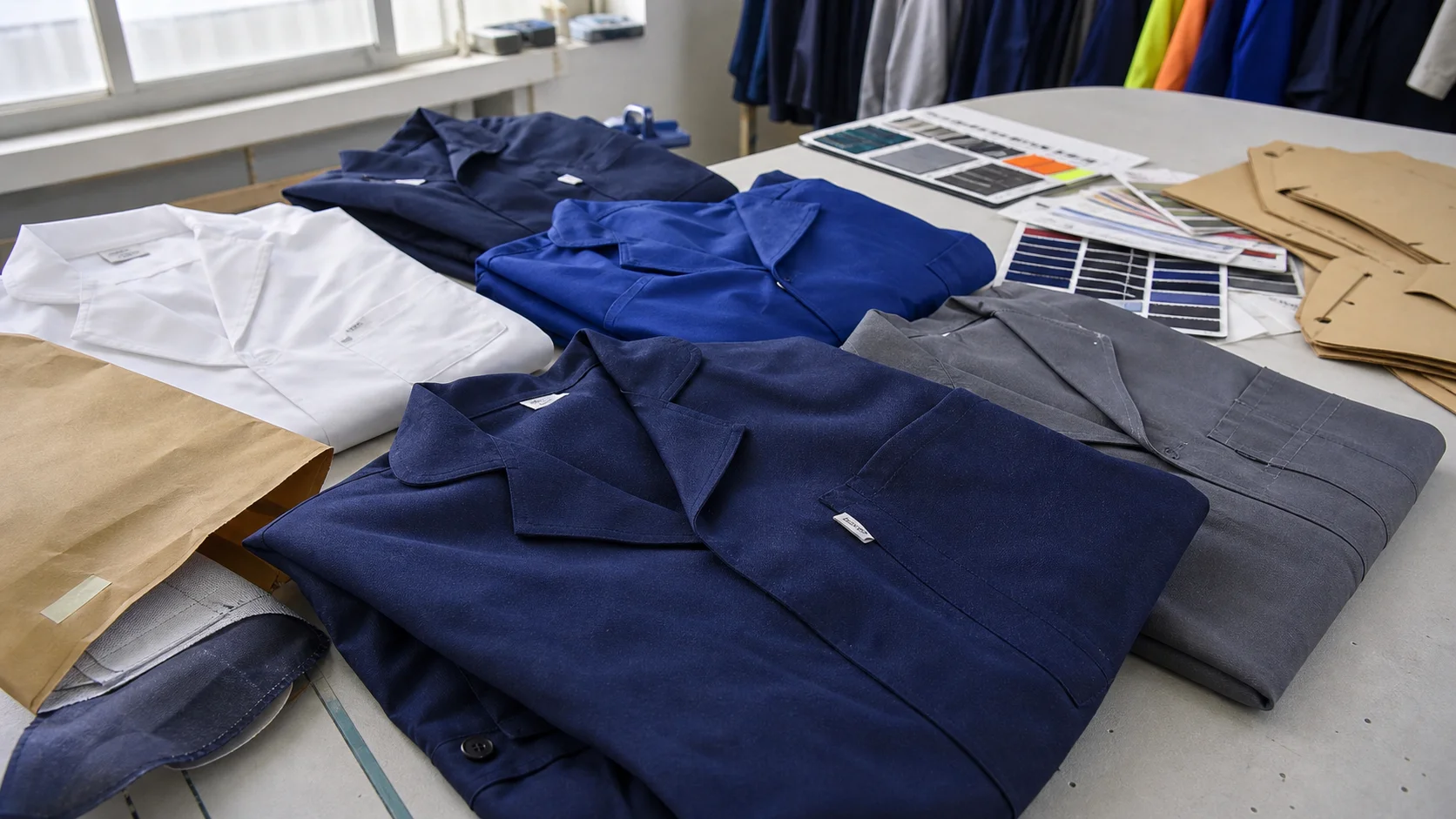
A product-specific SEO outline for construction safety teams buying lab coats, focused on factory release checkpoints, inspection records, decoration...
Lab Coat Release Checklist for Safety Team Buyers - Fabrikn production reference
For construction safety teams, a lab coat is not just a general-purpose garment. It may be used by site safety officers, concrete testing teams, environmental monitoring staff, QA inspectors, materials technicians, chemical handling crews, or visitors entering controlled areas. The release checklist must confirm that every shipped coat matches the approved specification, the intended risk environment, and the buyer’s compliance expectations.
This guide covers a practical construction safety teams lab coat factory release checklist for B2B buyers, sourcing managers, safety procurement teams, and quality inspectors. It focuses on the factory release stage: the point where production is complete, packaging is finished, and the buyer must decide whether the order is ready to ship.
A factory release checklist is the buyer’s last structured control before goods leave the manufacturer. For construction safety teams, this step matters because lab coats may be exposed to dust, cement residue, solvents, testing reagents, asphalt additives, oils, drilling fluids, or general site contamination. The wrong garment can create compliance gaps, worker discomfort, poor durability, and unnecessary replacement costs.
Release inspection should not be treated as a basic visual review. A white coat may look acceptable in carton, but still fail on fabric weight, sleeve length, seam strength, pocket placement, logo accuracy, wash shrinkage, or label content. For safety team buyers, the inspection should connect directly to the garment’s intended function.
A good release checklist protects both sides. The buyer gets a traceable decision process. The factory gets clear criteria instead of subjective complaints after delivery. This is especially important when buying from an apparel manufacturer for repeat uniform programs, multi-site rollouts, or replenishment contracts.
Direct purchasing judgment: do not release lab coats only because they are “commercially acceptable.” Release them because they match the approved sample, purchase order, technical file, packing instruction, and safety use case.
The first question is simple: what will the construction safety team actually do while wearing the lab coat? A garment used for office-based safety audits does not need the same fabric or features as one used by concrete lab technicians or environmental sampling staff.
Common construction safety team use cases include site inspection, concrete cylinder testing, soil and aggregate testing, chemical storage checks, water quality sampling, hazardous material screening, visitor control, incident investigation, and quality assurance work near production zones. Each use case changes the specification.
For low-risk indoor inspection, a poly-cotton coat may be sufficient. For light chemical splash exposure, buyers may need a fabric with documented resistance properties or a disposable protective layer instead of a standard woven lab coat. For outdoor site movement, high-visibility elements may be required, though reflective tape and lab coat design must be planned carefully so the garment remains practical.
Buyers should avoid using “lab coat” as a generic product description. A construction safety teams lab coat factory release checklist should start with a defined risk profile, wearer role, work environment, expected wash cycle, and required compliance standard.
Before checking cartons, review the paperwork. Many release failures come from mismatched documents rather than visible sewing defects. The purchase order, approved sample, technical pack, size chart, care label artwork, fabric test report, trim card, packaging instruction, and inspection standard should all point to the same product.
The factory should provide a production packing list, carton breakdown, size ratio, color breakdown, and any required test documentation. If the garment includes specialized performance claims, such as flame resistance, anti-static behavior, fluid resistance, or chemical resistance, the buyer should request recognized test reports from the fabric supplier or accredited lab. A factory statement alone is not enough for safety-critical claims.
For procurement teams building long-term programs, it helps to centralize technical requirements before placing the order. If sourcing support is needed, buyers can review apparel production and quality capabilities through Fabrikn’s services page and align the release checklist with the original manufacturing scope.
Fabric is the largest performance decision in a lab coat order. For construction safety teams, common options include 100% cotton twill, poly-cotton twill, polyester-cotton poplin, treated cotton, anti-static blends, and specialized protective fabrics. Each has tradeoffs.
100% cotton is breathable and comfortable, but it may wrinkle, shrink, and wear faster depending on weight and weave. Poly-cotton blends are usually easier to maintain and more stable after washing, but they may not be suitable for heat or flame exposure unless engineered and certified for that risk. Lightweight poplin can feel comfortable in warm conditions, but may lack durability for tool-heavy or rough site movement. Heavier twill improves durability but can become hot during long shifts.
Typical lab coat fabric weights range from about 130 gsm to 240 gsm. For light inspection use, 130 to 160 gsm may be acceptable. For construction materials testing and repeated laundering, 180 to 220 gsm often gives better service life. Heavier fabric is not automatically better; it can reduce wearer compliance if the coat becomes uncomfortable in warm climates.
Fabric Option Typical Use Buyer Tradeoff Poly-cotton poplin, 130-160 gsm Light-duty inspection, visitor coats, office-to-site use Lower cost and easier care, but less abrasion resistance Poly-cotton twill, 180-220 gsm Routine safety team wear, testing labs, QA inspection Better durability, but warmer and usually higher cost 100% cotton twill, 180-240 gsm Comfort-focused workwear, moderate lab use Breathable, but shrinkage and creasing need control Treated or certified fabric Specific risk environments Requires documentation, higher MOQ, and tighter test controlFor white or light-colored coats, shade control is a common inspection risk. Different fabric lots may look acceptable separately but appear mismatched when packed together. Buyers should require lot-level shade grouping if visual uniformity matters across a safety team.
Construction quality determines whether the coat survives actual site use. Lab coats for construction safety teams often face bending, reaching, carrying clipboards, climbing stairs, handling samples, and frequent washing. Weak seams and poorly reinforced pockets usually fail first.
At factory release, inspectors should compare bulk garments against the approved sample. This includes collar shape, lapel depth, pocket size, sleeve opening, back vent, side openings, cuff design, closure placement, stitch type, and reinforcement. Do not assume the sewing line followed the sample unless the checklist confirms it.
Stitch density should be specified. For many woven lab coats, buyers may see 8 to 12 stitches per inch, depending on fabric and seam type. Too few stitches can weaken seams. Too many stitches can damage lightweight fabric. The correct choice depends on material, thread, and garment stress points.
Thread quality also matters. Polyester core-spun thread is common for durability. Cotton thread may be used for specific requirements, but it is not automatically the best choice. If the lab coat has flame-resistant requirements, thread selection must match the certified fabric system. A flame-resistant shell with ordinary melting thread can create a serious specification failure.
Lab coats are often ordered in broad sizes: XS to 5XL or S to 4XL. For construction safety teams, fit must account for movement and layering. A coat may be worn over polo shirts, work shirts, hoodies, or light safety vests depending on the site. Too slim a fit reduces adoption; too loose a fit can snag on equipment.
A practical factory release checklist should include measurement review across all sizes, not just medium or large. Inspectors should measure chest, waist, sweep, shoulder, sleeve length, center back length, across back, armhole, cuff opening, pocket placement, and front placket length. Tolerances should be agreed before production. A common commercial tolerance may be around 1 cm for small points and 1.5 to 2 cm for larger body measurements, but buyers should define this in the technical pack.
Unisex sizing is cost-efficient and simpler for inventory, but it may not fit all teams well. Men’s and women’s patterns improve fit, but they increase SKU count, sampling time, and MOQ pressure. For large safety teams, separate fits may be worth the added complexity. For smaller projects, unisex sizing may be the practical choice.
Purchasing judgment: if the coat is intended for active site movement, prioritize shoulder mobility and sleeve function over a narrow retail-style silhouette.
Trims are small cost items that can create large field problems. Buttons crack, snaps corrode, labels wash out, and embroidery can pucker if backing or stitch density is wrong. The release checklist should treat trims as functional components, not decoration.
Common closure options include buttons, snaps, concealed snaps, hook-and-loop tape, and zippers. Buttons are economical and easy to replace. Snaps are faster for users but need pull-strength control and corrosion resistance. Hook-and-loop is convenient but can collect lint, cement dust, and debris. Zippers offer secure closure but increase cost and can be uncomfortable on a traditional lab coat design.
For construction safety teams, metal trims should be reviewed carefully if garments are exposed to moisture, chemicals, or electrical work areas. Plastic buttons may be safer for some environments, but they must withstand laundering and daily wear.
Branding should be inspected against approved artwork. Embroidery size, thread color, logo position, and backing must be consistent. Heat transfers should be tested for adhesion, edge lifting, cracking, and wash durability. Reflective logos or trims should not be assumed compliant unless the material and placement have been specified and tested for the intended requirement.
A reliable release process starts before bulk production. Buyers should use sampling stages to remove uncertainty early. The most common stages are fit sample, fabric or lab dip approval, pre-production sample, size set sample, and shipment sample.
The fit sample checks pattern, proportions, and wearability. The pre-production sample confirms final fabric, trims, labels, measurements, logo placement, and construction. The size set confirms grading across sizes. The shipment sample is pulled from actual bulk production and should match the approved pre-production sample.
Skipping sample stages saves time upfront but creates risk at release. If there is no sealed reference sample, the factory and buyer may disagree about what “approved” means. This is a common source of shipment delays and discount negotiations.
Sample Stage Purpose Release Risk if Skipped Fit sample Checks pattern, movement, and proportions Poor wearer comfort and high size complaints Lab dip or fabric handloom Confirms color, hand feel, and fabric direction Bulk shade or fabric feel disputes Pre-production sample Locks final garment specification Unclear factory standard during inspection Size set sample Confirms grading across full size range Small and large sizes may fit poorly Shipment sample Represents actual bulk output Buyer has limited proof before releaseApproval comments should be written, dated, and version-controlled. Vague comments such as “make better” or “as discussed” are weak release controls. Use measurable comments: increase sleeve length by 2 cm, move chest pocket 1.5 cm higher, change button to approved matte white four-hole button, or reduce collar height by 0.5 cm.
Typical MOQ ranges vary by fabric, factory setup, customization, and order complexity. For basic stock-fabric lab coats with limited customization, buyers may find MOQs around 100 to 300 pieces per style or color. For custom fabric, dyed-to-match color, specialized trims, or performance-treated material, MOQs may rise to 500 to 1,000 pieces or more. Certified protective fabrics can require higher minimums because mills and trim suppliers also set minimums.
Small construction teams often want multiple sizes, logos, and site-specific names in low quantities. That creates cost pressure. The more SKUs in the order, the harder it is for the factory to maintain efficiency. A 300-piece order split across ten sizes and three logo versions is operationally different from 300 identical coats.
Lead time depends on fabric availability, sample approval speed, trim sourcing, logo work, production capacity, testing, inspection booking, and shipping method. Basic lab coat production from available fabric may take around 30 to 60 days after sample approval. Custom fabric or certified materials can push the timeline to 60 to 120 days or more. Testing failures, delayed approvals, and late artwork changes are common causes of schedule slippage.
Buyers should not schedule site rollout immediately after the planned production finish date. Build time for final inspection, rework, carton correction, document review, and freight pickup. The release checklist is only useful if the buyer has time to act on the results.
Final inspection should be performed when production is complete and most goods are packed, commonly when at least 80% of the order is finished and packed. Inspection can be done by the buyer, factory QC, or a third-party inspection company. For critical safety applications, relying only on factory self-inspection may not be enough.
Inspection standards often use AQL sampling methods, but the buyer must define defect classifications clearly. AQL is a sampling method, not a product specification. Critical defects, major defects, and minor defects should be agreed before inspection.
Critical defects may include wrong safety label, missing required performance marking, sharp metal contamination, wrong certified fabric, severe staining, or broken closures that make the garment unusable. Major defects may include incorrect measurements outside tolerance, open seams, wrong logo placement, missing pockets, shade mismatch, or serious puckering. Minor defects may include small loose threads, slight washable marks, or minor packaging inconsistencies depending on the buyer’s standard.
Inspection should include on-site measurement, workmanship review, barcode scan if applicable, carton audit, and packaging check. If the garment has wash performance requirements, bulk garments should be tested according to the agreed standard before release rather than after distribution.
For buyers still defining factory qualification and production oversight, the company background and working model should be reviewed before order placement. A useful starting point is the Fabrikn about page, especially when aligning sourcing expectations with quality control responsibilities.
Packing errors create downstream problems for safety teams. A coat can pass workmanship inspection but still fail the release process if sizes are mixed, carton labels are wrong, or site allocation is unclear. For multi-site construction companies, incorrect packing can delay distribution and create shortages at active projects.
Each garment should be folded according to instruction, packed in the agreed polybag or bundle format, and labeled correctly. Buyers may request individual polybags for clean storage, but this increases plastic use and waste. Bulk packing reduces packaging cost and environmental impact, but it can make distribution harder if coats are shipped to multiple locations.
Carton quality should match shipping conditions. Weak cartons can crush during freight, especially for international shipments or warehouse handling. Carton marks should include style number, size, color, quantity, purchase order, carton number, gross weight, net weight, and destination details where required.
Moisture is a practical concern for cotton and poly-cotton garments. If coats are packed before fully dry after pressing or finishing, mildew risk increases. Buyers should look for any musty smell, damp cartons, condensation, or visible staining before release.
The factory release decision should be structured. A buyer should not rely only on a pass or fail statement. The release file should include inspection report, measurement chart, defect photos, carton audit findings, document review, sample comparison notes, and corrective action status.
There are usually four practical outcomes: approve shipment, approve with minor corrective action, hold shipment pending rework, or reject and remake affected goods. The right decision depends on defect severity, safety impact, delivery urgency, and whether the issue can be corrected without damaging the garment.
Minor loose threads can usually be trimmed. Wrong care labels, incorrect fabric, unsafe trims, or failed performance requirements are more serious. Buyers should be cautious about accepting discounts for safety-related failures. A lower price does not solve worker risk or compliance exposure.
Release Outcome When It Fits Buyer Caution Approve shipment Goods match approved standard and defects are within limit Keep inspection file for future replenishment comparison Approve after minor correction Issues are cosmetic or easy to fix before dispatch Request proof of correction before freight release Hold shipment Defects need sorting, repair, relabeling, or repacking Set a reinspection plan and deadline Reject affected goods Safety, fabric, measurement, or branding failures are material Confirm remake terms and impact on rollout scheduleA clear decision trail is especially useful for repeat orders. If the first production run establishes reliable standards, future releases become faster and less subjective. If the first run exposes recurring issues, buyers should adjust the tech pack, supplier controls, or factory selection before reordering.
The following checklist can be adapted for construction safety team lab coat orders. It is intentionally practical rather than theoretical. Buyers should modify it based on risk level, destination market, and internal safety policy.
The best release checklist is built before production starts. If the buyer waits until final inspection to define fabric performance, pocket reinforcement, label wording, or packaging format, the factory may have limited options to correct issues without delay or extra cost.
Early technical alignment is especially important for construction safety teams because garment expectations often sit between workwear, uniforms, PPE-adjacent clothing, and lab apparel. The buyer must decide whether the coat is a uniform item, a controlled safety garment, or part of a broader protective clothing system.
For custom development, buyers can discuss specification, sampling, and production planning through Fabrikn’s contact page. Clear early communication reduces the chance that final release becomes a negotiation instead of a verification step.
For safety team buyers, the strongest lab coat release process combines technical clarity with practical inspection discipline. Do not over-specify features the team does not need, because unnecessary requirements raise MOQ, cost, and lead time. Do not under-specify fabric, seams, labels, and testing if the coat will be used near real site hazards.
The main tradeoff is cost versus control. A basic stock lab coat is faster and cheaper, but it gives the buyer less control over fabric lots, fit, trims, and branding. A fully custom coat gives better alignment with safety team needs, but it requires more sampling, higher MOQ, and more disciplined approvals.
A construction safety teams lab coat factory release checklist should answer one question before shipment: are these garments fit for the intended site role, made to the approved specification, packed for clean distribution, and documented well enough to support repeat purchasing? If the answer is yes, release is justified. If the answer is uncertain, hold shipment and resolve the gap before the goods leave the factory.
Get a free quote from Fabrikn — your trusted B2B clothing manufacturer with 10+ years of experience. MOQ as low as 200 pieces.
Get a Free Quote →The checklist should include document review, fabric verification, garment construction, measurements, trims, labels, branding, performance documentation, packaging, carton marks, and final inspection results. It should be based on the approved sample and technical pack, not only visual appearance.
For basic lab coats using available fabric, typical MOQs may range from 100 to 300 pieces per style or color. Custom dyed fabric, special trims, certified protective materials, or complex branding may increase MOQ to 500 to 1,000 pieces or more.
Basic production may take around 30 to 60 days after sample approval if fabric and trims are available. Custom fabrics, special testing, or certified materials can extend lead time to 60 to 120 days or more. Approval delays and failed testing can add more time.
Light-duty inspection coats may use 130 to 160 gsm fabric. More durable coats for testing labs and repeated laundering often use 180 to 220 gsm fabric. The best choice depends on climate, wash cycle, abrasion risk, and whether special protection is required.
Only specify flame resistance when the risk assessment requires it. If flame resistance is required, the buyer should confirm certified fabric, compatible thread, correct trims, and valid test documentation. A standard poly-cotton lab coat should not be treated as flame-resistant without proof.
Common failures include shade variation, measurement deviations, uneven pocket placement, loose stitching, button or snap misalignment, incorrect care labels, embroidery puckering, stains, loose threads, and carton quantity errors.
Yes, for most custom or safety-related orders. The pre-production sample locks the final standard for fabric, trims, construction, measurements, labels, and branding. Without it, release inspection becomes more subjective and disputes are harder to resolve.
Yes, if defects are cosmetic, limited, and correctable without affecting safety, function, or compliance. Safety-related failures, wrong fabric, incorrect labels, or major measurement issues should not be accepted simply for a discount.