
A practical SEO outline for construction safety teams to audit contrast bartack maps, verify colorfastness, and reduce visibility and durability failures...
In workwear and construction apparel, a contrast bartack is not just a decorative stitch. It can also become a practical identification cue, a reinforcement marker, or part of a visual compliance system on garments used by safety teams. That is where a contrast bartack map order colorfastness audit comes in. If the bartacks are mapped incorrectly, shaded unevenly, or fail colorfastness testing after laundering and wear, the garment can miss the visual standard the buyer approved. For construction safety teams, that is more than a cosmetic issue. It can affect garment consistency, site visibility, and the reliability of the uniform program.
This article breaks down how to audit contrast bartack maps in bulk orders, what to check for colorfastness, where production usually goes wrong, and how sourcing teams can reduce avoidable claims. It is written for procurement managers, technical buyers, and safety program coordinators who need practical control points rather than theory.
Contrast Bartack Map Audits for Safety Teams - Fabrikn production reference
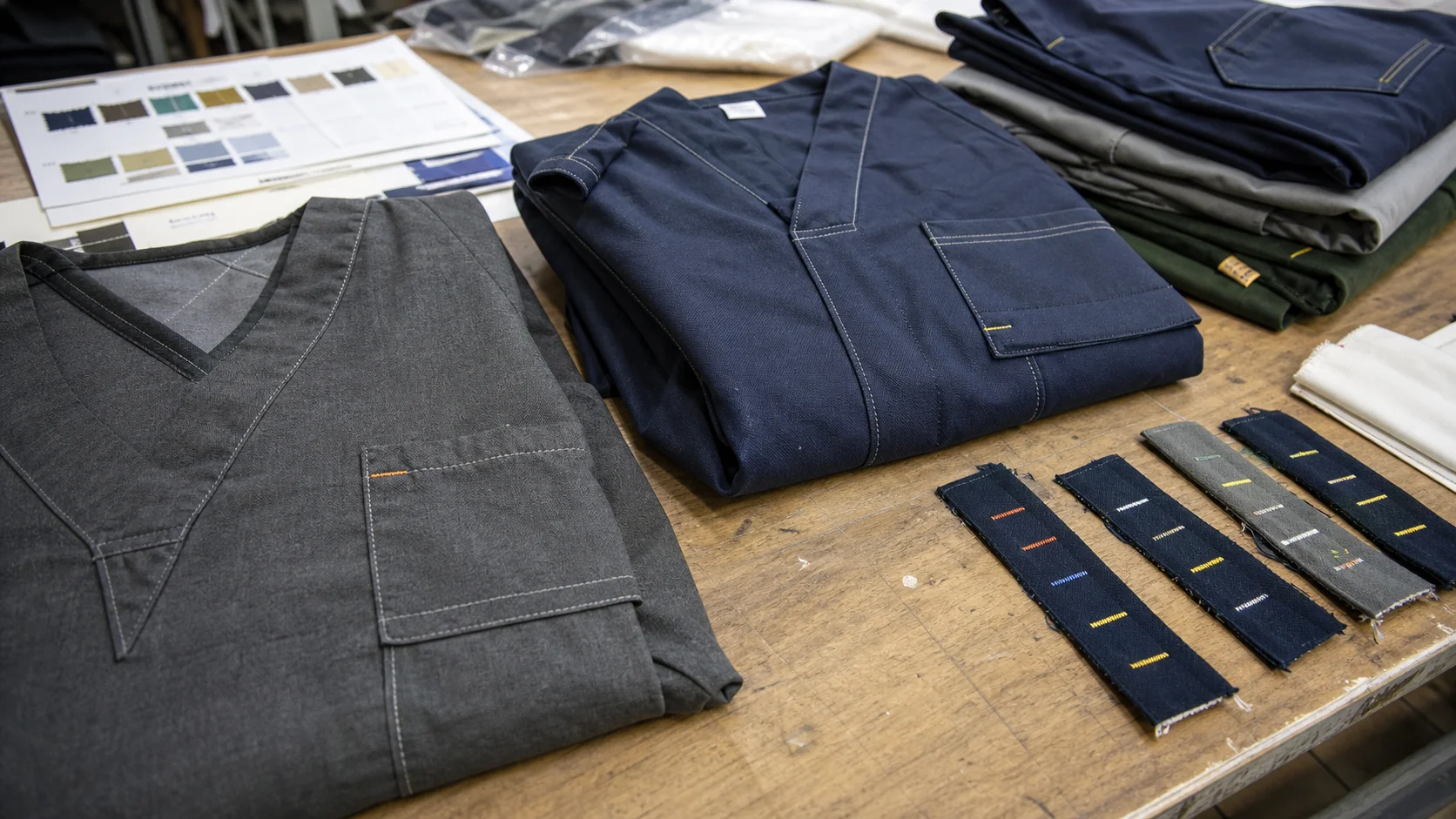
A bartack map is the placement plan for bartack stitches across a garment. In workwear, bartacks are often used at pocket corners, stress points, belt loops, placket ends, tool loop anchors, and seam intersections. When the bartack thread is a contrast color, the map also becomes a visual design element. Buyers may specify exact stitch locations, color codes, stitch density, and needle count expectations to make sure every garment matches the approved sample.
A contrast bartack map order colorfastness audit checks two things at once: first, whether the bartacks appear where the map says they should appear; second, whether the contrast thread retains its color under washing, rubbing, perspiration, and outdoor exposure. For construction safety teams, this matters because uniforms are worn hard and washed often. A thread that bleeds, fades, or migrates onto surrounding fabric can quickly make a clean approved sample look unfit for issue.
Safety apparel procurement often focuses on hi-vis fabric performance, reflectivity, flame resistance, or abrasion resistance. Decorative or functional contrast bartacks can be overlooked until the first production lot comes back inconsistent. That is a mistake. In a large uniform program, small details are multiplied across hundreds or thousands of garments. A poor bartack thread choice or weak map control can create a visible mismatch across shifts, crews, or replenishment cycles.
For construction safety teams, consistency supports more than brand appearance. It supports jobsite discipline. When a workwear program uses contrast bartacks to identify role, department, size family, or product tier, the details must stay stable after repeated laundering. If the bartack color shifts badly, buyers may face complaints about mismatched lots, rejected replenishment, or uniform look drift across seasons.
Procurement judgment here is simple: if the bartack is part of the garment identity, treat it like a controlled specification, not like a minor trim choice.
For buyers looking to tighten the overall sourcing process, the services page is a useful place to review production support options, while the about us page can help evaluate whether a vendor is structured for technical order handling.
A strong audit starts with the map itself. Do not wait until bulk production to discover that the factory interpreted the placement differently. The following items should be checked against the tech pack, approval sample, and production marker comments.
One common issue is assuming the map is self-explanatory. It rarely is. If the tech pack includes a visual map, the factory should confirm every numbered bartack point before cutting bulk fabric. A production team that begins sewing without a clear sign-off often corrects problems late in the line, which is usually more expensive and less consistent than preventing the issue at sample stage.
Contrast thread colorfastness is usually evaluated through a combination of wash, rub, and sometimes light or perspiration testing, depending on the end use and buyer standard. In workwear, wash fastness and crocking resistance are the most practical checks because garments are laundered frequently and handled in dirty environments.
When auditing contrast bartacks, buyers should ask whether the thread has already been tested on the intended fabric. A thread can perform differently on cotton canvas, polyester-cotton blends, stretch twill, or coated materials. Dark fabric can also show dye transfer more clearly if the contrast thread is poorly fixed. A good test result on a lab swatch does not always guarantee the same result on a full garment with heavy seam bulk and higher stitch tension.
If the safety team’s garments are intended for repeated industrial washing, the buyer should ask for thread lab reports before bulk approval. The report should match the exact thread article and color being used, not a similar stock option. If the supplier proposes a substitution, that substitution should be reapproved. Small deviations in dye lot or fiber blend can change the result.
The best audits are built on precise specifications. Vague instructions create disputes, especially when the contrast effect is part of the garment’s visual identity. Buyers should define the bartack system as carefully as they define the main fabric or reflective tape.
Specification Area Buyer Should Confirm Why It Matters Thread fiber Polyester, nylon, or approved blend Affects strength and colorfastness Thread shade Pantone, lab dip reference, or approved thread card Prevents shade disputes Stitch density Number of stitches and bartack length Controls appearance and reinforcement Placement tolerance Allowable deviation in mm Helps quality control at line inspection Testing standard Required wash and rub tests Sets pass/fail criteria Approved sample Signed sealed sample or reference garment Becomes the benchmark for bulkThread count and needle selection deserve extra attention. If the thread is too thick for the fabric weight, the bartack can tunnel or pucker the panel. If it is too thin, the reinforcement may be weak and the visual contrast may look underfilled. Stitch tension should be balanced so the bartack sits flat without breaking color consistency across the run.
A sensible sample process helps avoid the most common production losses. For contrast bartack order audits, the sequence should usually include a pre-production sample, a placement approval, and a wash-tested reference if the garment will be laundered heavily. Some buyers also request a top-of-production sample from the first sewn panel or first finished dozen garments.
Buyers should avoid approving a sample that has not been washed if the final garment will be washed in service. A thread can look acceptable straight off the line and still fail after laundering. The same caution applies to samples sewn with alternative thread from stock. A good-looking sample is useful only if it reflects the actual bulk materials and process.
For technical order coordination or to discuss decoration-related production control, a supplier’s contact page is the right place to start a direct conversation before approving the order path.
Once bulk starts, the audit should move from document review to live production control. This is where many orders drift. Operators may change thread cones, line supervisors may shift bartack placement slightly for speed, or replacement spools may come from a different dye lot. Any of those changes can affect the final result.
Production audits should check the first run, mid-run stability, and end-run consistency. The first pieces are often the cleanest because the line is focused. Mid-run issues are more revealing because they show whether the operator can maintain the bartack map over volume. End-run inspection confirms whether thread shade, tension, and placement stayed constant after partial cone changes or machine adjustments.
Inspection risk increases when the factory has to switch thread lots during production. If the thread supplier cannot maintain shade continuity, the buyer may see visible variation within one order. That is especially risky in a construction safety program, where garments often need to match across crews and replenishment cycles.
Most contrast bartack defects fall into a handful of repeat patterns. Knowing them in advance helps the buyer set better controls and dispute terms if the order goes off spec.
One overlooked problem is visibility inconsistency. A bartack may pass technical strength expectations but fail visual expectations because the thread appears dull under factory lighting, or because the color looks different after finishing. The buyer should review samples under normal and daylight-like conditions when possible. What looks acceptable under one light source can look wrong on site.
For contrast bartack workwear, minimum order quantity is usually driven by fabric, thread, and garment complexity rather than the bartack itself. Even so, buyers should expect that small custom runs cost more per piece because thread setup, machine adjustment, and approval handling take time. In many programs, a practical MOQ may sit in the low hundreds to low thousands of pieces, depending on garment type, color count, and customization level. Exact numbers vary by factory capability and fabric sourcing conditions.
Lead time depends on more than sewing. It is affected by fabric availability, thread sourcing, lab testing, approvals, and any required wash testing. If the buyer delays sample sign-off, the whole schedule moves. If a special thread color must be dyed or matched, that adds risk. If a garment also includes reflective tape, embroidery, or printed labels, the decoration queue becomes more complex.
Practical planning rule: do not treat bartack color approval as a final-stage detail. It should be locked before bulk cutting, especially if the thread has to be sourced specially. Late changes usually cost more than they save.
A lean but effective audit checklist should combine visual inspection with a few objective tests. The goal is not to overcomplicate the order. It is to prevent preventable rejects.
Checkpoint What to Look For Risk if Missed Thread shade Matches approved reference under consistent light Lot mismatch, customer complaint Bartack placement Aligned to map and within tolerance Uniform inconsistency, rework Wash result No noticeable fade or bleed Rejected after laundering Rub result No heavy transfer to adjacent fabric Appearance failure in use Seam integrity No distortion or broken stitching around bartack Durability claim risk Pack consistency Each carton contains matching visual output Sorting costs, delayed issueA useful practice is to retain a retained sample set from the approved pre-production lot and the first bulk output. This gives the buyer a direct comparison if problems surface during final inspection or after delivery. If an order is being produced for a contractor or site program with strict uniform rules, that reference can be valuable during claim resolution.
Not every detail deserves the same level of cost. Buyers should spend on the specifications that affect performance and uniform control, and avoid paying extra for decorative complexity that does not add value. On contrast bartacks, the most important investment is usually in correct thread selection, reliable colorfastness testing, and careful first article approval. Paying slightly more for a stable, tested thread is often cheaper than sorting and replacing a compromised bulk order.
Hold back from needless complexity if the bartack has no functional role in the garment identity. Too many thread colors, unnecessary stitch patterns, or custom dye requests can slow lead time and introduce shade risk. In workwear programs, simplicity often wins. A clear thread spec, a controlled sample process, and a disciplined inspection plan are usually enough.
When in doubt, ask whether the bartack is decorative, functional, or both. That answer should shape the order controls. Functional bartacks need durability emphasis. Decorative bartacks need shade and appearance emphasis. Many safety team garments need both.
Contrast bartack map order colorfastness audits are not a niche concern. For construction safety teams, they are part of keeping the uniform program stable, durable, and visually consistent. The audit should cover placement, thread specification, wash performance, rub resistance, and production continuity. It should also account for real sourcing constraints such as MOQ, lead time, thread availability, and approval discipline.
Buyers who treat bartacks as a controlled specification reduce rework and keep uniform standards intact across large orders. Buyers who leave them to chance usually pay for it later in disputes, replacements, and avoidable delays.
Get a free quote from Fabrikn — your trusted B2B clothing manufacturer with 10+ years of experience. MOQ as low as 200 pieces.
Get a Free Quote →It is the placement plan showing where bartack stitches should appear on the garment, including size, position, and thread color. In contrast applications, the bartack is both functional and visual.
If the contrast thread fades or bleeds after washing, the garment can look mismatched or unapproved. That creates quality issues for safety teams that rely on consistent workwear.
Wash fastness and rub fastness are the most common. Depending on the garment’s use, light fastness and perspiration resistance may also be relevant.
Buyers should approve the thread shade, bartack placement, stitch appearance, and any wash-tested sample that reflects the actual production materials.
MOQ varies by factory and garment complexity, but custom programs often start in the low hundreds to low thousands of pieces. Fabric, thread, and decoration requirements can raise the threshold.
Shade inconsistency is one of the biggest risks, followed by bleeding after wash and placement drift from the approved map.