
A 2500-word SEO outline for fitness club buyers auditing contrast bartack maps, thread colorfastness, and supplier production controls before ordering...
Contrast Bartack Map Audit for Fitness Club Buyers - Decoration & Printing manufacturing guide
Fitness club apparel is bought for hard use. Staff uniforms, instructor kits, retail merchandise, and member event garments are washed frequently, exposed to sweat, stretched during movement, and judged visually by members. A small contrast bartack can look like a minor decoration detail, but it sits at the intersection of reinforcement, branding, color control, and garment durability.
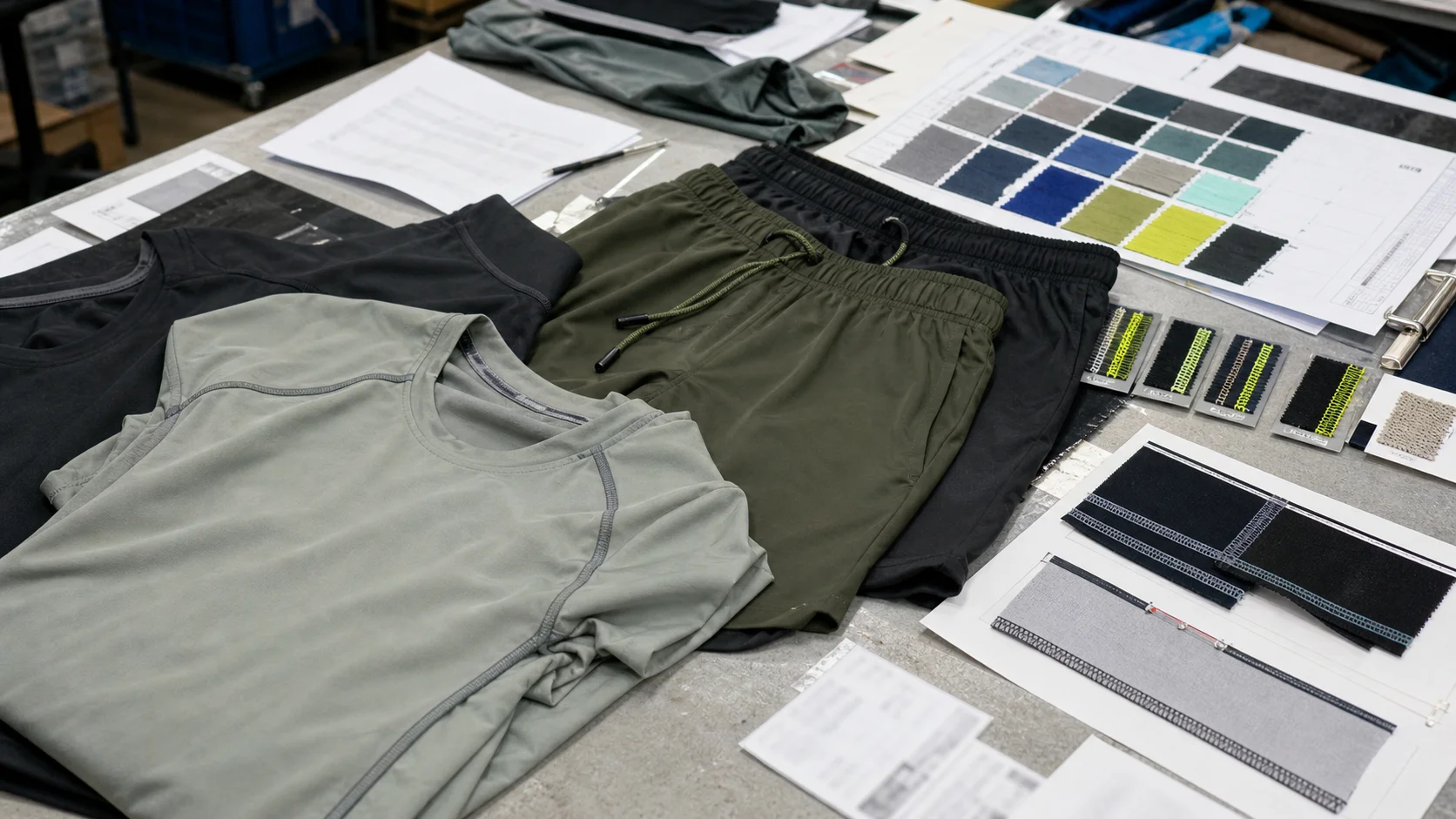
A contrast bartack map supplier colorfastness audit is a practical buying tool for fitness club buyers who want the design effect of visible reinforcement without taking unnecessary quality risk. The bartack map shows exactly where contrast bartacks are placed, what thread color is used, what stitch density is required, and how the reinforcement aligns with stress points such as pocket openings, side vents, placket ends, waistband joins, drawcord exits, and seam intersections.
Contrast stitching can sharpen a product line. It may help separate staff roles, create a club signature, or add perceived value to private-label activewear. The tradeoff is clear: every contrasting thread creates a visible quality checkpoint. If placement drifts, the error is obvious. If thread bleeds, crocking appears on lighter fabric. If the bartack is too dense, it may cut or pucker lightweight knit fabric. If it is too loose, the reinforcement fails.
Buyers should treat the bartack map as a controlled decoration and construction document, not as a casual note in a tech pack. The audit should confirm that the supplier can interpret the map, source suitable thread, run colorfastness checks, control needle damage, and maintain consistent placement across bulk production.
Purchasing judgment: contrast bartacks are worth using when the club wants a deliberate design feature and the supplier can prove colorfastness and placement control. They are not worth the risk if the garment is low-margin, extremely light-colored, or being produced under a rushed approval schedule.
Fitness club buyers working with custom apparel programs can review broader production support through Fabrikn services, especially when a style involves multiple decoration points, performance fabrics, or club-specific color standards.
A contrast bartack map audit checks whether the supplier can consistently execute visible bartacks according to the buyer’s technical requirements. It is not limited to checking a finished sample. A proper audit reviews documents, materials, machine settings, sampling records, colorfastness evidence, and production inspection controls.
The best map is simple enough for production operators to follow and detailed enough for quality inspectors to judge. Buyers should avoid vague notes such as “add contrast bartacks at stress points.” That leaves too much room for interpretation. A factory may place the bartacks where it normally does, not where the club’s design requires them.
Fitness club programs often use contrast bartacks on polo shirts, joggers, woven training shorts, zip hoodies, yoga leggings, studio jackets, and gym staff utility vests. In knit tops, bartacks may reinforce side vents or placket ends. In shorts and joggers, they commonly support pocket openings, waistband seam joins, and drawcord exits. In leggings, visible bartacks are less common because tight stretch and abrasion can create comfort issues, but they may appear at pocket edges or gusset seam ends if carefully engineered.
Garment Type Common Contrast Bartack Points Primary Risk Buyer Judgment Staff polo shirt Placket bottom, side vents, pocket corners Puckering on lightweight knit Use moderate density and test washing appearance Training shorts Pocket mouths, waistband joins, hem vents Thread bleeding onto light fabric Require wash and perspiration colorfastness checks Joggers Pocket corners, drawcord exits, back yoke seams Placement variation across sizes Approve graded placement on size set Hoodie Kangaroo pocket corners, hood seam ends, zipper base Bulky seam distortion Confirm needle and bartack density on bulk fabric Leggings Side pocket edges, gusset seam ends Skin irritation and stitch breakage Use only when comfort and stretch recovery are verifiedColorfastness is the central concern when contrast thread is placed on activewear. Fitness club apparel sees sweat, detergent, friction, heat, and sometimes sanitizing chemicals from gym environments. A thread that looks clean in a showroom sample can cause problems after five washes or after one high-sweat training session.
Contrast bartacks are especially risky when dark thread is used on light fabric, neon thread is used on black or navy fabric, or recycled polyester thread is mixed with high-stretch synthetic fabric. The thread supplier’s shade card is not enough. Buyers need evidence that the actual thread lot used for production is suitable for the garment fabric and end use.
Testing does not always need to be complicated, but it must be relevant. A buyer ordering black shorts with red bartacks should worry about red staining during laundering. A buyer ordering white polos with navy bartacks should worry about navy bleeding and visible stitch shadowing. A buyer ordering neon bartacks on compression leggings should worry about both migration and stretch durability.
Many buyers use a grey scale rating system to evaluate staining and color change. Requirements vary by brand and market, but a practical expectation for fitness apparel is usually grade 4 or better for most standard wash and rubbing tests, with special caution on high-contrast combinations. A grade 3 to 4 result may be acceptable for some budget programs, but it is a buying compromise and should be acknowledged in writing.
Colorfastness risk increases when the schedule is rushed and the supplier swaps thread lots without approval. Buyers should require the supplier to keep production thread cones traceable. At minimum, the bulk thread should match the approved shade reference, and any replacement lot should be rechecked before sewing.
Purchasing judgment: if the supplier cannot identify the thread source, thread composition, or bulk thread lot, do not approve a contrast bartack program for light-colored fitness apparel.
A supplier may be capable of sewing bartacks but still weak at controlled contrast bartack production. The difference is discipline. Contrast bartacks need clean machine setup, operator consistency, thread handling, and inspection awareness. Buyers should verify capability before placing a purchase order, especially when the program includes multiple club locations, staff categories, or repeat replenishment.
Buyers should not accept “standard quality” as an answer. A supplier that understands the work will be able to explain where the bartacks go, how they control the thread shade, and how inspectors judge placement. If the response is vague, the risk is likely to appear in bulk production.
The answers do not need to be elaborate. They need to be specific. A practical supplier may state, for example, that the pocket bartack is positioned 5 mm from the pocket opening edge with a tolerance of plus or minus 2 mm, using polyester thread of a defined ticket size. That is more useful than a polished sales answer with no production detail.
For buyers still deciding whether a supplier is suitable for a club apparel program, the company background and sourcing approach can be reviewed through Fabrikn’s about page.
A bartack is only as good as the material system around it. The audit should connect fabric behavior, thread properties, trims, and placement. Fitness apparel often uses knitted polyester, nylon-spandex, cotton-poly pique, fleece, interlock, mesh, or woven stretch fabric. Each reacts differently to dense stitching.
Lightweight knits may pucker if the bartack is too dense. Stretch fabrics may recover poorly if the needle cuts elastane. Brushed fleece may hide thread slightly, which can reduce contrast impact but also conceal uneven stitches. Woven stretch shorts usually tolerate bartacks well, but pocket corners can distort if seam allowances are bulky.
Buyers should specify fabric weight and composition in the tech pack and require bartack testing on actual bulk fabric or approved lab dip fabric. A bartack approved on substitute fabric is not reliable.
Common thread choices include spun polyester, filament polyester, textured polyester, and nylon. Polyester thread is often preferred for activewear because it offers good strength, wash resistance, and color consistency. Nylon may be used in some stretch applications, but it can be more sensitive to heat and dye migration depending on the finish.
Contrast thread should be evaluated in normal room light and, where relevant, under store lighting. Bright club colors can shift visually against black, navy, charcoal, or melange fabric. Buyers should avoid approving a color from a digital screen alone.
Contrast bartacks often sit near other decoration details: heat transfers, embroidery, screen printing, silicone badges, zipper tape, drawcords, eyelets, and woven labels. The audit should confirm that bartack locations do not interfere with these trims. For example, a pocket corner bartack placed too close to a heat transfer may cause lifting during pressing. A bartack near a zipper base may create bulk that affects zipper closure. A drawcord exit bartack may cut into an eyelet area if placement is too tight.
This is why contrast bartacks belong in the decoration and printing conversation even though they are stitched. They can frame a printed logo, echo a brand color, or compete with decoration if overused. Fitness club buyers should decide early whether contrast bartacks are functional accents or a visible brand signature.
Placement tolerance should be realistic. A typical tolerance may be plus or minus 2 mm for highly visible points such as pocket openings and plus or minus 3 mm for less visible internal reinforcement points. Wider tolerance may be necessary on bulky fleece or curved seam areas, but that reduces visual sharpness.
Specification Point Typical Requirement Audit Concern Bartack length 6 mm to 12 mm depending on garment and stress point Too short may fail; too long may look heavy Bartack width 1.5 mm to 3 mm typical for apparel applications Wide tack may pucker lightweight fabric Stitch count Supplier-specific, approved by sample and strength need High density can damage yarns or elastane Placement tolerance Often plus or minus 2 mm to 3 mm Visible variation reduces retail appearance Thread color Approved shade card, Pantone direction, or lab dip Digital color approval is not enoughSampling is where most contrast bartack problems should be caught. Buyers should not wait for final inspection to discover that a bartack is too bright, too heavy, misaligned, or unstable after washing. A disciplined sample process is cheaper than bulk rework.
Not every program can afford every stage. A small staff uniform order may combine steps. A retail club merchandise program with repeat buys should not skip the pre-production sample. The pre-production sample is the buyer’s last strong checkpoint before materials are cut and sewing begins.
Approval comments need to be written in terms production can follow. “Looks good” does not protect the buyer. Better comments include “Approved red bartack thread against navy fabric,” “Move pocket bartack 3 mm inward from pocket mouth,” or “Reduce density to avoid puckering on side vent.”
When a sample fails, the rejection reason should identify whether the issue is placement, thread shade, stitch density, color bleeding, or fabric damage. This helps the supplier correct the root cause instead of producing another sample with the same defect.
A basic wash review is useful even when formal lab testing is not required. Buyers can request that the supplier wash the sample according to the care label and submit photos or the physical washed sample. Physical review is more reliable because color bleeding, thread fuzzing, and puckering can be difficult to judge from photos.
Fitness club buyers should pay special attention to white, grey, pastel, and heather garments. These shades make bleeding and staining more visible. A dark garment with bright contrast thread can also show lint, abrasion, or thread shade dulling after laundering.
MOQ and lead time depend on the supplier, garment type, fabric availability, decoration complexity, and whether thread colors are standard or custom dyed. Buyers should use typical ranges as planning guidance, not as fixed promises.
Low MOQ sounds attractive, but it can create constraints. The supplier may use available thread shades instead of exact brand colors. They may limit the number of bartack placements or charge sample fees. They may not support custom colorfastness testing unless the order value justifies it.
Typical lead time for a straightforward custom apparel order can range from about 30 to 60 days after final sample and material approval. More complex programs can take longer. Lead time is affected by fabric knitting or dyeing, thread sourcing, trim availability, decoration capacity, sample revisions, lab testing, production queue, inspection, packing, and shipping mode.
Contrast bartacks can add time if the thread is custom dyed or if colorfastness testing fails. A failed thread test may force the supplier to source a new thread, retest it, and remake the pre-production sample. That delay is still better than shipping garments that stain in club laundry.
The direct sewing cost of bartacks is usually not the largest cost factor. The cost pressure comes from setup, quality control, thread sourcing, sampling, inspection time, and rework risk. A design with two contrast bartacks may be easy to manage. A design with twelve visible bartacks on a high-stretch fabric requires much tighter control.
Buying Choice Cost Impact Risk Impact Practical Recommendation Standard thread color Lower Lower if tested and available Best for small or urgent club orders Custom thread dye Higher Medium due to shade and testing needs Use for brand-critical retail programs Many visible bartack points Higher inspection and rework cost Higher placement risk Limit to meaningful stress points Dark thread on light fabric Testing cost may increase High staining risk Approve only after wash and perspiration checks Tone-on-tone bartack Lower quality pressure Lower visual defect risk Use when durability matters more than decorationBuyers needing quotation support or feasibility review can contact a sourcing team through Fabrikn’s contact page with garment type, order quantity, target fabric, color references, and decoration requirements.
Inspection should catch both functional and visual defects. Contrast bartacks make quality failures easier to see, but only if inspectors know what to check. A final random inspection alone may not catch systematic placement problems early enough. Inline inspection is important when the bartack is visible and repeated across many garments.
Inline inspection should start when the first pieces come off the line. Inspectors should compare production against the approved pre-production sample and map. If the first batch shows a placement drift, the supplier can correct the machine guide or operator instruction before the full order is sewn.
Final inspection should include measurement and appearance review. Inspectors should check bartack position, color, stitch formation, thread trimming, puckering, staining, and garment symmetry. For high-contrast designs, a visual review from normal viewing distance is important. A technically acceptable bartack can still look messy if its angle varies from garment to garment.
Inspectors should also rub the bartack area lightly with a white cloth if bleeding or crocking is suspected, especially on dark or bright thread. This does not replace lab testing, but it can flag obvious problems before shipment.
Defect limits should be agreed before inspection. For visible decoration details, buyers often set tighter appearance expectations than for hidden construction seams. That is reasonable, but the supplier needs to know the standard before production starts.
A practical checklist helps keep the audit focused. Fitness club buyers may not need a long formal audit for every small order, but they do need evidence that the supplier has controlled the main risks. The checklist below can be used during supplier evaluation, sample review, and pre-shipment inspection planning.
For fitness club buyers, a contrast bartack map supplier colorfastness audit is not paperwork for its own sake. It is a safeguard against visible quality failures in garments that will be washed, stretched, sweated in, and seen by members every day. The audit links the design intent to production reality.
The strongest buying position is to approve contrast bartacks only after the supplier has shown clear placement control, suitable thread selection, relevant colorfastness checks, and a reliable sample approval path. The most common problems are predictable: bleeding thread, puckering fabric, wrong placement, shade mismatch, and inconsistent inspection standards.
A buyer can reduce most of this risk with a clear bartack map, physical thread approval, pre-production sample, wash review, and inline inspection. The investment is modest compared with the cost of replacing staff uniforms or explaining stained merchandise to club members.
Final purchasing judgment: use contrast bartacks when they support the brand and reinforcement plan. Keep them limited, tested, and mapped. If the supplier treats them as a casual sewing detail, the buyer should either simplify the design or choose a more controlled production partner.
Get a free quote from Fabrikn — your trusted B2B clothing manufacturer with 10+ years of experience. MOQ as low as 200 pieces.
Get a Free Quote →A contrast bartack map is a technical layout showing where visible bartack stitches should be placed on a garment. It normally includes location, thread color, stitch size, placement tolerance, and related construction notes.
Fitness apparel is exposed to sweat, detergent, friction, and frequent washing. Poor colorfastness can cause contrast thread to bleed, stain the garment, fade unevenly, or transfer color onto nearby fabric panels.
Typical MOQ ranges may start around 100 to 300 pieces for stock-body customization and around 300 to 800 pieces for custom cut-and-sew apparel. Custom dyed fabric or thread can push MOQ higher, often 500 to 1,500 pieces or more depending on supplier and material source.
They can be used, but with caution. Leggings require stretch, recovery, and comfort. Dense bartacks may irritate the wearer or damage elastane if the needle, thread, and stitch setting are not suitable.
Colorfastness to washing, perspiration, rubbing, and migration are the most relevant for contrast bartacks in fitness apparel. The exact test plan should match fabric composition, thread color, garment use, and buyer quality standard.
No. Digital images are useful for discussion but unreliable for final shade approval. Buyers should approve a physical thread card, lab dip, or sample sewn on the actual fabric whenever possible.
A common practical range is plus or minus 2 mm to 3 mm, depending on fabric, seam structure, and visibility. High-visibility pocket corners may need tighter control than hidden reinforcement points.
Common failures include wrong thread color, missing bartacks, uneven placement, puckering, loose thread tails, skipped stitches, needle damage, and color bleeding after washing or rubbing.
They can increase cost through machine setup, thread sourcing, sampling, inspection, and possible testing. The sewing operation itself may be modest, but visible quality control makes the overall program more demanding.
Buyers should avoid them when the fabric is very delicate, the color contrast creates high bleeding risk, the schedule does not allow testing, or the supplier cannot provide clear placement and thread control.