
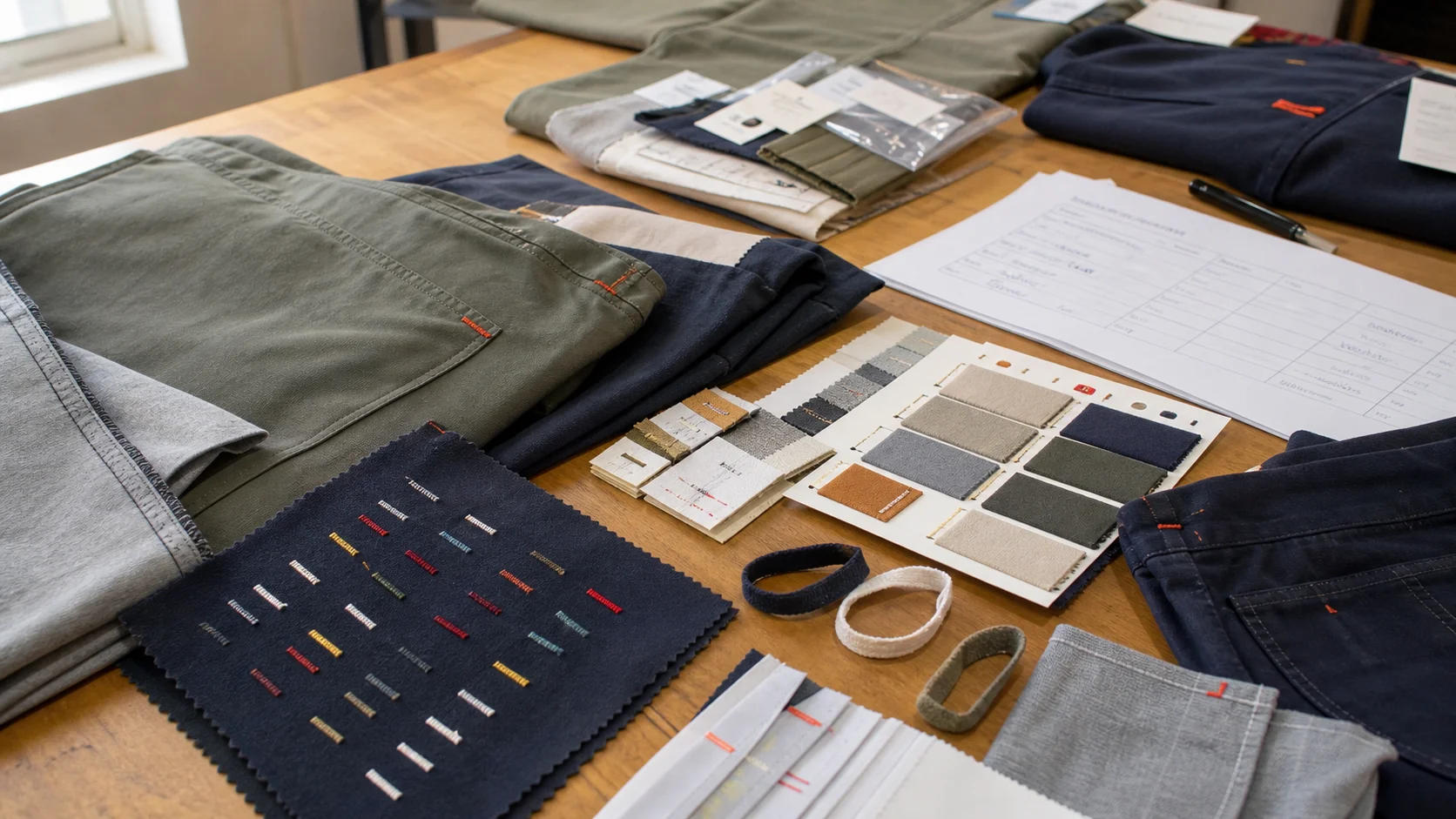
A practical SEO article outline for retail operations teams auditing contrast bartack maps, factory placement standards, and colorfastness risks before...
Contrast Bartack Map Audit for Retail Teams - Decoration & Printing manufacturing guide
Contrast bartacks are small, but they carry a lot of operational risk. A bright stitch at a pocket corner, belt loop, fly opening, side seam, or drawcord exit can make a garment look intentional and premium. The same stitch can also expose poor color control, weak shade matching, skipped reinforcement points, bleeding thread, inconsistent placement, or factory confusion between design intent and sewing-line habit.
For retail operations teams, a contrast bartack map factory colorfastness audit is not a design exercise only. It is a sourcing control tool. It connects the artwork file, technical pack, thread specification, fabric color, wash process, sewing operation, inspection checklist, and final shipment approval. When the map is vague, factories make assumptions. When thread colorfastness is not tested against the shell fabric and wash route, the garment may pass inline sewing checks but fail after laundering, rubbing, or packing humidity exposure.
This guide explains how retail teams can audit contrast bartack placement, thread shade, colorfastness, production consistency, and factory execution before bulk goods leave the sewing floor. It is written for apparel operations, sourcing, QA, product development, and merchandising teams that need fewer surprises in bulk production.
A contrast bartack map is a garment diagram that identifies every bartack location where the thread color intentionally differs from the shell fabric, pocketing, binding, waistband, or trim. It should show the position, length, stitch density, thread color code, machine setting, and whether the bartack is functional, decorative, or both.
Most retail teams are familiar with garment measurement charts and artwork placement files. Bartack maps deserve the same discipline. A single pant can include contrast bartacks at front pocket openings, back pocket corners, belt loops, fly base, crotch seam reinforcement, coin pocket edges, side cargo flap corners, knee panel corners, drawcord channels, and hem vents. A jacket can include them at pocket bags, zipper stops, placket ends, sleeve tabs, hood openings, and stress points.
The map needs to remove interpretation from the sewing floor. “Use contrast bartack at pocket” is not enough. Which pocket? Which corner? How far from the edge? Is the bartack horizontal, vertical, diagonal, or perpendicular to the seam? Should it sit over the seam, next to the seam, or centered on a reinforcement point? If the garment has left and right symmetry, the map must make that clear.
Retail teams should treat the bartack map as part of the master production record. The approved map should match the sealed sample, pre-production sample, size set, inspection report, and final packing standard. If the design changes after sample approval, the map must be revised and reissued with version control.
Contrast bartacks are visible. That is the advantage and the risk. On a dark garment, a light-colored bartack becomes a quality signal. On a washed garment, a saturated thread may either stay crisp or bleed into the surrounding fabric. On a kidswear, workwear, denim, outdoor, or casual bottoms program, inconsistent bartacks can make a shipment look mixed even when the base sewing is acceptable.
The most common factory issue is not that workers cannot sew bartacks. The issue is that the factory receives incomplete direction. Sewing supervisors may follow an old sample, the merchandiser may follow the latest email, the thread store may issue a near shade, and QC may inspect against a printed tech pack that does not show the final update. A contrast bartack map audit forces alignment before bulk risk becomes expensive.
Operations teams should also consider downstream retail consequences. E-commerce imagery magnifies detail. Store lighting makes thread shade variation obvious. Customer returns may cite “defect,” “loose stitching,” “color run,” or “poor finish” even when the bartack was intended as decoration. Retail buyers may reject a shipment if reinforcement stitching is missing from high-stress points or if decorative contrast placement is inconsistent across sizes.
Purchasing judgment: if the contrast bartack is part of the brand look, audit it like a logo. If it is only functional reinforcement, keep the color close to body fabric unless the design team is willing to manage the extra production and inspection risk.
The risk is not equal across all garment areas. Some placements are highly visible but low stress. Others are hidden but critical for durability. Retail teams should classify each bartack before approving the map.
These placements require tight shade control and neat stitch density. A slightly crooked contrast bartack draws attention faster than a tonal one. For retail teams, the AQL plan should reflect that visibility. Cosmetic defects at decorative points may need stricter classification than similar flaws in hidden locations.
Functional bartacks must survive wear, laundering, and strain. Thread strength and stitch density matter as much as appearance. If contrast thread is chosen mainly for color, confirm that it also meets strength requirements. A decorative embroidery thread may not be suitable for stress reinforcement.
Garment wash can change both thread color and stitch appearance. Thread may appear bright before wash and dull after wash. The shell fabric may bleed into light thread. A saturated thread may stain the shell. The audit must test the actual production route, not only a lab dip in isolation.
A practical audit should cover documents, materials, machines, operators, inline control, and final inspection. It should not be limited to checking finished garments at the end of production. By that stage, rework is slow and expensive.
The factory should hold one current version of the bartack map. The map should match the bill of materials, operation breakdown, sewing line sample, and approved pre-production sample. If there are multiple colors in the style, each colorway needs its own map or a clearly controlled color matrix.
Retail teams should ask whether old versions are removed from the cutting room, sample room, sewing line, and QC tables. Version confusion is a frequent cause of mixed bartack placement. The problem often appears when a factory makes salesman samples, photo samples, and bulk samples with slightly different instructions.
The audit should verify thread cones, thread labels, supplier references, ticket size, fiber content, shade number, and lot numbers. A thread that looks close under factory lighting may not match under daylight, store lighting, or camera flash. Retail teams should require a defined light source for shade approval, typically D65 for daylight assessment, with buyer-specific requirements if applicable.
Thread storage also matters. Mixed cones on the same line invite operator substitution. If a style uses two similar shades, the factory should physically separate them and label them clearly. For contrast bartacks, “near match” is not acceptable unless the buyer has approved a tolerance standard.
Bartack machines should be set for the approved length, width, stitch count, tension, thread trim, and reinforcement pattern. The audit should compare machine settings against the approved sample. Operators should not adjust stitch density casually to reduce thread breakage or speed production unless the change is approved.
Stretch fabrics, heavy canvas, denim, fleece, and coated materials may require different needles or tension settings. Poor needle selection can cause skipped stitches, yarn breakage, puckering, or fabric damage. A contrast bartack makes these defects more visible.
Factories should train operators using a physical approved sample and a visual map at the workstation. The best maps show real garment photos or clear technical diagrams. Line leaders should confirm first pieces before mass sewing begins.
Retail operations teams should not assume that all operators understand decoration intent. If the bartack has a branding purpose, that detail must be communicated. If the bartack is structural, missed placement can become a durability claim.
Colorfastness is the central risk in a contrast bartack program. The thread may pass general supplier specifications, yet fail in the final garment because it interacts with a particular shell fabric, dye system, wash process, finishing chemical, or packing environment.
Retail teams should request colorfastness evidence before bulk approval. The exact test protocol depends on product type, market, and buyer standard. Common areas include washing, water, perspiration, rubbing or crocking, dry cleaning if relevant, and color migration during storage. For babywear, kidswear, performance apparel, and uniforms, expectations may be stricter.
Audit Area What to Check Why It Matters Thread colorfastness to washing Test contrast thread with actual shell fabric and wash route Prevents staining, fading, and color transfer after customer laundering Colorfastness to rubbing Check dry and wet crocking on dark shells and saturated threads Reduces visible smearing and transfer during wear or handling Perspiration resistance Review acid and alkaline perspiration results where relevant Important for waistbands, underarms, collars, and active use areas Shade consistency Compare thread lots under controlled light Avoids mixed appearance across production batches Garment wash performance Assess pre-wash and post-wash samples from the same production route Confirms final retail appearance, not only raw material performancePolyester sewing thread is commonly used because it offers good strength, abrasion resistance, and generally reliable colorfastness. Cotton thread may be preferred for garment dye or authentic denim looks, but it can change shade more noticeably after wash. Core-spun thread can offer strength with a softer appearance. Nylon thread may be used in certain products, though heat and dye behavior need review.
The practical choice depends on the garment. A rigid denim program with vintage wash may accept a worn-down bartack look. A clean uniform pant may not. A premium outdoor short with bright color accents needs tight color consistency because the contrast is part of the value proposition.
Color migration is often underestimated. High humidity, pressure in cartons, plastic packaging, residual chemicals, and long storage can cause transfer from thread to adjacent fabric. Red, navy, black, and fluorescent shades deserve extra caution, especially on white, beige, pastel, and heather grounds.
Retail operations teams should ask whether the factory has completed a migration or storage simulation when risk is high. Testing is especially useful for goods shipped by sea, packed tightly, or stored through seasonal delays. A garment that looks clean at final inspection can show staining weeks later if migration control is weak.
A strong technical pack prevents most bartack disputes. It should be explicit enough for the factory to quote accurately, sample correctly, and inspect consistently. It should also help retail teams compare factories during sourcing.
For complex styles, a numbered map is better than written notes. Each bartack point should have an ID, such as BT01 for front pocket left upper corner or BT08 for fly base. The same ID should appear in the inspection checklist. This helps reduce vague defect comments and improves communication with the factory.
The bill of materials should list the shell fabric composition, construction, weight, finish, and color standard. For example, a cotton stretch twill with pigment dye behaves differently from a piece-dyed polyester blend. Denim wash routes can alter thread appearance more aggressively than clean finished twill.
Trim specifications should include thread cone supplier, shade code, ticket size, thread type, and approved substitute rules. If substitution is not allowed, state it. If substitution is allowed only after lab approval, state the approval route. Sourcing teams often approve a sample based on one thread lot, then bulk production uses another. That is a preventable risk.
For support with production-ready apparel documentation, retail teams can review the manufacturing scope at Fabrikn services or use Fabrikn contact when a style needs quotation and technical review before sampling.
The sample approval process should prove that the factory can execute the map repeatedly, not just create one attractive sample. A single salesman sample may be sewn by the sample room under closer supervision than bulk production. Retail teams need approvals that represent real production conditions.
The pre-production sample should not be approved until thread colorfastness risk has been reviewed. If test results are pending, the approval should be conditional. Clear conditions protect both buyer and factory. The factory should understand that bulk cutting or sewing before colorfastness approval is at its own risk unless the buyer has agreed otherwise.
Review the garment under consistent lighting. Compare the bartack thread against the approved color standard, not only against an email photo. Check pre-wash and post-wash samples side by side. Measure bartack distance from seam or edge at several points. Confirm left-right balance. Inspect thread trimming, stitch tension, skipped stitches, loose ends, and puckering.
If the design uses multiple contrast colors, sample approval needs extra discipline. A jacket with orange bartacks at pockets and black bartacks at zippers can easily be misread on the sewing floor. Color-coded maps and workstation samples reduce confusion.
Bulk inspection should start before final inspection. Contrast bartack errors are often repetitive. If the first 300 garments are sewn with a wrong thread shade or missing placement, the repair burden grows quickly. Inline checks allow the factory to correct the line before the defect spreads.
Inline QC should check first pieces from each operator, each colorway, and each size group if grading affects placement. The inspector should compare garments to the approved pre-production sample and bartack map. Random checks should include thread cone verification at the machine.
Common inline defects include wrong bartack color, missed bartack, extra bartack, incorrect angle, excessive stitch density, low stitch density, thread break, skipped stitches, puckering, needle holes, poor trimming, and uneven left-right placement. For contrast stitching, even small quality issues are more visible, so the inspector should not treat them as minor by default.
Final inspection should include both appearance and function. The inspector should open pockets, pull lightly at stress points where appropriate, check hidden reinforcements, and compare all visible contrast points against the map. For washed goods, inspection should occur after the final wash and finishing process, not before.
Retail teams should define defect severity in advance. A missing bartack at a belt loop may be major because it affects durability. A slightly off-angle decorative bartack may be minor if within tolerance, but major if it is prominent and repeated. A color bleeding mark near a contrast bartack should usually be treated seriously because it may indicate a systemic colorfastness issue.
Defect Likely Cause Purchasing Judgment Wrong thread shade Substituted cone, poor labeling, mixed lots Reject or segregate unless shade is approved against tolerance Missing bartack Operator missed step, unclear operation breakdown Major defect at stress points; rework before shipment Bleeding or staining Poor colorfastness, wash chemistry, migration Hold shipment and investigate lot-wide risk Puckering around bartack High tension, wrong needle, unsuitable stitch density Accept only if minor and within approved appearance standard Inconsistent placement Weak map, no guide marks, operator variation Tighten tolerance for visible placements and repair severe casesContrast bartacks usually do not create high MOQ by themselves, but thread sourcing and color approval can affect order planning. Typical apparel factory MOQs vary widely by product type, fabric, and decoration complexity. For basic cut-and-sew styles, factories may quote around 300 to 500 pieces per color in development-friendly programs, while larger production factories may prefer 800 to 1,500 pieces per color or more. Denim, outerwear, uniforms, and highly washed garments may require higher commitments because of fabric dye lots, wash trials, and line setup.
Thread MOQ can become a hidden issue. Standard thread shades are easier to source in small quantities. Custom-dyed thread may require longer lead time and a minimum order from the thread supplier. If the design calls for a very specific brand accent color, confirm thread availability before locking the retail launch calendar.
As a rough planning guide, standard thread on a simple garment may add little time if the factory already has the shade and machine setup. Custom thread shade, wash trials, and formal lab testing can add one to three weeks or more depending on supplier response, test house timing, and approval speed. Rejected colorfastness results can add longer delays because teams may need to change thread type, shade, wash recipe, or placement strategy.
The sewing cost of bartacks is usually modest per garment, but costs rise with quantity of bartacks, color changes, machine setup, thread changes, inspection intensity, and rework. A garment with two decorative contrast bartacks is different from a utility pant with twenty-four reinforcement points across multiple panels.
Retail teams should ask factories to quote with the bartack map attached. This avoids later claims that the factory priced only basic reinforcement. If the contrast bartack is mainly decorative and margin is tight, consider limiting it to high-impact points. If it is functional, do not remove it simply to save seconds of sewing time. Durability failures cost more than controlled reinforcement.
Tradeoff: contrast bartacks can elevate a basic garment, but they reduce tolerance for factory variation. Use them where they add visible value or real strength. Avoid scattering them across low-impact areas unless the brand look justifies the extra control work.
A good audit checklist keeps the team focused. It also helps merchandising, sourcing, QA, and the factory speak the same language. The checklist below can be adapted by product category.
Teams building a broader supplier control process can also review background on the company at Fabrikn about us and align early on manufacturing expectations through Fabrikn services. Early technical discussion is usually cheaper than bulk rework.
Contrast bartacks sit in the Decoration & Printing category because they affect the visual identity of the garment, even though they are sewn rather than printed. They function like a small branding element. The same logic used for embroidery placement, heat transfer position, screen print color, and patch alignment should apply here: approved artwork, clear placement, controlled color, tested durability, and defined inspection tolerance.
The difference is that bartacks are also structural. A print can crack and still leave the garment wearable. A failed bartack at a belt loop, pocket mouth, or crotch seam can create a functional complaint. That dual role makes the audit more important, not less.
Retail teams should avoid managing contrast bartacks only through aesthetic approval. The right question is not “Does the sample look good?” The better question is “Can this factory repeat this stitch, in this thread, on this fabric, after this wash, across this full order, without color or placement failure?”
Approve contrast bartacks only when the tech pack, sample, factory process, and colorfastness evidence are aligned. If the garment uses a standard shell fabric, standard polyester thread, no garment wash, and low-contrast shade, the risk is manageable. If the garment uses a dark reactive-dyed fabric with white bartacks, a red thread on a pale shell, a heavy enzyme wash, or tight retail photography standards, the audit needs more rigor.
The best retail operations teams do not wait for final inspection to discover decoration defects. They control the map before quotation, approve the thread before bulk, test the wash route before shipment, and train inspectors to evaluate bartacks by location and severity. That discipline protects margin, delivery, and brand presentation.
A contrast bartack map factory colorfastness audit is a small process with large value. It turns a visible detail into a controlled production feature. For retail teams managing multiple suppliers, seasonal colorways, and strict delivery windows, that control is worth building into every relevant apparel program.
Get a free quote from Fabrikn — your trusted B2B clothing manufacturer with 10+ years of experience. MOQ as low as 200 pieces.
Get a Free Quote →A contrast bartack map is a technical diagram showing every bartack location where the thread color contrasts with the garment fabric. It should include placement, direction, length, thread shade, stitch settings, and inspection tolerance.
They need it because contrast bartacks are highly visible and can create quality, colorfastness, and durability issues. An audit helps confirm that the factory follows the approved map, uses the correct thread, and controls sewing consistency before shipment.
Common checks include colorfastness to washing, water, rubbing, perspiration, and storage migration. The exact requirement depends on the product, market, fabric, thread shade, and buyer standard.
Substitute thread should not be used unless the buyer approves it. The replacement should match shade, fiber type, ticket size, strength, and colorfastness requirements. A visual near match is not enough for a controlled retail program.
Typical garment MOQs may range from 300 to 500 pieces per color for smaller development-friendly programs and 800 to 1,500 pieces or more for larger factories or complex products. Custom thread colors, special washes, and fabric dye lots can increase the practical MOQ.
Standard thread shades may add little time. Custom shade approval, lab testing, garment wash trials, and failed colorfastness results can add one to three weeks or more, depending on supplier and testing timelines.
They can be both. A contrast bartack may serve as a visible design detail and also reinforce a stress point. Retail teams should classify each bartack as decorative, functional, or both so inspection severity is clear.
Common defects include wrong thread shade, missing bartacks, extra bartacks, inconsistent placement, skipped stitches, loose thread ends, puckering, bleeding, staining, and poor left-right balance.
They should be checked after the final wash if the garment is washed during production. Pre-wash approval alone is not reliable for denim, pigment dye, enzyme wash, garment dye, or heavily softened products.
A shipment should be held when inspection finds systemic wrong thread shade, missing functional bartacks, bleeding, staining, migration, or repeated placement errors outside tolerance. These issues usually indicate process failure rather than isolated workmanship defects.