
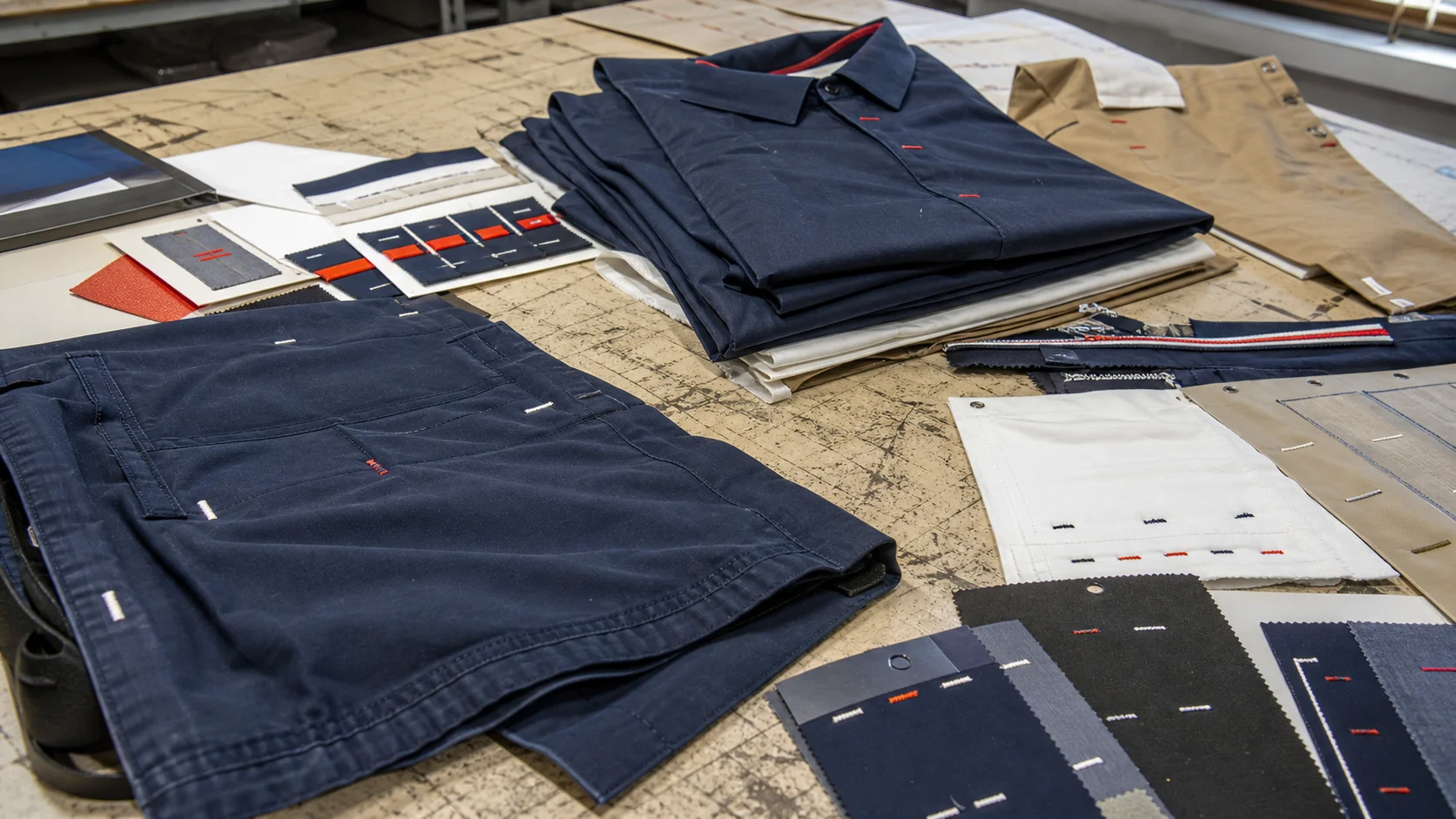
A product-specific sourcing review for marina operators evaluating custom contrast bartack map trim, including decoration placement, thread durability,...
Contrast Bartack Map Trim Sourcing for Marinas - Decoration & Printing manufacturing guide
Custom contrast bartack map trim sourcing is a niche but useful detail for marina operators that need branded apparel, staff uniforms, retail merchandise, event gear, and functional accessories with a stronger sense of place. In plain sourcing terms, this trim combines three ideas: a map-inspired design, a small applied trim or label, and contrast bartack stitching used as a visual and structural accent.
For marinas, the appeal is clear. A dock map, harbor outline, channel marker reference, berth grid, coastline shape, or simple nautical coordinate graphic can turn a standard cap, jacket, tote, polo, apron, deck shirt, or workwear pocket into something more specific to the property. The contrast bartack then gives that trim a deliberate finish. It looks less like a generic logo patch and more like a designed utility detail.
The purchasing challenge is that this is not a commodity decoration. A supplier must understand small-format artwork, stitch density, fabric stability, trim placement, colorfastness, and garment washing behavior. If one detail is weak, the finished product can look messy: puckered pockets, crooked bartacks, fuzzy printed maps, mismatched thread, or trims that curl after laundering.
For marina operators buying uniforms or resale merchandise, the right approach is to treat contrast bartack map trim as a controlled decoration package, not a last-minute add-on. The sourcing brief should define map artwork, trim construction, thread color, garment location, performance requirements, sample approval steps, and inspection points before production begins.
If the project is part of a broader custom apparel program, it is worth reviewing supplier capabilities across development, decoration, and finishing. A starting point is a manufacturing partner’s service scope, such as Fabrikn’s services page, to understand whether the vendor can coordinate garment production and trim application together rather than splitting responsibility across multiple parties.
A bartack is a dense, short stitch formation used to reinforce stress points. It is commonly found on pocket corners, belt loops, fly openings, bag handles, side vents, cuffs, and utility loops. In contrast bartack map trim, the bartack is intentionally visible and uses a thread color that contrasts with either the garment body or the trim itself.
Map trim can take several forms. It may be a woven label showing a simplified marina map, a printed twill patch with dock numbers, a heat-transfer graphic shaped like a harbor outline, a small webbing tab with coordinates, or a layered fabric applique showing a coastline silhouette. The trim does not need to reproduce a detailed navigational chart. In fact, overly detailed artwork often fails at small size.
For sourcing, “map trim” should be defined by construction rather than marketing language. A buyer should specify whether the design is:
Each method has a different risk profile. Printed trims allow finer map details but need testing for abrasion and wash durability. Woven labels feel premium but cannot handle tiny dock labels or thin contour lines. Embroidered map trims add texture but can become bulky on lightweight shirts. TPU and silicone trims can look modern, but they need correct heat settings and may not suit all garment fabrics.
The practical buying judgment is simple: if the map detail must be readable, choose printing or high-definition woven labeling. If the map is mainly a silhouette or place cue, embroidery, applique, or cut fabric trim can work well. If the garment is for dock staff exposed to sun, salt air, fuel, grease, and frequent washing, durability should take priority over micro-detail.
Contrast bartack map trim works best when it supports the garment’s function. A map tab on a pocket corner, a contrast bartack on a shoulder loop, or a small harbor-outline trim near a hem can look intentional. A large decorative patch placed randomly on a uniform shirt can look promotional rather than professional.
Common use cases for marina operators include staff uniforms, member apparel, chandlery or ship store retail items, fishing tournament merchandise, yacht club collaborations, dockmaster jackets, launch crew caps, service technician work shirts, and branded accessories. The trim can help separate departments without overcomplicating the garment. For example, dock crew apparel may use a bright safety bartack, while retail merchandise may use a tonal bartack and a cleaner map label.
Strong placement options include:
The trim should not interfere with wear comfort. Avoid bulky trims directly under backpack straps, life jacket contact points, waistbands, or high-friction seams. For dock crew apparel, avoid raised trims near radio clips, tool belts, and harness areas unless tested. For retail merchandise, a decorative placement can be more flexible, but laundering and skin comfort still matter.
Marina operators should also decide whether the trim is a uniform identifier or a retail storytelling element. Uniform trims need consistency, repeatability, and durability. Retail trims can carry more seasonal variation, limited-edition colors, or event-specific map references. Mixing these goals in one production order can create inventory and approval problems.
A clear sourcing brief prevents vague quotes and production surprises. Suppliers cannot accurately price “custom map trim with contrast bartack” unless the buyer defines garment type, trim method, artwork complexity, trim size, thread color, placement, order quantity, packaging, and performance expectations.
A practical brief should include:
Artwork should be supplied in vector format where possible. Fine lines, tiny berth numbers, shaded water areas, small compass roses, and dense dock grids are the first elements to fail. If the trim is under 50 mm wide, the map should be simplified aggressively. A coastline outline, marina basin shape, coordinates, dock letter, or channel marker icon usually reproduces better than a full map.
Color standards matter. Do not describe thread as “navy” or “dock blue” without a reference. Use Pantone TCX, Pantone Coated for print, thread brand references, or physical swatches where available. Factories may substitute close colors unless the purchase order states that lab dips, strike-offs, or thread cards require buyer approval.
If a marina is sourcing multiple products, the brief should define whether the map trim must match across all items. A woven label may look slightly different on a cap than a printed patch on a jacket. Total consistency is possible only if the same trim type, artwork scale, and color standards are used across the program.
Material choices decide whether the trim stays flat, survives laundering, and looks appropriate on marine-facing apparel. The best trim for a cotton twill cap may not be the best trim for a stretch polo or waterproof jacket.
Common apparel bases for marina programs include cotton twill, polyester-cotton poplin, ripstop, pique knit, jersey, fleece, softshell, nylon taslan, polyester microfiber, and canvas. Each fabric reacts differently to bartack density. Lightweight jersey can pucker under dense stitching. Stretch polos can distort if the trim is too rigid. Coated outerwear can be damaged if the needle or heat application is not suitable.
For workwear shirts, a 150-220 gsm woven fabric is often easier for bartack trim than a very lightweight fabric. For caps and bags, heavier twill or canvas provides stability. For performance polos, a low-profile woven side tab or heat transfer may be safer than a stitched patch.
Polyester thread is usually the safer default for marina apparel because it offers better resistance to moisture, abrasion, and sunlight than standard cotton thread. Nylon thread can be strong, but it may not be ideal for all heat or UV conditions. Cotton thread can suit heritage styling but should be tested if the garment will be heavily washed or exposed outdoors.
Contrast bartacks should be specified by color and thread size. If the bartack is purely decorative, the factory may use a standard thread. If it also reinforces a pocket or strap, thread strength and stitch security matter more. Buyers should ask whether the bartack machine can maintain consistent width and density on the selected fabric.
For printed map trims, polyester twill, cotton twill, canvas, and label tape are common choices. Polyester often gives better color consistency and dimensional stability. Cotton can look more natural but may shrink or fade differently from the garment. Canvas has a rugged look but may be too bulky for polos or caps.
For woven map labels, line detail is limited by yarn count and loom capability. The supplier should provide a woven strike-off before bulk production. For heat-applied trims, adhesive compatibility with the garment fabric is critical. Water-repellent coatings, stretch finishes, and textured knits can reduce adhesion if not tested.
Backing can stabilize the trim but may affect comfort. Options include fusible backing, nonwoven stabilizer, woven backing, adhesive film, or no backing. Edge finishing may include merrowed edges, heat-cut edges, folded edges, laser-cut synthetic edges, or stitched applique edges.
For marina uniforms, flat and secure edges are usually better than thick decorative borders. Thick borders can catch on equipment or curl after washing. For retail merchandise, a raised edge can be acceptable if the product is not intended for heavy duty use.
Trim Method Best For Main Risk Buying Judgment Printed twill patch Readable map detail, small runs, retail tops Fading, cracking, edge fray Good balance if wash testing is approved before bulk. Woven label Clean branding, side tabs, caps, hems Loss of fine map lines Best for simplified maps and repeat programs. Embroidered applique Premium texture, jackets, bags, caps Bulk, puckering, high stitch cost Use for bold silhouettes, not detailed marina grids. Heat transfer Performance fabrics, lightweight garments Adhesion failure, heat marks Useful when stitching would distort the garment. Webbing tab Utility styling, bags, workwear, jackets Limited artwork area Strong option for coordinates or dock codes.Contrast bartack map trim often sits within a larger decoration package. A marina order may include left chest embroidery, sleeve print, back screen print, cap embroidery, woven labels, and hangtags. The trim must not compete with or disrupt those decorations.
Screen printing can work well for larger apparel graphics, but it may be too blunt for small map trim unless the artwork is simplified. Digital printing can hold more detail on trim pieces, yet it needs testing for wash and abrasion. Sublimation is useful on polyester trim, especially for full-color maps, but it is not suitable for cotton bases and can shift color depending on substrate.
Embroidery gives a durable, premium feel, but it is not the best tool for tiny lines. Embroidered maps should be converted into broader shapes. A marina basin silhouette, wave contour, dock letter, or compass point can work better than a full line map. Dense embroidery on lightweight fabric can cause puckering, especially near hems and pocket edges.
Heat transfers and TPU trims are useful on performance apparel where sewing may damage stretch recovery or waterproofing. Adhesion testing is non-negotiable. A transfer that looks clean on the first sample can peel after repeated washing, salt exposure, or flexing if the adhesive is not matched to the base fabric.
Decoration sequencing also matters. If the trim is sewn before garment dyeing or washing, it may shrink, bleed, or distort. If it is applied after final pressing, placement may be more accurate but production handling can slow down. If waterproof outerwear is involved, stitching through a shell fabric can compromise water resistance unless seam sealing or placement choices are considered.
Purchasing judgment: do not approve map trim only from a flat artwork mockup. Approve it on the actual garment fabric, in the actual size, with the actual bartack thread and placement.
Buyers should also confirm brand hierarchy. If the map trim is a subtle place marker, the main logo can remain dominant. If the map trim is the main story for retail merchandise, reduce competing logos and keep the rest of the decoration clean.
MOQ depends on garment type, trim method, artwork complexity, and whether the supplier is producing from stock blanks or full custom manufacturing. Marina operators often want controlled quantities because uniform rosters and retail sell-through can be seasonal. Suppliers often need minimums to cover trim setup, machine time, and dye or print preparation.
Typical MOQ ranges are:
These ranges are directional. Actual minimums can move up or down based on factory workload, material availability, color count, supplier relationship, and whether trims can be batched across multiple styles. A marina operator with several garment styles may be able to use the same map trim across the program to improve order efficiency.
Sampling should follow a controlled sequence:
Lead times vary. For stock garments with locally applied trim, a realistic production window may be 2-5 weeks after approvals, depending on decoration capacity and trim availability. For imported custom garments, 8-14 weeks after pre-production approval is more common. Technical outerwear, custom fabric dyeing, molded trims, and peak-season factory capacity can extend timelines.
Sampling lead time can add 1-4 weeks for simple trim and longer for complex woven, molded, or multi-material trims. Freight choices also affect calendar planning. Air freight can rescue a late uniform order but damages margin. Ocean freight improves cost but requires earlier purchase orders. For marina season launches, the trim development calendar should start months before staff onboarding or retail opening.
For buyers needing help defining a project before a quote, a direct inquiry through Fabrikn’s contact page is more useful when it includes quantities, garment categories, artwork, target delivery dates, and expected use conditions.
Most failures in contrast bartack map trim are visible and preventable. The problem is that they often appear after bulk production has started. A pre-production sample and an inspection checklist reduce that risk.
Key inspection risks include:
Placement tolerance should be written into the specification. A common tolerance for small trims may be around plus or minus 3-5 mm, but tighter tolerances can be difficult on soft knits or curved cap panels. Larger trims may allow slightly more tolerance if visual alignment remains acceptable. The buyer should decide what is truly critical. A side tab must line up cleanly with a seam. A hidden locker loop trim may allow more flexibility.
Wash testing should reflect actual use. Dock staff uniforms may see sweat, sunscreen, saltwater, fuel residue, food stains, and frequent laundering. Retail garments may see gentler home washing. For uniform programs, test at least several wash cycles before final approval. Check for puckering, shrinkage mismatch, color loss, and trim lifting after drying.
AQL inspection can be used for bulk orders, but the defect list must name the trim issues clearly. If the inspection company only checks generic garment defects, it may miss decoration-specific problems. Critical measurements should include trim placement, bartack dimensions, label orientation, and visible thread quality.
For technical garments, needle holes and seam sealing deserve special attention. A bartack may strengthen a trim but create a water entry point on a jacket. The buyer should avoid placing decorative bartacks in rain-exposed areas unless the construction has been engineered for it.
Contrast bartack map trim is not usually the largest cost in a garment program, but it can create hidden costs if poorly planned. The main cost drivers are trim setup, artwork conversion, stitch time, decoration sequencing, placement complexity, reject rate, and order quantity.
Small trims can be expensive per unit when the order quantity is low because setup is spread across fewer pieces. A woven label with a 1,000-piece minimum may be economical across a full marina apparel range but inefficient for a 75-piece one-time order. A printed patch may be better for smaller runs, especially if the supplier can produce digitally with lower setup costs.
Stitching cost depends on handling time as much as machine time. A bartack on an easy flat pocket is efficient. A bartack on a curved cap panel, thick jacket pocket, or fully assembled bag can slow production. If the trim requires precise alignment against a printed map or seam, labor time increases.
There is also a design tradeoff. More contrast makes the detail visible and distinctive. Too much contrast can look busy or expose small alignment variation. Tonal bartacks are more forgiving and often better for premium retail apparel. Bright contrast bartacks work well for utility styling, youth merchandise, event gear, or safety-coded staff garments.
Buyers should consider three practical budget levels:
Budget Level Recommended Approach Tradeoff Cost controlled Stock garment, printed or woven side tab, standard bartack thread Less customization in fabric and garment silhouette. Balanced Custom garment color or selected fabric, approved woven or printed map trim, contrast bartack placement Better brand detail with moderate MOQ and development time. Premium Cut-and-sew apparel, custom trim package, multiple placements, garment-specific testing Higher MOQ, longer lead time, more sample rounds.The safest purchasing decision is usually the balanced route. It gives marina operators a meaningful custom detail without pushing the project into unnecessary complexity. Premium trim construction is justified for high-margin retail products, executive apparel, member gifts, or signature uniforms. It is less justified for short-term seasonal staff shirts unless the design will be reordered.
One cost-saving tactic is to standardize the trim and vary only the garment. A single map label can be used on polos, caps, tote bags, and jackets if the scale and attachment method work. Another tactic is to standardize thread color across all bartacks. This reduces machine changeovers and helps consistency.
Do not cut cost by skipping strike-offs or wash tests. The cheapest sample stage is before bulk production. Rejecting a shipment because the map label curls or the bartack puckers is more expensive than testing the trim properly.
A capable supplier should ask detailed questions before quoting. If a vendor accepts a complex map trim order with no questions about artwork, trim construction, placement, or fabric, that is not a good sign. The best supplier for this category is not always the lowest-cost decorator. It is the supplier that can control garment, trim, and finishing quality together.
Marina operators should review suppliers across five areas:
Ask for examples of similar construction types, not necessarily the same marina concept. A supplier that can show clean bartacks on pocket trims, stable woven labels on knits, and durable printed patches on workwear is more relevant than a supplier with only standard logo embroidery.
References to compliance and responsible production should be handled carefully. Do not assume a supplier has active audits unless documentation is provided. If uniforms are part of a larger corporate procurement process, ask about material documentation, restricted substance standards, country of origin, care labeling, and packaging requirements.
A useful supplier review question is: “What part of this design would you change to reduce production risk?” Strong suppliers will identify issues such as map line thickness, trim size, fabric puckering, heat-transfer adhesion, or placement difficulty. Weak suppliers may simply quote the job as drawn and leave the buyer to discover problems later.
For buyers comparing manufacturing partners, reviewing company background and operating focus can help frame the conversation. Pages such as Fabrikn’s about page can provide context before submitting a sourcing brief or requesting development support.
The following example shows how a marina operator could define a contrast bartack map trim for a staff overshirt or retail work shirt. It is not a universal specification, but it demonstrates the level of detail that helps suppliers quote and sample accurately.
Specification Area Example Requirement Garment Long-sleeve woven overshirt, 180-200 gsm polyester-cotton twill, navy body color. Trim Printed polyester twill map patch, 45 mm x 25 mm, heat-cut edge, matte finish. Artwork Simplified marina basin outline with one dock marker and coordinates; no berth numbers. Placement Right chest pocket outer corner, 8 mm from pocket side edge and 8 mm from bottom edge. Bartack Two contrast bartacks in signal orange polyester thread, 10 mm length, 2 mm width. Tolerance Trim placement within plus or minus 4 mm; bartacks parallel to pocket edge. Testing Home wash test for color bleed, puckering, trim curl, and print loss before production approval. Approval Artwork proof, trim strike-off, placement sample, and pre-production sample required.This type of specification makes tradeoffs visible. The map is simplified to protect readability. Polyester twill supports durability. The orange bartack creates a utility accent but is limited to two positions to control labor. The placement tolerance gives the factory a measurable target.
Before issuing a purchase order, marina operators should confirm that all visual and technical details are locked. Vague approvals can lead to disputes later. The purchase order should reference the approved sample, not just the artwork file.
The purchase order should also define what happens if the trim fails testing or if bulk production deviates from the approved sample. Rework responsibility, replacement timelines, and approval authority should be clear. This is especially important for seasonal marina operations where late uniforms create operational pressure.
Custom contrast bartack map trim is a smart decoration choice when a marina wants apparel that feels site-specific, functional, and more developed than a standard logo print. It is strongest on workwear-inspired shirts, caps, bags, jackets, aprons, and retail garments where the trim can sit naturally near a pocket, seam, hem, or tab.
The main risk is overdesign. A detailed marina chart reduced to a tiny patch will usually disappoint. A simplified map cue, strong material choice, controlled bartack placement, and disciplined sample process will produce a better result. Buyers should prioritize readable artwork, stable fabric, correct thread, and realistic tolerances.
For marina operators, the best sourcing route depends on quantity and purpose. Stock garments with custom trim are practical for smaller staff programs and seasonal retail tests. Cut-and-sew development makes sense when the marina needs a distinctive long-term apparel range or a premium merchandise line. In both cases, the trim should be tested on the actual garment before bulk production.
The right supplier will not just say yes to the artwork. They will question the scale, recommend suitable trim construction, flag fabric risks, provide strike-offs, and define inspection criteria. That is the difference between a decorative idea and a repeatable sourcing program.
Get a free quote from Fabrikn — your trusted B2B clothing manufacturer with 10+ years of experience. MOQ as low as 200 pieces.
Get a Free Quote →Contrast bartack map trim is a custom garment or accessory detail that combines a map-inspired trim with visible bartack stitching in a contrasting thread color. It may be used on pockets, hems, side seams, caps, jackets, bags, or aprons.
Yes, if the trim is durable, comfortable, and placed away from high-friction work areas. Staff uniforms need stronger testing than casual retail apparel because they may face frequent washing, salt air, sun exposure, and physical wear.
Printed trim usually handles fine map detail better than embroidery or woven labels. For very small trims, simplify the map to a coastline, marina basin shape, dock letter, coordinates, or channel marker icon.
Stock garments with custom trim may start around 50-150 pieces per style. Cut-and-sew apparel often starts around 300-800 pieces per style and color. Custom labels or patches may require 500-1,000 pieces per design. Exact MOQs depend on supplier capability, trim method, and material availability.
Simple trim sampling may take 1-4 weeks. More complex woven, embroidered, molded, or multi-material trims can take longer. Bulk production may take 2-5 weeks for stock garments with decoration or 8-14 weeks for imported cut-and-sew programs after final approvals.
Buyers should approve the artwork proof, trim strike-off, placement sample, wash or performance test, and final pre-production sample. The bulk order should match the approved pre-production sample.
They can if placed through waterproof shell fabric without proper construction planning. Decorative bartacks on rainwear should be reviewed carefully because needle holes may reduce water resistance unless seam sealing or protected placement is used.
Common defects include crooked placement, puckering, unreadable map lines, inconsistent bartack width, loose threads, trim curling, print fading, color bleeding, and poor adhesion on heat-applied trims.
Bright contrast works well for utility styling, event merchandise, and visible staff details. Tonal bartacks are more refined and forgiving, especially for premium retail apparel or member-facing garments.
Use simplified vector artwork, choose trim construction that matches the garment fabric, approve physical samples, test laundering, define placement tolerances, and inspect bulk production against the approved sample.