
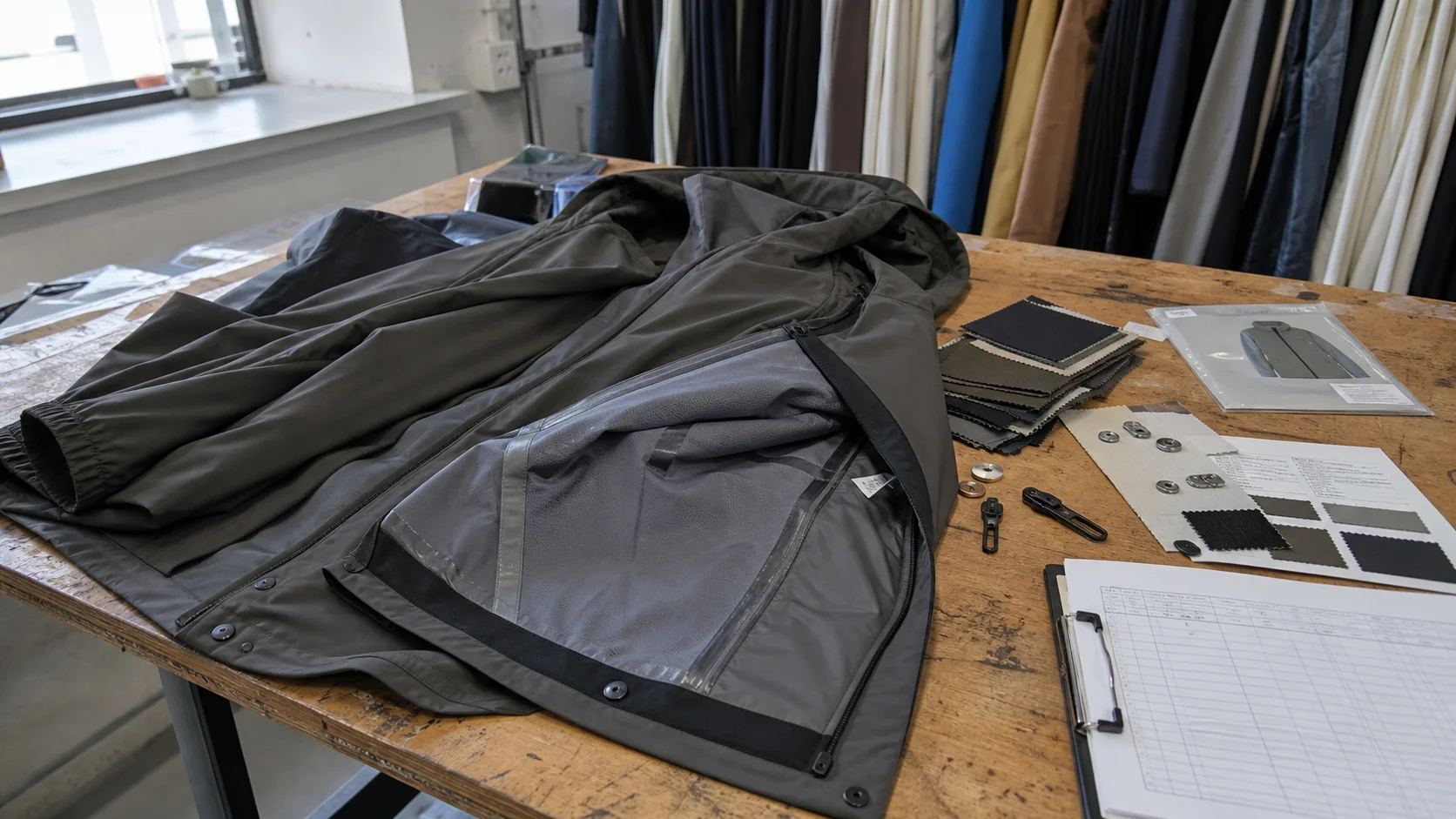
A practical AQL inspection checklist for fitness club buyers sourcing coveralls, covering fit, fabric, stitching, labeling, packaging, and defect limits.
Coverall AQL Inspection Checklist for Fitness Club Buyers - Fabrikn production reference
Fitness club buyers sourcing coveralls for maintenance teams, cleaning staff, spa attendants, recovery-zone technicians, or branded operations crews need more than a nice-looking sample. A coverall used in a gym environment is exposed to sweat, cleaning chemicals, repeated laundering, stretching, locker-room humidity, and constant movement. A weak seam, poor zipper, shrinking fabric, or inaccurate sizing can turn a low-cost order into daily complaints from staff.
This guide explains how to build a practical coverall manufacturer AQL inspection checklist for fitness club buyers. It covers AQL levels, measurement tolerances, workmanship defects, fabric and trim checks, sampling decisions, MOQ expectations, cost tradeoffs, and the supplier approval process.
Coveralls are not usually the most glamorous uniform item in a fitness business, but they are highly visible when worn by facility staff. A maintenance technician walking across the gym floor in a faded, twisted, or badly fitted coverall affects the brand impression. More importantly, poorly made garments can restrict movement, tear at stress points, or become uncomfortable during long shifts.
Fitness club buyers often prioritize price, color, logo placement, and delivery date. Those are important, but inspection standards decide whether the final order matches the approved sample. AQL inspection gives the buyer and manufacturer a shared defect threshold. It does not guarantee perfection. It sets an agreed limit for acceptable and unacceptable defects in a sampled shipment.
For club chains, franchises, boutique gyms, wellness centers, and sports facility operators, AQL inspection is especially useful when:
A practical inspection checklist keeps the discussion specific. Instead of saying “quality is poor,” the buyer can identify measurable problems: zipper failure, wrong GSM, sleeve length out of tolerance, uneven embroidery, skipped stitches, shade variation, loose bar tacks, or incorrect carton labeling.
AQL stands for Acceptable Quality Limit. In apparel sourcing, it is commonly used to decide how many units from a finished production lot should be inspected and how many defects are acceptable before the shipment is rejected or held for sorting.
AQL is based on sampling tables, often aligned with ANSI/ASQ Z1.4 or ISO 2859-1. The buyer selects an inspection level and an AQL value. The inspection company or quality team then checks a sample size from the shipment. Defects are classified as critical, major, or minor.
Defect Type Meaning Coverall Example Typical Buyer Action Critical Unsafe, illegal, or unusable issue Sharp metal trim, broken needle contamination, toxic odor, incorrect safety label where required Reject shipment or require full screening Major Issue affecting appearance, function, durability, or saleability Broken zipper, open seam, wrong size measurement, logo in wrong position Reject if defect count exceeds AQL allowance Minor Small issue unlikely to affect use but still below standard Minor loose thread, slight stitch unevenness, small washable mark Accept if within agreed limitThe key point: AQL is not a promise that every unit is defect-free. It is a risk management tool. Buyers who need near-zero defects should budget for tighter inspection, factory sorting, or 100% checking of critical features such as zippers, snaps, logos, and measurements.
For most fitness club coverall orders, a reasonable starting point is AQL 2.5 for major defects and AQL 4.0 for minor defects. This is common in apparel sourcing when the product is uniform-grade rather than luxury-grade. Critical defects should usually be set at 0 allowed.
Inspection Category Suggested AQL Why It Matters Critical defects 0 Safety, contamination, and compliance issues should not be accepted. Major defects 2.5 Good balance for uniforms where function and brand presentation matter. Minor defects 4.0 Allows small cosmetic imperfections without holding up a practical staff uniform order.Buyers sourcing premium front-of-house coveralls, hospitality-style coveralls, or retail-facing branded garments may choose AQL 1.5 for major defects. That can reduce risk, but it may increase inspection cost and create more rejected shipments if the supplier is not used to tighter standards.
Low-cost promotional or short-term event coveralls may use looser standards, but that is rarely the best choice for fitness clubs. Staff uniforms are worn repeatedly. Poor durability becomes visible quickly.
Purchasing judgment: If the coverall will be worn daily by operational staff, do not treat it like a disposable promotional garment. Spend the inspection budget on zipper strength, seam durability, shrinkage control, and measurement consistency.
AQL inspection at the end of production is useful, but many expensive problems start before cutting begins. Fitness club buyers should lock the technical details before the manufacturer purchases bulk fabric and trims.
Not every coverall is built for the same job. A maintenance worker may need stronger fabric and tool pockets. A spa or recovery-zone staff member may need a softer, cleaner-looking garment. Cleaning staff may need fabric that tolerates frequent washing and mild chemical exposure.
The tech pack should be more specific than a reference photo. It should include garment sketches, size chart, tolerance, fabric details, trim details, logo artwork, placement measurements, stitch requirements, packaging instructions, and labeling requirements.
If your buying team needs development support, you can review manufacturing options through Fabrikn’s services page before approaching bulk production.
Coverall fabric selection has a direct impact on cost, comfort, shrinkage, and durability. Fitness clubs often choose cotton-poly blends, polyester-spandex blends, twill, ripstop, or stretch woven fabrics depending on the staff role.
Fabric Option Typical Use Tradeoff Poly-cotton twill, 180-240 GSM General maintenance and operations uniforms Durable and cost-effective, but may feel warmer than lighter fabrics. Cotton-rich twill, 200-260 GSM Comfort-focused staff uniforms Breathable, but shrinkage and color fading need stronger control. Polyester-spandex woven, 160-220 GSM Active roles needing mobility Better movement, usually higher cost and more sensitive heat handling. Ripstop fabric, 180-230 GSM High-wear operations or facility staff Strong and functional, less polished for hospitality-style branding.Trim failures are common in coveralls. A cheap zipper can make an otherwise acceptable garment unusable. Snaps can loosen, drawcords can fray, and elastic can stretch out after washing.
The final AQL inspection should compare bulk goods against the approved sample, purchase order, tech pack, size chart, artwork file, color standard, and packaging instructions. The checklist below is suitable for fitness club buyers sourcing custom or private-label coveralls from a manufacturer.
Common risk: size ratio errors. A shipment may pass visually but fail operationally if too many small sizes and too few large sizes are packed. Fitness clubs often have diverse staff body types, so size accuracy matters.
Panel shade variation is a frequent issue when fabric lots are mixed or cutting bundles are not controlled. For branded fitness chains, visible shade difference across staff uniforms can look unprofessional.
Small fabric defects may be acceptable in hidden areas, depending on the agreed defect manual. Visible defects on the chest, front leg, collar, or logo area should usually be classified more severely.
For coveralls, stress points deserve special attention. The crotch seam, underarm seam, pocket corners, waistband, and zipper base should be reinforced. Bar tacks are low-cost insurance when the garment is used for active operational work.
Zipper failure is a major defect for coveralls. A garment with a broken front zipper cannot be used, even if the stitching and fabric are acceptable. Buyers placing larger orders should consider 100% zipper function checks at the factory before packing.
Fitness facility teams may carry radios, keys, cleaning cloths, pens, small tools, gloves, or access cards. Weak pocket corners will fail quickly if the coverall is used by maintenance or operations staff.
Logo errors are often treated as major defects because they affect brand presentation. A coverall with a crooked chest logo or wrong club mark is difficult to issue to staff. For multi-location fitness brands, each branch logo or department mark should be checked against packing allocation.
Coveralls are more complex to fit than shirts or pants because one garment must work across torso length, chest, waist, hip, rise, sleeve, and inseam. Poor fit can restrict squatting, reaching, bending, and walking. That is a serious issue in a gym setting where staff move constantly.
Measurement tolerance should be agreed before production. Tight tolerances improve consistency but may raise the rejection risk if the factory pattern, cutting, and sewing controls are weak. Loose tolerances reduce inspection disputes but may create fit complaints from staff.
For gym operations, fit should be practical rather than fashion-tight. A slimmer coverall may look sharp in a sample photo, but staff need room for movement. Stretch fabric can help, though it increases fabric cost and may need different care instructions.
AQL inspection mostly checks finished goods, but fabric and trim performance should be verified earlier through lab testing or supplier documentation where relevant. Buyers should not rely only on hand feel.
Typical shrinkage expectations depend on fabric type. A common target for woven uniform fabric is within 3% after washing, though stricter standards may be possible with pre-shrunk fabric and controlled finishing. Cotton-rich fabric often needs more shrinkage management than polyester-rich fabric.
Fitness club uniforms are often washed frequently, sometimes by staff at home and sometimes by a central laundry service. Care instructions should be realistic. If the garment requires delicate washing or low-temperature handling, it may not suit a high-turnover operations team.
Purchasing judgment: A cheaper fabric that shrinks, fades, or pills after five washes is not cheaper in use. For repeat staff uniforms, cost per wear is more important than unit price alone.
Workmanship defects in coveralls can be cosmetic or functional. The most serious problems are those that reduce durability or make the garment uncomfortable.
Classification should be defined before inspection. A supplier may argue that an issue is minor if the buyer has not documented the standard. A defect manual with photos is useful for repeat orders.
Packing errors can create headaches even when garment quality is acceptable. Fitness club buyers often distribute uniforms to multiple locations, departments, or opening teams. Incorrect packing slows rollout and increases sorting cost.
For buyers distributing to several clubs, pre-packed branch cartons can save labor. The tradeoff is that packing errors become more disruptive. AQL inspection should include carton assortment checks and random carton opening.
Coverall MOQ depends on fabric availability, customization level, factory capacity, trim sourcing, color dyeing, and logo method. Fitness club buyers should expect different MOQ ranges depending on whether they use stock fabric or custom-developed material.
Order Type Typical MOQ Range Cost Impact Best For Stock fabric, simple logo 100-300 pieces per style/color Lower development cost and faster lead time Small gyms, pilot programs, replacement uniforms Custom color in available fabric base 300-800 pieces per color Higher dyeing and lab dip cost Growing chains and branded programs Custom fabric or performance finish 800-1,500+ pieces Higher MOQ, testing, and material commitment Large fitness groups or long-term uniform programs Multiple sizes with complex trims 300-1,000+ pieces More cutting, sewing, and inspection complexity Operational teams needing functional coverallsThese ranges are typical market references, not fixed rules. Some manufacturers accept lower MOQ with a surcharge. Others require higher MOQ if fabric mills, dye houses, or trim suppliers impose minimums.
Chasing the lowest FOB price can backfire if the coverall is expected to last through frequent washing. Buyers should compare landed cost, expected wear life, replacement rate, and staff acceptance. A slightly better zipper and reinforced pockets may add cost, but they often reduce early failures.
For sourcing planning or supplier discussions, buyers can also connect through Fabrikn’s contact page to discuss production requirements, MOQ constraints, and development priorities.
A clean sample process reduces disputes during final AQL inspection. The approved sample becomes the reference for appearance, construction, measurements, trims, and branding.
The first sample confirms design direction. It may use substitute fabric or trims if the bulk materials are not ready. Buyers should use this stage to correct styling, pocket placement, fit direction, and branding size.
The fit sample should be made closer to the intended pattern and size spec. For coveralls, fit should be tested through movement: reaching, squatting, bending, walking, and sitting. Static appearance is not enough.
A size set checks grading across the full size range. This matters for coveralls because torso length and rise can become problematic in larger or smaller sizes. Buyers should not approve only a medium size if the order includes XS to 4XL.
The pre-production sample should use bulk fabric, bulk trims, approved logo method, correct labels, and final workmanship standard. This sample should be signed off before cutting bulk production.
Keep one sealed sample with the buyer, one with the manufacturer, and one available for the inspection team if practical. This avoids arguments about what was approved.
Buyers who want to understand the sourcing partner behind a production program can review Fabrikn’s about page for company background and service positioning.
Final inspection is common, but it is not always enough. The right inspection timing depends on order size, supplier reliability, product complexity, and delivery risk.
Inline inspection is performed during production, often when 20-40% of goods are completed. It helps catch problems early, such as wrong stitch type, incorrect pocket placement, poor tension, or fabric shade mixing.
This is useful for first-time suppliers, complex coveralls, custom trims, or tight delivery schedules. The cost is higher than final-only inspection, but the buyer has more time to correct issues.
Final random inspection is usually done when production is 100% complete and at least 80% packed. It checks finished goods before shipment. This is the standard AQL inspection stage.
The limitation is timing. If the order fails final inspection close to the ship date, rework may delay delivery. Buyers should build buffer time into the production calendar.
Pre-shipment inspection may overlap with final inspection, but the focus includes carton condition, packing list accuracy, shipping marks, and loading readiness. It is useful when goods are being shipped to multiple fitness club locations or a central warehouse.
Inspection Stage Best Use Main Benefit Main Limitation Inline New supplier or complex style Finds problems early Does not confirm final packed quality Final Random Most bulk orders Confirms shipment quality by AQL Late failures can delay shipment Pre-Shipment Multi-location distribution Checks packing and shipping readiness May not catch earlier process issuesBefore placing an order, fitness club buyers should ask direct questions that expose quality control capability, not just price and lead time.
Lead times vary by fabric availability, order size, customization, season, factory capacity, and testing needs. As a practical guide:
Urgent orders may be possible, but compression usually creates tradeoffs. The factory may use available fabric instead of ideal fabric, reduce sample rounds, or limit customization. Buyers should decide which risks are acceptable before confirming the purchase order.
A strong coverall inspection checklist should not be complicated for the sake of paperwork. It should focus on the defects that affect daily use, brand appearance, and distribution accuracy.
Checklist Area Buyer Priority Inspection Risk Fabric GSM, color, shrinkage, pilling, stains Fading, poor hand feel, shade variation Fit Body length, chest, rise, sleeve, inseam Restricted movement, staff complaints Stitching Stress points, seam strength, bar tacks Open seams after wear Trims Zipper, snaps, elastic, labels Unusable garment if closure fails Branding Logo position, color, quality Poor brand presentation Packing Size ratio, carton marks, branch allocation Distribution delays and sorting costThe best sourcing decision is usually not the cheapest coverall. It is the coverall that meets the club’s wear requirements, arrives on time, fits the staff, survives laundering, and presents the brand consistently. AQL inspection supports that decision by giving the buyer a structured way to accept, reject, or request rework before shipment.
Get a free quote from Fabrikn — your trusted B2B clothing manufacturer with 10+ years of experience. MOQ as low as 200 pieces.
Get a Free Quote →A practical standard is AQL 2.5 for major defects, AQL 4.0 for minor defects, and 0 allowed for critical defects. Premium branded coveralls may require AQL 1.5 for major defects, but that should be discussed with the manufacturer before production.
Common failures include broken or rough zippers, open seams, incorrect measurements, poor logo placement, shade variation, loose pocket stitching, wrong size labels, fabric stains, and carton assortment errors.
Typical MOQ ranges from 100-300 pieces for stock fabric with simple branding, 300-800 pieces for custom colors, and 800-1,500+ pieces for custom fabric or special performance finishes. Actual MOQ depends on the manufacturer, fabric source, trim requirements, and customization level.
AQL sampling is suitable for most bulk orders. Full 100% inspection may be justified for critical features such as zipper function, logo accuracy, branch allocation, or high-value premium uniforms. Buyers can combine AQL final inspection with factory-level 100% checks for specific points.
Poly-cotton twill is a common choice for durability and cost control. Cotton-rich twill offers comfort but needs shrinkage and fading control. Polyester-spandex woven fabrics improve mobility but usually cost more. The best option depends on staff role, climate, washing method, and brand look.
Final AQL inspection should happen when production is complete and most goods are packed, commonly with 100% finished and at least 80% packed. For first orders or complex styles, an inline inspection during production is also recommended.
Chest, waist, hip, shoulder, sleeve length, inseam, front rise, back rise, and total body length are important. Total body length and rise are especially critical because they affect bending, reaching, and squatting comfort.
Use a complete tech pack, approve a pre-production sample, confirm fabric and trim specifications, define measurement tolerances, request size set samples, set clear AQL standards, and allow enough time for inline checks, final inspection, and possible rework.