
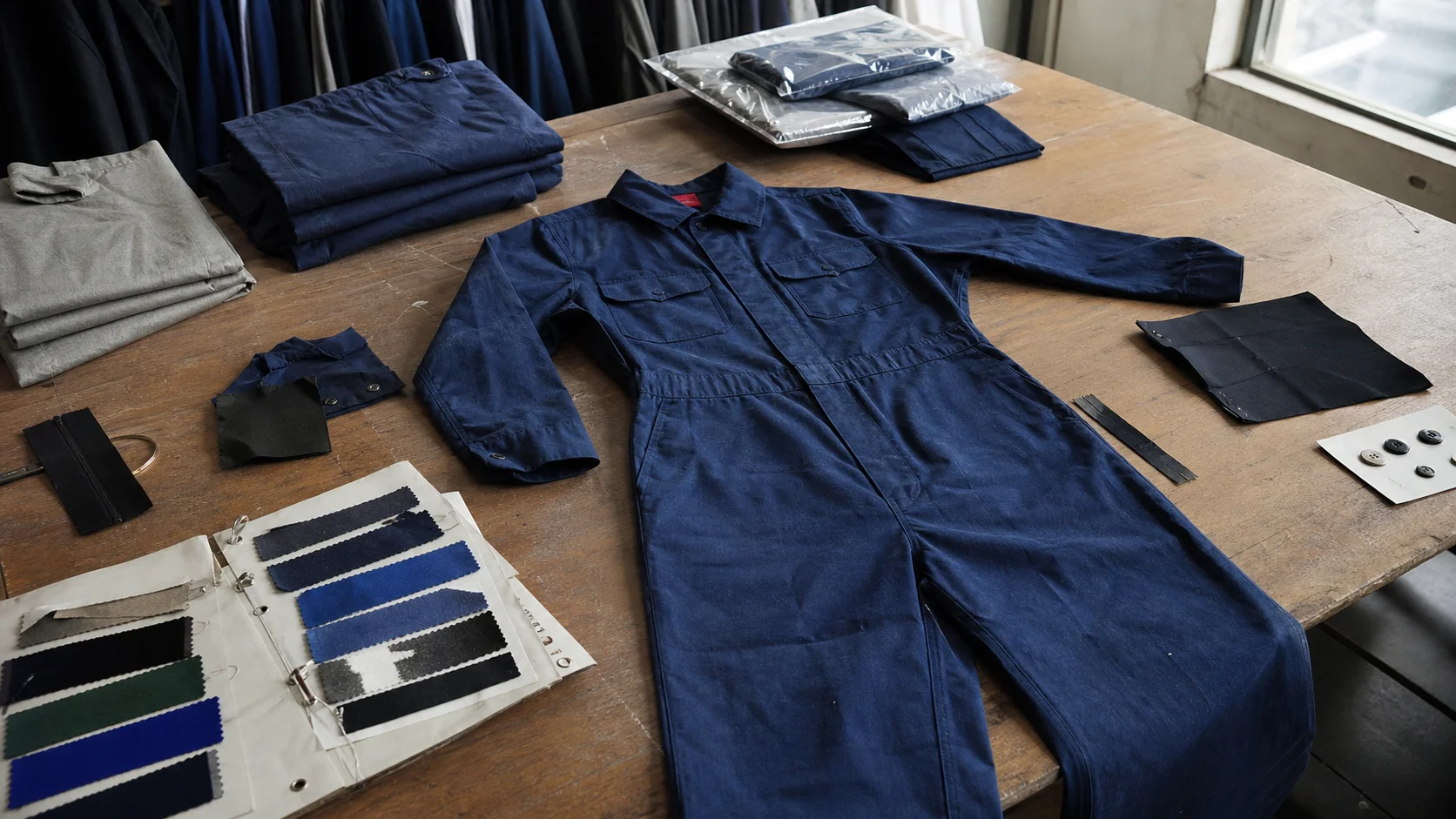
A practical SEO outline for event staffing buyers auditing coverall factory colorfastness, with inspection checkpoints for dyed fabric, trims, wash...
Coverall Colorfastness Audit for Event Staffing Buyers - Quality & Inspection manufacturing guide
Event staffing teams buy coveralls for visibility, brand control, hygiene, and fast identification on crowded sites. Colorfastness is often treated as a laboratory detail, but for buyers managing temporary crews, agency staff, venue workers, festival support teams, logistics runners, and backstage operations, it becomes a purchasing risk. A coverall that bleeds dye onto seats, fades after the first laundry cycle, or transfers color onto a client’s white barricade wrap can create complaints that cost more than the garment.
A practical coverall factory colorfastness audit checks whether the supplier can control shade, dye stability, washing performance, rubbing resistance, and trim compatibility before bulk production leaves the factory. It is not only a lab report. It is a sourcing control that connects fabric selection, dyeing method, garment construction, washing instructions, packaging, sampling, inspection, and final approval.
This guide is written for event staffing buyers who need durable, consistent coveralls for repeated use, fast deployment, and brand-sensitive environments. It explains what to check at factory level, which tests matter, how to structure approvals, and where inspection risks usually appear.
Coveralls used by event staffing teams face different wear conditions from industrial uniforms. They may be worn by temporary workers who do not know the care rules. They may be issued and returned quickly. They may be laundered in batches with mixed garments. They may be packed damp after outdoor events. They may be exposed to rain, sweat, dust, lighting rigs, alcohol spills, food grease, sanitizer, and repeated abrasion from radios, belts, lanyards, and access badges.
For this use case, colorfastness is not limited to whether the fabric looks acceptable after a wash. Buyers need to know whether color will transfer during wear, whether dark shades will mark lighter trims, whether bright brand colors will fade unevenly, and whether different production lots will match when uniforms are reordered later.
The main commercial risks are straightforward:
For buyers ordering at scale, the lowest unit price can become expensive if color performance is weak. Event staffing apparel is visible, handled in bulk, and often reused. A factory colorfastness audit helps verify whether a supplier can maintain performance across fabric lots and repeat orders, not just make one attractive sample.
Purchasing judgment: if the coverall is for one short indoor activation, a basic colorfastness requirement may be enough. If the garment will be reused across venues, washed repeatedly, worn outdoors, or produced in a strong corporate color, colorfastness should be treated as a core quality item, not a secondary test.
A coverall factory colorfastness audit should connect paperwork, materials, process control, and finished goods inspection. A supplier may have a passing lab report for one fabric, but the risk remains if the bulk fabric comes from a different mill, a different dye lot, or a substituted blend.
The audit should confirm four things:
A buyer can manage this internally, through a nominated inspection partner, or through a sourcing partner that handles technical garment development and production follow-up. For buyers comparing options, fabrikn’s apparel manufacturing services page is a useful place to understand how production, sampling, and quality support can be structured across a program.
The audit should not be a one-page box-ticking exercise. It should answer practical questions: Which fabric mill supplied the cloth? Was the shade lab-dipped before cutting? Were dark and light components tested together? Were care labels aligned with actual wash performance? Are retained samples available for dispute resolution? Was testing done on fabric only, or on finished garments with all trims attached?
Colorfastness starts with fabric selection. Coveralls for event staffing often use woven cotton twill, polyester-cotton twill, polyester-cotton canvas, mechanical stretch blends, ripstop, or lighter poplin-type fabrics. Each behaves differently in dyeing, washing, and abrasion.
Cotton feels familiar, breathes well, and is often preferred for comfort. It can be a good option for long shifts, indoor crew work, and warmer climates. The tradeoff is that cotton-rich fabrics can fade faster than polyester-rich fabrics, especially in strong shades. Black, navy, red, royal blue, bottle green, and orange need careful dye selection and wash testing.
Reactive dyes are common for cotton and can perform well when properly fixed and washed off. Poor fixation, shortcut washing, or weak after-treatment can lead to dye bleeding and poor rubbing fastness. Dark cotton coveralls can also show chalking or abrasion marks at seams, knees, elbows, and pocket edges.
Poly-cotton is common because it balances durability, cost, comfort, and color retention. Polyester helps shade stability and drying speed. Cotton improves comfort and reduces the overly synthetic feel. A typical blend may be 65/35 polyester-cotton, 80/20 polyester-cotton, or 60/40 cotton-polyester depending on the specification.
The risk is that blended fabrics need proper dyeing for both fibers. If the dyeing route is not controlled, one fiber component may fade differently from the other. This can cause a dull, uneven, or washed-out appearance after laundering. Buyers should ask whether the fabric is piece dyed, yarn dyed, or solution dyed, and whether the supplier can provide batch-level test records.
Polyester fabrics can give strong color retention, but not all polyester coveralls are equal. Bright event colors and high-visibility-inspired shades need attention because fluorescent or vivid dyes may have weaker lightfastness than standard dark shades. Outdoor festivals, road-adjacent operations, and venue parking teams may expose garments to sun for long hours.
If the coverall needs to meet formal high-visibility standards, the audit becomes more technical and should include luminance, chromaticity, reflective tape performance, and certified material compliance. If it is only “high-vis style” for staff recognition, buyers still need colorfastness and contrast performance, but the legal and safety requirements may differ. That distinction should be settled before quoting.
Event coveralls often sit between lightweight promotional uniforms and heavy workwear. Typical weights may range from around 160 gsm for lighter indoor or seasonal use to 240-300 gsm for more durable workwear-style coveralls. Heavier fabrics can resist abrasion better, but they cost more, dry slower, and may be uncomfortable during summer events.
Finishes also matter. Resin finish, softener, water-repellent finish, soil-release finish, anti-static finish, and enzyme washing can change color performance. A fabric that passes colorfastness before finishing may behave differently after finishing. The audit should require testing on the final finished fabric, not only greige or pre-finish cloth.
Fabric Type Common Benefit Main Colorfastness Risk Buyer Judgment 100% cotton twill Comfortable and breathable Fading and wet rubbing on dark shades Good for comfort-led programs if wash performance is verified 65/35 polyester-cotton Balanced durability and cost Uneven shade change if blend dyeing is weak Often the practical default for reusable event coveralls Polyester-rich twill Better shade retention and quicker drying Heat discomfort and shade variation between batches Useful for high-volume issue-and-return programs Stretch blend Improved mobility Elastic fiber damage, shade change after repeated wash Worth considering for premium crews, but needs wash testing Fluorescent polyester Strong visibility Lightfastness and certification risk Use certified materials if safety compliance is claimedBuyers do not need to become laboratory technicians, but they should know which tests protect them. The purchase order should name required tests, acceptable rating levels, and whether tests apply to fabric, trims, prints, embroidery, or finished garments.
This test checks shade change and staining after laundering. It is essential for reusable coveralls. Common test methods include ISO 105-C06, AATCC 61, or buyer-specified equivalents. For event staffing coveralls, the test should reflect realistic care conditions. If the care label says warm machine wash, the test should not be based only on gentle cold washing.
Buyers should look at two results: how much the garment changes color, and whether it stains adjacent fabrics. Staining matters because coveralls are often washed in mixed loads. A dark coverall that stains lighter garments creates operational problems for agencies managing uniform pools.
Rubbing fastness measures whether color transfers when the fabric is rubbed dry or wet. This is one of the most important tests for dark coveralls. Staff lean against counters, barriers, staging, equipment cases, and seating. Wet rubbing matters when workers sweat, get rained on, or handle damp garments after events.
Dry rubbing is usually easier to pass than wet rubbing. A buyer should be cautious if a supplier only shows dry rubbing results. Dark cotton and cotton-rich fabrics are common risk areas. Acceptable ratings vary by buyer and end use, but many commercial programs target grade 4 or above for dry rubbing and grade 3-4 or above for wet rubbing, depending on shade depth and fabric type.
Perspiration testing checks whether acidic or alkaline sweat conditions affect color. Event crews work long shifts under lights, in hot tents, on load-in days, and in crowded indoor venues. Sweat can cause dye migration, especially at collars, underarms, waistband areas, cuffs, and back panels.
This test is particularly useful for black, navy, red, and bright shades. It also matters when coveralls are worn over white T-shirts or branded base layers. If the buyer supplies a light underlayer, test staining risk against light adjacent fabric.
Water fastness helps assess rain exposure, damp storage, and accidental wet contact. It is not a replacement for washing or perspiration testing. It is a basic risk screen for garments used outdoors or transported in bulk after wet events.
Coveralls packed before fully dry can transfer dye at pressure points. The audit should check whether the factory understands drying before packing, especially for garment-washed styles or finished goods stored in humid conditions.
Lightfastness is important for outdoor event teams, venue parking, security support, ticketing queues, and festival operations. Sun exposure can shift shades, especially vivid colors and fluorescent tones. Standard tests may include ISO 105-B02 or AATCC 16, with the rating requirement set according to expected exposure.
For one-time indoor events, lightfastness may be less critical. For a program that reuses coveralls across an outdoor season, poor lightfastness can cause visible fading between early and late batches. That makes replacement garments look different from the original pool.
Most branded coveralls should not be bleached unless the fabric and color are designed for it. Cleaning contractors and rental laundries may still use aggressive detergents or disinfecting cycles. If coveralls are likely to enter industrial laundry, buyers should specify laundry resistance separately.
Care labels should be realistic. A label saying “do not bleach” does not prevent a third-party laundry from using harsh chemicals. For event staffing programs, it may be better to choose fabric and shade combinations that tolerate practical laundering rather than relying only on delicate care instructions.
Coveralls may include screen printing, heat transfer logos, embroidery, woven patches, reflective branding, or silicone badges. Branding can fail differently from fabric. A printed logo may crack, fade, bleed, or discolor after washing. Embroidery thread may stain the surrounding fabric, especially on light panels.
If branding is added after garment production, the buyer should test the final decorated garment. A blank coverall lab report does not prove that the finished branded garment will perform well.
Test Area Why It Matters Common Risk Practical Requirement Washing Reusable uniform pools need repeat cleaning Fading or staining other garments Test final fabric to agreed wash method Dry rubbing Staff contact furniture, barriers, and equipment Dye transfer from dark shades Check dark colors before bulk cutting Wet rubbing Sweat and rain increase transfer risk Staining underlayers and surfaces Do not accept dry rubbing alone Perspiration Long shifts create sweat exposure Collar, cuff, and underarm staining Test against light adjacent fabric Light Outdoor events expose garments to sun Seasonal fading and batch mismatch Prioritize for vivid and fluorescent colorsA strong sampling process reduces colorfastness disputes. It also gives the buyer physical evidence for shade, hand feel, construction, and trim performance. Coverall buyers should avoid approving production based only on a digital image, especially for dark or vivid colors.
The tech pack or product sheet should define fabric composition, weight, weave, color reference, shrinkage tolerance, colorfastness requirements, trims, thread color, closure type, pocket layout, branding method, and care label. Pantone references can help communicate color, but fabric shade should be approved by physical lab dips or strike-offs because dye behaves differently on different fiber blends.
For coveralls, the specification should also state whether the garment is unisex, men’s, women’s, or size-adjustable. Fit affects abrasion points. A tight coverall may experience more rubbing at thighs, seat, elbows, and shoulders, which can make weak dye performance more visible.
Lab dips are small dyed fabric swatches submitted for shade approval. Strike-offs may be more relevant for printed fabrics or special finishes. Buyers should review under a standard light source where possible. Office lighting can hide red, green, or navy shifts.
Do not approve a lab dip only for color if the program requires performance. The factory should confirm that the lab dip represents the intended bulk dyeing process. If the mill changes dye class, finish, or fiber source after approval, the previous colorfastness evidence may no longer apply.
The first garment sample checks construction, fit, pocket placement, zipper length, sleeve and leg opening, action back, gusset, elastic, and branding position. Colorfastness may not be fully proven at this stage if sample fabric is not bulk-equivalent, but the buyer should still look for obvious shade variation and trim contamination.
Buyers should request written confirmation if proto samples are made from substitute fabric. This prevents a common misunderstanding: a clean proto made in stock fabric does not prove that the bulk dyed fabric will behave the same.
The pre-production sample should be made from bulk-equivalent fabric and trims. This is the key stage for colorfastness testing. If branding is included, test the decorated garment. If reflective tape is used, test staining and adhesion after wash. If contrast panels are included, test color migration between dark and light components.
Sample approval should include photographs, physical retained samples, test reports, and signed comments. A good approval record states what is approved and what still needs correction. Vague comments such as “sample okay” are weak protection if the bulk order arrives with shade or bleeding issues.
A size set checks all sizes before cutting. It also confirms that shade and trims remain consistent across garment sizes. Pre-production meeting notes should record approved fabric lot, approved trim cards, approved care label, packing method, inspection plan, and any known color risk.
For buyers running multiple event regions or staggered deliveries, retained samples should be distributed carefully. The buying office, supplier, inspection team, and warehouse may each need a reference sample from the same approval set.
Bulk production is where many colorfastness problems enter. A supplier may submit a good pre-production sample, then cut fabric from multiple dye lots, substitute thread, change zipper tape, or rush finishing to meet delivery. The audit should check controls before, during, and after sewing.
Coveralls use large fabric consumption because they include torso, sleeves, legs, pockets, facings, and sometimes reinforced panels. Large orders may require multiple fabric rolls or dye lots. The factory should record roll numbers, dye lot references, shade grouping, and cutting allocation.
Shade bands can appear when panels from different lots are sewn together. A sleeve from one roll and body from another may look acceptable indoors but visibly different under daylight or stage lighting. The cutting plan should avoid mixing shade lots within a single garment.
Before cutting, the factory should inspect fabric width, weight, shade, defects, shrinkage, and colorfastness evidence. Trims should also be checked. Zipper tape, Velcro-style closures, binding, webbing, drawcords, elastic, thread, and labels can all create staining or mismatch problems.
Thread is a quiet risk. If thread is not colorfast, seams can bleed or fade differently from the shell fabric. If thread shade is poorly matched, every seam highlights the issue. For event staffing buyers using brand colors, the thread should be included on the approved trim card.
Cut parts should remain bundled by shade lot and size. Mixed bundles increase the chance of panel mismatch. Factories producing multiple colors in parallel should separate cutting tables, bundles, and storage areas to avoid contamination from lint, dye dust, or loose thread.
Dark coveralls can pick up light lint; light coveralls can pick up dark fiber contamination. This is not always colorfastness, but buyers often experience it as a color quality complaint. Good housekeeping reduces false defects and real staining risks.
In-line QC should check visible shade match, seam appearance, trim staining, print alignment, and handling marks. Workers may use chalk, stickers, water-soluble pens, or heat marks during sewing. Some marking tools leave stains on dark or bright fabric, especially after pressing.
Pressing temperature matters. Excessive heat can change shade, create shine, damage reflective tape, or affect heat transfer logos. A factory audit should ask how pressing settings are controlled for the specific fabric and trim combination.
Some coveralls are garment washed for softness or a worn-in look. This adds colorfastness risk. Garment washing can cause shade variation, seam abrasion, puckering, and trim discoloration. If garment washing is part of the style, the approved sample must represent the final wash recipe.
For standard event staffing coveralls, garment washing is often unnecessary unless comfort or style requires it. The buyer should weigh the benefit against added lead time, cost, and variation. A clean, stable, piece-dyed fabric may be a better choice for repeat uniform programs.
Final inspection should not rely only on random measurements and carton counts. Color-related checks should be built into the inspection plan, especially for dark, bright, contrast, or multi-lot orders.
Common inspection risks include:
Inspectors can run simple field checks, such as comparing garments to approved samples under consistent light, checking shade continuity across panels, rubbing dark areas with a clean white cloth, and reviewing carton segregation by color and lot. These checks do not replace laboratory testing, but they are useful warning signs before shipment.
For higher-risk orders, buyers should require third-party lab testing on bulk fabric or finished garments before final release. The cost is usually small compared with the cost of rejected uniforms arriving shortly before an event. If a supplier resists reasonable bulk testing, that is a purchasing signal. It may mean timing is tight, process control is weak, or the supplier is not confident in the material.
Purchasing judgment: a passed sample test is not enough for a large order if bulk production uses multiple dye lots. Ask for bulk lot testing or at least lot-level shade records when the order is time-critical or brand-sensitive.
Colorfastness requirements affect MOQ, price, and lead time. Buyers should set expectations early rather than adding testing demands after the supplier has quoted a basic garment.
MOQ depends on fabric availability, color, trims, branding, and factory setup. For coveralls, buyers may see approximate ranges like these:
These are typical commercial ranges, not guarantees. A factory with stock fabric may accept lower quantities. A mill dyeing a custom shade may not. Buyers should ask whether the MOQ is driven by fabric, dyeing, trims, cutting, or sewing line setup. That answer helps negotiate intelligently.
Lead time for coveralls depends on more than sewing capacity. The main dependencies are fabric sourcing, lab dips, testing, trim procurement, sample corrections, production queue, garment decoration, final inspection, and shipping.
A practical timeline may include:
Rush orders compress approval time and increase color risk. Skipping lab dips, using untested stock fabric, or approving digital images may be acceptable for emergency one-time use, but it is not a sound approach for a reusable staffing program.
Better colorfastness can cost more. Higher-grade dyes, better fixation, longer washing-off processes, certified materials, bulk lot testing, and stricter QC all add cost. The buyer’s job is not always to buy the highest specification. It is to buy the right specification for the event risk.
For a short indoor conference, a standard poly-cotton coverall in a stock dark shade may be commercially sensible. For a nationwide event staffing program with repeated laundering and public-facing crews, stronger testing and better fabric control are justified. For a sponsor-branded activation using a vivid custom color, shade control may be as important as garment construction.
Buying Scenario Recommended Control Level Tradeoff One-time indoor event Basic fabric check and visual inspection Lower cost, higher risk if garments are reused Reusable agency uniform pool Wash, rubbing, perspiration, and shade controls Moderate cost, better lifecycle value Outdoor festival staffing Add lightfastness and wet rubbing emphasis Longer approval timeline, fewer fading complaints Custom sponsor color Lab dip approvals and bulk shade lot records Better brand control, possible higher MOQ High-vis safety use Certified materials and compliance testing Higher cost, reduced legal and safety riskA useful factory audit checklist should be specific enough to guide action, but not so complex that it slows every order. The following checklist can be adapted for coverall sourcing, supplier onboarding, or pre-production approval.
Buyers who need support building a supplier brief or production control plan can contact fabrikn through the contact page. The most efficient inquiries usually include target quantity, delivery date, garment reference, fabric preference, branding method, color standard, and intended use conditions.
A purchase order should not only list color and quantity. It should make color performance enforceable. Clear requirements reduce disputes and make supplier quotations easier to compare.
A practical purchase order clause may include:
For event staffing buyers, the care label should be treated as part of the quality agreement. If coveralls need commercial washing, say so before development. If they will be cold washed only, the buyer must decide whether that is realistic for the staffing operation. Garments often fail in the gap between lab conditions and actual use.
Colorfastness ratings should be chosen with the supplier and testing partner based on fabric, shade, and end use. Demanding unrealistic ratings for deep shades can raise cost or delay production without improving practical performance. Accepting vague requirements can leave the buyer exposed. The middle ground is to set clear, commercially achievable standards and verify them before bulk shipment.
Several mistakes repeat across uniform and event apparel programs. Most are avoidable with earlier specification work.
Factories often use available fabric for early samples. That is normal, but it must be documented. If the buyer approves fit and appearance without confirming bulk fabric performance, the order may move forward with a false sense of security.
Fabric testing is useful, but coveralls are assembled products. Thread, tape, labels, zippers, prints, embroidery, and heat transfers can all change the result. Finished garment testing is especially important for contrast styles and branded uniforms.
Dry rubbing can pass while wet rubbing remains weak. Event staff sweat, work in rain, and handle damp garments. Wet rubbing is one of the first tests buyers should request for dark coveralls.
A delicate care label may protect the supplier, but it may not match how staffing teams actually wash garments. If coveralls will be washed in bulk, the garment should be developed and tested for that reality.
Reorders can look different from the first batch. Buyers should retain shade standards and ask for lab dip or bulk swatch approval for every repeat order. If uniforms are issued together, slight shade differences become obvious.
Not every coverall order needs a full factory audit. A small one-time order using stock garments may only need sample approval, basic inspection, and sensible care instructions. A full colorfastness audit becomes more valuable when the order is larger, more visible, more technical, or more likely to be reused.
Escalate the control level when:
A factory’s ability to manage colorfastness is also a sign of broader production discipline. Suppliers that track fabric lots, retain samples, follow test requirements, and control trims tend to be easier to manage across other quality areas as well. Buyers can learn more about fabrikn’s sourcing approach and company background on the about us page.
For event staffing teams, coverall colorfastness should be specified before quoting, verified during sampling, controlled during production, and checked before shipment. Waiting until the garments arrive is too late, especially when the event date is fixed.
The practical priority list is simple. Start with the right fabric for the use case. Approve physical shade standards. Test washing, rubbing, perspiration, and light exposure where relevant. Include trims and branding in the review. Keep bulk dye lots controlled. Inspect finished garments for shade mismatch and staining before cartons are released.
Price still matters. A buyer does not need luxury-grade testing for every short-term activation. Yet for reusable, public-facing, or sponsor-sensitive programs, weak colorfastness can damage brand presentation and increase replacement cost. The best value usually comes from a balanced specification: commercially realistic fabric, clear test standards, disciplined sampling, and inspection that focuses on the real failure points.
A coverall factory colorfastness audit is not paperwork for its own sake. It is a way to make sure the garment performs where event teams actually use it: under pressure, in public, across long shifts, and often with very little time to fix problems.
Get a free quote from Fabrikn — your trusted B2B clothing manufacturer with 10+ years of experience. MOQ as low as 200 pieces.
Get a Free Quote →A coverall colorfastness audit checks whether the fabric, trims, dyes, finishes, branding, and finished garments can resist fading, bleeding, staining, and color transfer during expected use and laundering. It usually includes document review, sample approval, lab testing, production controls, and final inspection.
For reusable event staffing coveralls, colorfastness to washing and colorfastness to rubbing are usually the most important. Wet rubbing is especially important for dark shades because staff may sweat, work in rain, or handle damp garments after events.
Both can be useful. Fabric testing helps confirm the base material, while finished garment testing checks the full product, including thread, zippers, labels, reflective tape, prints, embroidery, and heat transfers. For branded or contrast coveralls, finished garment testing is strongly recommended.
Typical MOQs may range from about 300-800 pieces per color when using an available base fabric with custom dyeing. Stock colors may be possible at lower quantities, while custom fabric construction, certified materials, or special finishes may require 800-1,500 pieces or more. Actual MOQ depends on mill, factory, trim, and production conditions.
Lab dips may add 5-10 business days, and testing may add another 5-10 business days after samples are ready. Corrections, retesting, custom trims, and bulk fabric production can extend the timeline. Buyers should build approval time into the schedule instead of treating testing as a last-minute step.
An old report may be useful background, but it should not automatically approve a new order. If the fabric mill, dye lot, shade, finish, construction, or trim package changes, new testing may be needed. Buyers should ask whether the report matches the exact material planned for bulk production.
Dark shades contain more dye, and cotton-rich fabrics can hold unfixed dye if processing is weak. Moisture increases the chance of dye transfer. Better dye fixation, proper washing-off, suitable fabric selection, and realistic testing reduce the risk.
No. A bright event coverall may help staff recognition, but a certified high-visibility coverall must meet specific safety standards for color, luminance, reflective performance, and design. Buyers should not claim safety compliance unless certified materials and testing support it.
Buyers should check shade consistency within garments, shade consistency between cartons, trim staining, care label accuracy, logo condition, rubbing transfer signs, and packing-related staining. Final inspection should compare garments against approved physical samples.
Use proven stock fabrics, avoid difficult custom shades, limit contrast trims, choose simple branding methods, approve physical samples quickly, and run targeted tests on the highest-risk colors. Rushing a custom dark or fluorescent coverall without testing increases the chance of fading, bleeding, or shade mismatch.