
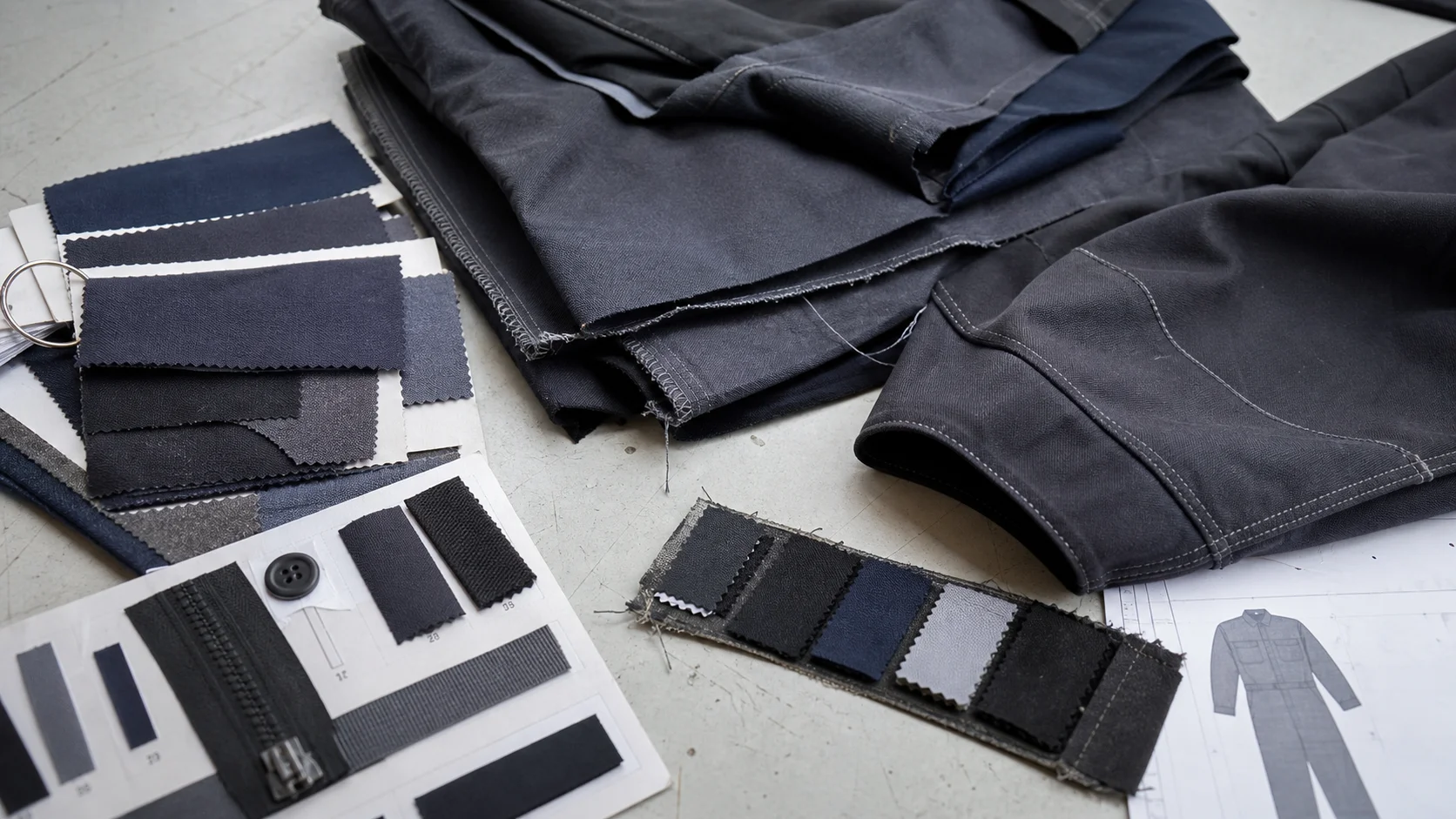
A practical fabric testing outline for fitness club buyers ordering coveralls, covering performance, durability, comfort, and quality checks that affect...
Fitness clubs do not buy coveralls the same way industrial laundries or construction teams do. The garment still needs durability, but the priorities shift toward comfort, breathability, easy movement, color retention, and repeated wash performance under high-contact use. For buyers responsible for sourcing coveralls for a gym, studio, training center, or multi-site fitness chain, fabric testing is not a technical extra. It is the part that protects your margin, reduces complaints, and keeps reorders consistent.
This guide focuses on coverall order fabric testing for fitness club buyers with practical sourcing considerations: what to test, what is usually acceptable, where costs rise, and how MOQ, fabric choice, and sample approval affect lead time. If you are evaluating suppliers, it helps to start with the service overview on Fabrikn services, then move into sampling and testing before you commit to bulk production. For direct sourcing support, use the contact page.
Coverall Fabric Testing Guide for Fitness Club Buyers - MOQ, Cost & Sourcing manufacturing guide
Fitness club coveralls tend to face a mix of stresses that are easy to underestimate at purchase stage. Staff may wear them during movement-heavy tasks, equipment handling, cleaning duties, instructor support, or front-of-house work. That means the fabric has to perform across stretch, recovery, abrasion, sweat exposure, frequent laundering, and visual presentation.
Testing matters because a fabric that looks fine in a sales sample can fail once it is cut and sewn into a full garment, then washed repeatedly. The risk is not always catastrophic failure. Often it is slower deterioration: pilling, shrinkage, seam distortion, color fade, or a loss of shape around knees, elbows, cuffs, and seat areas. For a fitness club buyer, those problems translate into replacement costs and inconsistent staff appearance.
For coveralls used in fitness club settings, the fabric should be evaluated not only for strength but also for comfort, wash stability, and appearance retention after repeated wear cycles. A durable fabric that feels stiff or traps heat can still be the wrong choice.
Buyers often assume thicker fabric equals better performance. That is not always true. In a gym environment, heavy fabric can create heat stress and reduce mobility. Lighter technical fabrics may perform better if they are properly tested for recovery, snag resistance, and colorfastness. The right choice depends on the role of the wearer and the washing routine.
Before testing, you need to know what kind of fabric you are evaluating. Different constructions carry different risks, and the test plan should match the end use.
Cotton blends remain common because they feel comfortable and are usually easy to source. For fitness club coveralls, a cotton-polyester blend often offers a practical balance between comfort and wash durability. Pure cotton may feel better at first touch, but it can shrink more and wrinkle more easily unless the finish is carefully controlled.
These are often preferred for repeat laundering and color stability. Polyester contributes to abrasion resistance and shape retention. The tradeoff is breathability. Buyers should test moisture management and surface feel, especially if the coverall is worn during active shifts or in warmer climates.
Adding spandex or elastane can improve mobility, especially around shoulders, knees, and the seat. That extra flexibility is useful for fitness staff, but stretch fabrics need careful recovery testing. Poor-quality stretch can bag out quickly, especially if the garment is washed hot or over-dried.
Some buyers look at knit constructions for comfort and movement. Knit coveralls can feel more flexible, but they may be less structured and more prone to snagging unless the yarn and finish are selected carefully. A knit option should be tested for pilling, dimensional stability, and seam performance before approval.
Not every buyer needs a full laboratory program, but a basic test package should be part of every coverall order. The exact methods can vary by supplier and target market, yet the categories below are the ones that matter most for fitness club use.
Start with confirmation of fiber content. A supplier may state a blend ratio, but the delivered fabric should match the approved specification. Composition affects everything else: shrinkage, feel, stretch, wash behavior, and price. If a fabric is meant to be 65/35 poly-cotton with 3% elastane, that needs to be documented clearly.
GSM influences drape, coverage, and cost. For fitness club coveralls, the best weight is usually a compromise between durability and comfort. Lighter fabrics can reduce heat buildup, while heavier fabrics may resist abrasion better. Buyers should avoid making decisions on weight alone. A fabric can be light and still durable if the yarn quality and construction are right.
These tests help predict how the fabric behaves under stress. Coveralls need to withstand bending, pulling, and repeated motion. High stress areas such as crotch seams, knees, elbows, and pockets should be considered when reading results. Weak tear performance often shows up after only a few industrial washes or during active use.
Fitness staff may rub against benches, equipment edges, cleaning tools, and repeated surface contact. Abrasion resistance is one of the most important checks for coveralls used in a club setting. A fabric that pills or wears thin early will look tired fast, even if the garment is otherwise well made.
Pilling is a common complaint on workwear that is worn and laundered often. It affects appearance more than structural strength, but in a branded fitness environment that matters. Buyers should request a pilling test and ask how the fabric behaves after washing, drying, and abrasion. Darker colors tend to show surface wear faster.
Dimensional stability is critical. A coverall that shrinks too much can become tight in the shoulders, short in the leg, or distorted at the cuff and placket. Buyers should ask for wash test results under the intended laundering conditions. If the club uses commercial laundering, test to a harsher cycle rather than a gentle home wash assumption.
Fitness club garments are exposed to sweat and frequent washing. Colorfastness testing should cover wash, crocking, and perspiration where applicable. A fabric may pass wash fastness but still bleed onto lighter panels, lining, or printed branding. Rubbing resistance matters if the garment is worn with bags, straps, or equipment contact.
Fabric testing is not just about the cloth on its own. Some fabrics behave poorly once stitched. Seam slippage can happen in looser weaves or fragile blends, and that creates opening stress at high-load points. Ask for confirmation that the fabric works with your chosen seam construction and thread type.
For fitness club applications, comfort often decides whether staff actually like wearing the coverall. Breathability should be considered along with weight and finish. A highly durable fabric can still be rejected by the wearer if it traps heat. This is one of the most common sourcing tradeoffs in active-use workwear.
The right test list depends on the role of the coverall. A maintenance team coverall inside a gym does not need the same spec as a front-of-house promotional uniform or an instructor support garment. The buyer should define performance priorities before asking for lab testing.
Use case Main fabric priority Risk if under-tested Cleaning and maintenance staff Durability, stain resistance, wash stability Fast wear, fading, shrinking after repeated laundering Instructor support or floor staff Mobility, breathability, appearance retention Discomfort, poor range of motion, bagging, pilling Brand-facing promotional wear Color consistency, finish, print stability Visual inconsistency across batches Multi-role club uniform Balanced strength, comfort, and wash performance Compromised performance in one area or the otherBuyers should also think about the washing method. Home laundering, on-site laundry, and industrial laundry all stress the fabric differently. A fabric that passes one system may fail another. That is why the best sourcing practice is to test against the actual care cycle the club will use.
Branding also matters. If the coverall includes embroidery, heat transfer, or direct printing, the fabric surface and finish need to be compatible. Some brushed or coated fabrics are more difficult to decorate cleanly. A good supplier will flag this early, not after bulk production.
Fabric testing should be tied to a sample approval process. A product can only be approved confidently when the buyer reviews the lab result, the strike-off or shade band, the sewn sample, and the wash-tested sample together.
Request a physical swatch or lab dip that matches the intended bulk fabric. Check hand feel, weight, stretch, texture, and color. Do not approve a sample based only on a digital photo. Lighting can hide finish differences, surface sheen, or weave irregularity.
For larger orders, it is worth asking for fabric testing before the bulk lot is cut. That reduces the risk of discovering a problem after the cloth has already been allocated. If the order is small, at least verify one production-ready sample set before confirming bulk.
The garment sample should show how the fabric behaves under pattern tension, seam construction, and finishing. Watch the shoulders, elbows, gusset areas, waist, and hem. A fabric that appears stable on the roll may distort after sewing if the pattern is tight or the stitch density is wrong.
This step is often skipped under time pressure, but it is where many failures become visible. Wash the sample several times under the intended care conditions. Check for shrinkage, twisting, color loss, pilling, and seam appearance. If the buyer has multiple sites or different laundry practices, test to the harsher standard.
Once the sample is accepted, the buyer should lock the approved fabric, trim, thread, label, color, and measurement tolerances. This protects the next reorder. Without a locked standard, a later batch can drift in feel or appearance even if the supplier is acting in good faith.
MOQ has a direct impact on fabric testing decisions. Many suppliers can source standard fabrics in relatively low quantities, but custom dyeing, special finishes, and performance blends usually require higher commitment. For fitness club buyers, the right order size depends on whether the program is a one-time uniform rollout or a recurring replenishment plan.
Typical MOQ ranges can vary widely, but these are common sourcing reference points:
Cost usually rises when testing requirements become more demanding. A buyer asking for abrasion, pilling, shrinkage, wash fastness, and stretch recovery testing is making a sensible request, but each additional verification can add time and lab expense. The cost is usually easier to justify when the order will be replenished over multiple seasons.
There are practical tradeoffs:
A buyer should not chase the cheapest fabric without asking what was removed from the spec. Lower cost may mean reduced yarn quality, weaker finish, less stable dyeing, or fewer test checks. Those savings are often lost after the first wash cycle or the first complaint from staff.
If you are comparing sourcing options, the best approach is to align the MOQ with expected consumption, then ask the supplier to quote separate lines for fabric, testing, sampling, decoration, and packing. That makes it easier to see where the real cost is sitting. For more background on service scope and production support, see about Fabrikn.
Fabric tests are essential, but they do not catch everything. Some issues only appear in final inspection or after the garment has been worn.
Even if a fabric passes testing, color consistency can still drift between rolls or dye lots. This is a common risk in multi-size or phased orders. Buyers should ask how shade continuity will be controlled and whether the supplier will keep the same dye lot for all pieces in a program.
Some fabrics handle cutting poorly and fray faster than expected. Others stretch out during sewing. This can affect neckline, cuffs, leg openings, and pocket alignment. The inspection risk is often visible only after the garment is assembled.
Zippers, snaps, elastic, labels, and thread can all affect garment performance. A strong fabric can still produce a weak product if the zipper fails or the thread breaks. Buyers should include trim checks in the approval process, especially for coveralls with multiple closure points.
Brushing, coating, wicking, and anti-pilling finishes can vary by lot. If the finish is uneven, the fabric may feel different from panel to panel or wash to wash. That is a serious issue for branded uniforms where consistency matters.
A clear spec sheet reduces sourcing mistakes more effectively than long email threads. It should define the exact fabric target and the performance expectations in measurable terms.
At minimum, include the following:
For fitness club buyers, it also helps to note the expected wear context. Is the garment for light front-desk use or active floor support? Is the club using commercial laundry? Are there brand colors that must remain consistent across all sites? Those details shape the test plan and keep the supplier from guessing.
The best supplier is not always the one with the most lab reports. Good sourcing comes from matching the test plan to the real use case, then checking whether the supplier can control fabric quality consistently at the order size you actually need.
Use these questions when comparing quotes:
Price-only comparisons can be misleading. A slightly higher unit cost may be justified if the fabric is more stable, the sample process is stronger, and the supplier understands repeat orders. For a fitness club program, the cheapest order is not the one with the lowest invoice. It is the one that avoids mid-season replacement and keeps the garment acceptable after laundering.
Coverall fabric testing for fitness club buyers is a procurement safeguard, not a paperwork exercise. The right fabric has to balance durability, mobility, appearance, and wash performance in a setting where garments are worn often and judged quickly. Buyers who test early, approve samples carefully, and specify fabric standards clearly usually get fewer surprises and better reorder stability.
When sourcing coveralls for a fitness club program, focus on the fabric behaviors that affect daily wear: shrinkage, pilling, abrasion, colorfastness, and recovery. Match the MOQ to your rollout plan, and do not ignore the cost of skipping tests. If you need support with sampling, fabric selection, or production coordination, start with the services overview and move to the contact page for a sourcing conversation.
Get a free quote from Fabrikn — your trusted B2B clothing manufacturer with 10+ years of experience. MOQ as low as 200 pieces.
Get a Free Quote →A polyester-cotton blend with controlled weight is often a practical choice. If the garment needs more movement, a stretch woven or stretch blend may be better, provided recovery and seam performance are tested properly.
At minimum, request composition verification, GSM check, shrinkage, colorfastness, abrasion, and pilling tests. Add stretch recovery and seam compatibility if elastane or a technical finish is involved.
Many custom coverall programs start around 300 to 800 pieces per style, though stock fabrics can sometimes support smaller runs. MOQ depends on fabric type, color, decoration, and supplier setup.
Sampling timelines depend on fabric availability, pattern complexity, and required testing. A simple sample may take a short cycle, while custom fabric development or wash testing can extend the process considerably.
Bulk fabric may come from a different roll or dye lot, or the supplier may change trims, thread, or finish. Another common reason is that the sample was not wash-tested under the real care conditions used by the club.
Both can help. Internal testing is useful for fit, comfort, and wash observation. Laboratory testing is better for measurable properties such as shrinkage, fastness, strength, and abrasion. For larger orders, buyers usually need both.