
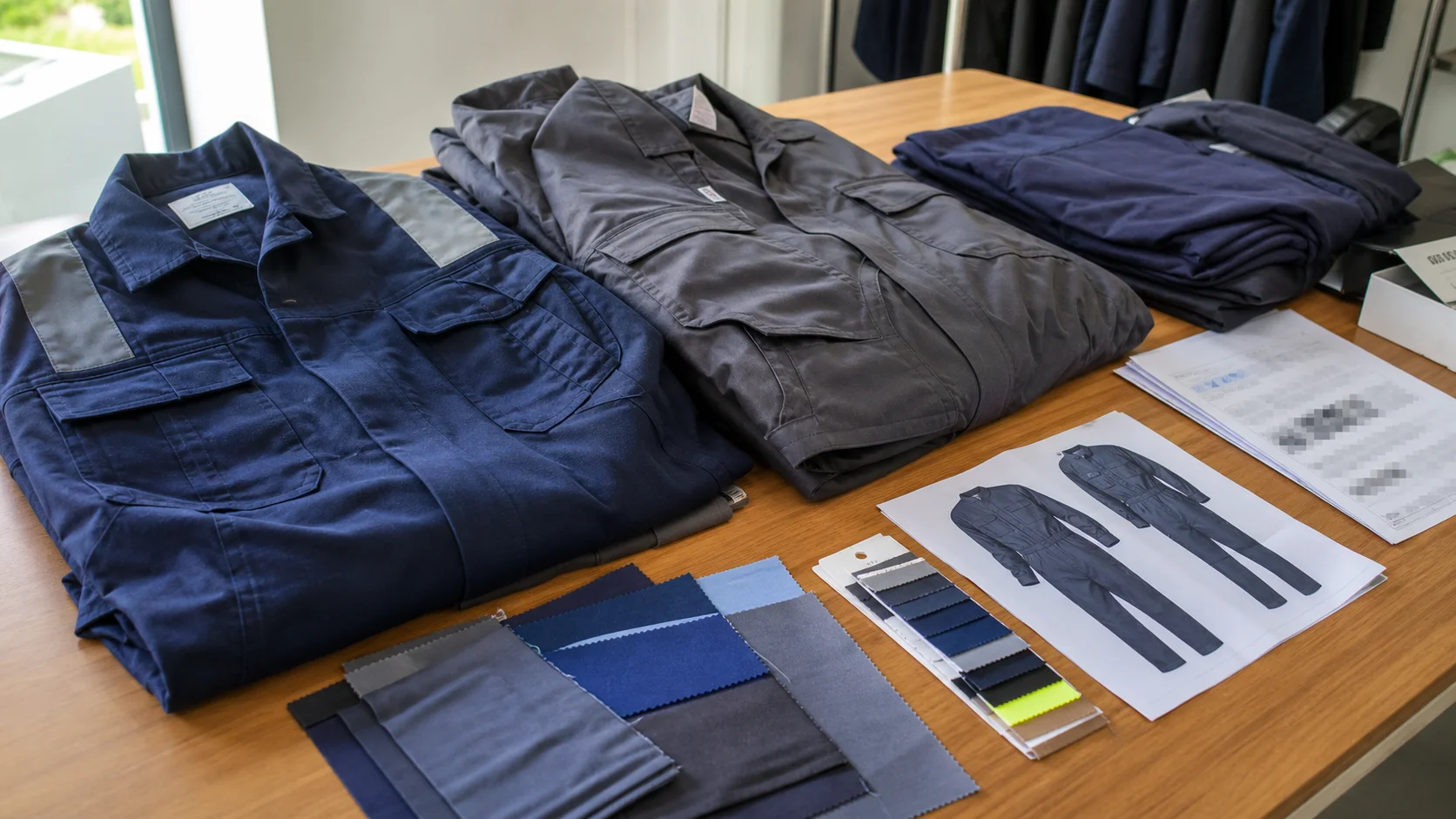
A quality and inspection outline for corporate uniform buyers auditing needle control policies in coverall factories, with focus on broken-needle...
Coverall Needle Audit for Uniform Buyers - Fabrikn production reference
For corporate uniform buyers, a coverall factory needle policy audit is not a paperwork exercise. It is a practical risk-control check that helps prevent broken needle contamination, garment rejection, shipment delays, and avoidable disputes with end users. Coveralls are often worn in industrial, maintenance, logistics, energy, food-adjacent, and facility service environments. A broken needle fragment trapped in a seam, pocket, waistband, reflective tape edge, or reinforced knee panel can create a serious safety and liability concern.
This article explains how uniform buyers can audit a coverall factory’s needle control policy before and during production. It covers what to request from suppliers, how to review needle logs, what to check on the sewing floor, how to link needle control with metal detection, and where inspection teams should focus when reviewing finished coveralls.
Purchasing judgment: a factory with a clean sample room but weak needle control on bulk sewing lines is still a risk. Needle policy must be visible at machine level, understood by operators, recorded by supervisors, and verified during final inspection.
A coverall factory needle policy audit matters because coveralls contain many sewing operations, many stress points, and often several materials in one garment. A basic shirt may have relatively simple seams. A coverall can include front zippers, plackets, chest pockets, cargo pockets, tool loops, elastic waist sections, reflective tape, reinforced knees, bartacks, sleeve cuffs, collar construction, gussets, labels, and sometimes flame-resistant or anti-static fabric requirements.
Every additional seam operation increases the chance of needle breakage. Heavy twill, canvas, poly-cotton blends, ripstop fabric, flame-resistant cotton, aramid blends, and thick pocket assemblies can put pressure on needles. Reflective tape and reinforcement patches can also cause deflection if the needle size, machine speed, feed, or presser foot is not suitable.
Corporate uniform buyers often focus on color, logo placement, sizing, fabric weight, wash performance, and delivery timing. Those are important. Needle control should sit beside them in the quality plan, not behind them. If a garment is delivered with a metal fragment, the issue is not limited to one defective unit. It may trigger a full shipment quarantine, re-screening, customer complaint, safety review, or supplier claim.
For buyers managing multi-site uniform programs, a needle incident can become expensive quickly. The cost is not only the garment. It includes sorting, replacement, air freight, lost confidence, internal investigation, and possible damage to the buyer’s procurement credibility. A strong needle audit reduces that risk before it reaches the warehouse.
Needle risk is highest where operators sew through thick layers, uneven bulk, trim edges, or rigid components. Coveralls often combine all of these risk points in one style. A sourcing team should map the garment construction and identify areas where needle breakage is more likely.
The audit should not only ask whether the factory has a needle policy. It should verify whether the policy responds to the garment’s construction risks. A lightweight poly-cotton coverall without reflective tape has a different risk profile from a flame-resistant coverall with heavy reinforcement panels and compliance trims.
A credible needle policy is specific, controlled, and visible on the production floor. It should not be a generic statement that says “broken needles are controlled.” Buyers should expect a written procedure that defines needle issue, replacement, storage, breakage handling, fragment recovery, documentation, supervisor approval, and final detection.
Policy Area What Buyers Should Check Purchasing Judgment Needle issue control Needles are issued by authorized staff, not freely stored at machines. Loose needle access increases undocumented replacement risk. Needle inventory Unused and used needles are counted and stored securely. Inventory mismatch suggests weak discipline. Broken needle recovery All fragments must be recovered and attached to a broken needle report. No full fragment recovery should mean garment and work area quarantine. Machine-level records Needle changes are logged by operator, machine, line, time, and reason. Logs that are completed only at day-end may be unreliable. Supervisor verification Line supervisor signs off after each breakage event. Operator-only records are not enough for higher-risk coveralls. Metal detection Finished garments pass through calibrated metal detection where required. Detection is a control step, not a substitute for broken needle recovery.The policy should cover all sewing areas, including sample room, cutting repair station, bulk sewing lines, embroidery or badge attachment, rework areas, finishing, and packing. Rework is often overlooked. Garments pulled from final inspection for repair may return to a small sewing station where needle control is less disciplined than on the main line. That is a common blind spot.
Uniform buyers should request needle control documents before placing bulk orders, especially when onboarding a new coverall supplier. The factory does not need to provide confidential customer details, but it should be able to share its standard operating procedure and blank or anonymized record formats.
A buyer should read these documents for practical detail. A strong factory procedure usually states who issues needles, where spare needles are stored, how broken fragments are collected, what happens if fragments are missing, how garments are isolated, and how production restarts. A weak procedure often has broad language but no forms, names, locations, or escalation steps.
When comparing suppliers, needle policy can be included in the broader quality evaluation. Buyers looking for structured support can review sourcing and inspection options through Fabrikn services, especially when a uniform program involves multiple styles or factories.
Needle policy should be considered during sampling, not only after bulk production starts. Sampling identifies construction stress points before thousands of coveralls are cut and sewn. If the sample room breaks needles repeatedly while sewing reinforced knees or reflective tape, bulk production will likely face the same issue unless the construction method is adjusted.
The pre-production sample is the most important stage for needle risk review. It should use actual bulk materials. A sample made with substitute fabric or lighter trims may hide production problems. If the final coverall uses 240 gsm poly-cotton twill, heavy-duty nylon zipper tape, reflective tape, and reinforced knee patches, the pre-production sample should represent those inputs closely.
Buyers should ask the supplier whether any needle breakage occurred during sample making. The answer may not always be recorded formally, but the question is useful. It signals that needle control is part of the quality expectation. It also helps identify construction areas that need machine adjustment, needle size changes, slower operation, or seam redesign.
Practical tradeoff: a cleaner construction with fewer unnecessary bartacks or reduced seam bulk can lower needle risk and improve sewing efficiency. Over-engineering a coverall can add strength in some areas but create production risk if the factory is not equipped for the material stack.
Needle breakage is rarely caused by one factor alone. It often comes from a mismatch between fabric, trims, thread, machine setup, operator handling, and production speed. A uniform buyer does not need to become a sewing technician, but the buyer should understand which specifications increase risk.
Needle size and type should match the fabric and seam operation. A heavy fabric may require a stronger needle, but using a needle that is too large can damage fabric, create visible holes, or weaken seam appearance. Thin needles may reduce fabric damage but break more easily on thick seams. That balance belongs in the factory’s technical setup review.
During production, a needle audit should be carried out on the sewing floor, not just in the quality office. Records should match what is happening at machines. The auditor should check whether operators know the policy, whether spare needles are controlled, and whether broken needle reports are completed immediately.
The best audit evidence is consistent across interviews, documents, and physical observation. If a supervisor says all needles are issued from a locked cabinet, but operators have loose packets at their machines, the policy is not being followed. If broken needle reports exist but no fragments are attached, the records may be incomplete. If the metal detector is present but switched off or not calibrated, it is not a reliable control.
Buyers should also check production pressure. When factories are late, operators may rush through thick seams, skip reporting steps, or move garments to rework without proper registration. Needle control discipline often weakens under schedule pressure. That makes realistic lead time and accurate production planning part of contamination prevention.
A strong broken needle procedure is simple enough for operators to follow and strict enough to protect the shipment. The factory should stop the machine, secure the garment and nearby bundle, recover all needle fragments, record the incident, and obtain supervisor verification before production continues.
When fragments are not fully recovered, the factory should treat the affected garment or bundle as suspect. This is where weak factories sometimes fail. They may replace the needle and continue sewing, assuming the fragment fell away. That is not acceptable for a corporate uniform program where garments go directly to employees or operational sites.
A buyer should define escalation requirements in the purchase order quality terms. For example, unresolved broken needle events may require bundle quarantine, 100% metal detection of affected output, supervisor report, and buyer notification. The exact requirements depend on product risk, end-use, and commercial agreement, but they should be written before shipment is at stake.
Metal detection can be a useful control for coveralls, especially when the product is high risk or the buyer requires it. Detection is common in some children’s wear and safety-sensitive categories, but corporate uniform programs vary. Buyers should decide whether metal detection is required based on end use, fabric and trim composition, customer expectation, and risk tolerance.
Metal detection is not always straightforward for coveralls. Metal zippers, snaps, rivets, buckles, or badge clips can trigger detection systems. If the garment includes legitimate metal trims, the buyer and supplier must agree on a detection method or alternative inspection control. One option is to avoid metal trims where possible and use plastic zippers or non-metal closures. Another option is to test components and finished garments with an agreed detection setup.
Garment Configuration Detection Consideration Buyer Decision No metal trims Finished garment metal detection is more practical. Require calibrated detection for higher-risk programs. Plastic zipper and plastic snaps Detection remains practical if other trims are non-metal. Good option when contamination control is a priority. Metal zipper or snaps Finished garment detection may create false rejection. Review trim substitution or define component-level controls. FR coverall with certified trims Trim substitution may affect compliance. Do not change trims without technical approval. Reflective tape and badges Usually not a metal issue, but construction can increase needle breakage. Focus on sewing control and seam inspection.Metal detector calibration should be recorded at the start of the shift, after breaks, after machine adjustment, and at the end of production, depending on the factory’s procedure and buyer requirements. Test pieces should be controlled. Records should show the detector is not just present but functioning throughout the inspection period.
If the buyer requires metal detection, the requirement should appear in the tech pack, purchase order, quality manual, or inspection protocol. A vague request made after goods are packed can create delays and disputes, especially if the garment contains metal trims that were already approved.
Final inspection should include visible needle control review, document checks, and garment-level risk inspection. Standard AQL inspection may catch workmanship defects, but it may not detect hidden metal contamination unless the inspection protocol includes needle and metal control steps.
Inspection risk increases when the factory has subcontracted embroidery, logo attachment, washing, or finishing. If a logo badge is sewn outside the main factory, that subcontracted process should also follow needle control. Corporate buyers should ask whether any operation is outsourced and whether the same needle policy applies.
A third-party inspection plan can include needle policy review as a special checkpoint. Buyers who need help structuring inspection requirements can contact a sourcing and quality team through Fabrikn contact before bulk production starts, rather than waiting until goods are packed.
Needle control is linked to commercial planning. Very low quantities, frequent style changes, rushed schedules, and complex customization can all make control harder. Buyers should understand typical MOQ ranges and lead-time dependencies when setting expectations with a coverall factory.
These ranges are not universal. A small workshop may accept lower quantities at a higher unit cost. A larger factory may prefer higher quantities and more stable production runs. Buyers should compare total landed cost and quality risk, not only unit price.
Typical production lead times for coveralls may range from 45 to 90 days after approvals, depending on materials, order size, and factory capacity. Stock fabric programs may move faster. Custom-dyed, FR, or heavily branded programs usually take longer. Sampling may require two to six weeks depending on revision cycles and material availability.
Rushed orders carry a real tradeoff. A factory under pressure may compress training, machine setup, inline inspection, and needle reporting discipline. If the coverall is safety-sensitive or used across a large workforce, buyers should avoid cutting quality-control time to recover from late approvals.
The purchase order should not only state style number, quantity, price, delivery date, and packing method. For coveralls, it should reference approved sample, fabric and trim specifications, inspection standard, needle control requirements, and contamination control expectations.
These clauses give the buyer a stronger position if quality issues arise. They also communicate expectations clearly before production starts. A supplier that refuses basic documentation or floor-level needle control should be treated as higher risk, even if the price is attractive.
A good coverall supplier does not need to be the largest factory. It needs disciplined control, appropriate machinery, trained supervisors, and transparent records. Buyers should look for consistency rather than polished presentations.
Audit Signal Low-Risk Supplier Behavior High-Risk Supplier Behavior Operator knowledge Operators explain broken needle steps clearly. Operators give inconsistent or vague answers. Needle storage Needles are issued and returned through controlled staff. Needle packets are scattered across machines. Records Logs are current, detailed, and signed. Logs look copied, incomplete, or backfilled. Rework area Same controls as main line. Repair station works informally without records. Machine setup Needle type and machine are suitable for operation. Frequent skipped stitches, breakage, and poor feeding. Management response Supervisor can show escalation process. Factory minimizes the issue or relies only on final inspection.The best purchasing decision is not always the lowest FOB price. If a supplier has weak contamination control, the buyer may pay later through rejected shipments, emergency replacements, and internal complaints. A slightly higher price from a better-controlled factory can be cheaper over the full uniform program.
Buyers assessing a new sourcing partner can also review company background and approach through Fabrikn about us to understand how sourcing support is positioned across supplier selection and quality management.
A coverall needle audit works best when it is built into the sourcing calendar. Waiting until final inspection is too late. Buyers should set expectations during supplier selection, confirm details during sampling, verify discipline during production, and review evidence before shipment release.
Uniform buyers should keep the process proportional. A small order of simple stock coveralls may not need the same level of documentation as a large industrial uniform rollout. Still, every order should have basic needle control. For larger programs, technical workwear, FR garments, and multi-site employee distribution, a stricter audit is justified.
A coverall factory needle policy audit is one of the most practical quality checks a corporate uniform buyer can apply. It protects the buyer, the wearer, and the supplier. The audit does not need to be complicated, but it must be real. Written policy, controlled needle issue, broken needle evidence, rework discipline, and inspection verification are the core elements.
The biggest warning sign is a supplier that treats needle control as an afterthought. If the factory cannot explain how it prevents and responds to broken needles, it may not be ready for a serious corporate uniform program. Strong buyers make the requirement clear at quotation stage, include it in order documents, and verify it before shipment.
Coveralls are functional garments. They are expected to work hard, wash repeatedly, carry brand identity, and protect the wearer’s everyday comfort. The same practical thinking should apply to quality control. Needle audit is not a luxury requirement. It is basic production discipline for responsible uniform sourcing.
Get a free quote from Fabrikn — your trusted B2B clothing manufacturer with 10+ years of experience. MOQ as low as 200 pieces.
Get a Free Quote →A coverall factory needle policy audit is a review of how a factory controls sewing needles before, during, and after production. It checks needle issue, storage, replacement, broken needle recovery, documentation, rework controls, and metal detection where required.
Needle control reduces the risk of broken needle fragments entering finished garments. For corporate uniform programs, contamination can cause safety concerns, shipment rejection, complaints from employees, and costly re-screening or replacement.
Not always. Metal detection is easier when garments do not contain metal trims. If coveralls include metal zippers, snaps, or clips, the buyer and supplier must agree on a practical control method. Needle recovery and documentation are still required even when metal detection is not practical.
Buyers should request the written needle control procedure, needle issue logs, broken needle reports, training records, rework station controls, machine maintenance records, and metal detector calibration logs if detection is part of the quality plan.
Typical MOQ can range from 100 to 300 pieces for stock fabric programs and 500 to 1,000 pieces for custom fabric, custom color, or more technical coveralls. FR garments and special trims may have their own material minimums.
Needle control should be checked during supplier evaluation, sample development, pre-production approval, inline inspection, final inspection, and shipment release. Rework stations should also be checked because repaired garments can create extra needle risk.
The operator should stop sewing, inform the supervisor, recover all fragments, attach fragments to a report, compare them with a complete needle, inspect the work area, and quarantine affected garments if any fragment is missing.
Yes. The purchase order or quality agreement should state that the supplier must follow a written needle control policy, record broken needle incidents, quarantine unresolved cases, provide logs for inspection, and apply equivalent controls to subcontracted work.