
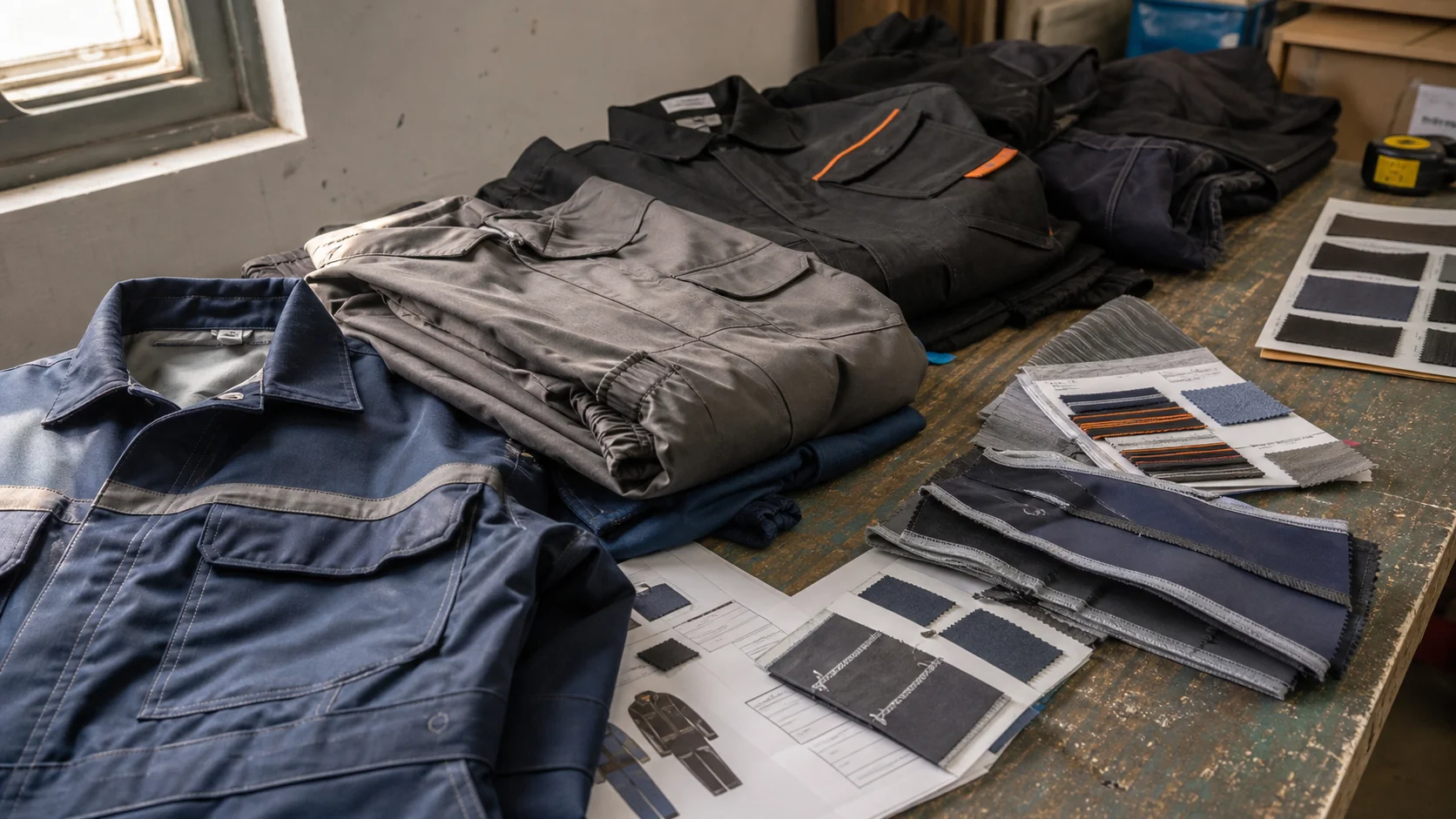
Practical breakdown of coverall factory production control brief for corporate uniform buyers, covering MOQ, cost, timeline, quality checks, and supplier...
Coverall Factory Production Control Brief For Corporate - Quality & Inspection manufacturing guide
Corporate uniform buyers do not need a factory brochure. They need a production-control brief that answers the real questions: can the supplier hold spec, protect the delivery date, and reduce avoidable quality risk across repeat orders. That matters most with coveralls, where fit, seam strength, pocket layout, trim durability, high-visibility rules, and wash performance all affect day-to-day use. A well-run coverall program is less about chasing the lowest unit price and more about controlling the points where loss usually happens.
This guide is written for purchasing teams, sourcing managers, and quality leads who need a practical view of how coverall production should be controlled inside a factory. It covers specification discipline, sampling, material approval, inline checks, final inspection, and the tradeoffs corporate buyers should weigh before awarding business. If you are benchmarking suppliers, the most useful starting point is usually the factory’s service process, not just the product photos. See Fabrikn services, about us, and contact us for company-level entry points.
Coveralls are a working garment, which means the quality standard is closer to industrial reliability than fashion finish. A corporate buyer may need one style for maintenance teams, another for warehouse staff, and a third for field technicians. The factory must therefore control multiple variables at once: measurements, reinforcement points, flame-retardant or hi-vis requirements where applicable, branding, and repeatability across size runs.
Production control protects three things that buyers care about most: consistency, compliance, and cost. Consistency means every re-order matches the approved sample. Compliance means the garment meets the intended end use and any required standard. Cost means the supplier does not inflate the order through avoidable alteration, rejected panels, or late freight caused by missed deadlines.
Many coverall problems begin before cutting starts. If the tech pack is vague, if trim approvals are informal, or if the size set is not verified properly, the factory has to guess. That guess often shows up later as shortened sleeves, misaligned pockets, poor zip performance, or a batch that fails wash testing after bulk production is already underway. Buyers should treat production control as a commercial safeguard, not just a technical activity.
Strong factory control starts with a complete and realistic specification package. For coveralls, the buyer should not assume the supplier will infer end use from a sketch or a photo. The brief should define the functional purpose clearly and leave as little ambiguity as possible.
Buyers should also specify what is not acceptable. That includes fabric substitutions without approval, unapproved thread changes, missing bar tacks, trimmed seam allowances below target, and decoration moved from the approved location. A good factory can manage all of that, but only when the rules are clear.
For corporate programs, it is also wise to define a tolerance position early. A common practical approach is to allow controlled tolerance around garment measurements while holding functional points tighter. Chest width and inseam may allow standard industry tolerance, but pocket placement, reflective tape positioning, and logo size should be more tightly controlled.
Sampling should be treated as a gate, not a formality. Corporate buyers often lose time by approving a sample too quickly or by requesting bulk production before the sample is fully signed off. The better process is staged and documented.
This is the first physical interpretation of the brief. It checks whether the factory understood the design intent and basic construction. At this stage, the garment may still be rough around finishing details, but the silhouette, main components, and functional features should be correct.
For coveralls, size variation matters more than many buyers expect. The size set verifies grading across the range and tests whether the suit works on real bodies, not just on paper. This is especially important when the garment is meant to be worn over other layers.
The pre-production sample should reflect the exact bulk materials, trims, branding, and construction order that will be used in production. If the supplier changes fabric source, zipper brand, reflective tape, or thread type after this point, the approval loses value.
Some programs use a sealed reference sample kept by both buyer and factory. This is useful when the order is large or the style will be repeated across seasons. It becomes the reference for production and final inspection disputes.
The most expensive mistake in coverall sourcing is usually not a high unit price. It is an approved sample that does not match bulk production because the factory substituted material, changed a process, or interpreted the spec loosely.
Buyers should ask for sample lead times before placing the order. Typical development samples may take 7 to 14 days depending on material readiness, while pre-production approval often depends on fabric availability, trim sourcing, and logo method. If embroidery or reflective tape is involved, add extra time for lab dips, strike-offs, or placement correction.
Material control is where many coverall orders succeed or fail. Corporate buyers often focus on color and price, then discover later that the fabric shrank too much, pilled too easily, or felt too stiff for the intended work. A production brief should call out the performance requirements, not just the composition.
Component Buyer Should Confirm Typical Risk Body fabric Composition, GSM, weave, finish, shrinkage target Color inconsistency, poor abrasion resistance, excessive shrinkage Thread Thread type, ticket size, color match, strength Broken seams, puckering, poor wash durability Zippers Brand grade, length, pull strength, teeth size Jamming, separation, early failure under stress Reflective tape Width, positioning, standard compliance if required Wrong placement, peeling, poor wash retention Buttons/snaps Material, finish, corrosion resistance Rusting, popping open, finish wear Labels Content, size, care marking, brand approval Wrong language, unreadable care info, misbrandingFabric choice should follow the work environment. For standard corporate maintenance or warehouse use, buyers often choose cotton-rich or poly-cotton blends for comfort and durability. For harsher duty use, abrasion resistance and dimensional stability matter more. If frequent laundering is expected, shrinkage control and colorfastness deserve more attention than minor hand-feel differences.
The safest practice is to approve all core materials before bulk booking. That includes main fabric, lining if used, zippers, pockets, tapes, elastic, buttons, and labels. Substitutions can be acceptable in some cases, but only with prior approval. A factory that swaps a trim based on stock availability without confirmation is creating avoidable risk for the buyer.
Production control in the factory should be structured around checkpoints, not general promises. The buyer does not need a long list of buzzwords. The buyer needs to know which stage is checked, who signs off, and what happens if the line starts drifting from the approved standard.
Before cutting, the factory should inspect fabric rolls and trims. This check catches shade variation, width issues, weaving defects, broken packaging, and obvious damage. Roll-to-roll shade control matters because coveralls often use large pattern pieces, and visible variation across panels is easy to spot on finished garments.
Cutting errors create expensive downstream defects. If the marker is wrong, the fabric is distorted, or the lay is not controlled, the garment can end up short in sleeve length, misaligned in the crotch, or inconsistent across sizes. Buyers should ask whether the factory uses shrinkage allowance based on pre-tested fabric or estimated allowance only. The first method is better.
Inline inspection should focus on seam type, stitch density, reinforcement, symmetry, and clean finishing. Coveralls need stronger attention at stress points such as crotch seams, side seams, pocket openings, and zipper attachments. If the design includes tool pockets or knee reinforcement, those areas should be checked for stitch security and alignment.
Finishing can hide or expose a lot. Press marks, shine, puckering, skipped stitches, and label misplacement often become obvious only after pressing. The factory should inspect again after finishing, because a garment that looks acceptable on the line can still fail visual standard after final handling.
Size, color, barcode, carton count, and polybag labeling all need verification before shipment. Corporate buyers often discover the wrong size ratio only after distribution starts. That error is expensive because it affects downstream allocation, not just one carton.
Coveralls have a few recurring defect patterns. Buyers who know these patterns can ask sharper questions and write better acceptance criteria.
Final inspection should not be the first time someone checks the order carefully. By that point, most problems are already embedded in finished goods. Better programs use inline checks, semi-finished audit points, and pre-pack verification so the factory can correct issues while there is still time.
If the order is tied to a corporate uniform rollout, buyers should also consider allocation risk. A small defect rate can still create major disruption if size ratios are tight or if one site needs urgent delivery. In those cases, the factory should be asked to retain a small buffer for replacement size units or minor damage claims. This is a commercial decision as much as a quality one.
Typical MOQ for coveralls varies by factory capability, fabric availability, and decoration complexity. A practical range for many made-to-order programs is often 300 to 1,000 pieces per style or color, though some suppliers can support lower volumes if the fabric is stock-supported or the design is simple. Custom trims, special finishes, and multi-color branding usually push MOQ upward.
Lead time depends on more than sewing capacity. Buyers should factor in fabric booking, lab dips, strike-offs, trim sourcing, sample approval, and inspection scheduling. A realistic production cycle for a standard custom coverall may be 30 to 60 days after approval, but that range can stretch if the fabric is imported, the color needs matching, or compliance testing is required.
Here is the tradeoff buyers should keep in mind: faster timelines usually reduce flexibility. If you want speed, you may need to accept stock fabric, limited trim options, or a tighter style range. If you want lower unit cost, you may need a higher MOQ and longer planning horizon. The wrong choice is often trying to optimize all three at once.
Seasonality matters too. Corporate buyers often place orders late in the cycle, then expect the factory to absorb the delay. If the coveralls are needed for a site launch, annual rollout, or safety refresh, build the approval calendar backward from the required ship date. Leave room for sample revision and at least one corrective round if the first sample misses the brief.
A good supplier conversation is specific. Broad questions usually produce broad answers. Corporate buyers should ask the factory how it controls the following points:
Buyers should also ask whether the factory keeps written records for approvals, material receipts, and inspection results. That record trail matters when the same style is repeated later. A supplier with stable documentation is easier to manage than one that relies on memory and informal messaging.
If the factory has a services page, use it to understand whether the supplier offers development support, inspection support, or export coordination. Start with services and then confirm communication channels through contact us if you need direct clarification on sampling or bulk production.
The best purchasing decision is not always the cheapest sample or the shortest promise. For coveralls, buyers should judge the supplier on process stability, not only on final price. A factory that can hold repeat orders, keep measurements stable, and flag problems early is usually a better long-term partner than one that wins business by underquoting and then relying on exceptions later.
Corporate uniform buyers should pay attention to four practical indicators. First, the supplier should understand workwear function, not just garment appearance. Second, the supplier should be willing to approve materials formally before bulk. Third, the supplier should show how it inspects production rather than assuming final QC will solve everything. Fourth, the supplier should be comfortable discussing tradeoffs on MOQ, lead time, and trim availability without overpromising.
When a supplier is transparent about risk, that is usually a positive sign. It means the factory is less likely to surprise the buyer later with a rejected lot or a missed ship date. The right factory conversation is not about claiming zero defects. It is about demonstrating control, early detection, and practical recovery options if something moves off spec.
A coverall factory production control brief for corporate buyers should be built around the realities of workwear manufacturing: clear specs, approved materials, disciplined sampling, stage-based inspection, and honest planning around MOQ and lead time. The goal is not just to buy a garment. The goal is to buy a repeatable uniform program that supports operations without creating avoidable service issues.
When the supplier understands quality control in this practical way, the buyer gains better predictability on cost, timing, and fit. That is the real value of a strong production-control brief. It gives the factory fewer chances to guess and gives the buyer a clearer path to consistent bulk delivery.
Get a free quote from Fabrikn — your trusted B2B clothing manufacturer with 10+ years of experience. MOQ as low as 200 pieces.
Get a Free Quote →It is a buyer-facing document that defines how the factory should manage materials, sampling, sewing, inspection, packing, and delivery for a coverall order. For corporate buyers, it helps reduce variation and avoid approval disputes.
Many factories work in the range of 300 to 1,000 pieces per style or color, but the actual MOQ depends on fabric source, trim complexity, and whether stock-supported materials are available. Special finishes or compliance features can increase the MOQ.
A common process includes a development sample, a size set, and a pre-production sample. Larger or more technical programs may need more rounds if the fit, branding, or performance requirements are strict.
Buyers should confirm fabric, trim, zipper, labels, size grading, pocket placement, logo positioning, and any required safety features. The pre-production sample should reflect the exact bulk materials and construction.
Measurement drift, weak seam reinforcement, shade variation, zipper failure, label errors, and shrinkage after washing are among the most common risks. Final inspection alone is not enough to catch all of them.
Standard lead time after approval is often 30 to 60 days, but it depends on material readiness, sample approval speed, and whether the order needs special trims or testing. Planning should begin well before the required ship date.
Only with formal approval. Substitutions can affect shrinkage, comfort, durability, and color consistency. If the supplier proposes a change, the buyer should review the impact before releasing bulk production.