
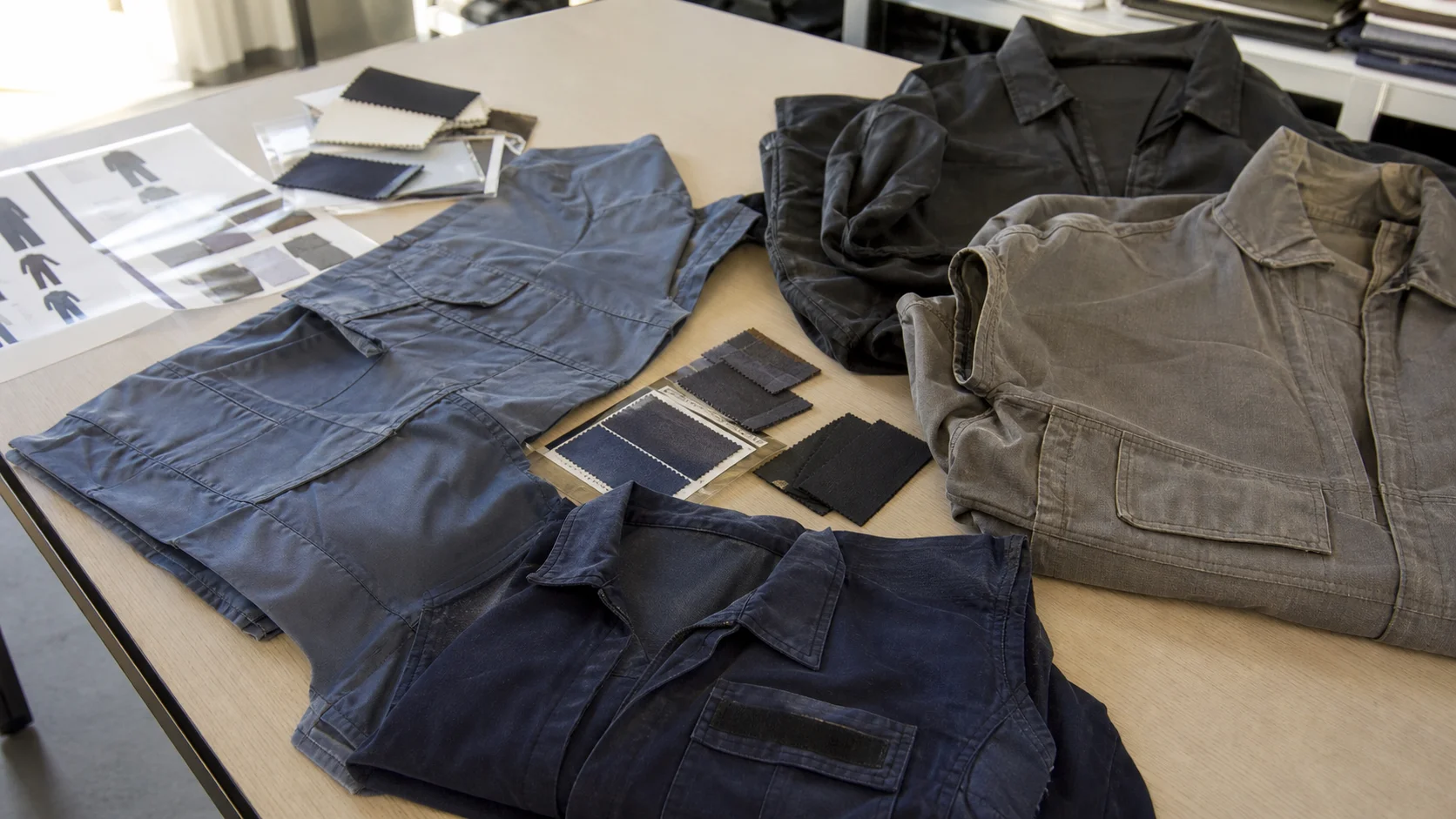
A sourcing-focused outline for fitness club buyers evaluating printed coveralls, with emphasis on decoration durability, wash testing, cost drivers, MOQ...
Coverall Print Durability Review for Fitness Club Buyers - MOQ, Cost & Sourcing manufacturing guide
Fitness club buyers face a different print-durability problem than general workwear or promotional apparel buyers. Coveralls used in a fitness environment are exposed to frequent movement, high-friction contact, perspiration, repeated washing, and a brand image standard that has to hold up in public. If the logo cracks, peels, or fades too quickly, the garment stops looking premium long before the fabric itself wears out.
For purchasing teams, the right question is not only “what print looks best on day one?” It is “what print method will stay acceptable after heavy wash cycles, daily wear, and a demanding environment?” That means evaluating print durability alongside MOQ, unit cost, lead time, and the service level of the supplier. In many cases, the cheapest print is the most expensive one once rework, claims, and early replacement are included.
This review focuses on the practical side of fitness club buyers coverall print durability review: what to ask suppliers, which print methods are worth considering, where quality usually fails, and how to avoid sourcing mistakes when ordering coveralls for fitness-related operations, branded uniforms, or club staff apparel.
Fitness clubs usually want coveralls for staff uniforms, maintenance teams, front-of-house support, storage and facility operations, or brand activations tied to sports and wellness campaigns. In all of these cases, the printed logo or message is part of the customer experience. Once the print starts to deteriorate, the garment can look neglected even if the fabric is still functional.
Durability matters for four reasons:
Fitness club buyers should also think about use conditions. Coveralls worn for indoor operations may experience less UV exposure than outdoor workwear, but they often face more frequent laundering and more stretch during movement. That combination can be harder on prints than casual apparel use. The print must tolerate washing, bending, rubbing against benches or equipment, and detergent exposure.
A print that survives a showroom sample is not automatically suitable for a busy club environment. Buyers should judge durability based on fabric, print method, and wash testing, not appearance alone.
Not every print method performs the same way on workwear-style coveralls. Some are better for sharp branding, while others are better for flexibility or cost. The right choice depends on the fabric content, the size of the logo, the number of colors, and the expected wash frequency.
Screen printing remains one of the most common methods for logos on coveralls. It can be cost-effective at scale and usually offers good opacity on darker garments. On cotton-rich fabrics, a well-formulated screen print can provide strong durability if the cure process is controlled properly.
Tradeoff: screen printing can crack if the ink layer is too thick, if the cure is incomplete, or if the garment has high stretch at the print area. It is often a strong choice for bold logos, but buyers should watch for hand-feel stiffness on large prints.
Heat transfers are often used for detailed graphics, names, numbering, or smaller branding elements. They can reproduce sharp edges and multiple colors with good consistency. Quality varies widely by film, adhesive, press temperature, pressure, and garment care.
Tradeoff: low-cost transfers can peel at the edges after repeated washing, especially if applied to textured surfaces or high-stretch areas. Buyers should ask whether the transfer is designed for industrial wash performance or standard retail use.
Direct-to-film printing has become popular because it handles detailed artwork and short runs without screen setup costs. On suitable fabrics, it can deliver bright graphics and good flexibility. Many suppliers now promote DTF for custom workwear because it supports lower MOQ orders.
Tradeoff: durability depends heavily on the adhesive, film quality, and application process. On heavily laundered uniforms, DTF can perform well when sourced carefully, but it should still be tested against the intended wash cycle and fabric construction.
Although embroidery is not a print method, many buyers compare it with printing because it is often used for logos on coveralls. Embroidery is generally durable and resists washing better than surface print. It does, though, add weight and can be less suitable for large graphic areas.
Tradeoff: embroidery is usually more expensive, may feel bulky on lightweight fabrics, and can cause discomfort if placed where the garment flexes repeatedly. It is often best for chest logos, small marks, or premium branding.
Print durability is not only about the ink or transfer. The base fabric affects how long the decoration lasts. If the substrate moves too much, shrinks after washing, or has a surface finish that resists adhesion, the print may fail early.
Cotton provides a stable printing surface for many inks, but it can shrink and may lose shape after repeated wash cycles if the fabric construction is weak. Polyester offers better dimensional stability, though some printing systems require careful heat control to avoid migration or poor bonding. Blends often give buyers the best compromise, especially when durability and comfort both matter.
For fitness-club coveralls, a polyester-cotton blend is often a practical sourcing option because it can balance wash stability, comfort, and print performance. The exact ratio matters. A heavier cotton content may feel softer, while a higher polyester content may improve wash recovery and reduce shrinkage risk.
Lightweight fabrics can be more comfortable, but they may not support large decorative prints as well as midweight fabrics. A thin material may show print-through, puckering, or edge distortion after washing. Textured surfaces can also interfere with transfer adhesion.
Buyers should ask for the fabric gsm, weave type, and finishing process. A coated or heavily finished fabric may need a different print approach than a brushed or enzyme-washed fabric. What works on one sample may fail on another if the production lot changes.
If coveralls are designed for movement, the print must stretch with the fabric. Areas around the shoulders, chest, knees, and back are especially sensitive. A rigid print on a flexible panel is one of the most common reasons for cracking.
When movement is important, buyers should ask suppliers whether the print is tested for elongation and whether a flexible ink or elastic transfer is available. Even then, a limit exists. High-stretch performance usually costs more and may reduce sharpness slightly.
In a fitness club setting, wash performance is often a better indicator of quality than initial appearance. Sweat, detergent, heat, and repeated laundering work together to expose weak print systems. Buyers should treat wash testing as a core part of sourcing, not an optional extra.
Buyers sometimes focus on print method but ignore care instructions. That is a mistake. If the club’s laundry process uses high heat, strong chemicals, or industrial washing, the print system must be specified accordingly. A supplier that does not align print choice with washing requirements is creating avoidable risk.
It is sensible to request the intended care label language and confirm whether the garment is meant for domestic washing, commercial laundry, or lighter wash routines. Small differences in drying temperature can change durability outcomes significantly.
No printed garment lasts forever. The aim is not infinite life. The aim is acceptable visual performance through the expected service period. For many fitness club buyers, a reasonable target is maintaining good appearance through multiple months of active use and repeated washing, provided the print method and fabric choice are matched properly.
Suppliers may claim high wash counts, but those claims should be tied to test conditions. A “50-wash” statement is only useful if the wash temperature, detergent, dry method, and evaluation standard are known. Buyers should not compare claims without that context.
Sample approval is where many sourcing projects succeed or fail. A sales sample can hide issues that appear only in production, so the process should be structured and documented.
Before sampling, confirm logo size, color references, print location, and garment size range. A logo that looks balanced on a medium sample may be oversized on smaller sizes or underwhelming on larger ones. Placement should be checked with movement in mind, not just flat on a table.
A strike-off or print test on the actual fabric is more useful than a digital image. For complex orders, ask for a pre-production sample using the exact fabric, trim, and print method intended for bulk production. If trims, labels, or zipper types change later, the final result may differ.
Buyers should ask for basic testing, even if they do not run full lab certification. At minimum, review wash performance, color transfer risk, and rubbing resistance. If the supplier can provide third-party test data, that is useful, but the report must match the actual garment specification.
Try the sample on multiple body sizes and assess movement, print cracking under flex, and how the garment looks after a few wash cycles. A logo can appear excellent on a still sample and then distort once the fabric is tensioned.
For fitness club coveralls, approval should be based on how the garment behaves after wear and wash, not on a clean sample alone.
MOQ is a major buying factor in branded coveralls. Print durability often improves with better materials and tighter production control, but those choices can increase the order value. Buyers need to decide where the balance should sit.
Actual MOQ depends on the factory, fabric availability, print method, and whether the order is custom or stock-supported. For many custom coverall programs, a practical MOQ range may fall around 100 to 300 pieces per color or design for simpler production setups. More specialized fabrics, multiple print placements, or custom trim packages may push MOQ higher, sometimes to 500 pieces or more.
Short runs are possible, especially with DTF or other low-setup decoration methods, but unit cost is usually higher. Buyers seeking lower quantity should expect less room for negotiation on fabric, packaging, and testing.
Low MOQ is attractive for pilots, seasonal programs, or new club launches. The downside is that a low-quantity order may limit fabric choices and push the buyer toward faster decoration methods that are not always the most durable. If the club expects repeated laundering, it may be better to accept a slightly higher MOQ in exchange for stronger print performance and more stable production control.
A common sourcing mistake is to optimize only for sticker price. A better approach is to compare cost per wear. A slightly higher unit price that doubles useful life is usually the better commercial decision.
Even a well-chosen print method can fail if production control is weak. Buyers should review decoration quality as part of inline and final inspection.
Buyers should ask how the supplier controls the press settings, verifies print alignment, and separates sizes during production. If the factory uses multiple decoration operators or subcontracted printing, the risk of inconsistency rises. That does not mean the supplier is unsuitable, but it does mean more supervision is needed.
A good purchase order should define the fabric composition, gsm, print method, logo size, color references, wash standard, packaging method, tolerance for placement, and sample approval reference. The more precise the purchase order, the easier it is to resolve disputes later.
Buyers should also ask whether spare prints, overages, or replacements are included. If not, a small defect rate can become an expensive issue after delivery.
For fitness club buyers, the best print solution is usually the one that fits the use case rather than the one with the most impressive sales pitch. A few practical rules help narrow the field.
If your team is comparing decoration methods, fabric options, or production plans for club uniforms and branded coveralls, it helps to work through the sourcing details early. Fabrikn’s services page is a useful place to review how product development and manufacturing support can be structured before committing to bulk order terms.
Buyers who need a faster discussion on specs, MOQs, or sampling can also start with the contact page. Clear requirements on fabric, print method, and target wash performance usually lead to better quotations and fewer revisions.
For companies evaluating whether a supplier is a fit for ongoing apparel programs, the about page can help set expectations around capabilities and process style. That matters when the order involves repeated reorders, consistent branding, and controlled quality across batches.
Coverall print durability is a sourcing issue, not a decorative detail. For fitness club buyers, the print has to survive movement, sweat, laundering, and repeated visual scrutiny. Screen printing, heat transfers, DTF, and embroidery each have strengths, but none is universally best. The right choice depends on fabric, use frequency, size of logo, and budget.
The safest buying strategy is straightforward: define the garment purpose, choose the fabric first, match the decoration method to the wash requirement, insist on physical samples, and test before bulk approval. MOQ and unit price matter, but they should be weighed against durability and replacement risk. In apparel sourcing, the lowest upfront price is often the most expensive route over time.
Get a free quote from Fabrikn — your trusted B2B clothing manufacturer with 10+ years of experience. MOQ as low as 200 pieces.
Get a Free Quote →There is no single best method for every order. Screen printing is often strong for simple logos on stable fabrics, while embroidery is very durable for smaller branding. DTF and heat transfers can work well, but they should be tested carefully for wash performance and adhesion.
That depends on the intended use and laundry method. Buyers should ask suppliers to match the test standard to the real care process. A wash claim is only useful if the temperature, detergent, and drying method are clearly stated.
Many custom coverall programs start around 100 to 300 pieces per style or color, though more complex specifications may require higher volumes. Short runs are possible, but the unit price is usually higher.
Yes, but the print system must be flexible enough to move with the fabric. Buyers should avoid rigid decoration on areas that bend or stretch repeatedly. Sample wear testing is especially important here.
The approval should cover logo size, placement, color reference, print method, garment size range, and any special finishing or wash instructions. A clear approval sample helps avoid disputes in bulk production.
Not always. For short runs or light-duty use, a lower-cost transfer can be acceptable. The risk is that some lower-end systems peel or fade early, so the buyer should test before placing a larger order.
Use a physical sample, verify fabric and trim specifications, confirm curing or press settings, review wash performance, and include print tolerance requirements in the purchase order. Good communication before production is cheaper than rework after delivery.