
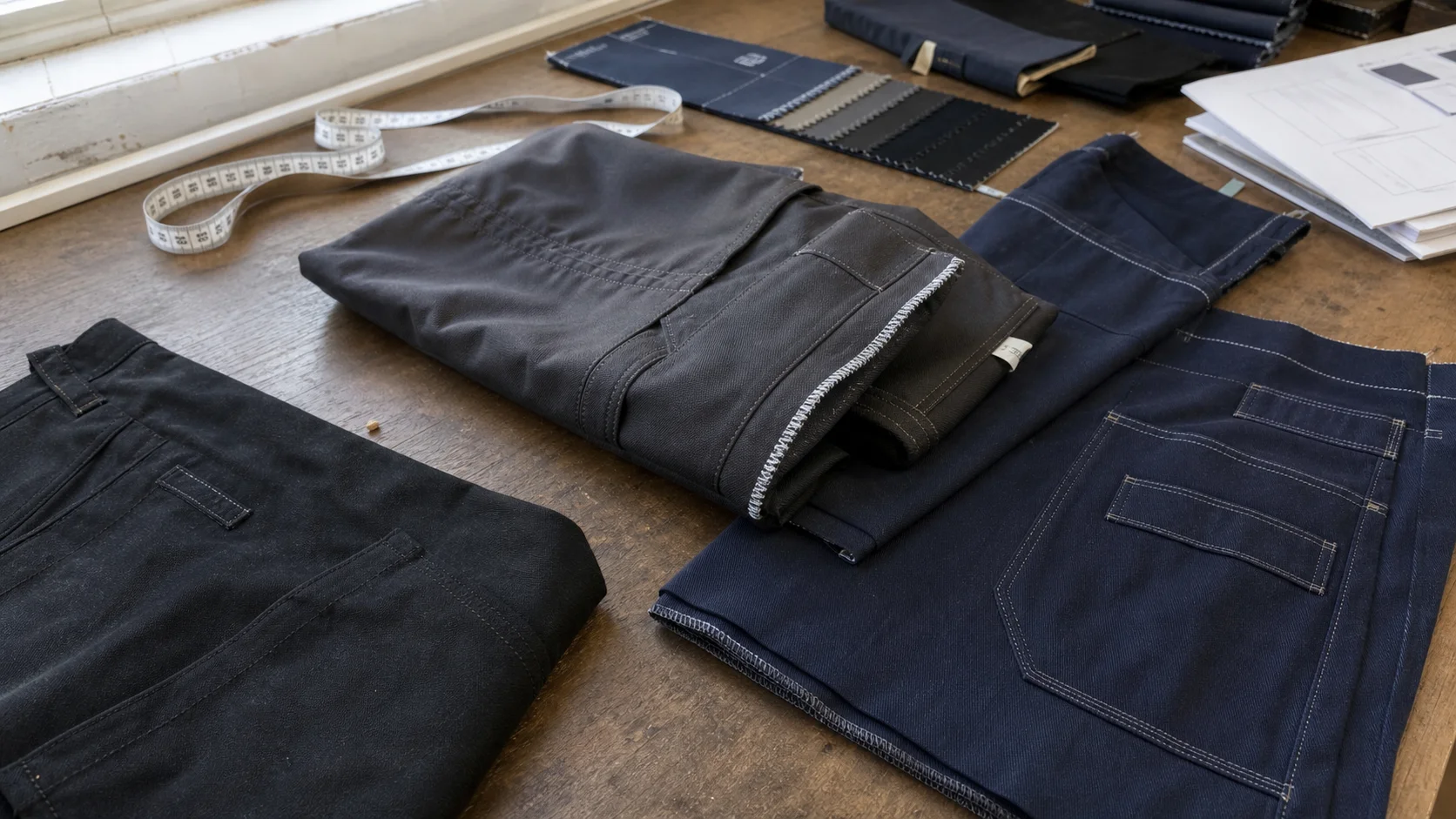
A sourcing-focused outline for restaurant groups evaluating coverall seam strength, cost tradeoffs, MOQ planning, and production specs before placing...
Coverall Seam Strength Review for Buyers - MOQ, Cost & Sourcing manufacturing guide
A coverall seam strength review for restaurant groups is not a lab exercise for its own sake. It is a practical sourcing check that tells a buyer whether a garment can survive daily bending, lifting, washing, spot-cleaning, and repeated wear across multiple locations. Restaurant uniforms are handled harder than most buyers expect. Staff reach across prep stations, squat near storage shelves, lean against counters, carry boxes, and work near heat, moisture, oil, and cleaning chemicals. Weak seams turn into split crotches, torn underarms, popped pockets, and costly replacements.
For restaurant groups buying coveralls at scale, seam strength affects three commercial issues: replacement rate, staff presentation, and operational disruption. A low-cost coverall that fails after 15 washes is not cheaper if the buyer needs emergency replenishment every month. A seam that opens at the seat or side body also creates a staff confidence issue. In back-of-house environments, failures may go unreported until the garment becomes unusable. In front-of-house or open-kitchen concepts, seam failure is visible to guests and managers.
Restaurant buyers should treat seam strength as part of total uniform durability, not as a separate technical feature. The right review includes fabric weight, seam construction, thread selection, stitch density, bartacking, size grading, laundry method, and inspection standards. Each factor changes the real-world performance of the garment.
Direct purchasing judgment: if the coverall is for light brand presentation, a basic stitched seam may be acceptable. If the garment is worn in kitchens, commissaries, maintenance teams, or delivery-prep operations, seam construction deserves the same attention as fabric and fit.
A useful coverall seam strength review starts before sampling. Buyers should define where the garment will be used, how often it will be washed, and what movements place stress on the seams. A restaurant group with a central kitchen has different needs from a casual dining chain using coveralls as a branded front-of-house layer. A bakery, butcher counter, catering team, or facilities crew may require stronger seam reinforcement than a host team wearing coveralls for styling.
The first review point is the stress map of the garment. On coveralls, the highest-risk areas are the crotch seam, inseam, underarm, shoulder, sleeve opening, side pocket opening, chest pocket corners, waistband joining seam, zipper placket, and back rise. These areas need stronger construction because they absorb repeated movement and pulling. Pocket seams also fail often when staff carry thermometers, pens, order pads, keys, box cutters, or small tools.
The second review point is the laundry environment. Restaurant uniforms are often washed more aggressively than casual apparel. High-temperature washing, industrial drying, oxygen bleach, degreasers, and frequent laundering can reduce seam performance. Cotton-rich fabrics may shrink and place tension on seams. Polyester-rich fabrics may retain shape better, but poor thread or skipped stitches can still fail.
The third review point is the fit block. Coveralls that are too slim in the seat, thigh, armhole, or back body will fail even if the stitching is acceptable. Buyers often focus on the smallest and largest sizes, but the middle sizes also need motion testing. A garment that looks clean while standing can become weak during squatting, bending, reaching, and kneeling.
The fourth review point is the supplier’s technical capability. A factory that mainly makes fashion jumpsuits may not build the same seam standard as one producing workwear. Buyers should ask for seam construction details in the tech pack and review physical samples carefully. If sourcing support is needed, Fabrikn’s manufacturing services page is a useful starting point for understanding how production support can be structured.
Seam type is one of the clearest indicators of garment durability. Buyers do not need to become pattern engineers, but they should know the basic options and where each one belongs.
A plain seam joins two fabric panels with a single line of stitching, often with overlock finishing on the raw edges. It is economical and common. For low-stress areas, it may be adequate. For restaurant coveralls used daily, plain seams alone are often not enough at the seat, crotch, underarm, or pocket stress points.
The benefit is cost control. Plain seams are faster to sew and easier for suppliers to execute. The downside is that strength depends heavily on stitch quality, seam allowance, and fabric behavior. If the seam allowance is too narrow or the fabric frays, the seam may pull apart under stress.
An overlocked seam uses looped thread to bind the fabric edge. It is common in mass apparel production because it is efficient and clean inside the garment. In coveralls, overlock is often used as edge finishing or as part of a joined seam.
Buyers should not assume overlock means heavy-duty. A weak overlock can unravel if threads break. For restaurant uniforms, overlock seams should be checked for consistent tension, no skipped stitches, and sufficient seam allowance. Overlock alone is best kept away from high-strain zones unless reinforced.
A safety stitch combines a chain stitch with an overlock edge. It is stronger than a basic overlock and is commonly used in workwear and uniforms. For restaurant groups, this is often a practical middle ground between cost and durability.
Safety stitch construction is suitable for side seams, inseams, sleeve seams, and areas where durability matters but the buyer still needs scalable production. It is not the most premium option, but it usually improves seam reliability without pushing cost too high.
A flat-felled seam encloses raw edges and creates a clean, durable seam with visible stitch rows. It is common in denim, work shirts, and heavy-duty garments. For coveralls, it can be useful on inseams, side seams, and other high-wear areas.
The tradeoff is cost and production complexity. Flat-felled seams require more sewing time and better operator control. On heavier fabrics, they may add bulk. For buyers ordering uniforms for kitchen and utility teams, the durability benefit can justify the extra cost. For fashion-led restaurant branding, it may be more than necessary.
Double-needle stitching adds two parallel lines of stitching. It improves strength and provides a workwear appearance. It is often used on yokes, pockets, plackets, and leg seams.
Buyers should confirm whether double-needle stitching is functional or mostly decorative. Two clean stitch rows are useful only if seam allowance, thread, and back-side finishing are correct. A good supplier should be able to explain where double-needle stitching is structural and where it is aesthetic.
Bartacks are dense reinforcement stitches used at stress points. For restaurant coveralls, bartacks are strongly recommended at pocket corners, zipper base, belt loops if used, side openings, and sometimes crotch stress points.
Bartacks add small cost but deliver high value. They reduce pocket tear-outs and prevent openings from splitting. If a buyer is trying to manage budget, bartacks at critical points are usually a better investment than cosmetic trim upgrades.
Seam or Stitch Type Best Use in Coveralls Buyer Judgment Plain seam with overlock Low-stress body areas Acceptable for light use, risky for daily kitchen wear Safety stitch Side seams, inseams, sleeve seams Good balance of cost and durability Flat-felled seam High-wear seams and workwear styling Strong option, but adds cost and bulk Double-needle stitching Pockets, plackets, yokes, visible seams Useful when paired with correct seam allowance Bartack Pocket corners, zipper base, belt loops Low-cost reinforcement with strong practical valueSeam strength depends on more than sewing. Fabric and trims can either support the seam or undermine it. A strong stitch on the wrong fabric may still fail. A durable fabric with cheap thread can also fail. Buyers should review the complete garment specification.
Restaurant coveralls are often made in cotton twill, poly-cotton twill, canvas, ripstop, stretch twill, or lighter woven blends. Typical weights may range from about 150 GSM for lightweight branded coveralls to 280 GSM or higher for workwear-style garments. Many restaurant groups land between 180 and 240 GSM because it balances durability, comfort, and laundry practicality.
Lightweight fabric is cooler and cheaper, but seams may tear if staff perform physical work. Heavy fabric feels more durable, but it can be hot in kitchens and may reduce comfort during long shifts. The right weight depends on job role and climate. For kitchen, prep, and utility teams, a midweight poly-cotton twill is often a practical choice. For front-of-house styling, lighter fabric may be acceptable if seam reinforcement is still specified.
Cotton offers comfort and breathability, but it can shrink and wrinkle. Polyester improves dimensional stability and drying speed. Poly-cotton blends are common because they handle repeated washing better than pure cotton in many uniform programs. Stretch fibers improve mobility, but they require careful seam testing because the fabric movement can stress thread and stitch recovery.
For restaurant buyers, fabric composition should be chosen together with laundry expectations. A 65/35 polyester-cotton blend may be easier for multi-unit operations than 100% cotton if garments are washed frequently and need consistent appearance. A stretch blend can improve comfort, but the supplier must use appropriate thread and stitch construction.
Thread is often overlooked because it is not visible on a line-item quote. It matters. Polyester thread is commonly used for uniforms because it offers strength and laundering resistance. Cotton thread may not be suitable for heavy restaurant wash cycles. Thread ticket size should match fabric weight. If the thread is too fine, it may break. If it is too heavy, it may damage lightweight fabric or create puckering.
Buyers should ask suppliers to specify thread type, approximate ticket size, and colorfastness expectations. For contrast stitching, colorfastness becomes more important. Poor thread dye performance can create visible fading or bleeding after washing.
Stitch density affects both strength and flexibility. Too few stitches per inch can reduce seam holding power. Too many stitches can perforate the fabric and weaken the seam, especially on lightweight woven fabrics. A typical range may be around 8 to 12 stitches per inch depending on fabric and seam type, but the right number should be confirmed through sampling and testing.
Buyers should not write unrealistic stitch specs copied from another garment. A supplier should test the construction on the selected fabric. The review should focus on whether seams hold under stress and after washing, not just whether a spec number appears in the tech pack.
Coverall closures create stress around the front placket, collar, waist, and crotch area. Zippers should be appropriate for the garment weight. Low-quality zippers can cause returns even if seam strength is good. Snaps should be tested for pull-out strength, especially on lighter fabric. Reinforcement behind snaps may be needed.
For restaurant groups, easy dressing and laundering matter. Metal components may be durable but can feel heavy or create heat concerns in some environments. Plastic components may be lighter but must be tested for wash durability. Any exposed hardware should be reviewed for comfort, safety, and brand appearance.
Coverall seam strength decisions directly affect MOQ, cost, and sourcing. Stronger construction usually adds sewing time, thread consumption, machine requirements, and quality-control attention. The question is not whether the cheapest seam can pass a sample review. The question is whether the chosen construction can perform across bulk production and repeated use.
MOQ varies by supplier, fabric availability, color, trim customization, and decoration method. For restaurant coveralls, buyers may see typical MOQ ranges such as:
These ranges are not universal. A supplier with available greige fabric and standard trims may accept lower quantities. Custom dyed fabric, branded zipper pulls, special labels, and non-standard thread colors can raise MOQ quickly. Size spread also matters. A 300-piece order across eight sizes is less efficient than the same quantity across four core sizes.
Seam strength affects cost through labor and process complexity. A safety stitch seam may be cost-effective because the operation is familiar and fast. A flat-felled seam may increase cost because it requires more handling and precision. Bartacks add machine time but are usually affordable. Extra seam testing, pre-production samples, and inline inspections also carry cost, either directly or through supplier overhead.
Fabric is still a major cost driver. A heavier twill costs more and may increase shipping weight. Stretch fabric can cost more and may require tighter sewing control. Contrast stitching, reinforced pockets, gussets, action backs, elastic waist panels, and custom hardware all add cost. The best sourcing decision is rarely the cheapest specification. It is the lowest-risk specification that meets the operating need.
Restaurant groups should avoid overengineering every garment. A premium flat-felled seam package on a low-use brand activation coverall may waste budget. A basic seam package on a commissary uniform is also a false economy. The buyer’s job is to match seam strength to the operating risk.
For brands comparing supplier models, company background and service approach matter. Reviewing a partner’s structure through pages such as About Fabrikn can help buyers understand whether the supplier is positioned for custom production, sourcing coordination, or broader apparel support.
Sampling is where many seam issues should be caught. A good sample process does not only check appearance. It tests whether the garment can survive movement, washing, and handling before bulk production begins.
The buyer should prepare or request a technical package that includes fabric composition, GSM, color, seam construction, stitch type, stitch density, thread type, trims, pocket placement, label placement, logo application, size range, and measurement tolerances. The tech pack should identify critical seams such as crotch, inseam, underarm, pocket openings, and zipper placket.
If the supplier controls the tech pack, the buyer should still review every construction note. Vague wording like “strong seam” is not enough. The document should state whether seams are safety stitched, overlocked, flat-felled, double-needle stitched, bartacked, or reinforced with tape or binding.
The proto sample checks concept, fit direction, seam placement, and general construction. Buyers should not expect a perfect garment at this stage, but they should identify high-risk areas early. If the crotch seam looks narrow, pocket corners lack reinforcement, or the sleeve seam twists, those issues should be corrected before the next stage.
Movement testing should be practical. Have the wearer squat, reach overhead, bend forward, sit, lift a box, and cross arms. If the garment pulls sharply at the seat or back body, seam strength may not solve the problem. The pattern may need adjustment.
The fit sample should use production-intent fabric or a close substitute. This matters because seam behavior changes with fabric weight, stretch, and shrinkage. Buyers should evaluate size grading, especially if the restaurant group has a broad employee base. A coverall that fits only one body type will create seam stress in daily use.
Restaurant groups should test at least one core size and one edge size if budget permits. Larger sizes often show strain at seat, thigh, and armhole seams. Smaller sizes may reveal proportion issues around torso length and crotch depth.
Wash testing is essential. A garment may pass visual review before laundering and fail after shrinkage. Buyers should wash samples using the intended method, or a conservative approximation if the final laundry method is not yet fixed. After washing, check seam puckering, twisting, thread breakage, pocket distortion, zipper performance, and measurement changes.
If the restaurant group uses industrial laundry, the sample should be reviewed with that in mind. Home wash testing is useful but may not reveal all risks. High heat drying can expose shrinkage and seam tension problems faster than mild drying.
The pre-production sample should represent final fabric, trims, labels, logo decoration, seam construction, and measurements. This is the buyer’s last main checkpoint before bulk production. Approval should be written and specific. If a seam standard is approved with exceptions, those exceptions should be documented clearly.
Buyers should keep one approved sample as the reference standard. The supplier should keep one as well. During inspection, bulk garments should be compared against the approved sample, not against memory or loose email descriptions.
A size set helps confirm that grading does not create seam stress. For coveralls, torso length and rise are especially important. If the torso is too short, the garment pulls at the crotch and shoulders. If the armhole is too tight, the underarm seam is at risk. If the thigh is too narrow, inseams may split.
Buyers often reduce size-set sampling to save time. That can be reasonable for repeat orders. For first orders, skipping size-set review can lead to avoidable failures in bulk.
Lead time for restaurant coveralls depends on fabric, trims, sampling speed, approval discipline, production capacity, decoration, inspection, and shipping. Seam strength decisions can influence several of these steps.
Typical development and production timing may look like this:
Stage Typical Time Range Key Dependency Tech pack and quotation 3 to 10 business days Completeness of specs and target quantity Proto or fit sample 7 to 21 days Fabric availability and construction complexity Revisions 7 to 21 days per round Buyer feedback speed and pattern changes Pre-production sample 7 to 20 days Final trims, labels, decoration, and fabric approval Bulk production 30 to 60 days Order size, factory capacity, seam complexity Inspection and shipping 7 to 35 days Inspection schedule and freight methodThese ranges are only planning references. Custom dyed fabric, delayed label approvals, failed wash tests, or late size changes can extend the timeline. Buyers should build in time for at least one sample revision on a new coverall program. Rushing straight from first sample to bulk production is risky when seam strength matters.
Decoration also affects timing. Embroidery near pockets or chest seams may change fabric tension. Heat transfers may need wash testing. Woven patches add stitching and can create puckering on lighter fabrics. If logos are placed across high-movement areas, they may affect comfort and durability.
For restaurant groups planning rollouts across multiple locations, the best approach is to start with a pilot quantity when possible. A pilot can reveal wear and seam issues before a full chain-wide order. If the MOQ does not allow a true small pilot, buyers can still run a controlled wearer trial using sales samples, pre-production samples, or a limited early production batch.
Inspection should focus on the areas most likely to fail. A random visual check is not enough for coveralls. Inspectors should review seam construction, stitch consistency, measurements, trims, decoration, and workmanship.
Measurements and seam strength are connected. If the garment is out of tolerance, seams may carry more strain than intended. For coveralls, key measurements include chest, waist, hip, thigh, inseam, sleeve length, across back, armhole, rise, and torso length. Torso length is especially important because coveralls connect upper and lower body fit. A small error can create major stress during movement.
Buyers should set realistic tolerances. Overly tight tolerances can create inspection disputes without improving performance. Too-loose tolerances can allow fit problems into bulk. A practical tolerance framework should be agreed before production starts.
Common workmanship issues include skipped stitches, broken stitches, open seams, loose threads, uneven bartacks, twisted legs, mismatched panels, incorrect thread color, poor pocket alignment, and puckered plackets. These problems may seem minor in a carton inspection, but they become expensive when spread across hundreds or thousands of garments.
Inspectors should pull gently at stress seams during review. This is not a substitute for lab testing, but it can reveal obvious failures. Garments should also be turned inside out to inspect seam finishing. Many seam problems are easier to see inside the garment.
For larger programs, buyers may request seam strength or seam slippage testing through a recognized lab. The exact method should be selected by the buyer, supplier, or testing partner based on fabric type and use case. Lab testing adds cost and time, but it can be useful for high-volume programs or when the coverall is expected to perform as workwear.
Buyers should be cautious with lab numbers. A test result is useful only when it reflects the actual production fabric, seam construction, and washing method. Testing a sample made with substitute fabric does not guarantee bulk performance.
A restaurant group buying coveralls should use a structured checklist before placing bulk orders. This reduces the chance of approving a garment that looks good in a showroom but fails in daily use.
For buyers who want help turning these points into a sourcing brief, the Fabrikn contact page is the right next step to discuss requirements, quantities, and production direction.
For most restaurant groups, the safest middle-ground coverall specification is a midweight woven fabric, practical poly-cotton blend, safety stitch on major seams, bartacks at stress points, reliable zipper or snap construction, and a fit block tested through movement and washing. This package usually gives better value than chasing the lowest possible FOB cost.
If the garment is for heavy back-of-house or maintenance use, consider stronger fabric, flat-felled or reinforced seams in selected areas, larger pockets with bartacks, and more rigorous wash testing. If the garment is mainly a branded visual piece, reduce cost through simpler construction, but do not remove reinforcement from pockets, crotch, or underarms without a clear wear-risk assessment.
The main buying mistake is separating design from durability. A coverall can look sharp in a sample photo and still be wrong for restaurant operations. Seam strength is where design meets daily work. Buyers who review it early usually avoid late-stage production problems, replacement costs, and staff complaints.
Get a free quote from Fabrikn — your trusted B2B clothing manufacturer with 10+ years of experience. MOQ as low as 200 pieces.
Get a Free Quote →Safety stitch construction is often the best cost-to-durability choice for restaurant coveralls. Flat-felled seams can be stronger, but they add cost and bulk. The right choice depends on whether the garment is used for front-of-house styling, kitchen work, commissary work, or maintenance.
Typical MOQs may range from 100 to 300 pieces for simple stock-color customization, 300 to 500 pieces for custom trims or construction changes, and 500 to 1,000 pieces or more for custom fabric, dyeing, or broad size ranges. Supplier capability and material availability can change these ranges.
The most common failure points are the crotch seam, inseam, underarm seam, pocket corners, zipper placket, and side openings. These areas experience repeated movement, pulling, and laundering stress.
Yes, bartacks are usually worth the small added cost. They are especially useful at pocket corners, zipper bases, belt loops, side openings, and other stress points. Removing bartacks to save cost can increase repair and replacement risk.
Heavier fabric can support stronger seams, but it may feel hot or stiff in restaurant environments. Lightweight fabric is more comfortable but may tear more easily under stress. Many restaurant uniform programs use midweight fabrics to balance comfort, durability, and wash performance.
Stretch fabric can improve mobility, especially for staff who bend, reach, or squat frequently. It needs careful seam testing because stretch changes how stress moves through the garment. Thread, stitch type, and fit must be matched to the fabric.
A practical process includes a proto sample, fit sample, wash-tested sample, pre-production sample, and size set for first orders. Repeat orders may need fewer steps if the fabric, fit, and factory process remain unchanged.
Inspection should check skipped stitches, open seams, broken threads, seam allowance, bartack placement, pocket reinforcement, measurement accuracy, and post-wash appearance when applicable. Turning garments inside out during inspection is important because many seam defects are hidden inside.
Use stronger construction only where it matters most. Keep safety stitch or reinforcement on high-stress seams, use bartacks at pockets, and simplify lower-risk seams or cosmetic details. Cutting durability from crotch, inseam, underarm, or pocket areas is usually a poor saving.
Lab testing is useful for high-volume programs, industrial laundry use, or workwear-level expectations. It adds cost and time, so it should be planned early. Test results should be based on production-intent fabric, seam construction, and laundering conditions.