
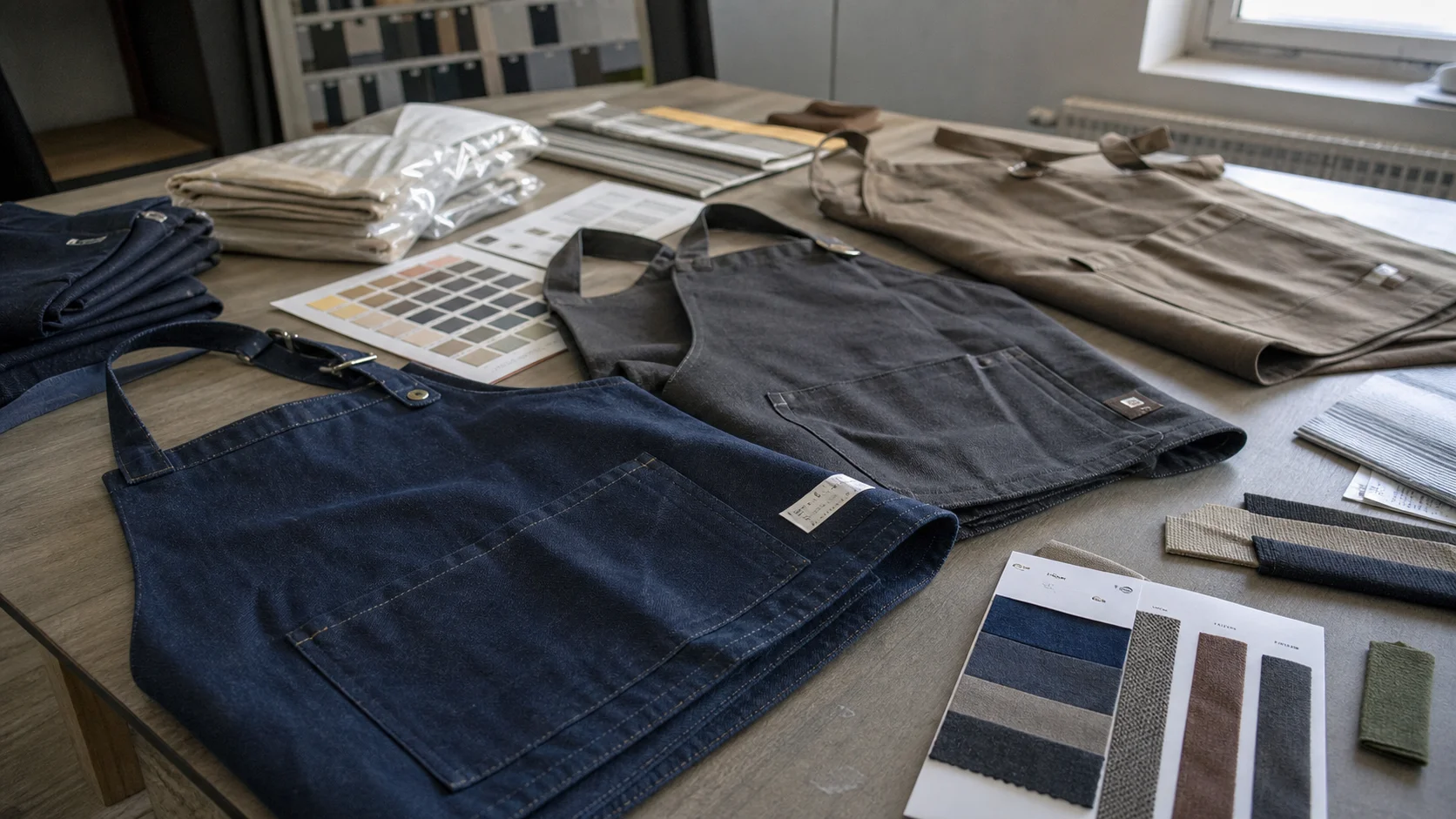
A practical sourcing and production outline for restaurant groups that need predictable coverall sizing, lower replacement costs, and better shrinkage...
Coverall Shrinkage Control Plan for Restaurant Buyers - Fabrikn production reference
Restaurant groups buy coveralls for hard-use environments: kitchens, prep areas, facilities teams, delivery support, commissaries, dish rooms, and back-of-house maintenance. The garment has to look consistent across locations, survive repeated laundering, and still fit after weeks of wear. Shrinkage is one of the most common reasons a uniform program fails after rollout.
A coverall shrinkage control plan for restaurant groups should be built before bulk production starts. It is not enough to ask the supplier for “pre-shrunk fabric” or accept a general tolerance note on a spec sheet. Buyers need fabric testing, pattern allowance, wash instructions, size-set approval, production inspection, and clear commercial terms for non-conforming goods.
This article outlines a practical sourcing plan for restaurant buyers, procurement teams, and uniform program managers who need to control shrinkage without overpaying or creating unnecessary production delays.
Coveralls are different from standard work shirts or aprons. They cover the torso, arms, and legs in one garment, so even small shrinkage can cause noticeable fit problems. A 2% length shrinkage may not ruin a T-shirt, but it can shorten sleeves, pull at the crotch, restrict shoulder movement, and make the garment uncomfortable for long shifts.
Restaurant groups also face a consistency problem. A single-location restaurant may be able to adjust sizing informally. A group with 20, 50, or 200 sites needs predictable sizing across all orders. If the first shipment fits and the replenishment shipment shrinks more aggressively, store managers will lose confidence in the program.
The key risks include:
A shrinkage control plan is therefore a commercial tool, not just a technical quality note. It protects the buyer’s budget, helps suppliers quote more accurately, and reduces avoidable disputes after delivery.
Most shrinkage problems come from a combination of fabric behavior, garment construction, washing method, and poor specification control. Buyers should not assume the problem is always the factory’s sewing quality. Often, the root cause is decided earlier, when fabric is chosen and tolerances are approved.
Woven fabrics can shrink after washing because tension from weaving, dyeing, or finishing is released. Cotton-rich fabrics are especially prone to this unless properly pre-shrunk or sanforized. Twill, canvas, and poplin can all behave differently depending on yarn count, weave density, finishing, and dyeing process.
Some garments do not shrink fully after the first wash. They continue shrinking over several wash cycles. This is a major issue for restaurant groups using commercial laundering. A sample that looks acceptable after one home wash may fail after five industrial cycles.
Restaurant laundry conditions are often harsher than consumer care labels assume. High-heat tumble drying can drive additional shrinkage, especially in cotton or cotton-rich blends. If a buyer plans to use a laundry vendor, the test method should reflect real conditions.
A coverall can pass general shrinkage testing but still look poor if panels shrink unevenly. Twisting legs, puckered seams, shortened plackets, distorted collars, and uneven pocket placement often come from fabric instability, seam tension, or mismatched trims.
Zippers, tapes, elastic, rib cuffs, reflective trims, interlinings, and thread may respond differently to heat and washing. If the fabric shrinks but a zipper tape does not, the front placket can ripple. If elastic shrinks aggressively, cuffs or waist sections may become too tight.
Shrinkage tolerance depends on the fabric, wash method, and fit requirement. There is no single number that works for all coverall programs. A premium uniform program using stable polyester-rich fabric should require tighter control than a low-cost cotton coverall designed for rough utility use.
Restaurant buyers can use the following as practical starting points when discussing specifications with suppliers:
Fabric Type Typical Shrinkage Target After Wash Buyer Comment Polyester-cotton twill, 65/35 1% to 3% Common choice for durability and lower shrinkage risk. Good for multi-location programs. Cotton-poly twill, 60/40 or 55/45 2% to 4% Better hand feel than high-poly blends, but needs stronger shrinkage testing. 100% cotton twill or canvas 3% to 6%, sometimes higher Comfortable and breathable, but riskier for industrial laundry unless well pre-shrunk. Stretch woven blend 2% to 5% Must test recovery, seam strength, and elastic behavior after repeated washes. Flame-resistant or specialty fabric Varies by certification and finish Testing must follow supplier data and compliance requirements. Do not rely on generic tolerances.For most restaurant coverall programs, a practical target is to keep length and width shrinkage within 3% after the agreed wash test. If the fabric is 100% cotton, buyers may need to accept a slightly wider tolerance or pay for better fabric finishing. The important point is to define the test method, number of wash cycles, and measurement points before placing the bulk order.
Purchasing judgment: If the restaurant group cannot control how each location launders garments, choose a more stable fabric blend and a more forgiving fit. A tight silhouette with cotton-rich fabric is a higher-risk combination.
Fabric selection is the first major decision in a coverall shrinkage control plan. Buyers often focus on weight, color, and price, but shrinkage stability should be part of the costing discussion from the start.
Poly-cotton twill is commonly used for restaurant, facility, and general workwear programs because it balances durability, cost, and wash stability. A 65/35 polyester-cotton blend usually shrinks less than 100% cotton and dries faster. It may feel less breathable in hot kitchens, depending on fabric weight and weave.
Common weights for coveralls include approximately 180 to 260 gsm for lighter indoor use and 260 to 320 gsm for heavier-duty workwear. Heavier fabric can feel more substantial but may be warmer for kitchen teams. Shrinkage testing should be done on the exact fabric quality, not a “similar” swatch.
Cotton coveralls are valued for comfort, breathability, and natural hand feel. They can be a sensible choice for certain back-of-house environments, especially where heat comfort matters. The tradeoff is higher shrinkage risk, longer drying time, and more variation between fabric lots.
If a restaurant group prefers cotton, ask whether the fabric is sanforized or pre-shrunk. Request test reports based on the intended washing method. Sanforizing can reduce shrinkage, but it does not eliminate the need for garment-level testing.
Stretch fabrics can improve mobility, especially when employees bend, lift, or reach during shifts. They also add complexity. Elastane or mechanical stretch must be tested for growth, recovery, seam strength, and appearance after laundering. A coverall that feels excellent at fitting may bag out or twist after repeated washing if the fabric is not stable.
Dark colors may show fading, streaking, and seam abrasion after hot washing. Resin finishes, softeners, and water-repellent finishes can affect shrinkage and hand feel. If the restaurant group uses branded colors, lab dips and bulk shade approval should be tied to the same fabric quality used for shrinkage testing.
Buyers reviewing fabric options can compare development support and sourcing structure through Fabrikn’s apparel manufacturing services when building a uniform program that needs both cost control and technical consistency.
Fabric shrinkage control does not replace pattern planning. Even stable fabric may shrink slightly. A coverall pattern should be built with realistic allowance based on test results and fit expectations.
The most important measurement points are:
Restaurant coveralls should usually allow enough ease for bending, reaching, squatting, and layering over light garments. A slim fashion fit may look better in a presentation sample, but it is less forgiving after shrinkage. For operational teams, comfort and repeatable sizing usually matter more than a narrow silhouette.
Shrinkage impact is not always equal across sizes. Larger sizes may expose proportion issues after washing, especially in body length and rise. A size medium sample alone is not enough for a group-wide uniform program. Buyers should approve a size set covering core sizes and any extended sizes used by the workforce.
The tech pack should include both pre-wash and after-wash targets if shrinkage is expected. Some buyers only provide final measurement specs, which can be workable if the supplier has strong pattern and fabric control. For higher-risk fabrics, it is safer to agree how much allowance is built into the pattern and how after-wash measurements will be judged.
A disciplined sample approval process is the core of shrinkage control. Buyers should not approve bulk production based only on a nice-looking fit sample. The sample must be washed, measured, and reviewed against the intended care process.
Start with the exact fabric construction, weight, fiber content, color, and finish proposed for bulk. If the supplier changes mill, yarn count, dyeing method, or finishing, previous shrinkage results may no longer apply.
For branded restaurant groups, color should be reviewed after washing as well as before washing. Dark navy, black, charcoal, and deep green can look acceptable on a new sample but fade or crock under harsh laundering.
The first garment sample checks styling, construction, pocket placement, closure type, logo position, and base fit. It may not use final bulk fabric. If it does not use final fabric, do not use it as proof of shrinkage performance.
The pre-production sample should use confirmed fabric, trims, thread, labels, zipper, snaps, elastic, and any decoration method. This is the sample that should be tested for shrinkage and appearance after washing.
Agree the wash method before testing. Common options include home laundering, commercial laundering, or industrial wash simulation. Define water temperature, drying temperature, number of cycles, detergent type if relevant, and whether the garment is tumble dried or line dried.
For restaurant groups, one wash cycle is often too weak as a control. Three cycles provide a better early view. Five cycles are more useful if the garment will be laundered frequently or through a commercial laundry provider.
Measure the garment before washing and after conditioning. Measurements should be taken on a flat surface using a consistent method. Pulling, stretching, or measuring while damp will distort results.
Numbers matter, but fit review is still needed. A coverall may pass chest and inseam tolerance while failing comfort because the rise shortened or shoulder mobility changed. Buyers should check fit on at least one wearer or fit form after washing.
Once approved, keep a sealed reference sample. The supplier should also keep one. Bulk inspection should compare production against this approved sample, including fabric hand feel, shade, construction, and measurements.
Bulk production control starts before cutting. Once fabric is cut, shrinkage risk becomes expensive to correct. The supplier needs clear standards for incoming fabric inspection, relaxation, marker planning, cutting, sewing, and finishing.
Each fabric lot should be checked for width, weight, shade, defects, and shrinkage performance. Buyers placing large restaurant group orders should ask whether shrinkage testing is performed by lot or only once during development.
If production uses multiple fabric lots, lot-to-lot variation can create inconsistent fit. This is a common problem in reorder programs where a supplier sources “same specification” fabric from a different batch.
Fabric may need time to relax before cutting, especially if it has been tightly rolled or processed under tension. Cutting immediately after spreading can increase size variation. Relaxation time depends on fabric type, roll condition, and mill finishing.
Coveralls have long panels. Small cutting inaccuracies can add up across body length, inseam, and sleeve length. Buyers should set measurement tolerances that are realistic but firm. Common finished garment tolerance may range from approximately plus or minus 0.5 cm for small points to plus or minus 1.5 cm or more for long measurements, depending on size and fabric.
Tight seam tension can cause puckering after wash. Heavy seams around the zipper, crotch, pockets, and waistband should be reviewed carefully. Reinforcement is useful for durability, but bulky seam construction can distort after laundering if not tested.
Restaurant coveralls may include embroidery, woven patches, heat transfers, or screen prints. Decoration can affect shrinkage appearance. Heat-applied logos may crack, peel, or create localized distortion if the fabric shrinks around them. Embroidery can pucker after washing if backing and stitch density are not suitable.
Logo placement should be checked after wash, particularly on chest pockets, sleeves, and back panels. A logo that shifts visually because the surrounding area shrinks unevenly can make the garment look lower quality.
Inspection should not be limited to counting cartons and checking random loose threads. Shrinkage control requires measurement and wash-based verification. The inspection plan should be proportionate to order size and risk level.
The crotch seam, front zipper area, sleeve cap, pocket corners, and leg seams deserve extra attention. These areas take stress during wear and can show shrinkage distortion quickly. If the coverall includes an elastic waist, inspect both relaxed and stretched measurements after wash.
Many buyers use AQL inspection for bulk apparel, but shrinkage issues can be hard to catch if no wash test is included. A garment can pass visual inspection at the factory and fail after laundry. For higher-value orders, request a retained production sample from bulk and run a wash test before full shipment release when timing allows.
For restaurant groups building a repeatable uniform supply chain, it is worth discussing inspection scope early with the manufacturing partner. The Fabrikn about page gives context on working with apparel production requirements where quality planning is part of sourcing, not an afterthought.
Shrinkage control affects MOQ and cost. Stable fabric, lab testing, sample rounds, and tighter inspection all add time or money. The goal is not to over-engineer every order. The goal is to match the control level to the risk of the program.
MOQ depends on fabric availability, color, trim customization, logo method, and factory setup. Buyers can use these ranges as cautious planning references:
Program Type Typical MOQ Range Notes Stock fabric, basic coverall, limited customization 100 to 300 pieces Best for trials, smaller restaurant groups, or pilot locations. Custom color or custom fabric finish 300 to 800 pieces Fabric dyeing and finishing may drive MOQ more than sewing. Full custom coverall with branded trims and size set 500 to 1,500 pieces Better unit cost, but requires stronger forecasting and approval discipline. Large multi-location replenishment program 1,000 pieces and above Can support better fabric control, negotiated testing, and planned reorders.These are not universal factory rules. Some suppliers will accept lower quantities with a surcharge. Others will require higher MOQs because fabric mills, dye houses, or trim vendors set minimums. Restaurant buyers should ask which MOQ is tied to fabric, which is tied to garment production, and which is tied to branding components.
Cheaper fabric can produce a lower first quote and a higher total program cost. If shrinkage causes size exchanges, complaints, and replenishment confusion, the saving disappears quickly. A slightly higher unit cost may be justified for a restaurant group rolling out uniforms across many locations.
Not every program needs premium shrinkage control. A temporary promotion, short-term maintenance project, or limited internal-use garment may tolerate wider shrinkage if the unit cost must be low. In that case, the buyer should size more generously and avoid tight fits, complex trims, and high-heat decoration.
Tighter controls are worth the cost when the coverall is part of a visible brand standard, worn daily, washed commercially, or replenished across multiple seasons. They are also important when employee size distribution is broad and replacement logistics are expensive.
The best manufacturing plan can fail if the laundry method is unrealistic. Restaurant groups should decide whether coveralls will be employee-washed, store-washed, or handled by a laundry service. Each option changes the shrinkage risk.
Home laundering is difficult to control. Employees may use hot water, high-heat drying, bleach, or mixed loads. If home laundering is expected, the garment should be designed for abuse. Use stable fabric, clear care labels, and avoid trims that are sensitive to heat.
Store-level laundering gives slightly more control, but practices may still vary by location. Managers need simple instructions. Long care manuals rarely work in busy restaurants. A practical label and one-page internal guide are more useful.
Commercial laundering can improve consistency if the laundry partner follows agreed settings. It can also be harsher than home washing. Buyers should request the laundry profile and test garments under similar conditions before bulk approval.
Care labels should reflect the tested method. If the garment was only tested for cold wash and low tumble dry, do not assume it will survive hot wash and high dry. Common care instructions may include machine wash cold or warm, tumble dry low, do not bleach, and remove promptly. The exact wording should match fabric and trim performance.
Purchasing judgment: A care label is not a substitute for operational reality. If restaurants will use high-heat drying to turn uniforms around quickly, test for that condition or choose a fabric that can tolerate it.
A practical plan should be written into the purchase process. It does not need to be complicated, but it should be specific enough that the buyer and supplier share the same expectations.
List who will wear the coveralls, where they will be worn, and how often they will be washed. A facilities technician’s coverall may need different fabric weight and construction than a commissary prep team’s garment.
Decide whether testing should simulate home wash, commercial wash, or industrial laundry. Include temperature and drying method. If this is unknown, select more stable materials and avoid narrow fit specs.
Agree maximum shrinkage percentages for length and width. A typical target for poly-cotton restaurant coveralls may be within 3% after agreed wash cycles. Cotton-rich options may need a higher allowance unless premium finishing is used.
Create a measurement chart with critical points, tolerances, and size grading. Include after-wash measurement expectations if required. For coveralls, body length, rise, sleeve length, inseam, and shoulder movement are especially important.
Do not test fabric alone and assume the finished garment will behave the same. The zipper, elastic, thread, pocket fabric, interlining, label, and decoration should be included in the pre-production test.
Run the agreed wash test on the pre-production sample. Measure before and after washing. Review appearance and fit, not just shrinkage percentage.
Keep sealed samples, approved fabric swatches, trim cards, lab dips, and measurement records. These references help prevent silent substitutions during bulk or reorder production.
Bulk inspection should check measurements, shade, workmanship, trim performance, packing, and selected wash-test results where feasible. High-risk orders may justify third-party inspection or lab verification.
A vague spec creates room for variation. Restaurant buyers should request enough detail to make the supplier accountable without making the process unnecessarily slow.
Specification Area Details to Request Fabric Fiber content, weave, gsm, yarn count if available, finish, shrinkage result, color reference. Thread Fiber type, color, strength suitability, contrast or tonal requirement. Zipper or snaps Material, size, finish, puller type, corrosion resistance if needed. Elastic Width, recovery, shrinkage behavior, placement, relaxed and stretched measurements. Pockets Placement, reinforcement, bartacks, pocket bag material if separate. Decoration Logo method, placement, size, color, wash durability requirement. Labels Care label, size label, brand label, country of origin, fiber content. Packing Fold method, polybag requirement, carton ratio, barcode or location labeling.For restaurant groups, the care label and internal laundry guidance should be treated as part of the product specification. If the care instructions are ignored, shrinkage complaints become harder to resolve.
Shrinkage control adds steps, and those steps affect delivery timing. Buyers should build the timeline around approvals, not just sewing days.
Typical lead-time dependencies include:
As a cautious planning range, a simple coverall order using stock fabric may take around 4 to 8 weeks after approvals. A custom restaurant group program with lab dips, size sets, wash testing, and branded trims may take 8 to 14 weeks or more, especially if fabric needs to be dyed or finished. Reorders can be faster if the same fabric lot or approved fabric quality remains available, but buyers should not assume exact continuity without confirmation.
Restaurant buyers should clarify commercial responsibility before placing the purchase order. Shrinkage disputes are difficult when the contract only says “good quality” or “as per sample.”
Useful terms include:
Buyers should also define what happens if bulk production fails shrinkage requirements. Possible remedies may include replacement, repair, discount, sorting, or rejection, depending on severity and contract terms. A supplier is more likely to quote accurately if these expectations are clear upfront.
Restaurant groups preparing a new coverall program can contact a manufacturing partner early to review MOQ, material options, and testing requirements. For sourcing discussions, use the Fabrikn contact page to start with the program details that affect cost and lead time.
A good coverall shrinkage control plan balances performance, cost, and operational reality. The safest fabric is not always the most comfortable. The cheapest garment is rarely the cheapest program after replacements and complaints. The best choice depends on how often the coveralls are worn, how they are washed, how visible they are to customers, and how difficult replenishment will be.
For most restaurant groups, the practical route is a stable poly-cotton twill, a fit with enough movement allowance, confirmed wash testing on pre-production samples, and bulk inspection that checks measurements and after-wash behavior. Cotton-rich or stretch options can work well, but they need tighter development and clearer laundering assumptions.
Shrinkage control should be written into the sourcing process from the first quote. Ask for exact fabric details, test the garment as it will be used, approve the size set after wash, and lock the standard before cutting bulk. That discipline costs less than fixing a rollout after the uniforms are already in restaurants.
Get a free quote from Fabrikn — your trusted B2B clothing manufacturer with 10+ years of experience. MOQ as low as 200 pieces.
Get a Free Quote →For many polyester-cotton restaurant coveralls, a target of 1% to 3% after the agreed wash test is practical. Cotton-rich coveralls may shrink 3% to 6% or more unless the fabric is properly pre-shrunk. The buyer should define the wash method and number of cycles before approving bulk production.
Multiple washes are safer. One wash may not reveal progressive shrinkage. Three wash cycles are a useful minimum for many programs, while five cycles are better for garments that will be laundered frequently or commercially.
Polyester-cotton twill, especially blends such as 65/35 polyester-cotton, usually offers better shrinkage stability than 100% cotton. Cotton is more breathable but carries higher shrinkage risk. The best choice depends on comfort needs, laundry method, brand appearance, and budget.
A true zero-shrinkage guarantee is not realistic for most washable apparel. Buyers should request a defined shrinkage tolerance based on a specific test method. A clear tolerance is more useful than a broad “no shrinkage” claim.
Lower MOQs often rely on available stock fabric and may offer fewer options for custom finishing or testing. Higher MOQs can support custom fabric, better lot control, size-set development, and more structured inspection. Buyers should ask whether the MOQ is driven by fabric, trims, or garment production.
Critical measurements include chest, waist, hip, shoulder width, sleeve length, back length, rise, inseam, and total body length. Rise and body length are especially important because shrinkage there can make the garment uncomfortable even if width measurements pass.
Yes. Embroidery, patches, heat transfers, and prints can react differently after washing. Heat transfers may peel or crack, embroidery may pucker, and patches may distort if the base fabric shrinks. Decoration should be tested on the actual pre-production sample.
First, compare the garments against the approved test method, care instructions, and measurement records. Check whether the laundry process matched the agreed conditions. If the garments fail agreed tolerances under the correct test, review the purchase terms for replacement, sorting, discount, or rejection options.