
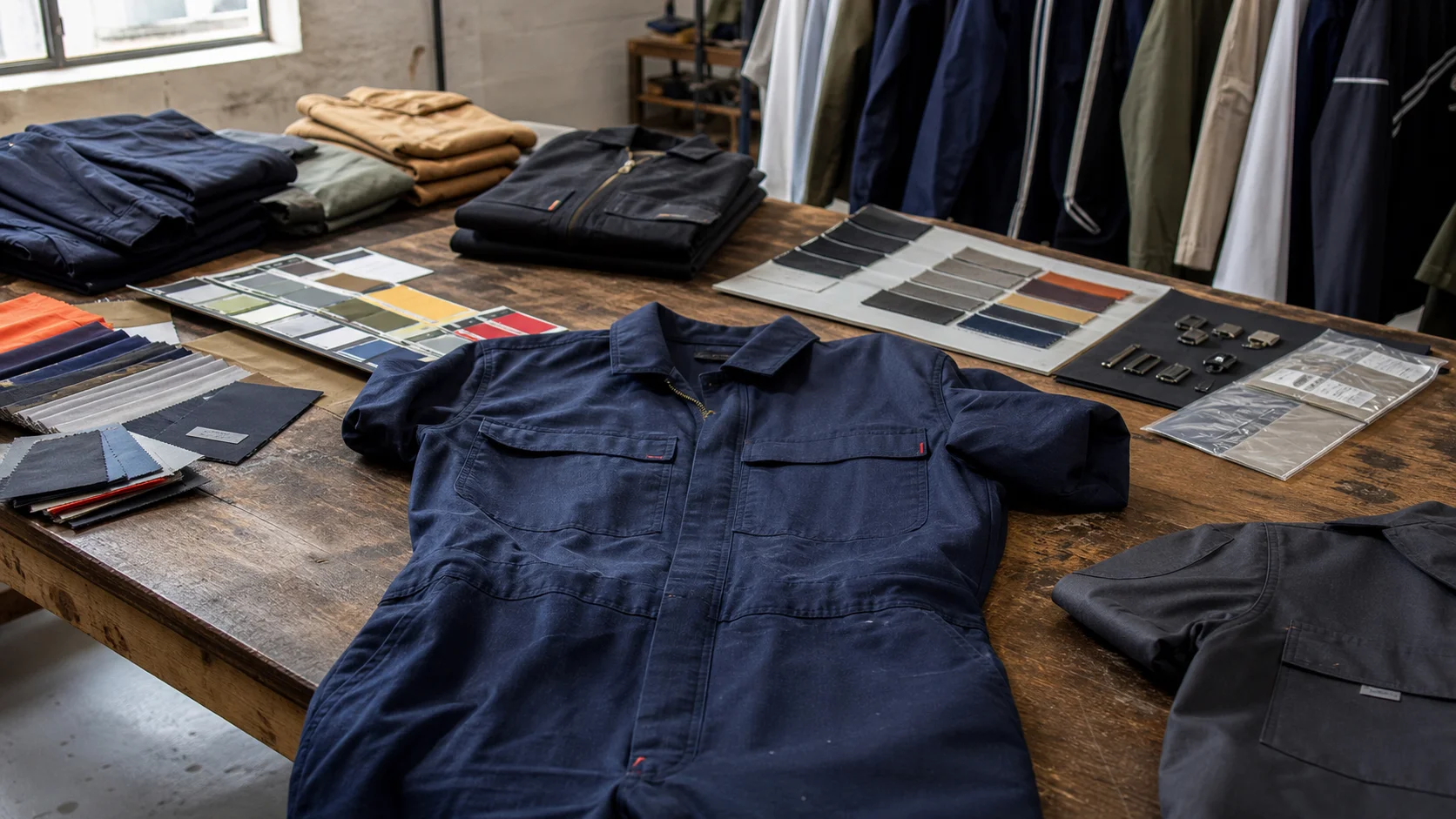
A product-specific SEO outline for restaurant groups evaluating coverall suppliers by fit, fabric, decoration, compliance, replenishment speed, MOQ, and...
Coverall Scorecard for Restaurant Group Sourcing - MOQ, Cost & Sourcing manufacturing guide
For multi-unit restaurant groups, coveralls are not just another uniform item. They sit at the intersection of food safety, laundry durability, brand presentation, cost control, and operational compliance. A weak coverall program creates hidden costs: inconsistent sizing, excessive replacements, staff resistance, delayed replenishment, and quality complaints from store managers. A strong program starts with a practical coverall supplier scorecard for restaurant groups.
This article outlines how purchasing teams, operations leaders, and uniform program managers can build a scorecard that compares coverall suppliers fairly. The focus is on MOQ, cost, sourcing, specifications, lead times, inspection risks, and the tradeoffs that matter when buying across multiple restaurant locations.
Restaurant groups often buy uniforms under time pressure. A new commissary opens, a central kitchen expands, or a sanitation process changes and the team needs coveralls quickly. The easiest decision is to choose the lowest unit price or the supplier with stock on hand. That may work for a one-time emergency order, but it is risky as a sourcing strategy.
A coverall supplier scorecard gives the buying team a structured way to compare suppliers across the same criteria. It keeps the conversation grounded in operational reality instead of sales claims. The right scorecard also helps separate a cheap quote from a reliable supply program.
Coveralls used in restaurant environments need to survive movement, repeated washing, exposure to food soils, and sometimes industrial laundering. They may be worn by prep teams, dishwashing staff, maintenance workers, production kitchen teams, delivery support staff, or back-of-house cleaning crews. Each use case has different requirements.
A scorecard is useful because it forces the team to define those requirements before asking for quotes. Without a clear specification, suppliers will quote different fabrics, trims, packaging methods, and labeling approaches. The purchasing team may think it is comparing like-for-like pricing when it is actually comparing very different garments.
Purchasing judgment: do not evaluate coverall suppliers on unit cost alone. For restaurant groups, the better supplier is usually the one that can maintain consistent specs, replenish reliably, and reduce store-level disruption.
Restaurant groups with 10, 50, or 300 locations also need scalability. A supplier that can handle a 300-piece launch may not be ready for rolling replenishment, size curve changes, regional distribution, or private-label packaging. A practical scorecard should reward suppliers that can support the full lifecycle of the program, not just the first purchase order.
A useful coverall supplier scorecard for restaurant groups should be weighted. Not every category carries the same importance. If the garment is used in food production or sanitation, quality and compliance may outweigh price. If the coverall is mainly used for light maintenance or occasional back-of-house tasks, cost and availability may carry more weight.
The following structure is a practical starting point:
Scorecard Category Suggested Weight What to Evaluate MOQ and Reorder Flexibility 15% Opening order MOQ, size/color minimums, replenishment rules, split shipment options Total Cost 20% Unit price, sampling fees, freight, duties, packaging, shrinkage, replacement rate Fabric and Construction 20% Fabric weight, fiber content, seam strength, closures, pockets, wash durability Lead Time and Reliability 15% Sample timing, bulk production timing, capacity, reorder lead time, rush options Quality Control 15% Inspection process, measurement tolerance, color control, defect handling, AQL readiness Service and Program Support 15% Communication, documentation, size support, account management, issue resolutionThis weighting can be adjusted. A restaurant group with strict food safety protocols may assign more weight to fabric, construction, and quality control. A fast-growing franchise group may place more emphasis on lead time, reorder flexibility, and supplier service.
Teams comparing vendors for broader uniform programs can also review supplier capabilities through a partner such as Fabrik Services, especially when specifications, sampling, and sourcing coordination need to be managed together.
MOQ is one of the first filters in any coverall sourcing project. It is also one of the most misunderstood. A supplier may advertise a low MOQ, but that number may apply only to blank stock coveralls in standard colors. Custom fabric, branded trims, embroidery, woven labels, contrast stitching, or special packaging can change the minimum quickly.
Typical MOQ ranges vary by sourcing model:
Restaurant groups should score MOQ based on practical fit, not simply the lowest number. A very low MOQ can mean higher unit prices, limited fabric choices, and inconsistent replenishment. A higher MOQ can reduce cost but create inventory risk if the size curve is wrong or if locations have uneven usage.
The scorecard should ask specific MOQ questions:
For restaurant groups, reorder flexibility is often more valuable than a slightly lower opening cost. Staff turnover, seasonal hiring, and new store openings create irregular demand. A supplier that can support 50-piece replenishments at a predictable price may be more useful than one that requires a 500-piece reorder every time.
Purchasing judgment: choose the MOQ model that matches your operating rhythm. If store openings are frequent and staffing changes are high, pay more attention to replenishment terms than the first-order discount.
The lowest quoted coverall price is rarely the true program cost. A restaurant group needs to look at landed cost, usable life, replacement rate, and administrative burden. A coverall that costs less upfront but shrinks, fades, loses snaps, or tears at the crotch seam can become more expensive within a few laundry cycles.
A proper cost score should include:
When comparing suppliers, request pricing at multiple quantity levels. A useful structure may include 100, 300, 500, 1,000, and 2,500 pieces. This shows where the cost curve changes and whether the supplier is competitive only at one volume tier.
Restaurant groups should also ask whether pricing is valid for a fixed period. Fabric, trims, labor, and freight costs can move. A quote that is valid for 15 days is not enough for a chain-wide rollout that needs internal approvals. For stable planning, ask suppliers to confirm price validity for 30, 60, or 90 days, or provide a clear adjustment mechanism for future reorders.
Cost tradeoffs are direct. Cotton-rich coveralls may feel better and breathe well, but they may shrink more and wrinkle faster if not specified correctly. Polyester-rich blends often hold color and shape better, but they can feel warmer in hot kitchens. Heavier fabric may improve durability but reduce comfort. A cheaper snap may pass a first inspection and still fail after repeated laundering.
The scorecard should reward suppliers that explain these tradeoffs clearly. Vague answers on fabric performance, wash testing, or trim durability should reduce the score, even if the price is attractive.
A restaurant group should not ask suppliers to “quote coveralls” without a technical specification. That creates inconsistent submissions and makes price comparison unreliable. The buying team should define the intended use, wash process, required branding, and acceptable performance standards.
Common fabric options include:
Trim specifications deserve close attention. Low-grade trims often cause the most visible failures. A supplier scorecard should evaluate zippers, snaps, buttons, elastic, thread, labels, and pocket reinforcement. For foodservice, loose trims can also become a safety concern if they detach in a production area.
Key construction points include:
For restaurant groups, pockets should be reviewed carefully. Too many pockets may look functional but can create hygiene or foreign-object concerns in food production areas. A maintenance team may need chest and tool pockets, while a central kitchen prep team may need fewer external storage points.
Branding should also be specified. Embroidery is durable but can add stiffness, cost, and lead time. Heat transfers can look clean but must be wash-tested, especially if industrial laundering is used. Woven labels can support brand consistency, but custom labels often increase MOQ and development time.
Teams that need help defining specifications before approaching vendors can use resources such as Fabrik’s sourcing background to understand how apparel development and supplier selection fit together.
Sampling is where many uniform programs either become disciplined or start drifting. Restaurant groups should treat coverall samples as operational test units, not showroom pieces. The goal is to confirm fit, function, durability, branding, and wash behavior before bulk production.
A typical sample approval process includes:
Sample timing depends on the sourcing route. Stock sample review may take a few days. Domestic custom samples often take 1 to 3 weeks. Overseas custom development may take 2 to 5 weeks or longer, especially if fabric or trims must be sourced separately.
Fit testing should include real movement. Wearers should bend, reach, lift, kneel, climb stairs, and work through typical job tasks. Coveralls that look acceptable while standing may pull across the back, bind at the crotch, or restrict the shoulders during actual work.
Restaurant groups should test the size curve before committing to a large order. A practical pilot may include small, medium, large, XL, 2XL, and selected tall or extended sizes. The pilot should capture feedback by role and location type. A central kitchen team may need different ease than a store-level maintenance team.
Purchasing judgment: never skip the wash test. Many coverall problems appear only after laundering, especially shrinkage, puckering, fading, label curling, and logo failure.
Lead time is not one number. It is a chain of dependencies. A supplier may quote 45 days for bulk production, but that clock may start only after sample approval, deposit payment, fabric availability, trim confirmation, and artwork approval. Restaurant groups should score suppliers on how clearly they define the timing path.
Typical lead-time ranges may include:
Lead time can be affected by size range, fabric availability, lab dip approvals, trim sourcing, logo method, packaging, inspection scheduling, and freight mode. Air freight may solve an urgent need but can damage the economics of a low-cost overseas order. Ocean freight can reduce cost but adds planning risk if store openings are fixed.
The scorecard should include supplier responsiveness during pre-production. Slow answers before an order usually predict slow answers after payment. A supplier that takes a week to clarify fabric weight or measurement tolerance may struggle when bulk issues appear.
For restaurant groups, phased rollouts often work better than one large launch. The first phase can cover pilot locations or one operating region. The second phase can adjust size ratios based on actual usage. The final phase can move into broader deployment with better inventory confidence.
Coveralls have predictable quality risks. A restaurant group should list these risks in the scorecard and ask suppliers how they prevent them. General claims about “high quality” are not enough. The buying team needs measurable controls.
Common inspection risks include:
Inspection criteria should be written before production starts. Measurement tolerances often range from plus or minus 0.5 inch to 1 inch depending on the point of measure and garment type. Critical areas such as chest, waist, inseam, sleeve length, and torso length should be checked because coverall fit is less forgiving than a shirt or apron.
AQL inspection can be useful for larger orders. Restaurant groups should ask whether the supplier supports pre-shipment inspection and whether the cartons can be made available for third-party review. For smaller orders, internal final inspection may be enough, but the supplier should still provide measurement reports and photos when requested.
Color control is another practical issue. Black, navy, charcoal, and white are common in restaurant uniform programs, but each presents risks. Black and navy can show shade variation and fading. White can show contamination, transparency, or yellowing. Charcoal can vary noticeably between dye lots. If the coveralls are customer-facing or brand-sensitive, lab dips and bulk shade approvals matter.
Packaging inspection should not be ignored. Restaurant groups often need size stickers, carton labels, store packs, or employee-level packing. Incorrect packing can create heavy administrative work for field teams. A supplier that scores well on packaging accuracy can save hours during rollout.
The following table gives a practical scoring model for comparing coverall suppliers. Scores can be assigned from 1 to 5, then multiplied by the category weight. A score of 5 should require evidence, not just a supplier promise.
Criteria Score 1 Score 3 Score 5 MOQ Fit High MOQ with poor size flexibility Acceptable MOQ with some limits MOQ supports launch and replenishment needs Cost Transparency Only unit price provided Most costs listed, some gaps Full landed cost and future pricing structure provided Fabric Specification Vague fabric description Basic fabric details provided Clear fiber, weight, finish, and wash performance details Sample Process No structured approval steps Samples available with limited documentation Proto, fit, wash, and pre-production approval process defined Lead Time Reliability Unclear timing and dependencies General timeline provided Detailed timeline with approval milestones and risk points Inspection Readiness No inspection documentation Basic final checks available Measurement reports, defect standards, and pre-shipment inspection support Reorder Support Reorders treated like new bulk orders Reorders possible but costly Clear replenishment terms, size flexibility, and inventory planning supportThis model gives the purchasing team a shared language. It also reduces internal conflict. Operations may care most about comfort and availability. Finance may focus on cost. Brand teams may care about appearance and consistency. A scorecard keeps all of these priorities visible.
A scorecard works best when introduced before supplier outreach. If the team builds the scorecard after quotes arrive, the process often becomes biased toward the cheapest or fastest option. Start with the operational brief, then send the same request to each supplier.
A practical implementation process includes:
For restaurant groups, the scorecard should also include internal feedback. Store managers, kitchen leads, laundry partners, and employees may notice problems that procurement cannot see from a quote sheet. Their input should be structured, not anecdotal. Use simple feedback forms covering comfort, mobility, heat, ease of dressing, pocket usefulness, and post-wash appearance.
Supplier communication should be scored during the process. Clear answers, accurate documents, and realistic timing matter. If a supplier overpromises during quoting, the risk increases during production. If a supplier asks detailed questions about wear conditions and laundering, that is usually a positive sign.
The final award does not always need to go to one supplier. Some restaurant groups benefit from a dual-source strategy: one supplier for standard stock replenishment and another for custom branded programs. Dual sourcing can reduce risk, but it can also create shade, fit, and specification inconsistency. If two suppliers are used, the technical standard must be tightly controlled.
Teams planning a new coverall program or reviewing existing suppliers can start a sourcing conversation through Fabrik’s contact page. The most productive discussions usually begin with target volume, use case, current pain points, and required delivery timing.
A coverall supplier scorecard for restaurant groups should be practical, weighted, and evidence-based. The goal is not to create paperwork. The goal is to reduce sourcing mistakes that become expensive at scale.
The strongest suppliers are usually not the ones with the most polished catalog. They are the suppliers that can explain MOQ structure, document fabric and trim specifications, manage samples properly, commit to realistic lead times, and support inspection before shipment. They should also understand that restaurant uniform programs are operational tools, not fashion buys.
For most restaurant groups, the best purchasing decision is a balanced one: durable enough for repeated washing, comfortable enough for daily use, flexible enough for replenishment, and costed clearly enough for budget planning. If a supplier cannot support those basics, a low price should not carry the decision.
Get a free quote from Fabrikn — your trusted B2B clothing manufacturer with 10+ years of experience. MOQ as low as 200 pieces.
Get a Free Quote →A coverall supplier scorecard is a structured evaluation tool used to compare vendors across criteria such as MOQ, cost, fabric quality, lead time, sampling, inspection controls, and replenishment support. It helps restaurant groups make sourcing decisions based on operational fit rather than unit price alone.
Stock coveralls may be available from 24 to 100 pieces, while custom coveralls commonly start around 300 to 1,000 pieces per style or color. Custom fabric, labels, packaging, or special trims can push MOQs higher. Reorder MOQ is often more important than opening MOQ for multi-unit restaurant groups.
Polyester/cotton twill is a common choice because it balances durability, color retention, and cost. Cotton-rich fabrics may improve comfort but need shrinkage control. Stretch blends can improve mobility but usually cost more and require careful wash testing.
Compare landed cost, not just unit price. Include decoration, sampling, freight, duties, packaging, inspection, shrinkage, replacements, and replenishment surcharges. A cheaper coverall can cost more over time if it fails quickly or creates operational problems.
A disciplined process usually includes a proto sample, fit sample, wash test sample, and pre-production sample. The final approved sample should confirm fabric, trims, measurements, branding, labels, and packaging before bulk cutting begins.
Common risks include shrinkage, seam failure, shade variation, broken snaps, zipper problems, poor logo durability, incorrect size labels, and measurement deviations. Restaurant groups should define inspection standards before placing bulk orders.
One supplier usually improves consistency in fit, color, and specifications. Multiple suppliers can reduce supply risk and improve flexibility, but only if the restaurant group controls the technical standard tightly. Dual sourcing without strict specifications can create mismatched uniforms across locations.