
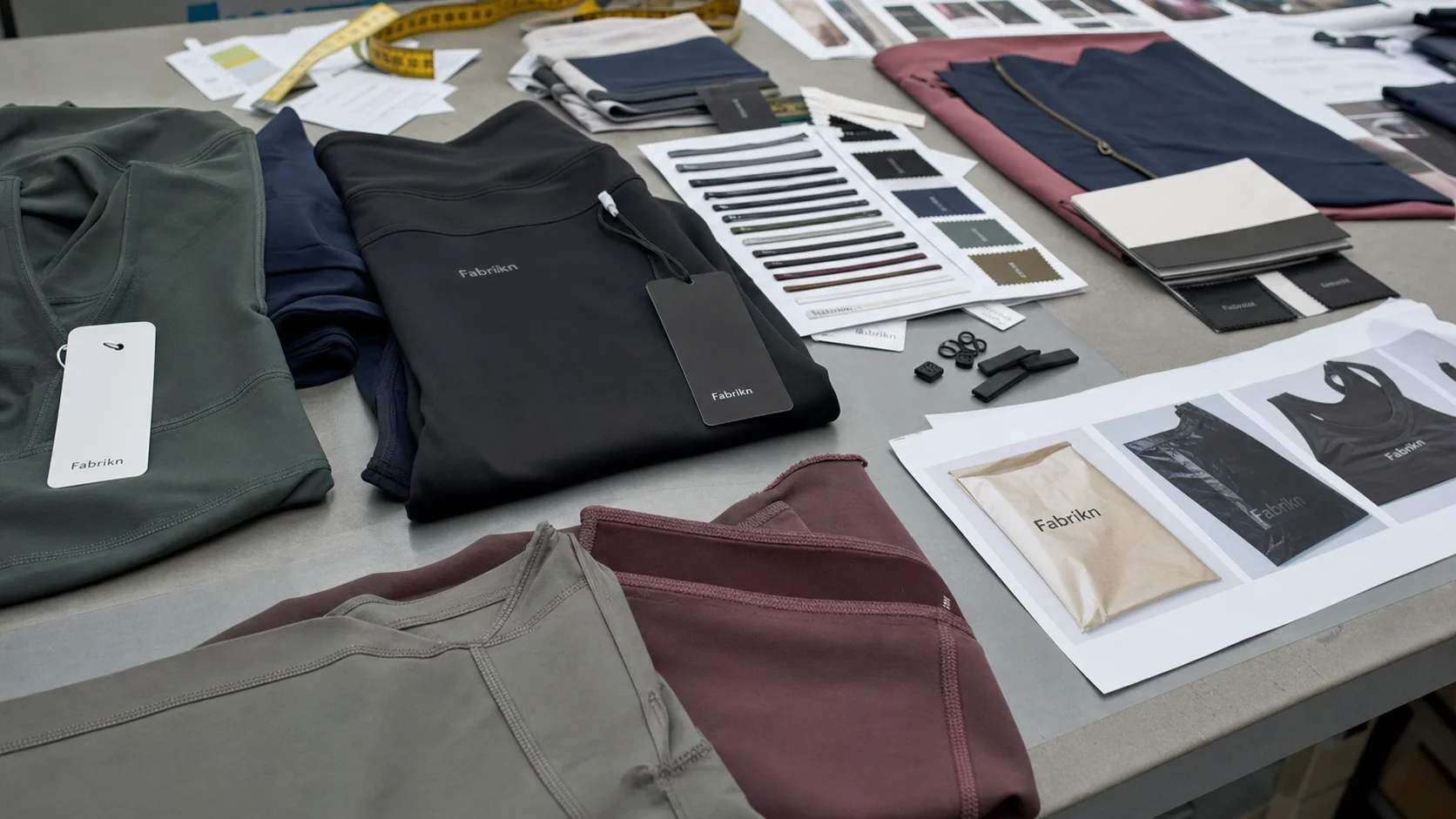
Plan MOQ, size runs, colorways, and decoration choices for custom activewear sets made for pilates studio merchandise, with a focus on small-batch buying...
Custom Activewear Sets MOQ Planning for Pilates Studios - Fabrikn production reference
For Pilates studios building merchandise around custom activewear sets, MOQ planning is not a paperwork detail. It is the point where design ambition, cash flow, sizing demand, and supplier reality meet. Studios that treat MOQ as a strategic input usually end up with cleaner assortments, better stock turns, and fewer discounting headaches. Studios that treat it as an afterthought often get stuck with awkward size runs, incomplete color orders, or fabrics that looked good in development but do not hold up in reorders.
This article covers how to think through MOQ planning for private label Pilates studio merchandise, what typically drives minimums, how sample approval affects launch timing, and where quality risk tends to show up. For studios exploring a production partner, Fabrikn’s services, about us, and contact us pages are useful starting points for understanding capability, process, and inquiry flow.
MOQ planning is important because custom activewear sets are not a single-SKU purchase. A studio may want matching leggings and sports bras, or shorts and tops, in several sizes and a small color palette. That quickly multiplies the SKU count. Every added size, color, and trim choice can influence the factory’s minimum quantity, setup cost, and fabric utilization.
For Pilates studios, the buying problem is also commercial. Merchandise is often sold in a relatively small retail environment, with customers who expect fit, comfort, and quality close to established athleisure brands. Inventory risk is real. Buy too shallow and popular sizes sell out early. Buy too deep and cash gets trapped in slow-moving sizes or colors.
The right MOQ plan should support three things at once: a believable assortment, a production order that suppliers can price responsibly, and a sales plan that does not assume every piece will move at the same speed.
MOQ ranges vary by factory, construction, and fabric sourcing method. These figures are typical planning ranges, not fixed rules:
Item Type Typical MOQ Range What Pushes It Up Cut-and-sew leggings 100 to 300 pcs per color/style Custom fabric, multiple panel seams, special waist construction Sports bras 100 to 300 pcs per color/style Complex cup support, molded inserts, bonded details Matching sets 150 to 500 total pcs, often split across pieces Multiple size curves, separate top and bottom SKUs, packaging requirements Seamless activewear 300 to 1,000 pcs per style Machine setup, yarn dyeing, knitting program cost Private label stock-based programs 50 to 200 pcs per logo placement or embellishment Blank garment availability, decoration method, label changesThese ranges shift depending on whether the studio is ordering from a blank stock program or a true custom development program. A stock garment with a heat-transfer logo can often start lower than a fully custom pattern and fabric package. That lower entry point is useful for first runs, though it limits control over hand feel, fit, and brand differentiation.
Fabric is usually the biggest MOQ driver. A factory using mill-stock fabric can often support lower minimums than a program requiring custom-dyed or custom-knit material. Performance fabrics such as nylon-spandex or polyester-spandex blends are commonly used for Pilates sets. When a studio wants a specific opacity level, compression feel, or brushed finish, the supplier may need to reserve or develop fabric in larger quantities.
Each color adds risk. A black set may be easy to repeat, but a seasonal sage, plum, or mineral blue can force a larger fabric commit. Studios often underestimate how quickly color variation expands the order. Three colors across four sizes and two garment types is not a small run anymore. It is a layered inventory decision.
MOQ is not only about total units. It is also about how those units are split across sizes. Pilates studios often sell a tighter range than mass retail, but the balance still matters. If small and medium dominate, it may be tempting to reduce large and extra-large quantities. That can create service issues later if the studio’s client base is broader than expected.
Simple yoga-style sets are cheaper to produce than sets with contour seams, hidden pockets, bonded hems, or intricate strap work. More pattern pieces mean more sewing time and higher defect risk. Bonding and laser-cut details can look sharp, but they require tighter process control and more reliable factory capability.
Screen print, heat transfer, embroidery, woven labels, hang tags, and custom polybags each add a different kind of minimum. A woven neck label might be practical even on smaller programs. A full custom packaging setup can become inefficient unless the order is large enough to absorb the packaging cost.
Good MOQ planning starts with the studio’s actual merchandise role. Is the line intended as a brand extension, a profit center, a member perk, or a seasonal drop? The answer changes how much inventory risk is acceptable.
First orders should usually be lean. A practical launch may include one legging, one bra or crop top, and one colorway in a controlled size curve. That keeps development manageable and makes it easier to test sell-through. A broad launch looks attractive on paper, but it often dilutes the order and weakens the factory’s ability to price efficiently.
Studios with existing apparel sales should use their own transaction history to shape the curve. In the absence of direct data, a cautious approach is better than guessing. Many studios over-order small sizes because they are easier to merchandise visually. Real demand often lands differently across the full membership base.
One practical tactic is to treat in-studio display samples as a separate budget line from the sellable order. Sample units help with fitting, social content, and merchandising. They should not be counted as core stock. A clean separation prevents false confidence in launch readiness.
The first production order should be built with a reorder path in mind. That means choosing fabrics, trims, and labels that can be repeated within a reasonable lead time. A one-time novelty fabric may get attention, but it can be a poor choice if the studio wants continuity.
A low MOQ is useful only when it leaves room for a second order. If the first run cannot be repeated without redesign, the initial unit cost may look acceptable while the long-term merchandising plan becomes brittle.
Sampling is where many activewear programs slip. The garment may appear straightforward, but fit, stretch recovery, stitch quality, and fabric opacity usually need several checks before bulk approval.
Some suppliers collapse these stages if the design is simple and the material is standard. That can save time, but it raises the risk of bulk variation. For a Pilates studio, where touch, stretch, and silhouette matter, a proper sample chain is usually worth the time.
Fit should be tested during movement, not only while standing still. Waistband roll-down, strap stability, crotch comfort, seam placement, and squat opacity deserve attention. A studio should also check whether the brand logo sits correctly after stretch. A logo that looks centered on the hanger can shift badly once the garment is worn.
Fabric hand feel is another point that is easy to misread. A soft brushed surface may feel premium but may show wear faster. A firmer compression fabric may last better, though some customers will find it less comfortable. The right choice depends on the studio’s price point and audience expectations.
MOQ planning improves when the material package is settled early. If the fabric and trims keep changing, the factory will either widen the minimum or absorb the uncertainty in pricing.
For Pilates wear, mid-weight fabrics are common because they balance comfort and coverage. Light fabrics can feel breathable but may be less forgiving in deeper stretches. Heavy fabrics can look premium and support better compression, though they may run warmer and cost more to ship.
Every trim decision has a cost effect. Custom elastic and branded packaging increase identity, but they also increase lead time and minimums. Studios often get better economics by keeping the garment simple and using branding in one or two controlled places.
Lead time is shaped by more than sewing capacity. Fabric development, strike-off approval, trim sourcing, size set approvals, and production scheduling all matter. A small order with difficult fabric can take longer than a larger order using stock material.
A practical timeline for a custom activewear set might look like this:
Those ranges can extend quickly if approvals are slow or if corrections are needed after samples are reviewed. Holiday congestion, fabric mill delays, and packaging changes also push timelines outward. Buyers should build in buffer time if merchandise is tied to a class launch, seasonal event, or membership campaign.
Inspection is not only about rejecting bad pieces. It is also about learning whether the style can be repeated cleanly. For activewear sets, the most common issues are not dramatic. They are usually consistency problems.
Inspection should include both appearance and performance checks. A garment can pass visual review and still fail in use if seams pop, compression relaxes too quickly, or elastic twists after laundering. That matters for Pilates studio merchandise because customers notice quality quickly and tend to compare pieces against premium retail alternatives.
Order consolidation is another practical issue. If a studio is buying multiple styles, it may be tempting to combine them into one shipment for efficiency. That can reduce freight complexity, but it also makes it harder to isolate defects by style if problems arise later.
Small starts are sensible when the studio is testing a new design, a new supplier, or an unproven color. Small starts are less sensible when the merchandise is meant to anchor a wider brand rollout and the studio already knows its audience. The mistake is to treat all launches the same.
Start smaller when the fabric is new, the fit is unproven, or the product will sit in a narrow retail channel with uncertain turnover. Commit more confidently when the design is straightforward, the supplier has a stable material package, and the studio has reason to believe the style will be reordered.
Another useful rule is to avoid over-engineering the first launch. Many studios do not need six colors and five trims. They need one dependable set that fits well, looks coherent in photos, and can be reordered without starting over. Simplicity lowers MOQ pressure and usually improves the buyer’s odds of a clean first season.
For studios comparing supplier options, the key question is not just who can quote the lowest unit cost. It is who can hold fit, repeat fabric, and keep the order workable across samples, bulk, and reorder. Fabrikn’s services page is a logical place to review support scope before moving to a direct conversation through contact us.
Get a free quote from Fabrikn — your trusted B2B clothing manufacturer with 10+ years of experience. MOQ as low as 200 pieces.
Get a Free Quote →A realistic starting point is often 100 to 300 pieces per style or color for cut-and-sew activewear, with higher minimums for seamless programs. Total set quantities may be lower or higher depending on whether tops and bottoms are ordered together or separately.
Yes, if the design uses stock fabric, simple branding, and a supplier comfortable with lower quantities. Small runs are harder to do when the fabric is custom dyed, the construction is complex, or the packaging is highly customized.
At minimum, buyers should expect a fit sample and a pre-production sample, with revisions if fit or material performance is not right. Complex styles may need more than one revision cycle before bulk approval.
There is no single best fabric. Nylon-spandex and polyester-spandex blends are common because they balance stretch, recovery, and comfort. The better choice depends on desired compression, hand feel, opacity, and price point.
The biggest risk is ordering into a style that cannot be repeated profitably. A first run that looks fine in isolation can become a problem if the supplier cannot hold the same fabric, trim, fit, or lead time for reorders.
That depends on the launch stage. Early-stage merchandise usually benefits more from lower MOQ and less risk. Once a style proves demand, unit cost becomes more important because the order can support better pricing through scale.
Custom activewear sets for Pilates studios work best when MOQ is treated as part of the product strategy, not just the supplier quote. Keep the first range tight, lock the fabric and trim package early, and judge each style by its ability to reorder cleanly. That approach is usually more profitable than chasing a wider assortment before demand is proven.