
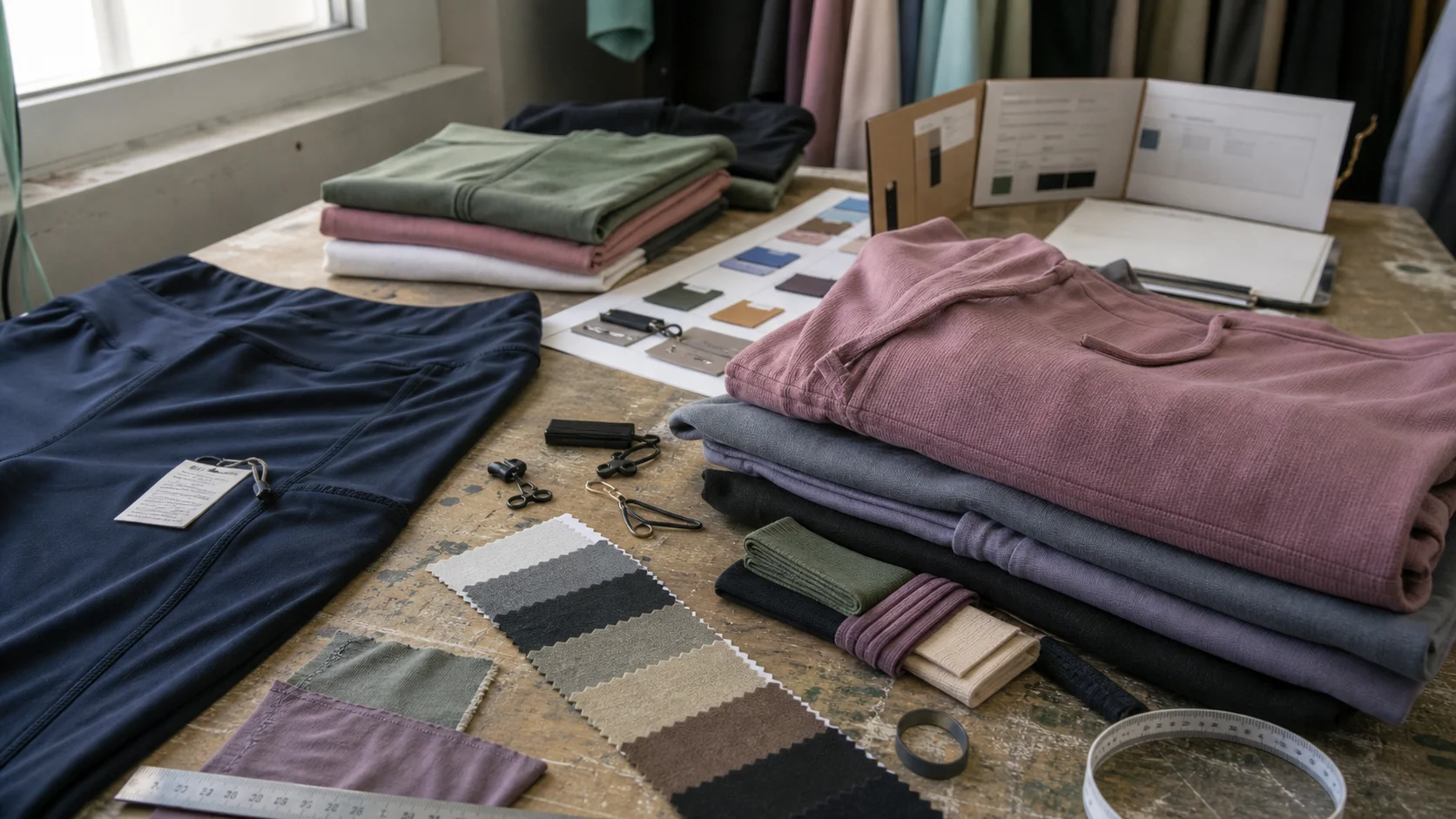
A practical outline for sourcing custom activewear sets that meet school fitness program requirements, with focus on compliance checks, decoration choices,...
Custom Activewear Sets for School Compliance - Fabrikn production reference
Schools do not buy activewear the same way clubs or retail brands do. Uniform rules, child-safety expectations, modesty standards, durability, and budget controls all sit in the same procurement file. For that reason, custom activewear sets compliance sourcing for school fitness programs needs a tighter brief than a standard sportswear order. The right set has to fit the program, meet school dress-code requirements, hold up to repeated washing, and arrive with enough consistency that teachers are not managing clothing problems during class time.
In practice, the sourcing question is not only whether a set looks suitable. It is whether the fabric weight, coverage, trim placement, sizing spread, decoration method, and production timeline can support school use without creating avoidable risk. That is where many orders fail. A garment that works for a casual gym drop may fall short once a school checks opacity, movement coverage, logo placement, or laundering performance.
“Compliance” in school activewear is broader than a logo match or a color match. It usually includes dress-code alignment, modest coverage, safe construction, age-appropriate fit, and consistency across a full size run. Schools may also expect garments to meet internal policies on fabric behavior, transparency, drawcord restrictions, and branding visibility.
For school fitness programs, compliance often means the garment must work under movement. A top that passes static inspection can still fail once students bend, stretch, or transition through class activities. That is why sourcing teams should evaluate activewear as a functional school uniform, not as ordinary sports apparel.
In procurement terms, the cleanest approach is to define compliance before sampling begins. The school or buyer should specify:
That level of detail may look strict, but it reduces back-and-forth later. A supplier can only price and plan accurately when the compliance standard is written into the brief.
School fitness programs are repetitive-use environments. Garments are worn, washed, dried, and reissued across a season or academic year. The product has to handle movement, perspiration, and frequent laundering without distorting. A low-cost set that saves money on the first invoice can become expensive if it pills quickly, fades after a few washes, or requires replacement before the school year ends.
There is also a procurement reality that matters. Schools often need predictable replenishment. That means the supplier must support size continuity, repeat color matching, and controlled lead times. When a program expands mid-year, a buyer should not be forced to switch fabrics or trims simply because the original order was not documented properly.
For that reason, custom activewear sets are usually a better sourcing decision than loosely coordinated off-the-shelf items. A matched set gives the school a consistent look, easier admin control, and a stronger position when ordering repeats. It also helps keep dress-code enforcement simple because students are issued the same approved system rather than a mix of similar products.
For school buyers, the cheapest sample is rarely the cheapest program. The useful comparison is total cost of ownership: replacement rate, fit complaints, inspection rejects, and repeat-order stability.
The strongest school program starts with practical fabric selection. Most buyers narrow the field to polyester-spandex or polyester blends because they dry quickly, handle printing well, and hold shape better than many cotton-heavy options. Breathability matters, but so does opacity. Thin, high-stretch fabrics can pass a hand-feel test and still fail in classroom movement.
Typical school activewear fabric choices include 180-220 gsm single jersey for lightweight tops, 220-260 gsm interlock or double-knit for more structured tops and joggers, and 240-300 gsm fleece or brushed fabrics for warm-up layers. Leggings and fitted shorts may need a fabric with higher elastane content for recovery, but the buyer should watch for over-compression and transparency at stress points.
Good sourcing briefs usually specify:
Fit is just as important. A school set should allow movement without becoming loose enough to violate dress code. That is a difficult balance in youth sizing, especially when the same item must work across different body shapes. Sizing charts should be measured against real garments, not only aged-up retail charts. Buyers should ask for graded specs, not just a generic size range.
Trim selection deserves attention as well. Exposed metal zips, hard toggles, bulky seam stacks, and decorative elements can create comfort and safety issues. Flat seams, soft elastic, secure labels, and covered drawcords are usually safer choices for school use. If a set includes reflective detail or heat-transfer logos, those elements should be tested for wash endurance and edge lift.
Component Common School-Safe Spec Primary Risk Top fabric Polyester-spandex, 180-220 gsm Opacity loss under stretch Legging fabric Higher-recovery knit, 220-260 gsm Sheerness, bagging at knees Waistband Wide elastic with secure stitching Rolling, twisting, poor recovery Decoration Heat transfer, screen print, or embroidery Cracking, peeling, scratch risk Closures Covered zips or no-hard-part construction Comfort and safety complaintsSchool activewear should not move straight from artwork to bulk production. A proper approval chain reduces costly mistakes. The basic sequence is straightforward: confirm the tech pack, review the fabric swatches, approve a prototype or size set sample, verify decoration placement, and sign off the pre-production sample before bulk cutting begins.
For custom school sets, a buyer should expect at least one prototype round, and often two if the school is particular about fit or branding. A more disciplined process includes wash testing on the sample, even if only a small home-launder test is available before laboratory testing. If the first sample looks right but shrinks or twists after washing, the order is not ready.
Useful approval checkpoints include:
School buyers should also avoid approving by photo alone. Images hide fabric handfeel, stretch recovery, stitch density, and trim quality. A sample may look fine on screen and still be wrong in the classroom. Physical approval is the safer path, especially when a compliance requirement is tied to modesty or safety.
MOQ for custom activewear sets varies widely by factory, decoration method, and fabric development. For many school-oriented programs, a workable starting point is often 100-300 sets per colorway or per design, though some suppliers will quote lower if they are using stock fabric and simple decoration. Full custom fabric programs can push the MOQ much higher.
Lead time depends on what is being customized. A basic order using stock fabric and standard trims may take around 25-45 days after sample approval. Add fabric dyeing, special trims, or complex decoration, and the schedule can extend to 45-75 days or more. School calendars leave little room for delay, so the buyer should build in contingency time before the start of term or sports season.
The tradeoff is simple. Lower MOQ gives flexibility, but usually raises unit cost. Higher MOQ reduces unit cost, but increases stock risk if enrollment changes or the school later revises the uniform policy. The right answer depends on the number of students, the certainty of the size curve, and whether the program expects repeat ordering.
When comparing quotes, buyers should check whether the price includes:
It is also worth asking whether repeat orders can be matched to the original shade and construction file. That matters more than many teams expect. A school may reorder the same style the next year, and a small change in fabric supplier can create a visible mismatch.
Inspection risk in school activewear is usually concentrated in a few predictable places. The first is measurement drift across sizes. The second is decoration failure, especially cracking, peeling, or crooked placement. The third is fabric inconsistency, where one production lot feels heavier, thinner, or less elastic than the approved sample.
Length, rise, inseam, and waistband stability should be checked carefully. In student wear, a small tolerance miss can become a complaint very quickly. If the school requires modest coverage, even a minor measurement issue can push a garment outside policy. Buyers should insist on a tolerances sheet and a clear AQL or inline inspection plan where possible.
Common inspection risks include:
School buyers should treat packing control as part of quality control. Sets often ship in size runs, and a single carton error can create distribution problems on campus. Carton labels, size stickers, and packing lists need to be checked against the purchase order before goods move.
Customization should support compliance, not work against it. For school programs, understated branding often performs better than large or high-build decoration. A clean chest logo, a small leg mark, or a tonal print is usually easier to approve and easier to wear across different activities.
Screen printing is cost-effective for simple logos and larger order volumes. Heat transfer works well for sharper detail, though buyers should verify wash durability. Embroidery has a premium look and usually lasts well, but it can add stiffness and may not be ideal on lightweight activewear. The right method depends on fabric weight, logo detail, and comfort expectations.
Names and numbers are less common in pure school fitness sets than in teamwear, but they may be requested for house systems, PE groups, or inter-school events. If personalization is required, the factory needs a tighter label and packing workflow. That increases handling complexity, which is one more reason to confirm the brief before production starts.
For practical sourcing, the best customization is usually the one that survives repeated washing without affecting comfort. Fancy decoration is easy to specify. Durable decoration on stretch fabric is the harder problem.
Before placing a school activewear order, the buyer should lock down the essentials. Missing one of these items can delay approval or create a correction charge later.
Buyers sourcing through a manufacturing partner should also ask how repeats will be handled. Repeatability is a core part of compliance sourcing. A school needs confidence that a mid-year replenishment will match the original set closely enough that it does not look like a different program.
For sourcing support, buyers often review manufacturing service capability, then move to sampling and price discussion. Fabrikn’s services page is a useful place to start when evaluating custom development and production support. For a direct project inquiry, the contact page is the practical next step. Background on company scope and approach sits on the about page, which helps when comparing suppliers before requesting samples.
If the budget is tight, keep the focus on fabric performance, fit consistency, and wash durability before spending on complex decoration. A school program needs garments that students can wear comfortably and that administrators can distribute without complaint. That usually means a modest design, controlled trims, and materials that are easy to repeat.
If the program is likely to repeat for several terms, invest more time in fit development and spec documentation. That upfront work reduces rework later. A strong tech pack and approved sample set are worth more than a slightly lower per-unit price from an unclear quote.
If the school has strict compliance rules, the safest sourcing choice is a supplier that can handle documentation cleanly, show physical samples early, and keep size and color control stable across the run. The cheapest route is rarely the cleanest route in school uniform procurement.
Get a free quote from Fabrikn — your trusted B2B clothing manufacturer with 10+ years of experience. MOQ as low as 200 pieces.
Get a Free Quote →It usually means the garment meets school dress-code standards for coverage, modesty, safety, and appearance. Compliance also covers fit consistency, fabric opacity, and decoration placement, especially where students need to move, stretch, or train in the same outfit.
Many suppliers quote around 100-300 sets per style or colorway for school-oriented programs, though the actual MOQ depends on fabric choice, customization level, and whether the factory is using stock materials or developing something from scratch.
One prototype is common, but two rounds are often more realistic when the program has strict fit or compliance rules. A buyer should also request a pre-production sample before bulk approval.
Polyester-spandex blends are often the practical starting point because they dry quickly, hold shape, and print well. The better choice depends on the garment type, required opacity, and wash durability. Fabric weight and recovery matter as much as fiber content.
For stock-fabric custom sets, 25-45 days after sample approval is a common planning range. If the order needs custom dyeing, special trims, or complicated decoration, lead time can extend to 45-75 days or longer.
Fit and fabric inconsistency are usually the biggest problems. A small measurement drift, poor opacity, or decoration failure can turn a usable school set into a rejection issue. Packing mistakes are also costly because they disrupt distribution by size.
That depends on the fabric and the use case. Print is often lighter and cheaper. Embroidery can be durable, but it may feel stiff on lightweight activewear. For school fitness use, the cleaner and more comfortable option is often the better purchase.