
A focused outline for sourcing trims on custom activewear sets for running club merchandise, covering functional trim choices, decoration compatibility,...
Custom Activewear Sets Trim Sourcing for Clubs - Fabrikn production reference
Running clubs buying custom activewear sets usually focus on color, fit, and print quality first. Trim is the part that gets treated like an afterthought, and that is where a lot of preventable problems start. Zippers fail early, drawcords shrink unevenly, labels irritate skin, and elastics lose recovery after a few washes. For club merchandise, those faults show up fast because members wear the same pieces repeatedly, train in them often, and judge quality by touch as much as by appearance.
Trim sourcing matters even more when the order includes decorated garments. A good print or embroidery placement can still be undermined by poor waistband elastic, weak stitching, or a scratchy heat-transfer label. Buyers who understand the trim package early usually get cleaner approvals, fewer last-minute substitutions, and fewer complaints after delivery. That is the point of a disciplined sourcing process: make the garment durable, comfortable, and repeatable before production starts.
Running club merchandise is not the same as generic gymwear. Club orders often carry a shared identity, a seasonal event, or a race-day purpose. That makes consistency important. A set that looks good in a mockup can still fail in wear if the trim package was chosen without enough attention to function.
Trim is the collection of non-fabric components in a garment. That includes drawcords, zippers, zipper pullers, waist elastic, labels, tags, sewing thread, piping, toggles, Velcro, snaps, and sometimes reflective details. In activewear, these details have a direct effect on comfort and durability. They also influence unit cost more than many buyers expect. A modest trim change can move the garment from value-tier to mid-tier pricing very quickly.
For running clubs, the right trim package helps merchandise feel like usable kit rather than promotional apparel. Members notice if the waistband twists, the cord is too short, or the zipper garage rubs on the neck. They also notice when the branding holds up through wash cycles. The best sourcing approach starts with the end use: training, warm-up, travel, recovery, or race-day layering.
Most custom activewear sets for clubs include a top and bottom, though some programs use jacket-and-pant combinations or matching shorts and singlet sets. Each style brings a different trim load.
Bottoms usually rely on elastic waistbands, sometimes with an internal or external drawcord. For club merchandise, elastic recovery matters as much as size. A waistband that relaxes too soon creates a poor fit after a few washes. Typical elastic widths range from 20 mm to 40 mm depending on garment design and size spread. Branded elastic can be an option, but it usually raises cost and adds lead time.
Drawcords should be specified clearly. Round cords, flat cords, and matte polyester cords each behave differently. Flat cords are common in sports bottoms because they sit neatly and are less likely to dig in. Ends may use heat-sealed tips, metal aglets, or simple stitching. Metal tips look premium, but they can increase weight and inspection risk if plating quality is uneven.
Jackets, half-zips, and some tops use coil zippers or molded plastic zippers. Coil zippers are generally smoother and lighter. Molded zippers can feel more robust, but they are not always the better choice for lightweight activewear. A zipper specification should cover tape color, tooth size, puller style, lock type, and whether a garage or chin guard is needed.
For club use, a low-profile zipper puller is often the practical choice. Oversized decorative pullers can snag, scratch, or rattle. If the item is intended for warm-up layering, a zipper guard at the neck is worth the extra cost. That small detail often improves wearer comfort more than a more expensive fabric swap.
Labels affect comfort and brand presentation. Heat-transfer labels, woven neck labels, and printed satin labels each solve a different problem. A heat-transfer label is useful for reducing irritation in performance garments, but the print has to survive repeated stretch and laundering. Woven labels are durable and give a more traditional branded feel, though they can be itchy if placed carelessly.
Care labels should not be treated as filler. They need the right content, size, and language for the sales market. A careful buyer asks for a care instruction format before sampling begins. Rework after approval is slower and more expensive than getting the wording right at the start.
Thread is a trim decision, not just a sewing decision. Polyester thread is usually preferred for activewear because it handles stretch and moisture better than cotton thread. Stitch type matters too. Flatlock, coverstitch, overlock, and bartack each serve different functions. If a garment uses stretch fabric, the wrong stitch construction can limit movement or cause broken seams.
Reinforcement at pocket openings, zipper stops, and stress points should be confirmed in the sample. Small club orders often receive less attention than larger commercial programs, which is why a clear trim sheet and construction spec become especially important.
Running clubs often request reflective details for visibility during early morning or evening use. Reflective tape, heat-transfer reflective logos, and piping all serve slightly different purposes. Reflective components can add a premium feel, but they need to be tested on the actual base fabric. Some materials show poor adhesion after heat pressing, especially when coatings or water-resistant finishes are involved.
Trim sourcing is easier when the fabric direction is settled first. The base fabric influences which trims will work reliably. For example, bonded or brushed surfaces may not accept all heat-transfer applications equally well. Waterproof or water-repellent fabrics often require zipper and tape choices that differ from standard jersey or interlock garments.
Common trim material choices for club activewear include polyester cords, nylon coil zippers, silicone or TPU branding elements, woven polyester labels, and polyester sewing thread. Nylon components tend to be softer in hand, while polyester is often more stable across wash cycles. The right answer depends on whether the garment is meant to feel technical, durable, or cost-controlled.
Fabric and trim compatibility should be checked early. A brushed fleece pant with a lightweight cord can look underbuilt. A delicate stretch top with a heavy zipper can look overdone. Good trim sourcing keeps the garment balanced.
Trim Item Common Options Practical Buying Note Waist cord Flat polyester, round polyester, elastic cord Flat cords are usually easier to wear and pack cleanly Zipper Coil, molded plastic, auto-lock, non-lock Coil zippers suit lighter performance garments better Label Heat-transfer, woven, printed satin Heat-transfer reduces skin irritation if durability is proven Thread Polyester, high-tenacity polyester Match thread strength to stretch and seam stress Reflective detail Transfer film, tape, piping Test adhesion on final fabric before bulk approvalMinimum order quantity for custom activewear sets varies widely by factory, decoration method, and trim complexity. A practical club-sized MOQ may start around 50 to 100 sets for simplified programs, while more typical factory expectations sit closer to 100 to 300 sets per colorway or style. If a garment needs custom trims, color-matched zippers, or branded elastic, the MOQ can move higher. Suppliers are usually more flexible on standard trims than on custom-made trim components.
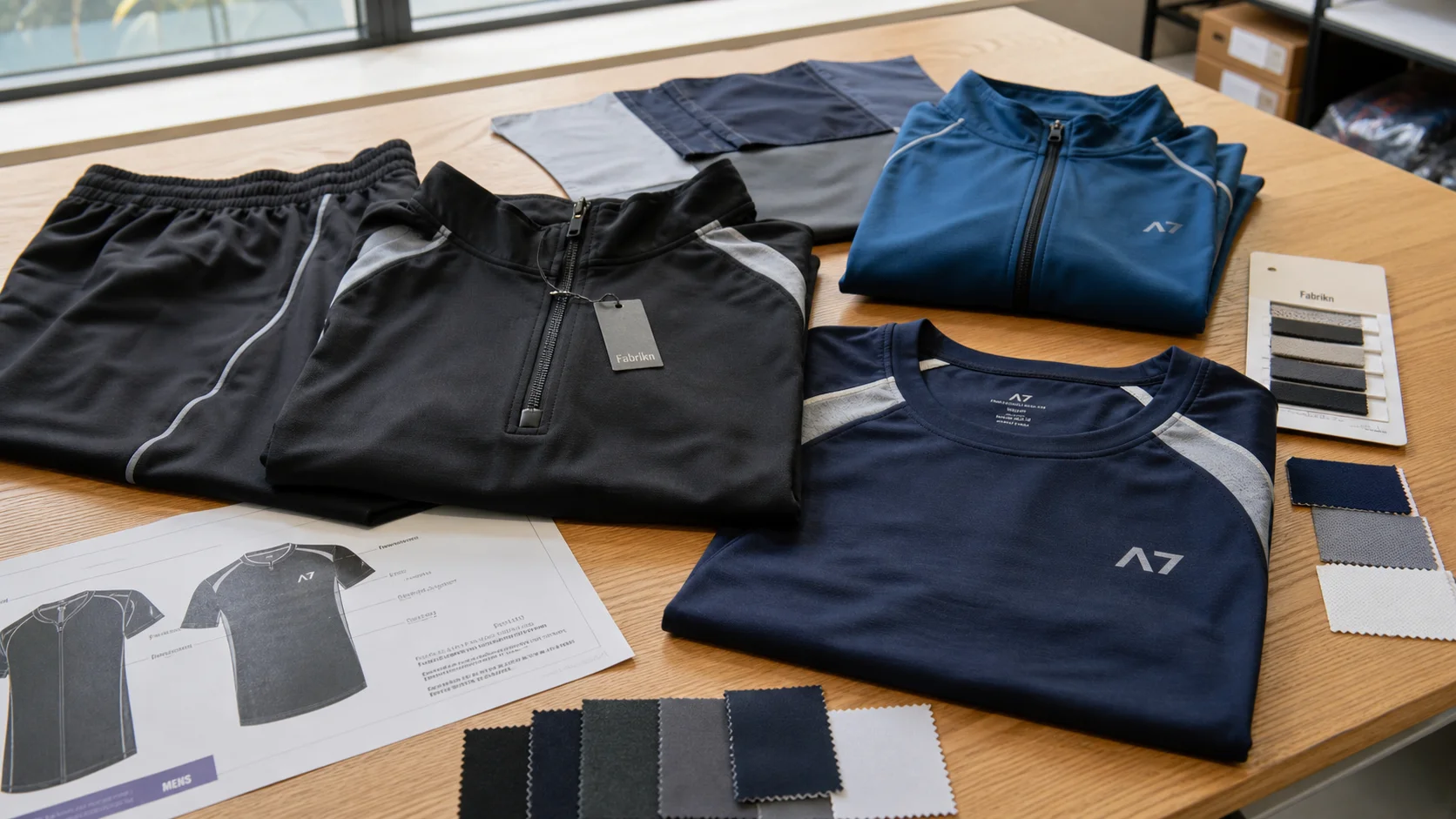
The sample approval process should be treated as part of purchasing, not as a courtesy. A proper sequence usually includes a tech pack or specification sheet, trim card review, prototype sample, fit sample if needed, and a pre-production sample or size set confirmation before bulk cutting. Each step exposes a different risk. A prototype may confirm layout but not fit. A fit sample may confirm size but still miss trim quality issues.
Buyers should ask for physical trim swatches whenever possible. Color on screen is not enough for zippers, labels, cords, or reflective film. If the club has a tight brand palette, Pantone or lab-dip confirmation may be required for fabric and certain trims. The more precise the color requirement, the more likely lead time will stretch.
A useful rule for club merchandise: approve the trim package before you approve decoration placement. Once artwork, seam positions, and trim channels are locked, late changes are expensive and usually visible.
Lead time depends on stock availability, trim customization, and decoration complexity. Standard trims from existing inventory move faster. Custom zipper pullers, dyed-to-match elastics, embossed branding, or special reflective materials add time. A reasonable production lead time for a basic program may sit around 20 to 35 days after sample approval, but that can extend if trims need development or if the order is split across multiple sizes and colors.
Several risks show up again and again. Color inconsistency is common when trim color is matched loosely to fabric. Label placement can drift if the factory does not use a clear measuring method. Zippers can arrive from one source and pullers from another, which creates visible mismatch. Elastic can vary in width or recovery if the supplier substitutes without approval. Those problems are often preventable with a tight spec sheet and clear incoming-material checks.
Inspection risk increases when orders combine decoration with stretch garments. Heat applied during printing can distort trim parts, especially on lightweight tops. Poor stitch tension can pucker around elastic channels or pocket openings. A club order does not need luxury-level complexity to run into trouble. It only needs one poorly controlled detail.
Because this article sits in the Decoration & Printing category, the decoration method should be part of the trim conversation from the start. For running club merchandise, common decoration options include screen printing, heat transfer, sublimation, embroidery, and reflective transfer films. The right choice depends on fabric type, visual effect, budget, and wash durability.
Sublimation works well on polyester garments when the artwork is colorful and full-coverage. The tradeoff is that it requires compatible fabric and usually white or light-base synthetic cloth for best color. Screen printing can be cost-effective for simple logos, but heavy ink deposits may affect stretch or breathability if overused. Heat transfer is versatile for names, numbers, and small logos, yet film quality and application temperature need close control. Embroidery can look premium on jackets and caps, though it is less suited to lightweight stretch zones.
Trim and decoration must not fight each other. A zipper placed too close to a logo panel can interfere with print alignment. Reflective piping may complicate embroidery. Elastic waistbands can distort lower-edge graphics if the artwork is too close to the seam. Good spec discipline avoids these conflicts before production begins.
For suppliers that handle both sourcing and decoration, clarity helps. A buyer should ask which trims are stock, which are sourced to order, and which decoration methods are compatible with each fabric. Fabrikn’s service pages are a practical place to start if you need to map scope before sharing a tech pack: services, about us, and contact us.
Inspection should check both appearance and function. A trim defect is not always obvious on the hanger. It shows up when the garment is pulled, washed, folded, or worn under load. That is why activewear QC needs a few practical tests.
Factory inspection should also include pack-out checks. If club merchandise ships as sets, the top and bottom should remain paired by size and colorway. Mismatched packing is common in multi-size runs and creates avoidable after-sales work. Polybags, size stickers, and carton markings are not decorative details. They reduce handling errors and simplify distribution to members.
Not every trim deserves the same budget. In club activewear, the best spending usually goes toward components the wearer touches every time: waist elastic, zipper quality, label comfort, and seam reinforcement. Those items directly affect perceived value. Saving on them often creates more complaints than the cost reduction justifies.
It is usually safer to economize on hidden details than on the visible, functional ones. For example, a standard woven label may be sufficient if the brand story is simple. A custom zipper puller may not be worth the added lead time unless the club needs a premium merchandising angle. Fancy trim can help when the merchandise is sold as a fundraising or identity piece, but complexity should be intentional. Random upgrades raise cost without improving wear.
There is also a channel issue. If the garments are for resale, members compare them to retail sportswear. If they are for internal club distribution, comfort and durability matter more than packaging theatre. A practical buyer matches the trim package to the use case instead of trying to overbuild every piece.
A strong supplier brief reduces back-and-forth. The brief should identify the garment type, fabric composition, target use, decoration method, trim requirements, and expected order quantity. If the club has a sponsor logo, race logo, or member personalization requirement, that should be listed clearly. The same goes for size range and pack-out instructions.
Useful spec points include fabric weight, stretch percentage, trim material, zipper length, label type, thread color, and required tolerances. A buyer should also state whether substitutions are allowed. Many sourcing problems start when a factory assumes a similar trim is acceptable. In club merchandise, similar is not always good enough. The wrong zipper sheen or elastic width can change the whole look of the set.
Buyers who want a faster quote and fewer sampling loops usually get better results by sending one organized file than by scattering instructions across email threads. If the program includes decoration, a clear artwork file and placement guide should travel with the spec sheet. For broader manufacturing support and quotation discussion, Fabrikn’s contact page is the right point of entry: contact us.
Custom activewear sets for running club merchandise succeed or fail on details that are easy to overlook. Trim sourcing sits at the center of that problem. The right zipper, label, cord, elastic, and thread choices improve comfort and durability, while poor choices create avoidable defects that members notice immediately. Decoration matters, but it works best when the garment structure supports it rather than competes with it.
For club buyers, the practical approach is straightforward: specify trim early, sample it honestly, test it under wear conditions, and approve only what can be repeated in bulk. That discipline keeps the merchandise looking coherent and wearing well after delivery. In a club setting, that is what gives the order value beyond the first event.
Get a free quote from Fabrikn — your trusted B2B clothing manufacturer with 10+ years of experience. MOQ as low as 200 pieces.
Get a Free Quote →Waist elastic, drawcords, zippers, labels, thread, and reflective details usually matter most. These parts affect comfort, durability, and the overall feel of the garment more than buyers expect.
MOQ often starts around 50 to 100 sets for simpler programs, though many factories prefer 100 to 300 sets per style or colorway. Custom trims or special decoration can push the MOQ higher.
A basic approval path usually includes a prototype sample, a fit check if needed, and a pre-production sample or size confirmation. Complex programs may need trim cards and material swatches before the first sample is made.
That depends on the fabric and the artwork. Sublimation suits polyester and full-color graphics. Screen printing works for simpler logos. Heat transfer is flexible for names and small marks. Embroidery suits heavier pieces, not lightweight stretch zones.
Common risks include zipper mismatch, weak elastic recovery, scratchy labels, poor reflective adhesion, and color variation between fabric and trim. Late substitutions are another frequent problem when approval is not controlled tightly.
Use a clear tech pack, request physical swatches, confirm allowable substitutions, and inspect sample garments under wear and wash conditions. Trim quality is easier to protect before cutting starts than after bulk production is underway.