
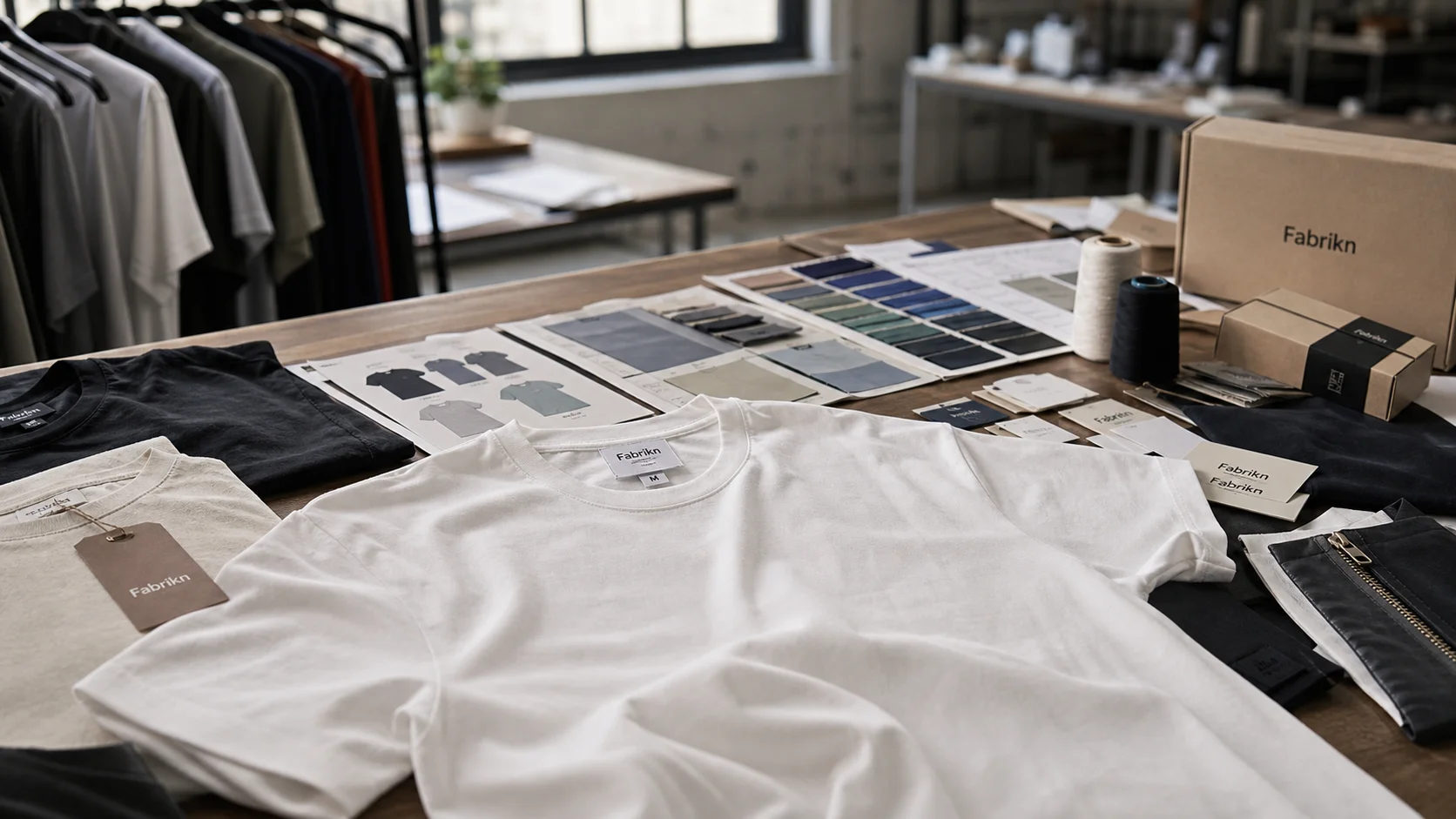
Custom Apparel Manufacturer with Pantone Matching compared by sample evidence, fabric or trim specs, MOQ, AQL terms, cost lines, delivery timing, and...
Fast answer: Custom Apparel Manufacturer with Pantone Matching: Sample Evidence, MOQ, Capacity, and Rework Terms should be judged by production evidence, not by a generic sourcing promise. The buyer needs sample proof, cost breakdowns, QC checkpoints, and delivery buffers in writing.
Ask for recent sample photos, measurement tolerances, fabric or print test assumptions, decoration test notes, packing examples, and a named inspection checkpoint. These details show whether the team can repeat an approved sample at bulk volume.
Separate garment cost, decoration, labels, packaging, sampling, testing, freight, and rush charges. Clear cost lines make it easier to reduce colorways, adjust size depth, or reserve more time for sampling.
When your apparel represents your brand, color is never just decoration. It is identity, recognition, and consistency all in one. Whether you are launching uniforms, promotional merchandise, retail collections, or corporate apparel, getting your colors right is essential. That is why businesses looking for a custom apparel manufacturer with Pantone matching need a partner who understands both production and brand standards.
Pantone matching helps ensure that your shirts, hoodies, jackets, hats, and other garments align with the exact color specifications in your brand guidelines. Instead of approximating a shade, manufacturers use Pantone references to target a precise color outcome across multiple production runs. For companies building a strong visual identity, this level of control can make the difference between polished branding and inconsistent results.
In this article, we will explain how Pantone matching works in custom clothing, why it matters, and how to work with a manufacturer to achieve dependable color accuracy. If you are comparing production partners, you can also learn more about our capabilities on our services page or reach out directly through our contact page.
Pantone Matching System, often called PMS, is a standardized color system used across design, printing, and manufacturing. Each Pantone color has a unique code, which makes it possible to communicate a specific shade without relying on vague descriptions like “navy blue” or “bright red.”
In custom apparel, Pantone matching means the manufacturer attempts to reproduce your specified color as closely as possible on the chosen fabric using the appropriate dye, ink, embroidery thread, or garment finishing process. This is especially important when your company has a strict brand identity or when garments need to match other branded materials such as packaging, signage, or digital assets.
It is important to understand that matching Pantone in apparel is not always identical to matching it on paper or a screen. Fabric type, weave, coating, print method, and lighting all affect final color appearance. A professional custom apparel manufacturer with Pantone matching will account for those variables and guide you toward the most accurate production approach.
Color consistency is one of the most visible markers of professionalism. When a customer, employee, or partner sees your apparel, they instantly connect it with your brand. If the color is off by even a noticeable shade, it can create a mismatch between your clothing and your brand identity.
Exact brand colors matter for several reasons:
For businesses in hospitality, healthcare, retail, corporate services, sports, and events, matching colors accurately is not optional. It supports brand cohesion and helps your team or product line stand out in a crowded market.
Achieving color accuracy in apparel is a controlled process that starts long before production begins. A reliable manufacturer will use a structured workflow to reduce guesswork and improve repeatability.
The process begins with a clear color specification. Always provide the full Pantone code, not just a general color name. If your brand uses a special variant, such as coated or uncoated references, make sure you communicate that as well. A Pantone color book or approved brand guide is useful for preventing errors at this stage.
Different decoration methods produce different color results. Screen printing, embroidery, heat transfer, sublimation, direct-to-garment printing, and garment dyeing all handle color differently. A custom apparel manufacturer with Pantone matching will recommend the best method based on your design, fabric, and order quantity.
For example, screen printing often provides strong spot-color accuracy on cotton garments, while sublimation can work well for all-over prints on polyester. Embroidery uses thread color charts, which means the closest thread match is selected rather than a liquid ink or dye formula.
For dyed garments and some fabric-based projects, manufacturers may create lab dips or strike-offs. These are sample swatches or trial runs produced to compare against the target Pantone. The goal is to test the color under controlled conditions before full production starts.
This step helps identify whether the first formula needs adjustment. It is one of the best ways to reduce costly mistakes in bulk production.
Color can look different depending on the light source. Natural daylight, fluorescent lighting, and warm indoor lighting can each alter the way a garment appears. Professional manufacturers review color samples under standardized lighting conditions to ensure that decisions are made accurately.
Once the sample matches are approved, the manufacturer documents the production standard. This includes dye formulas, thread codes, print ink selections, and machine settings where applicable. That documentation becomes the reference for future orders, helping preserve consistency over time.
During production, quality control checks ensure that each batch remains within acceptable color tolerance. Skilled factories monitor output to catch deviations early, which is especially important for large-volume orders and repeat programs.
Even the best Pantone reference cannot override physical material differences. Color in apparel is influenced by multiple factors, and understanding them helps set realistic expectations.
Different fibers absorb and reflect color differently. Cotton, polyester, nylon, rayon, wool, and blends all behave in unique ways. A color formula that looks perfect on cotton may appear brighter or duller on polyester. That is why your manufacturer should test the target shade on the exact fabric you plan to use.
Smooth, tightly woven fabrics often display color more evenly than textured or brushed surfaces. Fleece, rib knit, twill, and canvas may all influence how a color appears. The same Pantone code can look deeper on a dense fabric and lighter on a porous one.
Garment dyeing, piece dyeing, and yarn dyeing each create different outcomes. Dye penetration, temperature, timing, and fiber content all affect final tone. Precision is especially important for large runs because small variations can become more visible across batches.
Print processes have their own limitations. Some inks can closely reproduce Pantone colors, while others offer only a close approximation. Screen printing typically offers strong spot-color control, while digital printing can be ideal for detailed artwork but may vary slightly depending on the machine, substrate, and calibration.
Embroidery does not use Pantone ink directly. Instead, the manufacturer chooses the closest available thread color. Because threads come in standardized color libraries from thread suppliers, the match may be very close but not always exact. A good manufacturer will show thread charts and physical sew-outs so you can evaluate the result before approving production.
Special finishes such as washing, softening, enzyme treatment, or distressing can alter how color appears. Likewise, some garments may shift slightly after laundering. If color permanence is critical, ask your manufacturer to explain how the fabric will age and whether test washing is part of the approval process.
Choosing a supplier based only on price can be risky when exact color matters. Instead, look for a manufacturer with a documented process for brand color management and a strong understanding of textile production.
Manufacturers that regularly work with corporate, retail, hospitality, and promotional accounts are more likely to understand the importance of visual consistency. Ask about their approach to brand standards and whether they support repeat orders with saved color references.
A professional supplier should be willing to create and share samples before bulk production. Whether the project involves printing, dyeing, or embroidery, sample approval protects both sides and improves the chances of a successful result.
Color accuracy is not just about the first sample. It requires consistent monitoring throughout production. Ask how the factory handles tolerances, inspections, and batch tracking.
Reliable manufacturers keep clear records of Pantone codes, material details, approved samples, and production specifications. Good documentation is essential for reorder consistency and long-term brand management.
If your company needs more than a single garment type, it helps to work with a partner that can support multiple categories. This may include uniforms, promotional apparel, private label products, and custom accessories. A broader service offering reduces coordination issues and helps maintain color alignment across your product range. Learn more about company capabilities on our about us page.
If you want exact brand colors, your input matters as much as your manufacturer’s process. Following a few best practices can significantly improve outcomes.
It also helps to think about color in context. A brand color may look different on a black polo than on a white T-shirt or a hi-vis jacket. If you need multiple garment types, ask your supplier to show how the Pantone target will appear on each one.
Businesses often run into problems because they assume Pantone matching is automatic. In reality, accurate color production requires planning and communication. Here are common mistakes to avoid:
Avoiding these errors will save time, money, and frustration. It also helps you build a repeatable process for future apparel programs.
At Fabrikn, we understand that custom apparel is an extension of your brand. That is why we focus on helping businesses create garments that not only fit well and look professional, but also reflect the correct visual identity. If you are searching for a custom apparel manufacturer with Pantone matching, our team can help guide you from concept through production.
We support B2B apparel projects with attention to detail, communication, and production consistency. Whether you need uniforms, promotional clothing, retail-ready products, or branded teamwear, we can help you navigate fabric choices, decoration methods, and color standards so your apparel aligns with your brand requirements.
If you are planning a new project or need help with a reorder, start by reviewing our services or contact our team to discuss your goals. For more information about who we are and how we work, visit about us.
Get a free quote from Fabrikn — your trusted B2B clothing manufacturer with 10+ years of experience. MOQ as low as 200 pieces.
Get a Free Quote →Not always exactly, but a skilled manufacturer can usually achieve a very close match. Final results depend on fabric type, decoration method, and production process. A sample approval stage is the best way to confirm accuracy before bulk production.
Yes, but embroidery uses thread colors rather than direct Pantone inks or dyes. The manufacturer will choose the closest available thread match and may provide sew-out samples for approval.
Screen printing and garment dyeing often provide strong color control, while embroidery and digital printing may have more variation. The best method depends on your fabric, design, quantity, and desired finish.
Screen displays use light, while apparel uses physical pigments, dyes, and fibers. Fabrics, lighting, and finishing processes all affect appearance. That is why physical samples are essential.
Keep records of your approved Pantone codes, samples, thread charts, and production notes. Reordering from the same custom apparel manufacturer also improves consistency.
Yes. Fabrikn works with B2B clients who need custom clothing aligned with brand color standards. Visit our contact page to discuss your project details and get started.