
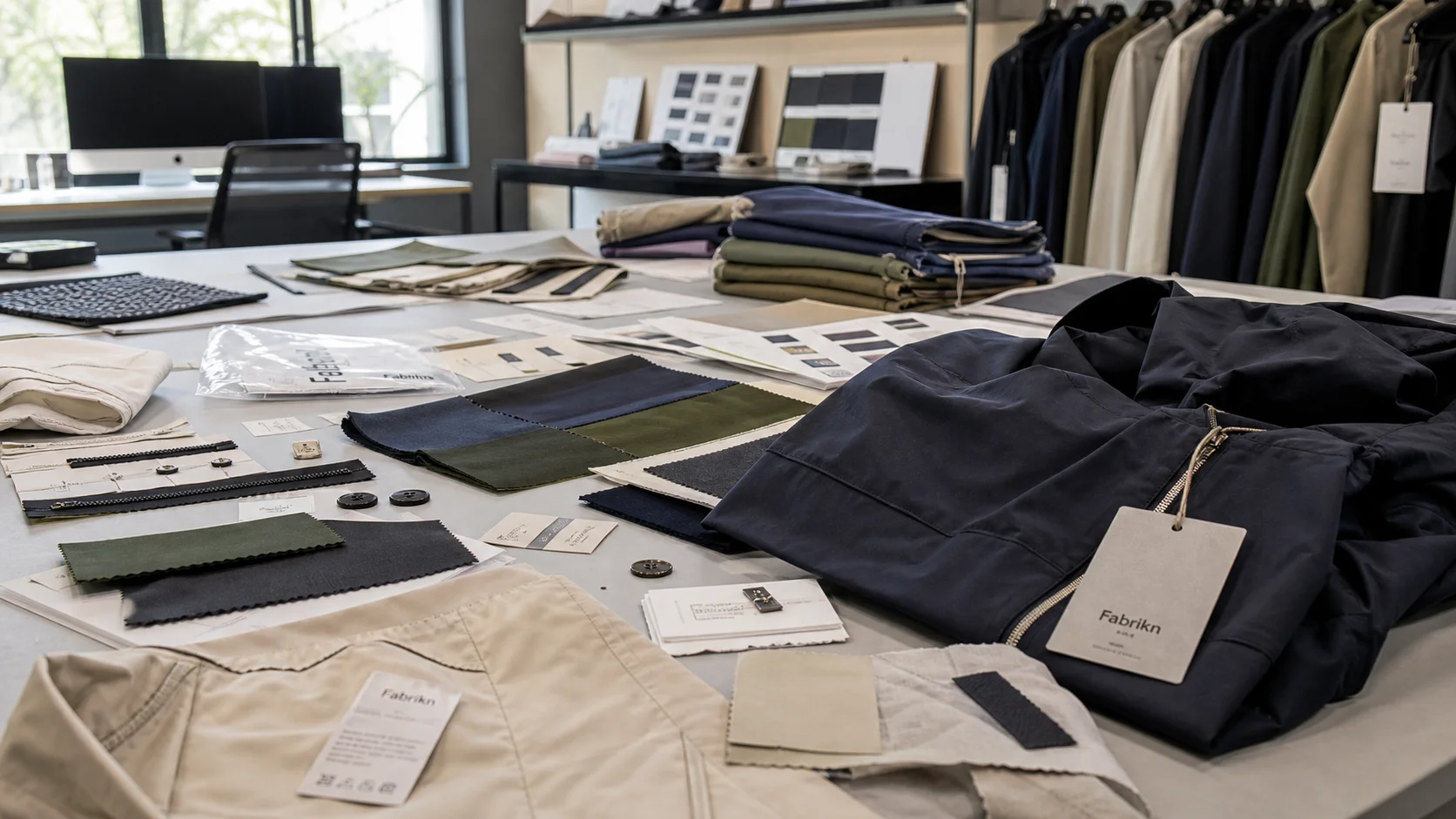
Custom Apparel Sample Approval Process compared by sample evidence, fabric or trim specs, MOQ, AQL terms, cost lines, delivery timing, and rework...
Fast answer: Custom Apparel Sample Approval Process: Tech Pack, Sample Gate, MOQ, and QC Terms should be judged by production evidence, not by a generic sourcing promise. The buyer needs sample proof, cost breakdowns, QC checkpoints, and delivery buffers in writing.
Ask for recent sample photos, measurement tolerances, fabric or print test assumptions, decoration test notes, packing examples, and a named inspection checkpoint. These details show whether the team can repeat an approved sample at bulk volume.
Separate garment cost, decoration, labels, packaging, sampling, testing, freight, and rush charges. Clear cost lines make it easier to reduce colorways, adjust size depth, or reserve more time for sampling.
The custom apparel sample approval process is one of the most important stages in bringing a clothing idea to life. Whether you are developing private label fashion, promotional garments, team uniforms, workwear, or a full seasonal collection, sample approval helps ensure that what gets produced in bulk matches your expectations for fit, quality, construction, branding, and finish.
For many brands, the biggest production problems happen not because of manufacturing itself, but because the sample review stage was rushed, unclear, or incomplete. A structured sample approval process reduces risk, saves time, prevents costly rework, and improves communication between brand and manufacturer. It also gives you a real opportunity to refine the product before bulk production begins.
In this guide, we will walk through the full custom apparel sample approval process, explain each sample stage, highlight common mistakes, and share practical tips for getting better production results. If you are building a new clothing line or scaling an existing one, this article will help you create a smoother and more reliable development workflow.
The custom apparel sample approval process is the review and sign-off stage before bulk production begins. It typically involves receiving one or more prototype garments from the manufacturer and checking them against the agreed specifications, design requirements, and quality standards. Once the sample is approved, the factory uses it as a production reference.
This process is not just about saying “yes” or “no” to a sample. It is a structured decision-making step where the brand confirms whether the garment is ready for mass production, or whether changes are needed. Depending on the product and complexity, there may be multiple rounds of sampling before final approval.
The exact workflow can vary by manufacturer, but most apparel sample approval processes include design confirmation, material selection, pattern development, sample creation, fit review, revisions, and final approval. For custom clothing projects, especially those with branding, embroidery, printing, special trims, or unique silhouettes, this stage is essential.
Sample approval plays a central role in product quality and production efficiency. It ensures that the final garments align with your expectations before large quantities are made. Without proper approval, small errors can become expensive problems across hundreds or thousands of units.
A sample helps identify issues early, such as incorrect measurements, poor fabric behavior, weak stitching, color mismatches, or branding placement errors. Catching these problems before bulk production significantly reduces waste and delays.
Sampling creates a physical reference point that both the brand and manufacturer can evaluate. This removes ambiguity that often exists in email descriptions, sketches, or technical packs alone. A sample makes expectations visible and measurable.
Rework in bulk production can be expensive. If a collar shape, print size, or size grading issue is discovered after mass production starts, the cost to correct it may be much higher than fixing it during sampling.
For brands that care about consistency across collections, colorways, or reorder production, sample approval ensures the product standard is established clearly. This is especially important for private label and branded apparel programs.
If you are planning a custom clothing project and want to work with a professional development team, you can learn more about our capabilities on the Fabrikn services page.
While each project is different, the custom apparel sample approval process usually follows a predictable sequence. Understanding these stages will help you manage timelines and make better decisions.
The process begins with a detailed brief. This should include product type, target market, fabric preferences, measurements, artwork files, labels, trims, color references, construction details, and packaging requirements. The clearer the brief, the more accurate the sample.
A well-prepared tech pack is often the foundation of a successful sample stage. It gives the manufacturer the information needed to interpret your vision correctly and reduce back-and-forth communication.
Before the sample is made, the factory typically confirms fabric, thread, labels, zippers, buttons, drawcords, tags, and other finishing components. If the exact materials are not available, the manufacturer may suggest alternatives or send swatches for approval.
This step matters because material behavior influences fit, drape, shrinkage, color appearance, and durability. A design can look very different depending on whether it is made from cotton jersey, fleece, polyester, woven twill, or performance fabric.
The first sample, often called a proto sample or development sample, is usually made to test the basic design. It may not be perfect or fully finished, but it allows the brand to assess the overall shape, silhouette, and construction direction.
This is often where early adjustments are made. For example, a hoodie may need a wider hood, a longer body length, or better sleeve balance. A polo shirt may need collar structure refinement or button placement changes.
Fit is one of the most important parts of the approval process. The fit sample is reviewed on a live model, mannequin, or size form to evaluate how the garment sits on the body. This helps identify tightness, looseness, sleeve shape, hem length, neckline balance, and overall proportion.
Brands often test multiple sizes or fit standards during this stage. Fit adjustments may require several rounds before the garment matches the intended audience and style direction.
Once design and fit are refined, the manufacturer creates a pre-production sample, also known as a PPS. This is typically the closest version to the final bulk product. It should reflect approved fabric, trims, measurements, branding, and finishing details as accurately as possible.
The pre-production sample is usually the final checkpoint before mass production. If it is approved, the factory can move forward with confidence.
After reviewing the final sample, the brand provides approval or requests final corrections. Approval should be documented clearly, ideally in writing, so both sides understand that the sample is the reference standard for bulk production.
This is the stage where you confirm whether the sample is approved as is, approved with minor comments, or rejected pending changes. Once approved, the approved sample should be retained as the production benchmark.
A strong sample review process goes beyond visual inspection. It requires a systematic approach so nothing important is missed. Here are the key areas to evaluate during sample approval.
Compare the sample measurements against the spec sheet. Focus on chest, body length, sleeve length, shoulder width, waist, inseam, rise, and any other critical dimensions. Small measurement differences can affect fit and comfort significantly.
Use a measuring tape and standard measurement methods. Do not rely only on visual judgment, especially for garments with complex shapes or oversized styling.
Inspect stitching consistency, seam alignment, seam strength, thread trimming, hem finish, edge quality, and reinforcement points. Look inside the garment as well as outside. High-quality construction should be neat, durable, and appropriate for the garment’s use.
Evaluate the sample fabric for hand feel, weight, stretch, opacity, drape, texture, and recovery. If the garment is intended for washing or active wear, consider shrinkage and performance behavior too.
Fabric can affect perceived quality more than many brands expect. A garment may look good in a sketch but feel too heavy, too thin, or too stiff in reality.
Check whether the sample matches the desired color standard. Lighting conditions can affect appearance, so compare in consistent light. If you are using Pantone references or lab dips, confirm that the colors are within acceptable tolerance.
For printed or embroidered apparel, review placement, size, clarity, alignment, density, and color consistency. Confirm that logos appear where they should and that the decoration method suits the fabric and product type.
A good sample is not only visually correct but also practical to wear. Test zippers, buttons, closures, stretch recovery, pocket functionality, comfort around neck and arm openings, and overall garment movement.
Many production issues can be traced back to avoidable mistakes during the sample stage. Understanding these pitfalls will help you avoid delays, disputes, and poor final results.
If the brief lacks details, the manufacturer has to make assumptions. That can lead to sampling errors and revision cycles. Every important element should be documented clearly before sampling begins.
Sometimes brands rush to approve a sample because they want to keep the project moving. However, approving too soon can lock in mistakes that become expensive later. Take the time to review the sample carefully.
A garment may look good on a hanger but perform poorly in use. Try the sample on a model, wash it if relevant, and examine it under different conditions. This is especially important for activewear, children’s wear, and workwear.
Small issues such as stitch inconsistency, neckline imbalance, or logo placement may seem minor at first, but they often indicate bigger production risks. If something looks off in the sample, address it before bulk production starts.
Verbal comments can be forgotten or misunderstood. Always provide written feedback with clear markups, measurements, photos, and priorities. Good documentation helps the manufacturer make the correct revisions.
Once the sample is approved, both sides should know exactly which version is the approved standard. Keep a physical sample or detailed reference record so there is no confusion during production.
The apparel sample approval process works best when it is managed like a quality control system rather than a simple review step. The following practices can help improve your production results.
A complete tech pack is one of the most effective tools for reducing errors. Include measurements, construction notes, fabric details, artwork placement, color references, and packaging instructions. The more precise the documentation, the more accurate the sample.
Define what must be correct before you approve a sample. This may include fit tolerances, decoration quality, fabric weight, wash performance, and finishing standards. Clear criteria make decision-making faster and more objective.
Sampling often requires more than one round. Build realistic time into your development schedule so you can make thoughtful revisions without disrupting your launch timeline.
If you receive multiple versions, compare them in the same environment. Side-by-side review makes differences easier to spot and helps you choose the best option based on consistent criteria.
Use concise comments like “increase sleeve length by 1.5 cm,” “move chest logo 2 cm higher,” or “reduce collar width by 0.5 cm.” Specific feedback is much more useful than general comments such as “make it better.”
A sample should not only look good; it should also be manufacturable at scale. Consider whether the same result can be consistently reproduced across a full production run. If the sample depends on overly manual or fragile methods, bulk consistency may suffer.
At Fabrikn, we understand that the sample approval stage is where many custom apparel projects succeed or fail. Our approach focuses on clear communication, practical development support, and production-ready standards that help brands move confidently from concept to bulk order.
Whether you are developing basic essentials, branded corporate apparel, fashion garments, or specialty uniforms, our team works to ensure the sample stage aligns with your product goals and production requirements. We help clients review details thoroughly, refine fit and construction, and prepare for scalable manufacturing.
If you are planning a new project or want to discuss your product development needs, visit our contact page. You can also learn more about our background and manufacturing approach on our about us page.
The custom apparel sample approval process is one of the most valuable steps in apparel manufacturing. It protects your brand from costly mistakes, helps refine product quality, and creates a clear reference for bulk production. When handled properly, sampling improves fit, construction, branding accuracy, and overall buyer satisfaction.
If you want better production results, focus on preparation, detailed review, clear feedback, and documented approval. The more disciplined your sample process is, the more likely your final garments will meet expectations and perform well in the market.
In custom clothing, success often depends on the details. Sample approval is where those details are tested, corrected, and finalized. Treat it as a strategic step, not just a formality, and your production outcomes will improve significantly.
Get a free quote from Fabrikn — your trusted B2B clothing manufacturer with 10+ years of experience. MOQ as low as 200 pieces.
Get a Free Quote →The purpose is to review a garment prototype before bulk production so the brand can confirm fit, quality, construction, materials, branding, and overall design accuracy.
It depends on product complexity. Simple garments may require one or two rounds, while more technical or fashion-forward items may need several revisions before final approval.
Start with the key priorities: measurements, fit, construction quality, fabric appearance, and branding placement. These areas usually have the biggest impact on final production results.
Yes, sometimes minor issues can be accepted if they do not affect quality, function, or brand standards. However, all accepted deviations should be documented clearly in writing.
Written approval creates a clear production reference and helps prevent disputes or misunderstandings. It confirms which sample version the factory should follow during bulk manufacturing.
Fabrikn supports custom clothing projects through product development guidance, sampling coordination, and production-focused manufacturing services. If you need help with your next project, reach out through our contact page.