
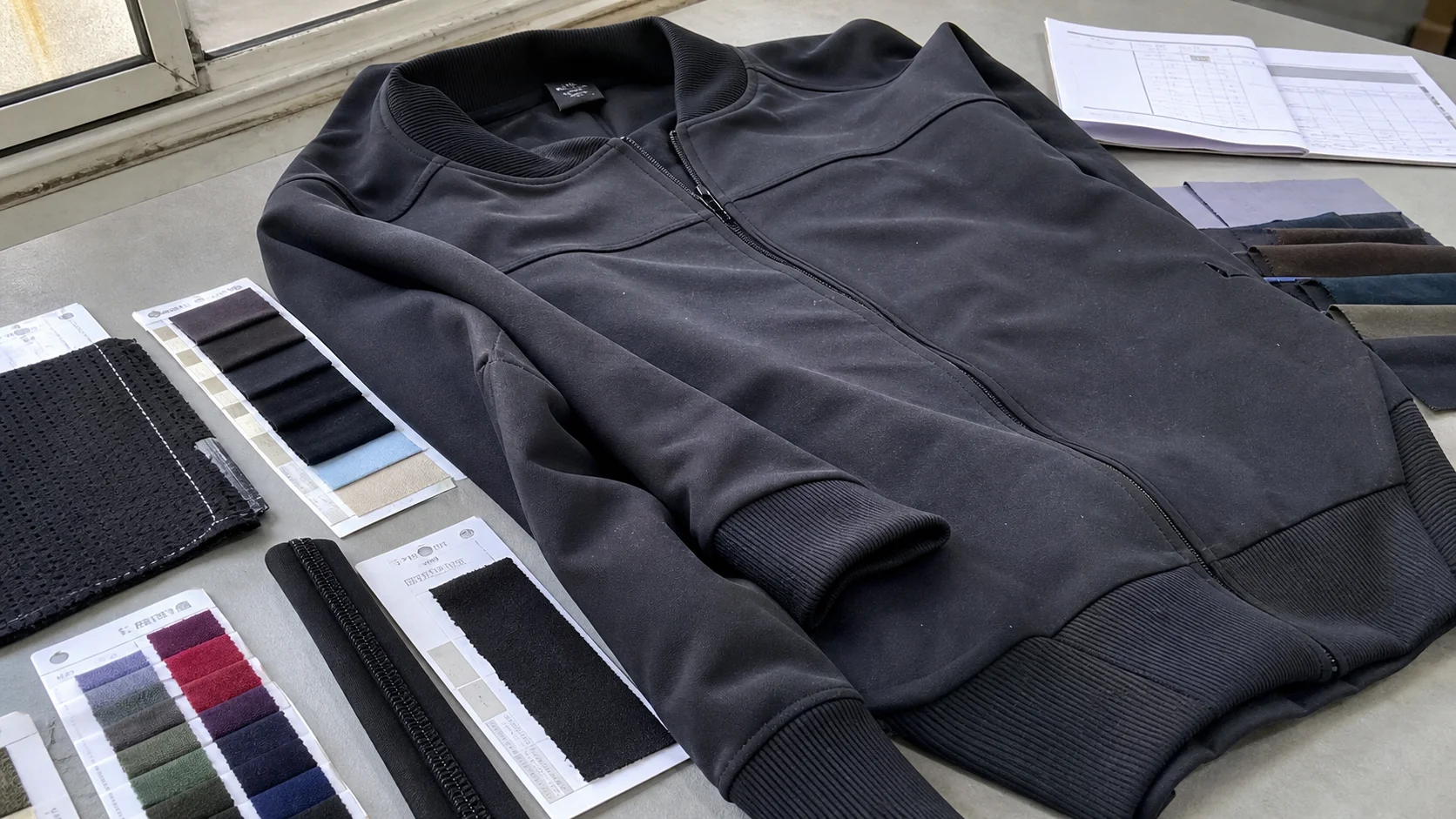
A practical SEO outline for construction safety teams auditing custom back neck tab colorfastness to help ensure durable branding, wash performance, and...
For construction safety teams, a custom back neck tab is a small component that can create a large sourcing problem if colorfastness is overlooked. The tab may seem minor compared with the garment body, but it still affects compliance perception, brand consistency, wearer comfort, and wash durability. In workwear and safety apparel, poor colorfastness can lead to bleeding onto collars or base layers, fading after repeated laundering, or visible inconsistency across lots. Those are not cosmetic issues only. They can trigger complaints from field teams, force rework, and complicate uniform rollouts.
This article gives a practical audit checklist for custom back neck tab colorfastness, written for buyers, technical teams, and construction safety program managers. It focuses on what to verify before bulk approval, what testing to request, where failures usually happen, and how to manage tradeoffs between cost, lead time, and durability. If you are sourcing decorated or branded garments, it helps to treat the back neck tab as part of the full decoration system, not as an afterthought.
Custom Back Neck Tab Colorfastness Audit Checklist - Fabrikn production reference
Construction safety teams tend to focus on high-visibility fabrics, reflective trims, seam strength, and garment compliance. That is right, but the back neck tab still deserves scrutiny. It sits in direct contact with the neck area, so any dye transfer can affect skin comfort and adjacent layers. In uniforms worn for long shifts, a tab that loses color after laundering can make the whole garment look aged faster than expected.
Colorfastness is also a procurement issue. A project may specify navy, charcoal, or corporate colors for back neck tabs to support identity and sizing programs. If the tab shade changes between batches, the garments may appear inconsistent in distribution. In the field, that inconsistency can lead to questions about whether the supply is mixed, washed out, or low grade. For large programs, a small trim failure can cause disproportionate disruption.
Back neck tabs are minor in size, not minor in impact. In workwear sourcing, the cheapest trim is often the most expensive mistake after bulk production starts.
A proper audit should cover the tab material, the color application method, attachment method, garment compatibility, and testing proof. Many failures happen because the buyer approved the tab color on a flat lab dip but did not test how it behaved after stitching, washing, abrasion, and heat exposure. Construction safety garments often face hard-use conditions, so the audit must reflect real wear rather than ideal lab conditions alone.
For custom back neck tab programs, start with the basics: identify whether the tab is woven, printed, dyed, or heat-transferred. Each process has different risk points. Woven labels can fade less dramatically than prints, but yarn dye consistency still matters. Printed tabs may look sharp initially yet show cracking or wash-off if the ink system is weak or the substrate is not compatible. Heat-transfer solutions can work well for short-run customization, but adhesion and wash durability need close verification.
Use the checklist below during development, pre-production approval, and bulk release. It is written for custom back neck tab colorfastness audit work in construction safety teams, but it also applies to other industrial apparel programs.
Fastness testing for a custom back neck tab should be proportionate to the actual use case. A construction safety team does not need every laboratory method under the sun, but it does need the right ones. At a minimum, wash fastness and rubbing fastness should be reviewed. If the garment is worn in bright outdoor conditions, light fastness matters. If the tab sits directly against skin, perspiration fastness becomes relevant.
It is wise to align the testing method with your laundering and wear environment. A tab that passes a mild domestic wash may not hold up in industrial laundering. Heat sealing, pressing, or embroidery finishing can also shift results. If the label or tab uses a printed surface, ask the supplier to show both initial and post-wash appearance. The first sample can look excellent and still fail in the field after the second or third wash.
Test Area What to Look For Typical Risk if Not Controlled Wash fastness Shade change, staining, print loss Color bleed onto collars or adjacent garments Rubbing fastness Dry and wet crocking performance Dye transfer to skin or base layers Light fastness Fading under sun exposure or storage Inconsistent uniform appearance across inventory Perspiration fastness Reaction to sweat and moisture Staining, odor retention, visual degradation Heat resistance Adhesion, shrinkage, gloss, distortion Failure during finishing or pressingPass-fail standards should be agreed before sampling begins. If the supplier is quoting from a lower-cost decoration line, expect tradeoffs. A lower-priced print method may be acceptable for short-term promotional apparel, but construction safety garments generally require more conservative criteria. Price alone should not decide the spec. A better approach is to choose the simplest method that still meets the laundering and wear requirements.
Construction safety teams often order garments in bulk and distribute them across multiple crews or subcontractor groups. That makes consistency essential. If some back neck tabs fade faster than others, the issue can look like mixed stock or poor handling, even when the root cause is a weak color system. In safety-critical programs, appearance affects trust. Teams notice when uniforms look inconsistent, and supervisors are then forced to explain avoidable defects.
There are also practical risks on site. A poorly dyed tab may bleed onto undershirts after sweat exposure. A rough printed tab can irritate the neck area, especially under helmet straps or during warm-weather work. If the tab is heat-applied and the adhesive is marginal, repeated laundering can cause edge lift or partial detachment. Once that begins, the garment may be downgraded or rejected before the body fabric is actually worn out.
Decoration and printing teams should also remember that garment care instructions vary. Some crews use industrial washing, while others use home laundering. Some sites demand quick turnaround and repeated sanitizing. All of this affects colorfastness. A tab spec that is acceptable for a light-duty uniform may not survive the realities of construction workwear distribution.
For suppliers, colorfastness control starts before production. Shade approvals should be tied to the exact tab substrate and the intended decoration process. If the supplier substitutes a slightly different tape or ink batch, the result may be close enough visually in the factory but fail after wash testing. Good control depends on lot traceability and a disciplined sample chain.
Buyers should request clear sign-off stages. First is the material approval. Next is the decoration sample or strike-off. Then comes the sewn garment sample with the tab placed as it will appear in bulk. Each step can reveal different problems. A perfect stand-alone tab can look poor once sewn into a garment, especially if the stitching compresses the fabric or exposes raw edges.
If you need support building a more reliable decoration workflow, review the relevant service details at fabrikn.com/services/. For project coordination or quotation follow-up, the contact page at fabrikn.com/contact-us/ is the practical route. Company background and capability context can be checked at fabrikn.com/about-us/.
Minimum order quantities for custom back neck tabs vary by construction, print method, and whether the tab is made as a standalone label or integrated into garment production. As a general sourcing range, woven or printed tab MOQs often start around 500 to 3,000 pieces per style or color, while more specialized finishes may require higher quantities. Short-run digital or transfer options may lower the MOQ, but the unit cost usually rises. Buyers should treat low MOQ claims carefully if the supplier still needs special setup, color approval, or tooling.
Sampling also takes time. A typical sequence includes artwork confirmation, substrate approval, lab dip or strike-off, sewn sample, wash test, and buyer sign-off. If the tab must match the garment body precisely, expect extra rounds of adjustment. Lead time depends on material availability, print method, testing turnaround, and whether any revisions are needed. A straightforward project can move quickly, but a conservative planning window is still better than rushing approvals and accepting a weak result.
For construction safety teams, the lead-time risk is not only factory capacity. It is also approval delay. If safety, sourcing, and user teams do not align on color, placement, and test standards early, bulk orders can stall. A delayed decision on a small neck tab can hold back an entire garment order if the supplier refuses to ship mixed-approved goods.
Do not overspend on a decorative feature that has no user value, but do not under-spec the one area that sits against skin and must survive repeated washing. That is the balance with custom back neck tab programs. If the garment is a low-risk promotional item, a simpler print system may be enough. If the garment is part of a construction safety rollout, choose the more durable option and test it properly.
The cheapest failure mode is usually a color issue caught in sampling. The most expensive failure mode is a bulk lot that looks acceptable on arrival and then bleeds, fades, or peels after distribution. That is why the audit checklist matters. It reduces guesswork and forces the supplier to prove the tab works under actual use conditions.
In workwear decoration, a colorfastness audit is not a paperwork exercise. It is a control step that protects the garment, the program timeline, and the buyer’s credibility.
Get a free quote from Fabrikn — your trusted B2B clothing manufacturer with 10+ years of experience. MOQ as low as 200 pieces.
Get a Free Quote →It is a review of how a custom back neck tab holds color under washing, rubbing, light exposure, sweat, and heat. The audit checks material choice, decoration method, stitching, sample approval, and testing records before bulk production.
Wash fastness and rubbing fastness are the core tests. Light fastness and perspiration fastness matter when garments are worn outdoors or for long shifts. Heat resistance should also be checked if the tab is printed or heat applied.
Typical MOQs often start around 500 to 3,000 pieces, depending on material, decoration method, and supplier setup. Specialty processes may require more, while short-run methods may offer lower minimums at a higher unit price.
Common reasons include the wrong dye or ink system, poor curing, incompatible base fabric, weak stitching, poor wash resistance, or shade variation between lots. Sometimes the tab itself is fine, but it fails once sewn into the garment and laundered.
Yes. That is the safer approach. A tab may pass as a standalone sample but still bleed onto the collar or distort after sewing. Testing the finished garment gives a more realistic result.
It can, but only if it passes the relevant fastness tests and meets the end-use requirements. For high-use construction apparel, a slightly higher-cost but more durable method is often the better commercial choice.
Define the color standard, request production-method samples, test the sewn garment, and set pass-fail criteria before bulk release. Keep written sign-off at each stage so there is no confusion later.
For more support on custom decoration and printing programs, review services, or reach out through contact us if you need a production discussion. If you want background on the supplier and its capabilities, see about us.