
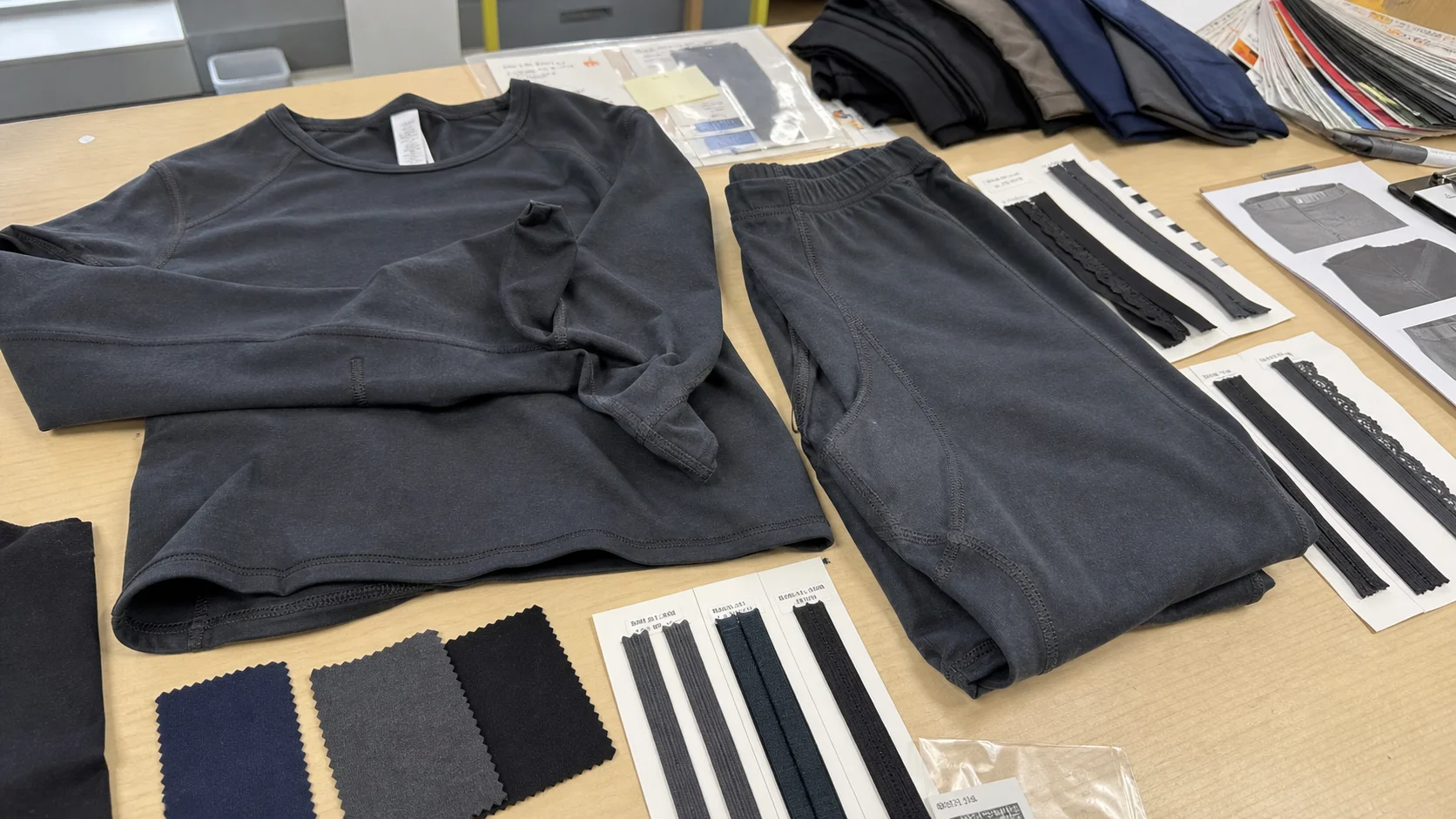
A sourcing-focused outline for buyers evaluating custom base layer set trims for cleaning crew uniforms, covering fabrics, neck and cuff finishes, labels,...
Base Layer Set Trim Review for Cleaning Crews - Activewear & Teamwear manufacturing guide
A base layer set for cleaning crews looks simple on the surface: a fitted top, a fitted bottom, stretch fabric, and basic branding. In real sourcing, the trim package often decides whether the garment works for daily use or becomes a recurring complaint. Neck tape, waistband elastic, care labels, size labels, heat transfers, cuffs, drawcords, reflective details, and packaging labels all affect comfort, durability, laundry performance, and reorder consistency.
For cleaning companies, facilities contractors, housekeeping teams, janitorial crews, and property service operators, base layer sets are usually not fashion products. They are support garments worn under polos, tunics, coveralls, softshell jackets, or high-visibility outerwear. The buyer’s goal is practical: keep staff comfortable across shifts, maintain a uniform appearance, reduce replacement frequency, and avoid garments that irritate skin during repetitive movement.
That is why a custom base layer set trim sourcing review for cleaning crews should be handled differently from a retail activewear review. Retail buyers may focus on visual shelf appeal and seasonal styling. Workwear buyers should focus on wash resistance, abrasion points, size clarity, fabric recovery, color continuity, and whether every trim component survives industrial or frequent domestic laundering.
Trim is also where small decisions create large operational effects. A scratchy back-neck label can lead to staff cutting it out, which removes size and care information. A low-grade waistband elastic can curl after several washes. A decorative heat transfer may crack if the ink system is not suitable for stretch fabric. A thick seam tape may look premium in a sample room but feel bulky under a work polo. The best trim decisions are not always the most expensive; they are the most appropriate for the crew’s daily conditions.
Companies planning a custom program can review manufacturing support through Fabrikn’s services and discuss project requirements through the contact page. The strongest briefs usually combine garment function, wearer environment, laundry method, branding requirements, and reorder expectations before price negotiation starts.
Cleaning crews need base layer sets for several reasons. Some teams work in cold storage, early-morning outdoor areas, warehouses, hospitals, campuses, hotels, transport hubs, or mixed indoor-outdoor sites. Others use base layers to standardize appearance beneath short-sleeve uniforms or to reduce the need for bulky outerwear. In these cases, the garment must be comfortable enough for long shifts and stable enough for repeated washing.
The sourcing question is not only “Can the factory make a compression-style top and bottom?” A better question is: “Can the supplier produce a repeatable teamwear base layer set with the right fabric, trims, labeling, size range, and packaging for operational distribution?” That distinction matters. Cleaning companies often issue garments by employee size and location. If labels are unclear, packaging is inconsistent, or size grading is poorly controlled, the buyer inherits distribution problems.
Typical base layer set orders for teamwear and workwear programs may range from 300 to 1,000 sets per color for basic custom production, depending on fabric availability, dyeing requirements, and trim customization. Some suppliers may accept lower MOQs of 100 to 300 sets when using stock fabric, standard trims, and limited branding. Fully custom yarn-dyed, piece-dyed, or special-finish fabrics may push minimums to 1,000 to 3,000 sets or more. Buyers should treat any unusually low MOQ for fully custom fabric with caution unless the supplier explains exactly how fabric is being sourced.
Base layer sets for cleaning crews usually benefit from controlled simplicity. Too many decorative trims add cost and inspection risk. Too little attention to trim quality creates avoidable wear problems. The best specification often includes a stable stretch fabric, flat or low-bulk seams, soft labels or printed labels, durable waistband elastic, controlled branding, and packaging that supports easy allocation by size.
A trim sourcing review should list every non-fabric component used in the garment. Many delays happen because buyers approve the main fabric but leave “minor” trims open until late in sampling. That creates avoidable risk. Trims can have their own lead times, color matching issues, compliance questions, and washing performance limitations.
For base layer tops, the back-neck area is a high-sensitivity zone. Cleaning staff bend, reach, lift, push carts, and work for long periods. A bulky seam or rough tape can irritate the wearer quickly. Common options include self-fabric binding, soft polyester tape, nylon-spandex binding, or coverstitched seam finishing without separate tape.
Self-fabric binding usually offers the best color match and stretch compatibility. Polyester tape may be cheaper and stable, but it can feel firm if the wrong weight is selected. For crew uniforms, the buying priority should be comfort after wash, not just clean sample appearance.
Labels are often underestimated. Cleaning crew garments may be washed frequently and handled by multiple employees or laundry services. Size identification should remain readable. Care instructions should be clear enough to reduce misuse, especially if the garment contains elastane.
Heat transfer labels can improve comfort because there is no sewn label edge. They must be tested for stretch recovery, cracking, and wash durability. Woven labels are durable but may feel scratchy unless edges are soft and placement is carefully chosen. Printed satin labels are economical but may fade or fray if quality is low. For fitted base layers, a soft heat transfer size and care label is often worth considering, provided it passes wash testing.
The waistband is one of the most important trims on the base layer bottom. A poor waistband can roll, twist, curl, or lose recovery. For cleaning crews, this is not a minor comfort issue. Staff move constantly, and base layer bottoms are usually worn under trousers. A thick, unstable, or abrasive waistband can become a daily complaint.
Typical waistband options include enclosed elastic, exposed logo elastic, brushed-back elastic, and jacquard elastic. Enclosed elastic is usually safer for workwear because it looks cleaner, reduces branding exposure, and can be more comfortable under uniform trousers. Exposed jacquard elastic may suit gymwear, but it can be unnecessary for cleaning crews unless the brand wants a visible premium detail.
Cuffs can help sleeves and legs stay in place, but they can also create pressure points. For base layer tops, a simple coverstitched hem or self-fabric cuff is usually enough. Thumbholes are sometimes requested for warmth, but they may not be suitable for cleaning work because they can interfere with gloves, hygiene protocols, or task safety. Buyers should only add thumbholes if the end use genuinely requires them.
For bottoms, ankle cuffs may keep the garment neat under trousers. A low-bulk finish is better than a heavy rib cuff. Rib trim can be comfortable, but it introduces color matching and recovery concerns. Self-fabric hems are simpler and often more dependable.
Most cleaning crew base layer bottoms do not need drawcords. Drawcords add cost, create laundering tangles, and may not be comfortable under work trousers. Eyelets or cord tips introduce metal or plastic trim that must be checked for durability and safety. If a drawcord is required, a flat internal drawcord with bar-tacked ends is more practical than a bulky external cord.
Reflective trim may be useful for crews working around parking areas, loading zones, or low-light building exteriors. It should not be added as decoration without a reason. Reflective films can crack on stretch fabrics if the wrong grade is used. They may also reduce stretch in the application area. If visibility is required, buyers should define whether the garment is a supplementary visibility layer or part of a certified high-visibility uniform system.
Direct purchasing judgment: for cleaning crews, prioritize soft, washable, low-bulk trims over decorative trims. A base layer set is a comfort and function item first. Branding should not compromise wearability.
Trim cannot be reviewed in isolation. The right trim depends on the fabric. Most base layer sets for activewear and teamwear use polyester-spandex, nylon-spandex, cotton-spandex, viscose blends, or recycled polyester-spandex. For cleaning crews, polyester-spandex is often the most practical balance of cost, durability, quick drying, and wash performance. Nylon-spandex can feel smoother and stronger, but it usually costs more. Cotton-rich blends may feel familiar, but they can hold moisture and dry more slowly.
Common fabric weights for base layer sets range from 160 gsm to 240 gsm. Lightweight 150 to 180 gsm fabric can work for mild climates and indoor layering, but opacity and durability must be checked. Midweight 190 to 220 gsm is often more suitable for crew programs because it offers better coverage and resilience. Heavier fabrics above 230 gsm can feel warm and supportive, but they may be too insulating for active cleaning work in heated buildings.
Elastane content usually falls between 8% and 18%. Lower elastane content may reduce cost but can limit recovery. Higher elastane can improve fit but raises concerns around heat sensitivity, washing conditions, and long-term recovery. Buyers should ask for stretch and recovery test results or at least conduct practical fitting after wash. A garment that fits well before washing but bags at the knee or elbow after ten cycles is not suitable for a uniform program.
Flatlock seams are common in performance base layers because they reduce bulk and improve comfort. They may cost more than standard overlock seams and require good machine control. Poor flatlock work can create skipped stitches, uneven seam width, or weak joins. Four-needle six-thread coverstitch can also work in certain areas. The construction method should match the fabric stretch and the garment’s stress points.
For cleaning crews, seam placement is as important as seam type. Side seams under the arms, inner thigh seams, crotch seams, and waistband joins should be checked during movement. A sample should be tested by bending, squatting, reaching, and layering under the intended uniform. Fit models are useful, but task simulation gives better information for workwear.
Base layer sets can be compression fit, close fit, or regular thermal fit. Compression fit may look athletic but can be uncomfortable for general cleaning teams if size tolerance is narrow. Close fit is usually the safer choice: neat under uniforms, not restrictive, and easier to size across a mixed workforce. Regular thermal fit may suit cold environments but can bunch under trousers or polos.
Size grading should be reviewed carefully. Cleaning crew programs may require a broad size range, often from XS to 4XL or beyond. Extended sizes require proper grading, not simple scaling. Waistband pressure, sleeve length, rise, thigh fit, and top length all need attention. A poorly graded 3XL base layer top may ride up or restrict shoulders, even if the medium sample looks acceptable.
Branding for cleaning crew base layer sets should be restrained and durable. These garments are usually worn under other uniform items, so the branding function may be identification, staff allocation, or corporate consistency rather than public-facing promotion.
Common branding options include heat transfer logos, silicone transfers, woven labels, printed neck labels, small hem tabs, jacquard waistbands, and packaging stickers. Heat transfer logos are popular because they are clean and low profile. The application must be compatible with stretch fabric. A logo placed across a high-stretch chest or thigh area may crack, distort, or peel if not tested properly.
Embroidery is generally not ideal for fitted base layer fabric. It can restrict stretch, irritate skin, and pucker after washing. Small woven hem tabs can work if placed away from friction zones. Jacquard elastic with logo repeat can look premium, but it is often unnecessary for cleaning crews and may increase MOQ because custom elastic requires separate production.
If the buyer needs staff identification by department, site, or role, packaging and external uniform pieces may be better places for that information. Adding multiple trims to the base layer can complicate stock management. For example, producing separate base layers for hotel housekeeping, kitchen cleaning, and exterior maintenance may multiply SKU count without improving performance. A standard base layer set with site-specific outerwear is often easier to manage.
Brands that want more context about sourcing support, production planning, and apparel development can review Fabrikn’s company background. A good supplier discussion should clarify what is truly custom and what can be standardized to protect cost and lead time.
MOQ depends on fabric source, trim customization, color requirements, size range, and factory workload. Buyers should separate garment MOQ from fabric MOQ and trim MOQ. A factory may agree to produce 300 sets, but the fabric mill may require 500 kg of custom-dyed fabric. A custom jacquard waistband supplier may require 1,000 to 3,000 meters. A heat transfer logo supplier may be flexible at low quantities, but special reflective film or silicone effects can require larger runs.
Program Type Typical MOQ Range Best Use Case Main Caution Stock fabric with standard trims 100-300 sets Pilot orders, small crews, urgent needs Limited color and fabric control Stock fabric with custom labels and logo 300-600 sets Small to mid-size uniform programs Trim approvals can still delay production Custom-dyed fabric with standard trims 600-1,500 sets Brand color matching and repeat programs Lab dips and fabric MOQ drive schedule Fully custom fabric and trim package 1,000-3,000+ sets Large contractors and multi-site rollouts Higher development cost and longer lead timeA clean sampling process reduces production disputes. The first step is usually a tech pack review, including fabric composition, weight, stretch targets, color, seam type, trim details, size range, and packaging. The second step is fabric and trim sourcing, including lab dips for custom color and strike-offs for logos or heat transfers. The third step is proto sampling, which checks fit, construction, and trim placement.
After proto feedback, buyers usually request a fit sample or revised sample. For teamwear programs, it is sensible to fit at least a core size and one extended size. A pre-production sample should then be made using actual bulk fabric, actual trims, actual labels, and final packaging. Production should not begin until the pre-production sample is approved in writing.
Lead time can range from four to ten weeks for simple production using available fabric, though this depends on factory capacity and trim readiness. Custom-dyed fabric, special trims, extended size grading, and multiple sample rounds can move the timeline to ten to sixteen weeks. Peak production seasons may add more time.
The longest delays often come from fabric color approval, elastic production, label artwork changes, and heat transfer testing. Buyers can shorten timelines by locking specifications early and avoiding late-stage changes. A base layer set may be operational apparel, but it still needs disciplined product development.
Inspection should focus on the failure points most likely to affect wearers and distribution teams. General appearance is not enough. Cleaning crew base layers must be checked for measurement consistency, seam strength, elastic recovery, label accuracy, shade variation, and packaging correctness.
Stretch garments can pass flat measurements but still fit poorly. Tolerance should be realistic and tied to critical points: chest, waist, hip, inseam, sleeve length, body length, rise, thigh, and cuff opening. If the tolerance is too loose, size consistency suffers. If it is too tight, production rejection risk becomes unreasonable. The right tolerance depends on fabric stretch and garment fit.
Base layer sets must match within the set. A top and bottom in visibly different shades look unprofessional, especially if staff remove outer layers during breaks or work in warmer areas. Shade bands should be checked under appropriate lighting. If fabric comes from different dye lots, the supplier should control pairing during cutting and packing.
Common defects include skipped stitches, broken threads, seam twisting, open seams, puckering, uneven coverstitching, and weak crotch seams. High-stretch areas need special attention. A seam that looks acceptable on the table may open under stretch. Inspectors should apply moderate stretch tests at stress points, especially armholes, crotch, waistband joins, and cuffs.
Heat transfers should be checked for adhesion, cracking, edge lift, shine marks, and placement consistency. Labels should be readable and correctly positioned. Waistband elastic should not be twisted inside the casing. Reflective trim should not crack when stretched. Drawcords, if used, should be secured and even.
Uniform programs often fail at the last step: packing. A high-quality garment in the wrong size bag creates extra handling cost. Each set should have a clear size sticker, barcode if required, color code, style number, and quantity per carton. Mixed-size cartons can be useful for site allocation, but they require careful packing lists. Bulk cartons by size are simpler for warehousing.
Inspection judgment: do not treat base layer sets as generic stretchwear. The set must be inspected as a top-and-bottom unit, with shade, size, labeling, and packing verified together.
Base layer set pricing is influenced by fabric weight, yarn type, elastane percentage, sewing complexity, size range, trims, branding, packaging, and order quantity. Buyers often focus on fabric cost first, but trim and handling details can change the final price meaningfully.
A lower-cost fabric may be acceptable if the garment is used occasionally or issued as a seasonal support item. For daily cleaning crews, fabric recovery and comfort deserve more budget. A cheap base layer that loses shape after repeated washing creates replacement cost and staff dissatisfaction. The lowest unit price can become the highest operating cost.
That said, not every premium feature is worth paying for. Custom jacquard waistbands, silicone logos, elaborate reflective graphics, contrast stitching, and complex paneling may add cost without improving the crew’s workday. Cleaning crew apparel should be durable, easy to issue, easy to wash, and comfortable under uniforms. Spend on fabric, elastic, seam comfort, and label quality before decorative trim.
For many cleaning crew programs, the best-value specification is a close-fit polyester-spandex set in a dark neutral color, with soft internal labeling, enclosed waistband elastic, durable coverstitch or flatlock seams, minimal external branding, and clear size packaging. This is not the flashiest option, but it is usually the strongest operational choice.
A supplier review should be specific. Broad claims such as “we make activewear” or “we can do custom uniforms” are not enough. The buyer should ask how the supplier handles stretch fabric sourcing, trim approval, washing tests, size grading, and production inspection.
The answers should be practical and documented. If the supplier cannot explain fabric MOQ, trim lead time, or wash testing, the buyer may face problems later. A reliable manufacturing partner should be able to separate what is easy, what is possible, and what carries risk.
Buyers can use Fabrikn’s contact page to start a specification-led discussion rather than asking for a generic quote. A clear brief gives the supplier a better chance to recommend the right fabric and trim package.
For cleaning crews, custom base layer set sourcing should be built around comfort, laundering stability, and operational simplicity. The strongest programs avoid unnecessary styling and focus on dependable materials. A good trim package is soft against the skin, stable after washing, easy to identify by size, and consistent across reorders.
The recommended direction is a polyester-spandex close-fit set, midweight enough for durability but not too heavy for active work. Use low-bulk seams, enclosed waistband elastic, soft internal labels, minimal heat transfer branding, and individual set packaging. Add reflective trim, custom elastic, or special logo effects only when there is a clear operational or brand reason.
In purchasing terms, the best base layer set is not the cheapest sample and not the most decorated option. It is the one that staff will wear without complaint, supervisors can issue without confusion, and the buyer can reorder with predictable quality. Trim review is the safeguard that makes that outcome more likely.
Get a free quote from Fabrikn — your trusted B2B clothing manufacturer with 10+ years of experience. MOQ as low as 200 pieces.
Get a Free Quote →Polyester-spandex is usually the most practical choice because it offers stretch, quick drying, durability, and reasonable cost. A weight of around 180-220 gsm often works well for teamwear base layers, though the final choice should reflect climate, layering needs, and laundry method.
Typical MOQs range from 100-300 sets for stock fabric with simple trims, 300-600 sets for stock fabric with custom branding, and 600-1,500 sets or more for custom-dyed fabric. Fully custom fabric and trim programs can require 1,000-3,000+ sets depending on mill and trim supplier minimums.
Heat transfer labels are often more comfortable for fitted base layers because they remove the scratchy label edge. They must be tested for cracking, fading, and adhesion after washing. Woven labels can be durable, but placement and softness need careful review.
Close fit is usually safer than strong compression. Cleaning staff need freedom to bend, reach, squat, and move throughout a shift. Compression fit can work for some activewear users, but it may be too restrictive for a broad uniformed workforce.
Reflective trim is useful only when crews work in low-light or traffic-adjacent environments and when the trim supports the safety plan. It should be tested on stretch fabric because some reflective films crack or restrict movement.
Buyers should approve fabric quality, lab dips if color is custom, trim cards, logo strike-offs, proto samples, fit samples, wash-tested samples, and a final pre-production sample made with actual bulk materials. Written approval reduces disputes once production starts.
Common issues include waistband rolling, shade mismatch between top and bottom, skipped stitches, poor seam recovery, peeling heat transfers, unreadable labels, measurement variation, and wrong size packaging. These risks should be included in the inspection checklist.
Use stock fabric colors where possible, limit logo placements, avoid unnecessary custom elastic, keep packaging simple, and standardize the base layer across teams. Do not cut too aggressively on fabric recovery, waistband quality, or seam comfort because those areas affect daily wear.