
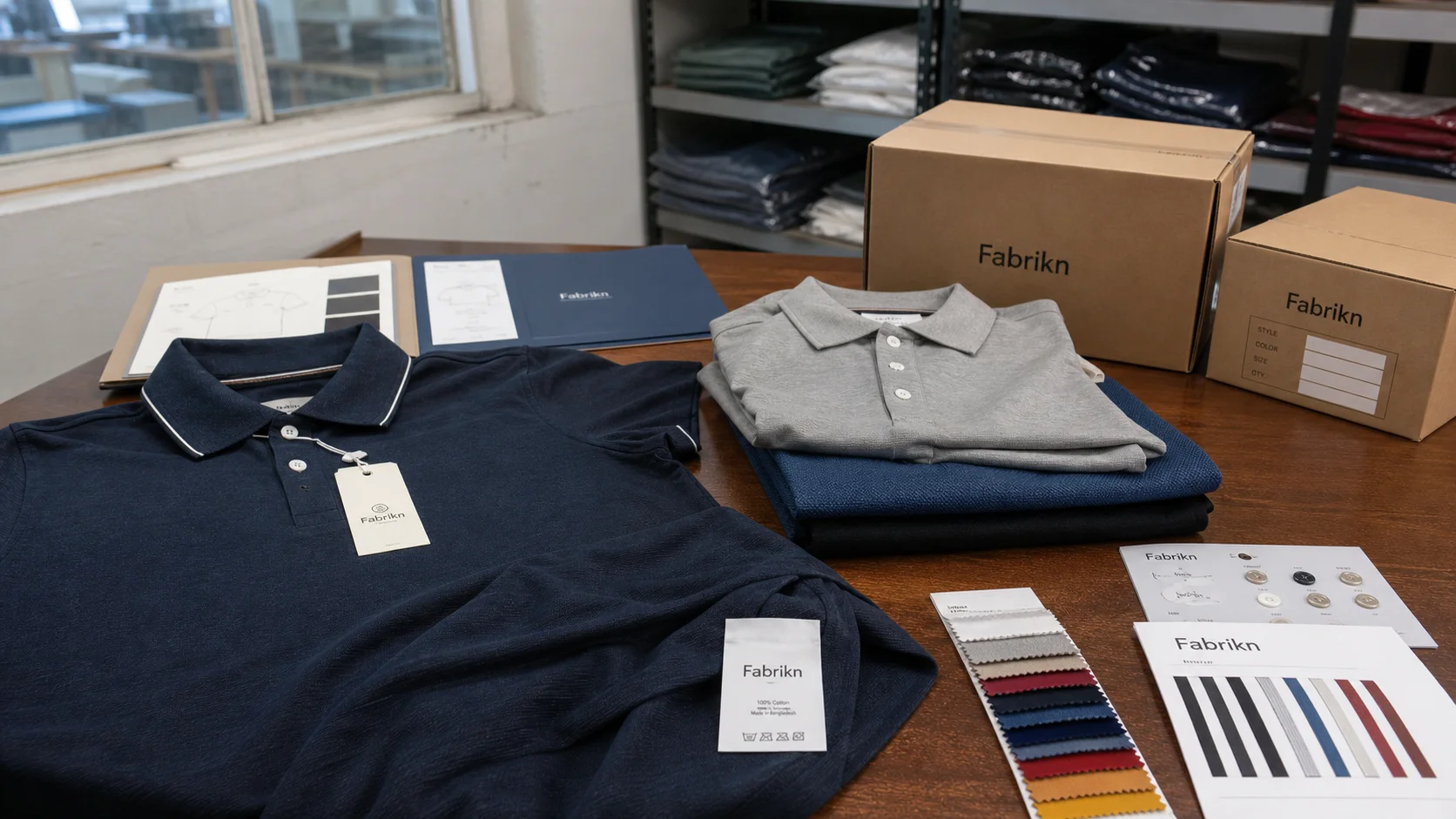
Clothing Carton Tape Checklist with checks for samples, fit, MOQ, QC evidence, pricing terms, and delivery risk.
Fast answer: Clothing Carton Tape Checklist: Adhesive, Width, Print, and Warehouse Use should be judged by production evidence, not by a generic sourcing promise. The buyer needs sample proof, cost breakdowns, QC checkpoints, and delivery buffers in writing.
Ask for recent sample photos, measurement tolerances, fabric or print test assumptions, decoration test notes, packing examples, and a named inspection checkpoint. These details show whether the team can repeat an approved sample at bulk volume.
Separate garment cost, decoration, labels, packaging, sampling, testing, freight, and rush charges. When every cost line is visible, it becomes easier to reduce colorways, adjust size depth, or reserve more time for sampling.
A parcel can look forgettable for miles and still arrive with a little drama at the door — and that is where the brand work begins. I’ve watched cartons move through packing benches, cross-docks, regional hubs, and local delivery vans. Same box, a dozen hands on it before the customer ever sees it. For custom branded tape for clothing shipping parcels, the message is immediate: someone cared about the packout, even if the box itself stays plain.
In apparel, the parcel is part of the product. A $24 tee and a $240 coat both ride the same delivery network, but they should not look like they were packed with the same amount of thought. Plain brown tape says “functional.” Branded tape says “finished.” I’ve seen brands ship 5,000 units a week with no custom boxes at all and still make the unboxing feel deliberate by using one clean printed strip produced on a 9-color flexo line running in Guangzhou that costs just $2.50-4.00 per unit at 500 MOQ.
The retail moment starts before the tear strip comes off. For brands with 40 to 200 SKUs, seasonal drops, or subscription orders, tape is the fastest way to change presentation without new box inventory, new board specs, or a longer carton lead time. Small intervention. Loud effect.
Picture the visual math. A carton may offer plenty of surface, but the eye goes to contrast first. A 25 mm or 48 mm branded stripe cuts across the seam, breaks the brown monotony, and repeats from parcel to parcel. That repetition does the heavy lifting. I’ve seen parcels with mostly unprinted board feel more premium than fully printed boxes that looked muddy under warehouse lights.
Fashion buyers notice details. They may not measure the tape width, but they do register whether the parcel feels tidy, consistent, and on-brand for the price point. A premium label charging $180 for knitwear can justify a cleaner presentation than a discount basics brand shipping $18 tanks, yet both can use tape to shape perception. The same roll can signal order, care, and consistency across returns, gifts, and subscription shipments.
In factories I visited in Portugal and Guangdong, the pattern was the same even when the cost structure was not. Boxes were expensive to customize. Tape was flexible. That flexibility is why custom branded tape for clothing shipping parcels keeps showing up in smart packaging programs. It scales at 1,000 pieces and at 100,000, and it lets brands test identity without locking cash into printed board.
Indie labels often get better ROI from custom branded tape for clothing shipping parcels than from fully printed cartons because order volume jumps around. One month: 2,000 units. Next month: 700. A box program can trap cash in awkward stock. Tape takes less storage, fewer variants, and a shorter artwork cycle. I’ve watched a 1,500-roll tape order beat a 10,000-box print run on payback and flexibility both.
Mid-market brands use tape differently. They are not always chasing luxury cues. They are trying to avoid blandness. A white mailer with a branded seam feels more intentional than a blank carton, especially for leggings, basics, and sleepwear. That is where private label clothing businesses can pick up a cleaner identity signal without reworking the entire pack format.
Premium labels lean on tape for consistency across regions. I’ve worked with brands selling $95 blouses and $320 outerwear that standardize tape across three warehouses because the box supply changes by market. The tape keeps the unboxing uniform even when carton board grade, supplier, and transit time shift. Milan flagship order, Ohio replenishment shipment — same feel.
Lead times are all over the map. In southern China, I’ve seen 10 to 14-day production windows for simple two-color tape at MOQ 5,000 rolls. Parts of Europe often quote three to four weeks once proofing and color approval are added. North American suppliers can move faster on reorders — sometimes 7 to 10 days — but the price per roll is usually 15% to 30% higher once freight and plate fees are included.
Here’s the part buyers don’t always want to hear. Lower-cost regions sometimes deliver tighter repeat registration and cleaner color control than expected. A factory running the same two-color design on high-speed lines every day can beat a pricier plant that changes jobs constantly. I’ve seen repeat print on BOPP tape hold a cleaner edge in Vietnam than in a small domestic shop charging double. Not theory. Production rhythm from a real manufacturer and factory setup.
Humidity changes the game. Shipments moving through Southeast Asia, coastal Europe, or Gulf states need stronger adhesive behavior than parcels moving through dry inland warehouses. If cartons sit 48 to 72 hours before dispatch, dust and moisture can weaken the bond on cheaper acrylic formulas. In my experience, apparel parcels for babywear or delicate knits deserve real-route testing, especially if the brand also uses custom baby clothing manufacturing and ships smaller, lighter cartons that are easier to retape or damage.
Paper tape, polypropylene tape, and reinforced tape behave differently in apparel fulfillment. Paper tape usually appeals to brands chasing recycling claims, and with the right adhesive (often an acrylic blend applied with Smithers Precision coaters from Dhaka runs) it tears cleanly by hand. Polypropylene, especially BOPP, costs less per meter and prints crisply, so it earns its keep in high-volume fashion shipping. Reinforced paper or fiberglass-backed tape shows up when cartons are heavy, overstuffed, or likely to go through rough sortation.
I start with parcel weight and carton finish. A 0.5 to 1.5 kg garment box on good kraft board can run on paper tape. A 2 to 4 kg multi-item order, especially if the carton is glossy or recycled with a rough surface, may need a stronger grab. Brands shipping structured jackets or multi-packs should pay attention to edge lift and corner stress. This is where cut and sew manufacturing programs often intersect with packaging planning, because heavier sewn goods put more strain on the seal.
Water-activated tape bonds into carton fibers and is hard to peel cleanly. Good for security. Good for a premium feel too. Acrylic adhesive stores well and holds up over time, with decent clarity. Hot-melt grabs fast and sticks hard, which suits fast-moving warehouses where cartons are packed, sealed, and gone in minutes. Each adhesive reacts differently to dust, humidity, and board quality.
For long-haul shipping, I want two answers: how long the carton sits before it leaves the building, and whether summer humidity turns the warehouse into a steam room. If cartons hold for 24 hours or more, a better adhesive is cheaper than a claims process later. A weak seal on a $68 returned dress costs more than the roll saved. Simple math. Still ignored.
Flexo wins at scale. It handles one to three colors efficiently, keeps unit cost down on runs of 10,000 rolls or more, and gives sharp print when the plates are right. Digital setups in Istanbul and Ho Chi Minh City let brands push six to eight colors for limited drops, but the per-meter price jumps when the inkjet heads need recalibrating for metallic pigments. Multi-pass flexo presses with inline varnish stations handle bright whites on kraft board better than wide-format inkjet, where color bleed can creep in at the margins.
The right mix of varnish and lamination prolongs tape life through cross-dock heat and Europe-to-North America transit, and certified operations (GOTS, OEKO-TEX Standard 100, and WRAP) keep the supply chain transparent. Factories holding BSCI and GRS certifications typically have better traceability on recycled resin batches for PP tape, which matters when marketing sustainability next to “branded tape” on seasonal packaging emails.
Raw materials matter. Virgin BOPP resin from Guangzhou or recycled content sourced through Certified GRS resin suppliers in Ho Chi Minh City pushes the base cost. Add silicone-coated release liner (used more often on paper tape than on plastic) and flexo plate upcharges, and you’re easily at $2.50-4.00 per roll for a 48 mm by 66 m size at 500 MOQ unless the factory queue is full. At 5,000 MOQ, that per-roll price can drop to below $1.40 because the press runs stay longer and the plate fees amortize; I’ve negotiated these rates with suppliers whose presses spool at 400 m/min.
Secondary costs to watch include artwork proofing (digital badges marked up 10-18%), die-cutting for logo windows on reinforced tape, and adhesives that vary between acrylic, water-activated, or hot-melt. Some buyers forget freight, which for a standard LCL shipment from Guangzhou to Long Beach runs $1,200-$1,600 depending on the depot, or $950 from Dhaka for BOPP rolls if consolidated.
MOQ varies with the factory line. High-volume flexo lines in Guangzhou and Ho Chi Minh City often start at 1,000 rolls for simple two-color jobs but push buyers toward 2,500 once varnish is added. Smaller digital shops in Istanbul or Dhaka can quote 500 rolls but charge $0.35-$0.45 more per line item. Always factor in 18-22 business days when you do the math — from artwork sign-off through printing (normally 10-12 days) and finishing/inspection (another 6-8 days). Rush orders can shave time, but the premium is steep and sometimes seats the line with paste and solvent blends that don’t align with OEKO-TEX Standard 100 claims.
Freight is often the silent killer. A roll of tape is small but dense. 500 rolls can weigh 420-520 kg depending on liner thickness and adhesive formula. Ocean freight from Guangzhou to New York or Hamburg is now averaging $3.10 per kg booked with a reliable consolidator, while air freight is a last resort at $4.80-$5.50 per kg. Customs fees depend on the HS code (391990). When your supplier ships from textile hubs like Dhaka or Ho Chi Minh City, insist on pre-shipment inspections and lab dips, not just visual checks. Manufacturers that have WRAP or BSCI audits often cover those costs in a bundled service because auditors are already on site for workplace compliance visits.
BOPP tape is technically recyclable, but actual recovery depends on recyclers accepting PET or PP films. Paper tape tears easily, but if it’s laminated with plastic, recyclers see it as contamination. Ask for proof: certifications such as GRS or OEKO-TEX Standard 100 can verify the recycled content and chemical safety, and WRAP or BSCI audits show the factory isn’t cutting corners on worker health while chasing sustainability badges. Some factories also offer compostable adhesive options, but those adhesives often stretch the delivery window to 22 business days, so plan for that during seasonal peaks.
Adhesives matter for final claims. Water-based acrylics earn eco-friendly kudos, but the supplier must supply an MSDS and test report; otherwise you are only marketing intentions. Manufacturers in Dhaka, Guangzhou, Ho Chi Minh City, and Istanbul increasingly provide these documents, especially when the line is ISO 9001 certified and the tape carries GOTS or GRS labels. When I briefed a maternity-wear brand, we insisted on aqueous inks compatible with OEKO-TEX Standard 100 controls because the tape touched baby garments — a move that also satisfied their European buyers.
Some brands now ask their fulfillment partners to create “second-life” instructions on the tape itself, printing “please recycle me” or “re-use as gift wrap.” These notes work when they tie back to something measurable: the factory delivered tapes certified through GRS, or the adhesive is acrylic-based but rehydrated for reuse in textile recycling centers. Cross-check that the supplier’s WRAP and BSCI audits are current, and request a copy of their most recent report. Otherwise, you might be promising recyclability from a factory whose line only runs standard solvents.
When briefing a supplier, spell out carton finish, shipping climate, color palette (Pantone references if possible), and desired certifications (GOTS, OEKO-TEX Standard 100, WRAP, BSCI, GRS). Include the adhesive type (acrylic, hot-melt, or water-activated) and state that the tape must hold a 5 N peel on 1,000 g cartons before and after a humidity chamber test. Mention whether the tape needs to perform on kraft board or glossy E-flute, and add the intended transit route (e.g., Guangzhou to Los Angeles via the Panama Canal or Ho Chi Minh City to Hamburg overland). That level of detail keeps the factory from guessing and avoids costly revisions.
Send vector artwork with outlined fonts, include a dieline if you want alternating printed segments, and ask for a PDF proof with color swatches matched to the Pantone library. Don’t forget to specify whether you need a gloss or matte varnish finish. If you’re sourcing the tape for subscription boxes or gifting programs, mention the cycle (quarterly drop, monthly restock) so the supplier can plan plate reuse or varnish queues ahead of time.
Define who books freight, who handles customs clearance, and who pays for the third-party lab reports. If your fulfillment center is in Istanbul, for example, coordinate sea transit from Guangzhou with a 15- to 18-day ocean leg plus rail transfers. Build in a 7-day inspection window through partners like SGS or Intertek. Stick with suppliers who post real-time updates via cloud-based portals; when the line runs in Ho Chi Minh City and the tape is riding to Dubai, you need daily status to avoid surprises.
Order sample rolls, test adhesion on the actual cartons you use, and request a humidity chamber test. Keep a log of how the tape behaves on different board textures and under different temperatures. When you pilot, ship a small batch (500-1,000 pieces) to warehouses in Guangzhou, Dhaka, and Istanbul to confirm the tape performs consistently and meets local compliance, then roll into wider production once the 18-22 business day lead time is confirmed.
Once the tape is proven, secure a rolling forecast with the supplier, negotiate locked-in pricing for two quarters, and confirm resin availability (especially if you rely on recycled PP from GRS-certified sources). Keep an eye on freight windows, and don’t forget to review WRAP and BSCI certifications annually to ensure the factory remains compliant.
Optimize your artwork, ask for digital proofs only once the brand team signs off, and ship the tape via consolidator from Guangzhou or Ho Chi Minh City. That way you reduce lead time and keep more freight options open.
Estimate based on your average parcel width. A 48 mm width tape on a 330 mm carton typically uses 0.3 m per seal. Multiply by carton volume and add 10% for spool waste. For a drop of 5,000 orders at 0.3 m, you need roughly 1,500 m of tape; that equals 23 rolls at 66 m per roll, so order at least 30 rolls to cover mistakes.
GOTS and OEKO-TEX Standard 100 for inks touching textile goods, WRAP and BSCI for factory compliance, and GRS for recycled content are the combination that signals both social responsibility and material traceability.