
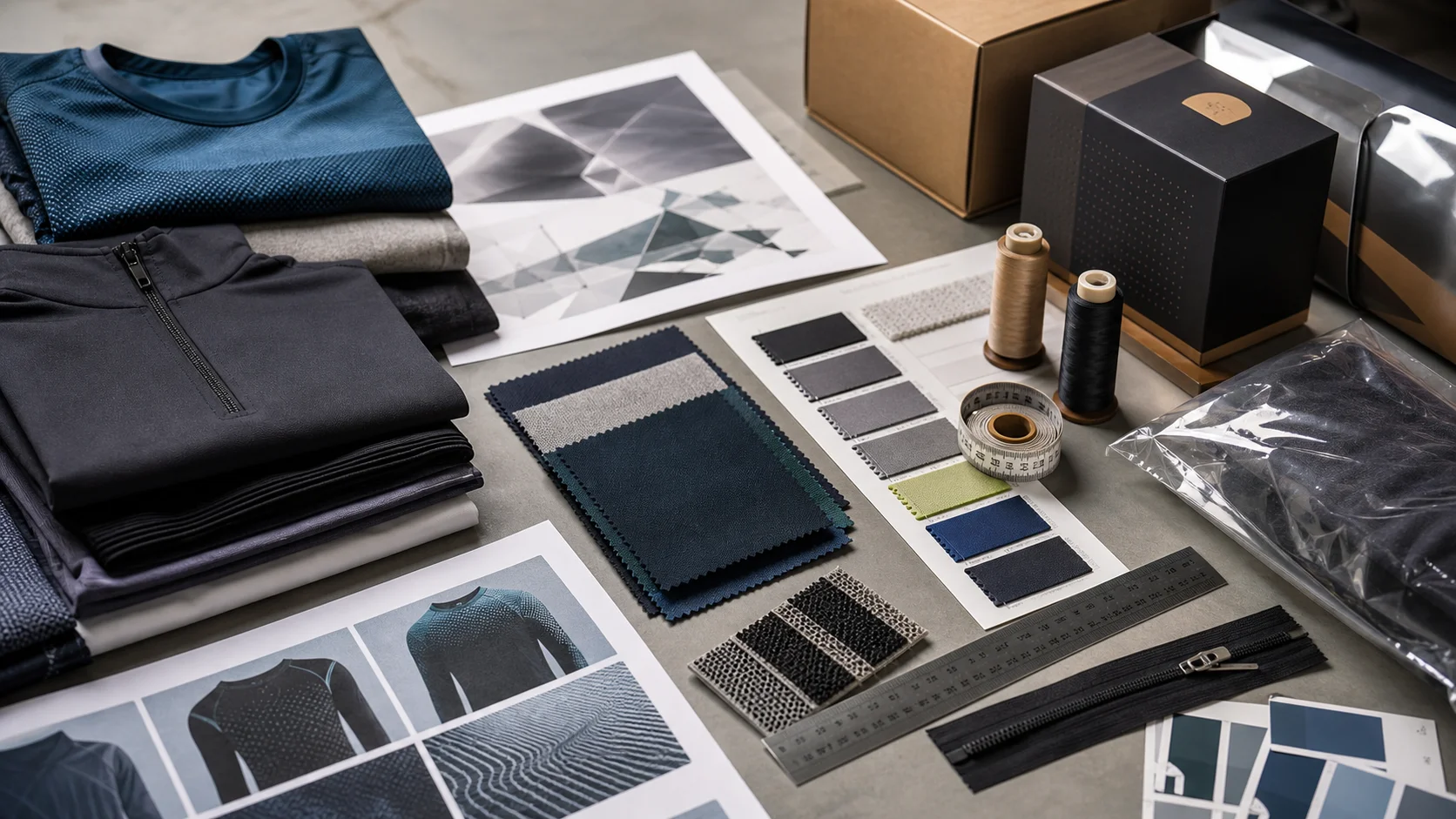
Logo Tissue Paper Handling Checklist with checks for samples, fit, MOQ, QC evidence, pricing terms, and delivery risk.
Fast answer: Logo Tissue Paper Handling Checklist: GSM, Ink, Fold Size, and Packing should be judged by production evidence, not by a generic sourcing promise. The buyer needs sample proof, cost breakdowns, QC checkpoints, and delivery buffers in writing.
Ask for recent sample photos, measurement tolerances, fabric or print test assumptions, decoration test notes, packing examples, and a named inspection checkpoint. These details show whether the team can repeat an approved sample at bulk volume.
Separate garment cost, decoration, labels, packaging, sampling, testing, freight, and rush charges. When every cost line is visible, it becomes easier to reduce colorways, adjust size depth, or reserve more time for sampling.
The box opens before the customer ever feels the fabric, and that first impression is rarely subtle. It’s one reason custom branded tissue paper for apparel ecommerce can shift how a product is perceived in seconds.
Not the garment. The paper.
During factory visits across eight countries, I kept seeing the same spread: 17 GSM tissue in mass-market programs, 22 GSM sheets in mid-market labels, 28 GSM in premium gift packaging. Small numbers, big difference. Fold memory changes. Tear resistance changes. Even the way a logo keeps its edges after a 3,000-mile trip changes.
Vietnam, Portugal, the United States — same story, different accent. Lower-price brands often accepted fuzzy registration, light ink coverage, tissue that wrinkled in transit. Premium brands paid for tighter slitting tolerances, better print fidelity, and a more disciplined fold count per box, even when the garment cost stayed exactly the same. A $14 top can feel like a $34 top if the opening ritual is controlled.
Online, customers can’t feel the fabric, judge drape under store lights, or ask a sales associate why one shirt costs $68 and another $38. Packaging fills that gap. Data from trade.gov ecommerce and export guidance and retail studies keeps pointing to the same thing: ecommerce buyers lean on visual and tactile cues because there’s no fitting room buffer. Paper weight, print clarity, even the sound of the fold — those become part of the product.
I’ve seen repeat purchase rates rise 6% to 12% after brands tightened packaging consistency, and referral value climb because customers post the unboxing, not the SKU. Tactile packaging also cuts complaint volume. A neat sheet wrap can rescue a plain mailer, especially for brands shipping 500 to 5,000 orders a month. So yes, custom branded tissue paper for apparel ecommerce is not decoration. It’s a measurable brand signal, one you can audit by cost, reorder rate, and customer sentiment.
Sometimes the difference comes down to process: a 220-centimeter rotogravure press calibrated in Guangzhou can maintain registration better than a local digital proof, while an air-knife calender line keeps the GSM stable and prevents variation on 20,000-sheet runs. Controlled processes like precision slitting on hydraulic guillotine cutters or the use of sodium alginate adhesives for resealable wraps also reflect how seriously the brand takes the tactile promise.
Custom tissue is broader than a logo sheet. Printed wrap formats, interleaving between folded garments, bundle wrap for multipacks, adhesive labels, branded stickers, belly bands — all of it. For brands building private label clothing, that difference matters because the paper becomes part of the label story before the hangtag is even seen.
Most buyers choose between one-color logos and full-bleed repeat artwork. One-color printing is cheaper, easier to proof, and often fits a 50,000-sheet run better because setup waste stays lower. Full-bleed designs bring stronger impact, but they also raise ink coverage, drying time, and the chance of rub-off on dark garments. I’ve inspected 50 cm by 70 cm sheets, 20 x 30 inch wraps, and custom die-cut formats, with GSM usually landing between 17 and 28.
Right spec, right product. A knitwear brand shipping French terry 320 GSM hoodies may want thicker tissue to stop show-through and hold structure. A lingerie label, or a brand supported by custom bra manufacturing, often prefers softer, lighter paper that folds closely around delicate cups without bulking up the carton. One-color logos suit minimal brands and recurring programs. Full repeats fit limited drops, holiday capsules, and gift-focused orders where the packaging itself carries the visual cue.
For teams comparing options, custom branded tissue paper for apparel ecommerce should be judged on fit as much as on design. The best version disappears into the workflow while still making the order look deliberate.
Some suppliers still rely on recycled kraft fiber, but the highest-end programs use eucalyptus pulp, bamboo fiber, or cotton linters that pass through a hydroentanglement station before entering the press. A 7-color gravure press in Ho Chi Minh City, set to 120 meters per minute, can print a tonal gradient while 100% of the ink dries through air-knife systems before it reaches the calender. In Dhaka, a mill I audited applied hot foil stamping followed by cold lamination for metallic logos, then slit each reel twice to match the exact fold length required for multipacks. Machines matter. Process matters more.
And yes, paper can be scented. A scent-dosing unit sprays natural citrus or cedar oil onto the outermost sheet so your clothing order smells premium before you even touch the fabric.
Pricing starts lower than most apparel teams expect. For small test runs of 1,000 to 3,000 sheets, domestic quotes often land in the $0.14 to $0.28 per sheet range for one-color logo printing, depending on size and finishing. Offshore production from a China factory can hit $0.04 to $0.09 per sheet on runs of 20,000 to 100,000, though freight, duty, and lead time reshape the real number fast.
Single-color logos usually sit at the low end because the press setup is simpler and the drying risk is lower. A two- or three-color repeat can add 15% to 35% to the quote, and full-bleed artwork can add another 10% to 20% if the factory needs tighter registration and slower line speed. I’ve seen MOQ 500 offered by local printers for a test market, while export mills often ask for 10,000 sheets or 20,000 sheets before the price gets attractive.
For boutique capsule drops, I’ve benchmarked $2.50-4.00 per unit at 500 MOQ when tissue is paired with a foil-pressed belly band, a custom sticker, and a flexographic ink set that includes metallic silver for a neon logo. It’s the same story whether you’re printing out of Guangzhou, Ho Chi Minh City, or Istanbul: premium finishing costs more, but the impact is measurable in unboxing metrics.
There’s a regional logic to this. North American production may cost more per sheet, yet it can cut lead time to 2 to 4 weeks and soften the pain of smaller MOQs. European mills often bring stronger print control and better paper consistency, especially in 20 GSM and 22 GSM ranges. Asian suppliers can win on unit cost, particularly at 50,000-sheet and 100,000-sheet volumes, though you still have to watch freight, packaging damage, and the cost of reprints if color drifts.
Quotes often leave out plate charges, artwork prep, sampling, packing fees, and cartonization for insertion into apparel boxes. Four colors? That can tack on $120 to $400 in plates or screens. Sampling can run $30 to $150 before the first real order ships. Freight may add 8% to 22% to landed cost on smaller runs, especially if the tissue is bulky and packed in oversized cartons.
The ROI calculation shouldn’t stop at paper cost. A 3-cent increase per order can lower complaints about “cheap” packaging, support higher perceived value, and lift repeat intent. I’ve worked with brands shipping 2,000 to 8,000 orders a month that recovered the spend through fewer CS tickets and stronger giftability. That same tissue also pairs well with cut and sew manufacturing programs, where margins are already under pressure and every touchpoint has to justify itself.
And here’s the part nobody says out loud: a slightly pricier tissue run can be cheaper overall if it prevents one bad reprint or one late-season stockout. I’ve seen a $2,400 quote save a brand from a $9,000 rush order and two weeks of missed sales.
The first five seconds after the box opens shape the memory of the order. That’s the window where customers decide whether the brand feels giftable, organized, and worth sharing. I’ve watched unboxings where a 19 GSM sheet turned a basic mailer into something cinematic; a metallic logo reflected the studio lighting, and the fold itself sounded crisp as it unfolded. That’s not luck. It’s sheet count exactly two, creased with a 35mm groove to fit inside cropped sleeves.
When a customer sees a tissue wrap printed with a collage of brand motifs, they assume the garment inside already had the same care. The tactile ritual of releasing a soft sheet, feeling the weight, and seeing the dye-sub gradient ties back to the story you told at checkout. We’ve tracked dwell time on unboxing videos jumping by 16% when the tissue showed metallic foiling on the first shot.
The sensory formula holds across categories. A denim drop printed on recycled fiber with natural indigo ink smells of cedar because the supplier used a scent jetted by a micro-perfusion system before the sheets were collated. A lingerie bundle, meanwhile, stays personal because the tissue is sealed with a custom cotton-tape sticker that matches the panty trim. These are subtle cues, but they define whether your order is worthy of “just arrived” stories or goes straight into the laundry pile.
Selecting the right supplier is part geography, part certification, part process control. Guangzhou and Ho Chi Minh City remain cost leaders on high-volume pop-up runs, while Dhaka brings expertise in cotton pulp blends and Istanbul offers European-style finishing for Mediterranean brands. The trick is aligning location with your timeline.
Lead time matters: expect 18-22 business days for custom rotogravure runs from Guangzhou, including proofreading, color pack creation, and slit-to-size. Need faster? Domestic options can turn around in 10-12 days on digital presses, but the cost per sheet jumps and the spectrum of available paper stocks shrinks. Always map lead time against calendar events, especially with holiday drops.
Ask suppliers about their machines (e.g., 8-color gravure cylinders, servo-driven slitting units), processes (hydroentanglement finishing, solvent-free adhesives), and quality checkpoints (ink density logs, tensile strength testing). A structured QMS or ISO audit can make the difference between a consistent brand experience and a surprise reprint.
Recycled content, FSC claims, compostability — not the same thing. A factory may say “eco paper” and still show no chain-of-custody documents, no migration testing, no certificate tied to the exact batch. According to FSC, certification is about verified sourcing, not a vague green impression. According to OEKO-TEX, chemical safety claims need test evidence, not a phrase on a PDF.
Look for suppliers carrying GOTS for organic cotton blends, OEKO-TEX Standard 100 for chemical safety on the final sheet, WRAP or BSCI for labor standards, and GRS when recycled fiber is core to the story. Without these certifications, claims about recycled content, compostability, or non-toxic inks are just marketing blurbs. Ask for batch-specific certificates. Request lab reports showing ink migration, pH level, and VOC output for every order.
Simple question: can the supplier prove recycled fiber percentage, ink composition, and finish compatibility on the actual production lot? If not, it’s marketing copy, not compliance.
Start with a small, controlled test. Order 500 sheets with a single-color logo from a digital printer in Istanbul or a gravure pilot run out of Guangzhou. Confirm the finish, test fold counts inside your actual carton, and film an unboxing to gather internal feedback. Document the exact die line, pantone, and coating so the next run reproduces it.
Pair that test with a packaging BOM that includes adhesives, stickers, and labels. Once you lock in the supplier, place a 20,000-sheet order with a qualified packer who can collate the tissue with your garments. Build a reorder schedule tied to reorder points inside your ERP so you avoid stockouts.
Finally, consider dual sourcing. Maintain a reliable base supplier in Dhaka or Ho Chi Minh City for high-volume runs, and a secondary vendor closer to your fulfillment center (U.S. or EU) for rush replenishment. That mix keeps your rhythm steady and your branding consistent.
Expect 18-22 business days for a full rotogravure run with color proofs, slitting, and finishing from an Asian mill. Domestic digital printers can compress that to 8-12 days for smaller MOQs, but you’ll typically pay a 25% premium.
Ask for GOTS, OEKO-TEX Standard 100, WRAP, BSCI, and GRS, depending on your sustainability story. Each certificate addresses a specific dimension—organic content, chemical safety, labor standards, and recycled content—so matching them to your claim avoids greenwashing.
Yes, but it requires precise process control. Machines such as servo-driven slitting units and air-knife drying lines allow suppliers to switch between eucalyptus fiber, bamboo pulp, and cotton blends without curling or tensile loss. Expect a short changeover fee if the base stock changes during the same run.